• KGS/USD = 0.01144 0%
  • KZT/USD = 0.00193 -0%
  • TJS/USD = 0.10876 0.55%
  • UZS/USD = 0.00008 0%
  • TMT/USD = 0.28490 0%
  • KGS/USD = 0.01144 0%
  • KZT/USD = 0.00193 -0%
  • TJS/USD = 0.10876 0.55%
  • UZS/USD = 0.00008 0%
  • TMT/USD = 0.28490 0%
  • KGS/USD = 0.01144 0%
  • KZT/USD = 0.00193 -0%
  • TJS/USD = 0.10876 0.55%
  • UZS/USD = 0.00008 0%
  • TMT/USD = 0.28490 0%
  • KGS/USD = 0.01144 0%
  • KZT/USD = 0.00193 -0%
  • TJS/USD = 0.10876 0.55%
  • UZS/USD = 0.00008 0%
  • TMT/USD = 0.28490 0%
  • KGS/USD = 0.01144 0%
  • KZT/USD = 0.00193 -0%
  • TJS/USD = 0.10876 0.55%
  • UZS/USD = 0.00008 0%
  • TMT/USD = 0.28490 0%
  • KGS/USD = 0.01144 0%
  • KZT/USD = 0.00193 -0%
  • TJS/USD = 0.10876 0.55%
  • UZS/USD = 0.00008 0%
  • TMT/USD = 0.28490 0%
  • KGS/USD = 0.01144 0%
  • KZT/USD = 0.00193 -0%
  • TJS/USD = 0.10876 0.55%
  • UZS/USD = 0.00008 0%
  • TMT/USD = 0.28490 0%
  • KGS/USD = 0.01144 0%
  • KZT/USD = 0.00193 -0%
  • TJS/USD = 0.10876 0.55%
  • UZS/USD = 0.00008 0%
  • TMT/USD = 0.28490 0%
11 December 2025

Kyrgyzstan to Open Trade Promotion House in Kabul

Kyrgyz representative Daniyar Zholchiev met with Afghanistan’s Minister of Industry and Trade Noruddin Azizi in Kabul, to discuss collaboration on new economic projects. (http://bakhtarnews.af/)

A proposal was welcomed by both parties for the expansion of trade relations and the launch of a Kyrgyz trade house in Afghanistan.

Azizi suggested that Bishkek could help Kabul with investments in electricity generation and mining. Construction of high-voltage power lines under the CASA-1000 project is currently underway in Afghanistan to enable the transmission of electricity from Kyrgyzstan and Tajikistan to Pakistan through the territory of Afghanistan. The latter has huge reserves of minerals, including rare-earth elements (REEs) but despite a long-held interest from global manufacturing giants in China and India, an agreement has yet to be settled with the Taliban.

Back in January 2024, Kyrgyz businessmen accompanied Daniyar Amangeldiev, Kyrgyz Minister of Economy and Commerce to Afghanistan to discuss new business opportunities. The outcome, described by the Kyrgyz ministry as the beginning of business relations between Bishkek and Kabul, was interest from Afghan authorities in importing electric lamps, medicines, sugar, beans, fabrics and other products from Kyrgyzstan.

Allegiance between the two countries was also testified late last year when Kyrgyzstan delivered humanitarian aid to Afghanistan in the form of 111 tons of food, warm clothing and personal hygiene products. Kyrgyz President Sadyr Japarov had earlier called on the international community to continue providing humanitarian aid to the Afghan people, despite the fact that many countries do not recognize the current Taliban government. Kyrgyz authorities have also frequently reiterated at international forums, including the UN, the need to ease the international isolation suffered by Afghanistan which both worsens the situation faced by a country ravaged by fighting and impacts Central Asia as a whole.

Kazakhstan’s Potential to Overtake China in Production of Rare-Earth Metals

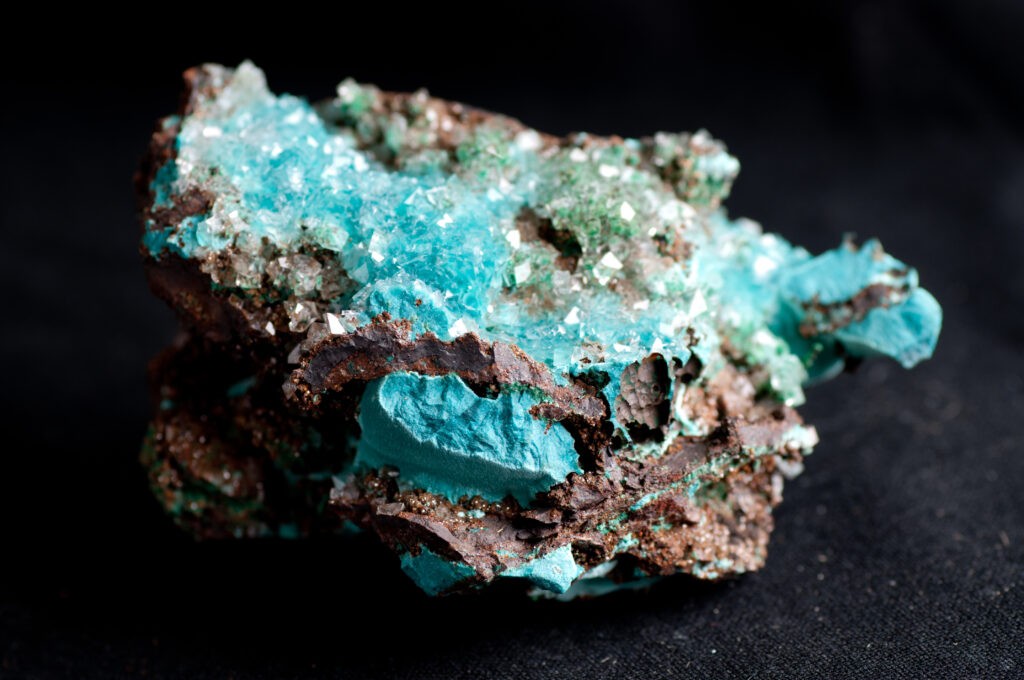
Kazakhstan has become a major participant in the international race for the extraction of valuable rare-earth metals or rare-earth elements (REEs). According to an https://asiatimes.com/ interview with international development expert Javier Piedra, the republic can not only compete with China — but even overtake it in terms of production.

Mr. Piedra, a financial consultant and former representative of the U.S. Agency for International Development (USAID), reported that China currently controls 70% of the global production REEs. He also explained that because of China’s tense relations with the West, Kazakhstan was in an advantageous position to develop its domestic industry in the sector. In a report by the Asia Times, Piedra stated, “Kazakhstan could be on par with China in mining such rare earth elements as scandium, yttrium and 15 lanthanides, which are used in the production of computers, turbines and cars.”

European and American investors are actively seeking opportunities to develop the industry outside China, and the republic’s subsoil, rich in rare metals, can provide a highly valuable resource to industries such as technology and manufacturing. In addition to Western countries, India also stands to benefit from the extraction of Kazakhstan’s rare earth elements and according to the Indian business press,the republic could already cover India’s demand for REEs.

The REE potential of Kazakhstan has been known since 2010 but was largely ignored by foreign investors in preference to developing their businesses in China. Extraction of REEs is an expensive and financially risky business. Exploration for deposits is similarly costly and markedly time consuming. However, the strategic importance of rare metals is growing. As claimed by Piedra in the Asian Times, everything may well change; “Western governments should identify alternative suppliers, including Kazakhstan, to reduce possible risks for investors and the likelihood of supply disruptions.”

The U.S. and the European Union (EU) are now poised to invest heavily in large-scale mining projects and are exploring alternative supply channels. Today, all consumption of yttrium and scandium in the United States depends on imports — and the EU imports 98% of its rare metals from China. .

Last September, New York hosted a presidential summit at which representatives from Kazakhstan, Kyrgyzstan, Turkmenistan, Uzbekistan and the U.S. discussed the exploration and production of critical rare metals.

Mr. Piedra believes that Kazakhstan is ready to benefit from its reserves of REEs but mining would first need to be updated to meet current environmental requirements. Care would also be required when choosing potential investors. “Astana will be wary of diplomats, foreign consultants and miners with an outdated view of the world and unfounded geopolitical ambitions. Central Asian countries will discourage attempts to penetrate them ‘through the back door.’ Such tricks may have worked in the 90s, but not now,” warned Piedra via Asia Times.

Meanwhile, Kazakhstan’s authorities continue to explore opportunities to utilize rare-earth deposits. Last November in Astana, Kassym-Jomart Tokayev and Emmanuel Macron discussed the extraction of strategically important minerals, and last month an alternative dialogue was held between the presidents of Kazakhstan and the U.S.

Over 100 Cases of Terrorism and Extremism Addressed by Kazakh Courts

According to statistics for 2023, 122 individuals were sent to Kazakhstan courts for crimes related to extremism and terrorism, slightly less than 2022’s figure of 124.
The most common offenses – 24 in total – included participating in and organising activities related to religion, followed closely by 23 cases of inciting social, national, tribal, racial, class or religious discord.

Ninety nine detainees had secondary or specialized secondary education, and only 19, higher education. Forty one had either disseminated propaganda supporting terrorism or publicly called for an act of terrorism.

The offenders’ ages were widespread with 44 offenders aged 30-39, 38 aged 40- 49, 15 over 50, and 6 over 60. Younger Kazakhs accused of extremism and terrorism included three minors under 18, 4 aged 18-20, and 12 aged 21-29.

The highest number of cases took place in Astana where the total of 50 showed an increase of 28.2% compared to 2022. Almaty saw 21 cases; North Kazakhstan, 16; Atyrau 14, and Zhambyl 13.

During the year, police seized 153 pieces of extremist material comprising 96 books and 42 leaflets.

Elected representatives of Kazakhstan’s Mazhilis (Parliament) are currently implementing a bill to prohibit entry to the country by foreigners involved in terrorist organizations and with prior convictions of sex crimes against minors.

Kazakhstan Poised to Spend almost Half a Billion Dollars on Recycling

Kazakh authorities have pledged financial support to combat the perennial problem of municipal solid waste (MSW).

According to a report by Analysts at Energyprom.kz, in 2023, Kazakhstan’s rate of recycling garbage fell to 23.9% from 25.4% in 2022.

To tackle this issue, the Ministry of Ecology and Natural Resources has allocated $445 million for the construction of new plants for recycling and processing MSW between 2024-2026. Adhering to European-standard best practices, the initial batch of will comprise 11 projects costing $133 million. Project managers involved in the initiative will receive loans from the ministry at a subsidized annual interest rate of 3%.

The ministry stated that the slight decline in the recycling rate is due to a calculation error. It transpires that up until 2023, data was incorrectly classified by Astana and instead of recycled waste, it related to sorted municipal waste. In turn, the capital’s recorded volume of MSW recycling at 17.1%, inaccurately inflated the statistics for Kazakhstan as a whole. The Bureau of National Statistics of the Republic of Kazakhstan failed to correct the data for 2021-2022, when the figures might even be lower.

A recalculation by the Ministry of Ecology and Natural Resources, clarified that since the share of processing recycled materials actually decreased, it will not be possible to reach the intended target of 27% by the end of the given period. At the same time, the volume of waste collected in Kazakhstan last year decreased by 4.7% to 4.1 million tons.

According to the government’s operations document for Kazakhstan’s transition to a green economy, by 2030 the MSW recycling rate should be 40%. However, today only four out of five Kazakhstan households have designated bins for the division of waste, and 19% have no access at all to waste collection services. Furthermore, residents in rural areas who use coal for heat have nowhere to dispose ash.

Referencing the slow development of an infrastructure for recycling, the Minister of Ecology Yerlan Nysanbayev stated that Kazakhstan currently lacks 82,000 garbage containers, and major cities are inadequately equipped to deal with waste removal. Landfills are also a problem. Overburdened, illegally built and employing outdated methods of waste compaction, only 20.6% of Kazakhstan’s 3,000 landfills comply with all modern safety and sanitary regulations.

A weak environmentally-conscious culture has led to a plethora of unauthorized dumps for MSW. Last year alone, 5,500 illegal sites were identified by local authorities, of which 86 percent were eliminated.
To prevent further spread, the minister has proposed an increase in fines for illegal dumping. Having remained low for years, many Kazakhs have found it cheaper to pay the penalties than transfer their garbage to official landfills.

According to KazWaste, problems concerning tariffs, low rates of waste collection, and waste removal costs persist throughout Kazakhstan. At the end of February 2024, household appliances could be recycled in only 13 of 20 Kazakh’s regions, wood in just three, and used filters in Aktobe alone.

The volume of general waste material able to be recycled also remains low since much of the sorting is manual. As a result, the potential market is small and of limited interest to entrepreneurs.

Kazakhstan and China to Expand Trade and Economic Cooperation

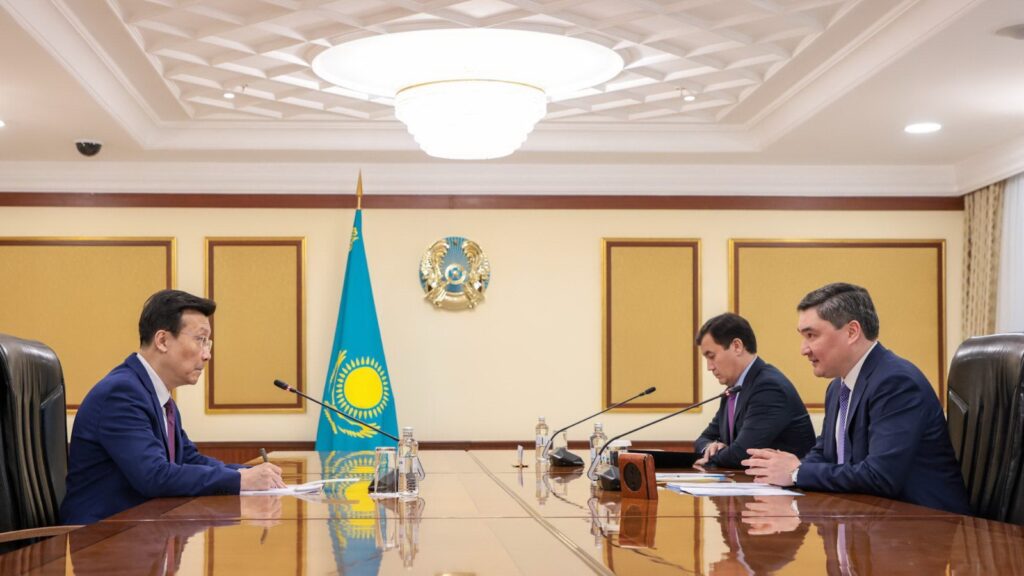
Further steps to eliminate restrictions in mutual trade, remove administrative barriers, and simplify customs procedures were discussed by the Prime Minister of Kazakhstan Olzhas Bektenov and Chinese Ambassador to Kazakhstan Zhang Xiao on March 13th.

Related issues included the expansion of Chinese cargo transit via Kazakhstan along the Trans-Caspian International Transport Route, and plans to increase the supply of Kazakh agricultural produce to the Chinese market.

Trade turnover between Kazakhstan and China grew by 30% last year to $31.5 billion. Over 9 months in 2023, Chinese investments in Kazakhstan’s economy amounted to $1.4 billion and 45 joint Kazakh-Chinese projects worth over $14.5 billion are currently under implementation. In January-February 2024, the volume of Chinese container traffic through Kazakhstan increased 2.6-fold, demonstrating the potential for further expansion, joint investment, and diversification of trade.

The Kazakh prime minister hailed the rise in trade and economic partnership between the two countries and the successful operation of some 3,000 joint companies in Kazakhstan, with the added recommendation that future joint Kazakh-Chinese projects focus on marketable high-tech products. The Chinese ambassador confirmed the potential for cooperation in the above alongside projects on agriculture and energy transfer.

Uzbekistan Foreign Minister Visits Afghanistan to Boost Economic Ties

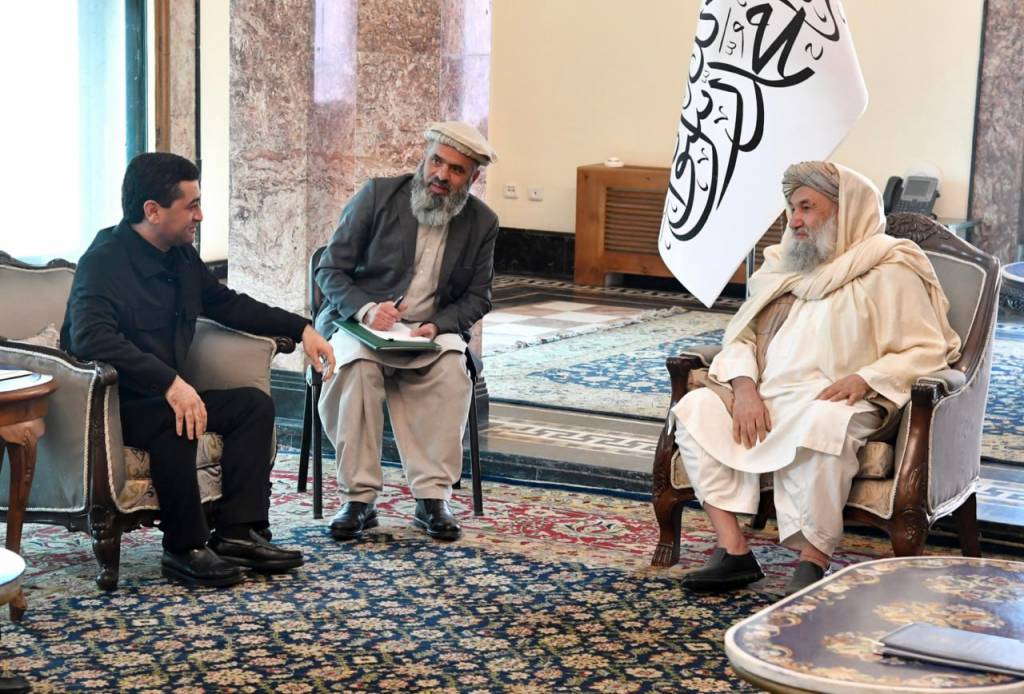
On March 12th, a delegation led by Uzbekistan’s Minister of Foreign Affairs Bakhtiyor Saidov visited Kabul to attend a meeting with officials of Afghanistan’s interim government: Acting Prime Minister Mullah Mohammad Hassan Akhund, Acting Deputy Prime Minister Mawlawi Abdul Salam Hanafi, Acting Deputy Prime Minister Mullah Abdul Ghani Baradar, Acting Foreign Minister Mawlawi Amir Khan Muttaqi, and Acting Minister of Commerce and Industry Nooruddin Azizi.

According to the Uzbek Foreign Ministry, discussions focused on boosting economic ties and creating more favourable conditions for both countries’ business sectors.

In a broadcast by Afghan TOLOnews, the Afghan government stated that in addition to economic cooperation, regional connectivity and transit through Afghanistan and Uzbekistan, the meeting covered the opening of an Afghan embassy in Uzbekistan. Attention was also paid to the Uzbek delegation’s interest in investment in a cement factory, coal mining, and a project to produce 200 megawatts of electricity from coal in Afghanistan.

Referencing the Afghan Ministry of Agriculture, Irrigation and Livestock, TOLOnews reported on a statement by Uzbekistan’s minister of water resources. Having outlined his country’s experience in manufacturing equipment for the construction of dams and canals, as well as water management at a regional level, the minister declared Uzbekistan’s readiness to cooperate with Afghanistan in these fields.

The issue of transboundary water use had come to the fore last month following Afghanistan’s announcement that construction has begun on the second phase of the Qosh Tepa Canal.