• KGS/USD = 0.01144 0%
  • KZT/USD = 0.00193 -0%
  • TJS/USD = 0.10811 -0.28%
  • UZS/USD = 0.00008 0%
  • TMT/USD = 0.28490 0%
  • KGS/USD = 0.01144 0%
  • KZT/USD = 0.00193 -0%
  • TJS/USD = 0.10811 -0.28%
  • UZS/USD = 0.00008 0%
  • TMT/USD = 0.28490 0%
  • KGS/USD = 0.01144 0%
  • KZT/USD = 0.00193 -0%
  • TJS/USD = 0.10811 -0.28%
  • UZS/USD = 0.00008 0%
  • TMT/USD = 0.28490 0%
  • KGS/USD = 0.01144 0%
  • KZT/USD = 0.00193 -0%
  • TJS/USD = 0.10811 -0.28%
  • UZS/USD = 0.00008 0%
  • TMT/USD = 0.28490 0%
  • KGS/USD = 0.01144 0%
  • KZT/USD = 0.00193 -0%
  • TJS/USD = 0.10811 -0.28%
  • UZS/USD = 0.00008 0%
  • TMT/USD = 0.28490 0%
  • KGS/USD = 0.01144 0%
  • KZT/USD = 0.00193 -0%
  • TJS/USD = 0.10811 -0.28%
  • UZS/USD = 0.00008 0%
  • TMT/USD = 0.28490 0%
  • KGS/USD = 0.01144 0%
  • KZT/USD = 0.00193 -0%
  • TJS/USD = 0.10811 -0.28%
  • UZS/USD = 0.00008 0%
  • TMT/USD = 0.28490 0%
  • KGS/USD = 0.01144 0%
  • KZT/USD = 0.00193 -0%
  • TJS/USD = 0.10811 -0.28%
  • UZS/USD = 0.00008 0%
  • TMT/USD = 0.28490 0%
10 December 2025

Kazakh-European Proposal for CRM and Green Hydrogen Strategy

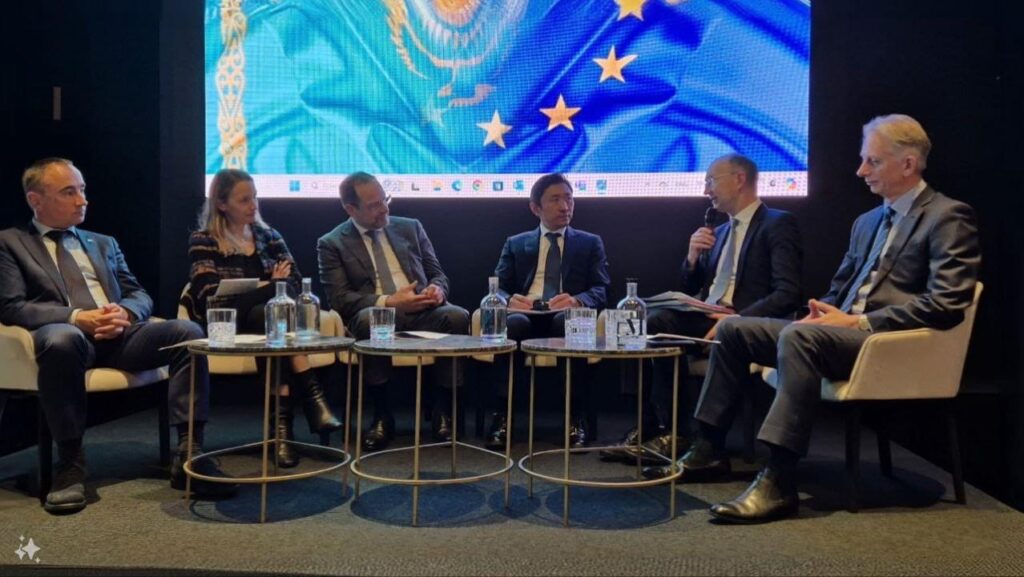
Some 60 high-ranking officials from the European Union and representatives of the EU business community attended a meeting on March 5th organized by the Kazakh Embassy in Belgium. A high-level event, its key focus was Kazakh-European cooperation on critical raw materials (CRM), green hydrogen and batteries.

In November 2022, Kazakhstan and the European Union signed a Memorandum of Understanding on sustainable raw materials, batteries, and renewable hydrogen value chains, and adopted a Roadmap for its implementation in 2023.

At the meeting on March 5th, Bolat Akchulakov, energy advisor to the president of Kazakhstan, emphasized the importance of the Kazakhstan-EU Memorandum of Understanding for strategic partnership in achieving common objectives of green transition.

Luc Devigne, deputy managing director for Eastern Europe and Central Asia of the European External Action Service (EEAS), praised the development of the Kazakhstan-EU relationship as a “success story of cooperation.” Referencing the EU’s readiness to further strengthen this partnership, he stated that it would ensure both the sustainability of supply chains and the achievement of common goals regarding climate change.

As part of the event, Kazakhstan’s national company Kazakh Invest presented a report on CRM at its Brussels office.

Kazakhstan produces 19 of the 34 critical raw materials listed by the European Union.

Kazakh manufacturers currently supply the EU with beryllium, tantalum, and titanium but have the potential to further exploit the country’s cache of other raw materials. By establishing plants to process reserves of nickel, cobalt, manganese, and lithium, Kazakh enterprises will be able to produce batteries, essential for electric vehicles.

Kazakhstan Intends to Bring Its Scientists Back From Abroad

Hundreds of Kazakh scientists will be repatriated to Kazakhstan from abroad, according to the Kazakh Minister of Science and Higher Education Sayasat Nurbek. He said that after the collapse of the USSR in the 1990’s, many promising scientists left the country. The ministry head said that now they are working to bring science specialists back to their homeland.

For example, Nurbek said that in the 1990s there were 52,000 scientific workers in Kazakhstan — and by 2000 that number had fallen to 12,000 people.

“Together with embassies we have created a database, we have 680 young or experienced scientists who work in leading scientific institutes or universities — we have identified them. Now we are working on their return,” Nurbek said.

The Minister of Science and Higher Education noted that they are working on three areas. The first is when Kazakhstani scientists don’t want to return to Kazakhstan. In that case, under the Bolashak mentoring program, young personnel are sent to them for training. “For example, Murat Saparbayev heads a large laboratory in Paris. Six of our scientists from Al-Farabi and Satpayev Universities work under his supervision. He trains them and [will help] create a similar laboratory in Kazakhstan,” said Nurbek.

There is also an option of “direct return” of Kazakh scientists. This is how Dos Sarbasov returned to Kazakhstan. According to Nurbek, he was given status as a member of the National Council on Science & Technology under the President of Kazakhstan — and a laboratory at Nazarbayev University. The third way to bring scientists back is for scientists who have left the country to give lectures to their colleagues in Kazakhstan. The project is called the Digital Nomads Lectures series. Alternatively, emigre scientists can also be invited to become independent directors on scientific councils.

Kazakhstan Now a Global Top Ten Iron Ore Producer

Latest data from the U.S. Geological Survey (USGS) puts Kazakhstan in the top 10 of countries by volume of mined iron ore.

Almost 2.8 billion tons of metal were extracted in the world in 2022. Iron ore makes up 93.3% of that total, or 2.6 billion tons, which includes 1.6 billion tons of iron. The leaders in iron ore production are Australia (880 million tons in 2022), Brazil (410 million tons), China (380 million tons) and India (290 million tons). USGS has Kazakhstan in ninth on the list, with 66 million tons.

Kazakhstan intends to increase iron ore production in the country, and plans to launch a new mining project in the Kostanay region. Its developers plan to put the Lomonosovskoye deposit into operation in 2025.

Kyrgyz Students Get Largest U.S. Visa Increase Globally to Enroll at American Universities

A report published by the U.S. Department of State has revealed that students from Kyrgyzstan saw the largest annual increase in the number of F-1 student visas issued from 2022 to 2023.

According to U.S. officials, 1,245 Kyrgyz students studied at U.S. universities in the 2022-23 academic year, That’s a material increase from the year before, when the U.S. Embassy in Kyrgyzstan issued only 708 student visas. The increase was 76%, the highest among all countries whose students study in the U.S.

In 2023 the U.S. issued about 446,000 F-1 student visas, up 8.5% from a year earlier. 2023 marked the highest number of visas issued to students from around the world since 2016. According to official information, the number of students from Kenya and Ghana also grew by 50% or more.

American company Apply Board, which helps foreign students enroll in U.S. universities, has conducted a study where it found that the largest growth in the number of foreign students was observed in academic departments for engineering technology, interdisciplinary studies, and computer and information sciences.

In 2023 the states of California, New York, Texas, Massachusetts and Illinois became the top destinations for international student enrollment.

In an interview with the Times of Central Asia, Apply Board staff revealed that Central Asia is the fastest growing market for U.S. student visas. Uzbekistan topped their list of applicant countries for 2022.

“A possible driver of Kyrgyzstan’s accelerating development is the country’s demographics. In 2023, more than half of its population was under 30 years old. In addition, its citizens are becoming more urbanized, driving demand for education. And as the country’s key industries such as agriculture, manufacturing and mining modernize, potential students are attracted to international programs that can help them stand out in these fields,” Apply Board representatives said.

Great Women in the History of the Kyrgyz Republic

Nestled in the heart of Central Asia, Kyrgyzstan boasts a rich tapestry of history woven by extraordinary women who have played pivotal roles in shaping the nation. From political pioneers to cultural icons, these women have left an indelible mark on the nation. To mark International Women’s Day, we remember some great women in the history of Kyrgyzstan, acknowledging their contribution and enduring impact.

 Kurmanjan Datka

Photo: Carl Gustav Mannerheim

Known as the “Queen of the South,” Kurmanjan Datka, the “Tsaritsa of Alai” was a courageous and noble woman who was not afraid to break with tradition. An important politician, in the second half of the eighteen century Kurmanjan ruled over the region wisely. Seeking both compromise and fighting for the rights of her people, she played a crucial role in unifying the Kyrgyz tribes during a tumultuous period, when her leadership and diplomacy skills were instrumental in maintaining peace.

Aside from Kurmanjan, no other woman has ever been honored with the title “Datka” – meaning “general” – in the history of Kyrgyzstan. Kurmanjan was the only woman to rule over the Kyrgyz nation. Recognized as the “mother of the nation,” 2011 was declared the year of Kurmanjan Datka in the Republic, where her face adorns banknotes.

Olga Manuilova

Photo: ilgeri.kg

Olga Manuilova’s contributions were valued highly by the Government of the Kyrgyz SSR, which in 1954 recognized her with the prestigious title, People’s Artist of the Kyrgyz SSR. In acknowledgment of her outstanding work, she was also honored with many other awards, including the Order of the Red Banner of Labor, the Badge of Honor, and the medal For Valorous Labor. Additionally, Manuilova received commendations in the form of diplomas from the Supreme Soviet of the Republic.

Among her notable creations were artistic masterpieces such as “Builders of the Great Chui Canal,” “In Aid of the Front” from 1942, and a monument to General Panfilov, which entwined her work with the fate of the nation. These remarkable works earned Manuilova the distinguished title of “Honored Art Worker of the Kyrgyz SSR.” This recognition underscored the significant impact of her artistic endeavors and highlighted her exceptional role in contributing to the cultural and artistic heritage of Kyrgyzstan. In 1973, a main belt asteroid was named after her.

Urkuya Salieva

Illustration: limon.kg

At the age of just seventeen, in 1927 Salieva became the secretary of her local Komsomol cell in the Osh Oblast, indicating her early inclination towards political activism. The following year, she defied societal expectations by assuming the role of chairperson for the council of her birth village of Murkut. Displaying exceptional leadership, Salieva was elected chairperson of the Kyzyl-Asker collective farm despite opposition from affluent individuals who underestimated her ability to navigate the challenges of this role. Showing devotion to her people, Salieva worked tirelessly to surpass all expectations, securing a seat on the Central Executive Committee of the Kyrgyz Autonomous Republic. In 1934, she was murdered by members of the Basmachi movement – an Islamic group opposed to Soviet rule. The collective farm which she had overseen was later renamed after her.

Sabira Kumushalieva

Photo: Alexander Fedorov

A hugely gifted actor, starting at the age of fourteen, Kumushalieva portrayed over a hundred different characters across theater and cinema in both Kyrgyzstan and Kazakhstan, demonstrating her ability to breathe life into a wide array of roles. She was a recipient of Order of the Badge of Honor, and named both People’s Artist of the Kyrgyz Republic and Honored Artist of the USSR. Among Kumushalieva’s most unforgettable performances which are etched into the memories of the Kyrgyz people are the prominent characters played by her in the movies “Milky Way,” “White Steamboat,” “Urkuya,” and “Elevator.” Following her passing, in 2008 a postage stamp bearing her image was issued to commemorate her life and work.

Zhetikashkayeva Nurkamal

Photo: kmborboru.su

The celebrated poet Zhetikashkayeva Nurkamal completed her education at the Lunacharsky Institute in Moscow in 1941 and subsequently became an artist at the Republican Kyrgyz Theater. Concurrently, Nurkamal engaged in research activities at the Institute of Kyrgyz Language, Literature, and History. She was inducted into the Union of Writers of the USSR in 1946, and in 1949 her first poem, entitled “Zhangan Zhalyn” (“Sparkling Flame”), was published.

A comprehensive collection of Nurkamal’s poems, along with a compilation of works in Russian entitled “I am the Daughter of October” was published posthumously in 1953. In her thirty-four years of life, Nurkamal received the medal For Labor during the Great Patriotic War of 1941-1945. In 1988, a street in Bishkek was named after her. Her legacy endures in the literary realm, showcasing the profound impact of her poetic contribution.

Dinara Asanova

Photo: seance.ru

A luminary in the world of film, Dinara Asanova was known for her multifaceted roles as a director and actress. Born in November 24 1942, in Bishkek – then known as Frunze – she left a significant mark in the late Soviet-era with her unique storytelling and directorial style.

Starting her career in the early 1960s, Asanova worked as an assistant at the Kyrgyzfilm studio, showcasing her versatile acting skills in films like “The Girl from Tien Shan” and “Everyone Has His Own Way”. Furthering her passion for cinema, she completed her studies in the directing department of VGIK in 1968.

In 1973, Asanova assumed the role of a director at Lenfilm, one of the most prominent studios in the USSR. Her directorial venture, “The Woodpecker Doesn’t Get Headaches” resonated with audiences and critics alike, marking a significant milestone in her career. This feature film solidified her reputation as a talented and impactful director. Despite her untimely death at the age of 42, Asanova’s contributions to the world of cinema continue to inspire and influence filmmakers today.

Kulbubu Mademilova

Photo: kino-teatr.ru

A respected figure in the performing arts, Mademilova held the prestigious titles of People’s Artist and prima ballerina of the Kyrgyz Opera and Ballet Theater. Not only did she mesmerize audiences with her performances, but she also blazed a trail as the first female ballet master in Kyrgyzstan. Additionally, Mademilova was instrumental in establishing the department of professional ballet masters at the Kalya Moldobasanov National Culture Center.

Over the course of her distinguished career, Mademilova amassed a wealth of creative productions and extensive pedagogic experience. As a ballet director, she played a pivotal role in the evolution of ballet theater in Kyrgyzstan, leaving a lasting legacy that transcends national boundaries. Her influence extended to such countries as Mongolia and Vietnam, where she staged iconic ballets such as “Giselle,” “Daughter of the Sun,” and “Don Quixote.” Her contributions to the world of ballet had a profound impact both locally and globally.

The great women of Kyrgyzstan have left an enduring legacy, shaping the cultural, political, and educational landscape of the nation. From Kurmanjan Datka’s leadership to Dinara Asanova’s cinematic vision, these remarkable women have enriched Kyrgyzstan’s history, leaving an indelible impact which will continue to inspire generations to come.

Chinese Company to Help Uzbekistan Develop Logistics Network

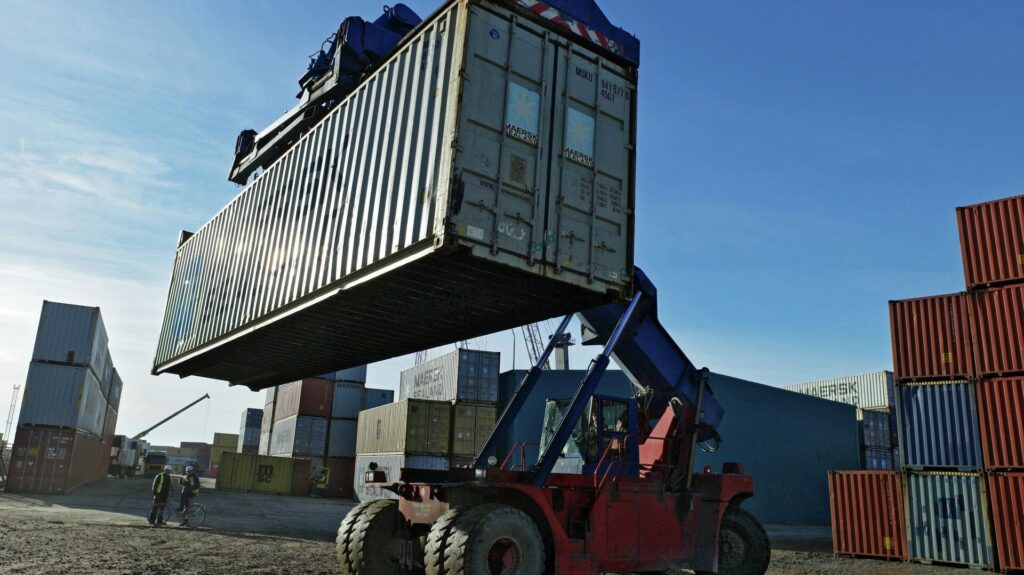
Chinese Shenzhen Neptune Logistics Co. Ltd. plans to invest about $10-$15m to build a transport and logistics center in Uzbekistan.

The company held talks with JSC Uztemiryulcontainer, which is the operator of the container park of state railway company JSC Uzbekistan Temir Yollari. During the meeting the parties discussed cooperation on joint use of existing logistics centers, the creation of new ones, establishment of distribution services, and joint use of railcars and containers. Shenzhen Neptune Logistics offered to create modern warehouses of the “A+” category in Uzbekistan. The parties also discussed cooperation on transportation from the Xi’an, Chengdu, and Shenzhen provinces along the China-Kyrgyzstan-Uzbekistan multimodal route, and along existing transport corridors, to Turkey and Europe.

Shenzhen Neptune Logistics was founded in 2002 and has its own logistics centers in more than 10 provinces in China, plus Europe, Central Asia, and Singapore. In 2023 the company launched about 100 container trains from China to Europe and on China-Central Asia routes from Xi’an, Chengdu, Shenzhen provinces. The company specializes in multimodal transportation and owns 25,000 of its own containers.

By modernizing and expanding logistics infrastructure, Uzbekistan and China are laying the foundation for a reliable logistics network that will link Central Asia and European markets.

Earlier, Chinese logistics company Zhengzhou Hongyi Transportation launched road-freight transportation from Shenzhen to Tashkent. The 6,500-kilometer route reduced the previous travel time of 20 days down to seven. As experts note, new projects focusing on development of rail and road lines will compensate for the deficit of legacy trunkline infrastructure in Central Asia — which will favorably affect both the economy of the country itself and its partners.

According to the Statistics Agency of Uzbekistan, the volume of cargo that transited Uzbekistan in 2023 amounted to 11.3 million tons — 22.8% more than in 2022.