• KGS/USD = 0.01144 0%
  • KZT/USD = 0.00194 -0%
  • TJS/USD = 0.10877 -0%
  • UZS/USD = 0.00008 0%
  • TMT/USD = 0.28571 0%
  • KGS/USD = 0.01144 0%
  • KZT/USD = 0.00194 -0%
  • TJS/USD = 0.10877 -0%
  • UZS/USD = 0.00008 0%
  • TMT/USD = 0.28571 0%
  • KGS/USD = 0.01144 0%
  • KZT/USD = 0.00194 -0%
  • TJS/USD = 0.10877 -0%
  • UZS/USD = 0.00008 0%
  • TMT/USD = 0.28571 0%
  • KGS/USD = 0.01144 0%
  • KZT/USD = 0.00194 -0%
  • TJS/USD = 0.10877 -0%
  • UZS/USD = 0.00008 0%
  • TMT/USD = 0.28571 0%
  • KGS/USD = 0.01144 0%
  • KZT/USD = 0.00194 -0%
  • TJS/USD = 0.10877 -0%
  • UZS/USD = 0.00008 0%
  • TMT/USD = 0.28571 0%
  • KGS/USD = 0.01144 0%
  • KZT/USD = 0.00194 -0%
  • TJS/USD = 0.10877 -0%
  • UZS/USD = 0.00008 0%
  • TMT/USD = 0.28571 0%
  • KGS/USD = 0.01144 0%
  • KZT/USD = 0.00194 -0%
  • TJS/USD = 0.10877 -0%
  • UZS/USD = 0.00008 0%
  • TMT/USD = 0.28571 0%
  • KGS/USD = 0.01144 0%
  • KZT/USD = 0.00194 -0%
  • TJS/USD = 0.10877 -0%
  • UZS/USD = 0.00008 0%
  • TMT/USD = 0.28571 0%
16 December 2025

Cenomi Retail Expands its Presence in Tashkent

The largest shopping and entertainment complex in Uzbekistan, Tashkent City Mall, has partially opened. While the official opening is scheduled for later in the first quarter of 2024, part of the retail premises is already open to shoppers.

Saudi-based Fawaz Alhokair Group, a retail-development company that operates under the Cenomi Retail brand in Uzbekistan and elsewhere, is already 11th in the world by revenue. Their entry onto the Uzbek market signifies that Uzbekistan has become an attractive enough retail center to bring in the world’s fashion giants, including Inditex-owned brands Zara, Massimo Dutti, Oysho, Bershka, Stradivarius, and Pull&Bear.

Tashkent City Mall will house an entertainment complex called Sky Park, which will include extreme sports, a virtual-reality zone, a children’s science complex and playground.

Given the increasing demand for global brands in Uzbekistan, the entry of Inditex brands to the market may create a platform for future foreign investments in the country’s retail trade.

According to the INFOLine consulting agency, Uzbekistan, Kyrgyzstan and Tajikistan are becoming increasingly attractive for global retailers. The main reason for this is the robust population growth rates found in the region. In addition, the population’s income on a nationwide scale continues to increase, which, in turn, encourages consumers to spend more money. Urbanization holds another reason for the popularity of retail in Central Asia, as the population is increasingly more willing to shop online and in shopping malls.
Korean Geologists Discover Lithium in Kazakhstan

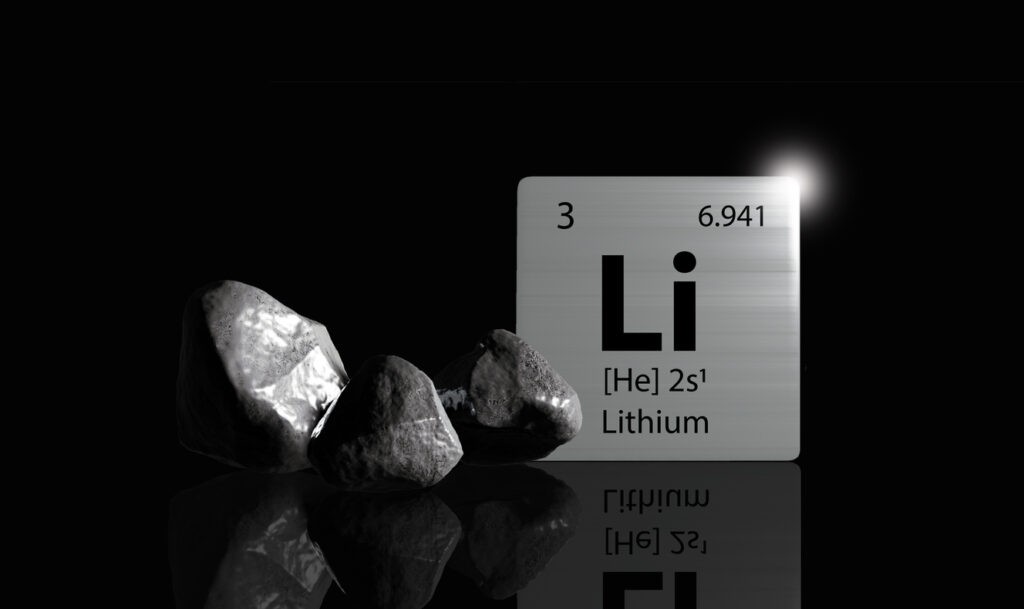
The Korea Institute of Geology and Mineral Resources (KIGAM) has announced that it has discovered a lithium deposit in Kazakhstan following testing in 2023. According to a report by The Korea Times on March 5th, the institute plans to develop this deposit.

Lithium is one of the most important minerals for the electric vehicle industry, as it is a key component in their batteries — along with elements like nickel, manganese, cobalt, aluminum and copper.

At the recent International Primary Minerals Forum in Seoul, KIGAM announced that the lithium deposit was discovered over a 1.6 square kilometer area of pegmatites in eastern Kazakhstan. It added that tantalum had previously been mined at this site.

Tantalum is usually found together with lithium and cesium, so KIGAM has been exploring the area since May last year at the request of the Kazakh government.

According to information provided by KIGAM, citing Kazakh forecasts, resources worth $15.7bn are buried in the area. KIGAM plans to apply for a drilling survey in the area next year with a Korean company to begin mining the lithium. The details of that Korean company weren’t made public, The Korea Times reported.

The Price of Liquefied Petroleum Gas Falls Below Production Costs in Kazakhstan

In a report on March 5th, Almasadam Satkaliev, Kazakhstan’s Minister of Energy, stated that in 2023 consumption of liquefied petroleum gas (LPG) by the country’s domestic market rose to 2.2 million tons; an increase of 400 thousand tons (or 28%) compared to 2022.

Cheaper than gasoline, LPG is understandably the fuel of choice for vehicle owners and a sharp hike in the cost of LPG was met with nationwide objection. Mass protests staged in the western Kazakh town of Zhanaozen in January 2022 soon spread across the country and turned violent in the cities of Almaty and Astana.

According to the energy minister, the current maximum wholesale price for LPG established by the state is lower than its production cost. While production varies from 60 thousand to 70 thousand tenge per ton, the wholesale price for manufacturing plants is set at 40,320 tenge/ton excluding VAT.

“Due to the unprofitability of liquefied petroleum gas production, manufacturers are running at a loss and are unable to invest in either the maintenance or modernization of their plants,” stated the minister.

The price of LPG in Kazakhstan, between 54-86 tenge per litre depending on the region, is the lowest among former Soviet states. For comparison the price per litre in Russia is equivalent to 165 tenge; in Kyrgyzstan, 159 tenge; in Azerbaijan, 171 tenge, and in Tajikistan, 273 tenge.

To meet the immediate demands of the country’s vehicle owners, a formal agreement has been made between the Ministry of Energy and Tengizchevroil for the monthly supply of 20 thousand tons of LPG.

The national company QazaqGaz and shareholders of the North Caspian project are also poised to sign an agreement for the supply of up to 700 tons of LPG per annum from the Kashagan oilfield by the end of this year.

Kazakhstan to Build New Power Generation Facilities

To ensure Kazakhstan’s energy security and increase its export potential, the Ministry of Energy has adopted a development plan for the country’s electrical power industry.

On March 5th, the Minister of Energy, Almasadam Satkaliev reported that under the new plan, scheduled to run until 2035, existing power generating facilities are to be modernized alongside the commission of new facilities with a total capacity of 26 GW.

In the southern regions of Kazakhstan, gas, and steam generation projects with an installed capacity of about 2.3 GW are due for completion in 2025-2026. The projects comprise combined cycle gas turbines in Turkestan and Kyzylorda with a capacity of 926.5 MW and 240 MW, as well as combined cycle power generation units at two heating plants in Almaty with a capacity of 544 MW and 557 MW.
Another combined cycle power plant with a capacity of 1.1 GW will be constructed in the Kyzylorda region.

The plans also include new gas and coal-fired power generation projects in Kazakhstan with a total capacity of 6.7 GW and the conclusion of an agreement with Russia for the construction of coal-fired thermal power plants in the cities of Kokshetau, Semey, and Ust-Kamenogorsk.

To achieve a 15% share of electricity generation by renewable energy sources by 2030, annual auctions will be held for a total capacity of over 6 GW (1,270 MW in 2024). Renewable energy projects with a total capacity of 3 GW are currently progressing in collaboration with Total Energies (France), Acwa Power (Saudi Arabia), and Masdar (UAE).

Eleven renewable energy facilities with a total capacity of 259 MW are to be commissioned this year.

Last month, Energy Minister Satkaliev reported that in 2023, Kazakhstan consumed 115 billion kWh of electrical energy, compared with 112.9 billion kWh in 2022, and produced 112.8 billion kWh, the same amount as in 2022. Last year Kazakhstan imported 3.4 billion kWh, and exported 1.4 billion kWh. In 2024, the country plans to generate 115 billion kWh.

Last year, the volume of electricity generated by renewable energy facilities amounted to 6.675 billion kWh, including 3.8 billion kWh from wind power plants, 1.8 billion kWh from solar plants, and 993.8 million kWh from hydropower plants. The generation of electricity from renewable sources in 2023 thus amounted to just 5.9% of the country’s total.

Looking to a greener future, Kazakhstan’s new goal is to achieve a 15% share of renewable energy sources in power generation by 2030, and a 50% share by 2050.

Kazakhstan Opens Al-Farabi Innovation Hub in Riyadh

A joint project between Kazakhstan and Saudi Arabia, the Al-Farabi Innovation Hub has newly opened in Riyadh.

As reported on March 5th by the Kazakh Ministry of Digital Development, Innovation and Aerospace Industry, the role of the Hub is to attract talented entrepreneurs and innovative start-ups from Kazakhstan to Saudi Arabia and support their relocation and growth in the region by providing seed investment from the Tumar Venture Fund as well as incubation and acceleration programs.

“Kazakhstan already has experience in growing start-ups,” explained Kazakh minister Bagdat Musin. “Five years ago, we launched the Astana Hub, which has become one of the leading technology parks in Central Asia. We have also engaged global partners such as Google, Draper University, StartX, Microsoft, and the World Bank, to provide access to the best cutting-edge solutions. I believe that the opening of the Hub will allow Kazakhstan and Saudi Arabia to strengthen ties and make a qualitative contribution to economic development.”

The Hub’s General Director Aslan Sultanov went on to state, “The Al-Farabi Innovation Hub will complement the infrastructure of the venture industry in Kazakhstan, giving start-ups from Central Asia and the Caucasus the opportunity to expand into Middle East and North Africa (MENA) markets, which comprise almost 493 million people.”

The new Hub follows the launch on March 1st, of the Qaz Steppe Innovation Hub in Dubai to promote Kazakh IT services to international markets.

Centre for Environmental Diagnostics of Vehicles Opens in Tashkent

On March 5th, Uzbekistan’s President Shavkat Mirziyoyev visited a new centre for environmental diagnostics of motor vehicles in Tashkent.

Environmental issues have become a major concern in Uzbek’s capital city, especially air pollution caused by harmful emissions from traffic.

In a measure to stall the sharp increase in air pollution, the centre first assesses the level of harmful substances emitted by motor vehicles and depending on results, attaches color-coded stickers with chips to vehicles’ windshields.

Plans are in place to divide the city’s territory into several ecological zones. Entry will be limited in accordance with the level of pollutants emitted by vehicles, identified by their red, yellow, or green stickers. Drivers of vehicles that violate the rules will be automatically fined and the resulting revenue, invested in incentives to further improve the environment.

The government plans to expand the initiative by installing some 100 automatic air monitoring stations and creating 84 registration and diagnostic centres for vehicles across the country.

In a move towards tackling air pollution, the government will also encourage the purchase of greener, electric vehicles by reducing the fee for state license plates.