SCO Summit in Astana: Will the West Accept the Role of the “Middle Powers”?

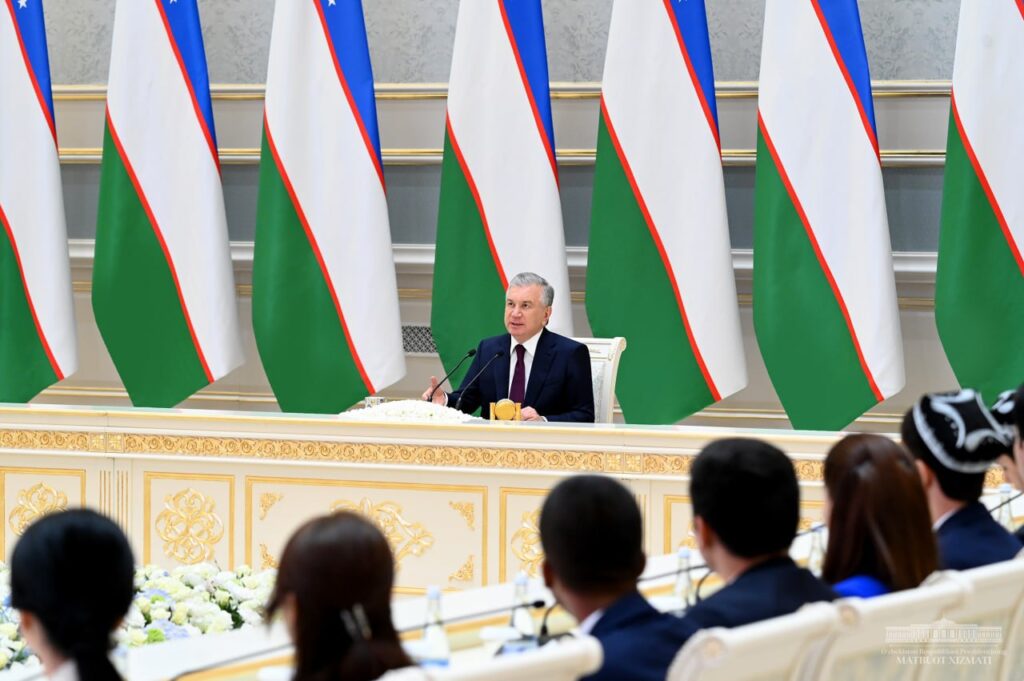
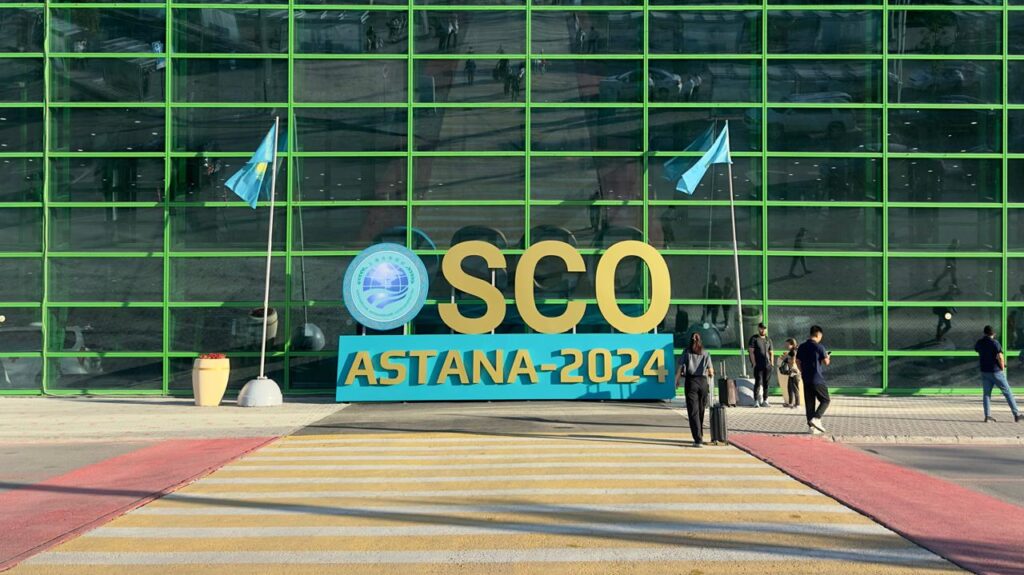
Kazakhstan will chair the Shanghai Cooperation Organization (SCO) summit in Astana on July 3-4. During the event, significant global initiatives are expected to be proposed.
Will Modi attend?
Kazakhstan has been chairing the SCO since July 2023, and following this summit the organization’s presidency will pass to China. The SCO was founded in 2001 by the leaders of China, Russia, Kazakhstan, Tajikistan, Kyrgyzstan, and Uzbekistan. In 2017, India and Pakistan became members of the organization, whilst Iran joined in 2022, and Belarus is expected to join the SCO in the summer of 2024. The association’s main tasks are to strengthen stability, fight terrorism and drug smuggling, develop economic cooperation and energy, and promote scientific and cultural partnerships.
The summit in Astana is expected to be attended by heads of state and government of 15 countries: Kazakhstan, Iran, China, Kyrgyzstan, Pakistan, Russia, Tajikistan, Uzbekistan, Belarus, Mongolia, Azerbaijan, Qatar, UAE, Turkey and Turkmenistan. U.N. Secretary-General Antonio Guterres will also participate.
According to foreign media, Indian Prime Minister Narendra Modi intends to avoid the summit. In particular, The Federal reports that the main reason for his decision is an unwillingness to be surrounded by anti-American attitudes.
“Although it has not been officially announced yet, unofficially, Indian diplomats have confirmed that Modi will not attend the SCO summit. Foreign Minister, S. Jaishankar will represent India in Kazakhstan instead,” the publication reported. Since the SCO includes China, Russia, and Iran, whose relations with the U.S. remain strained, anti-American statements are possible, even likely, during the summit, and Modi does not want to be associated with them. Nevertheless, in his conversation with President Tokayev, he expressed support for the activities of the SCO and his intention to cooperate.
Solving global problems
The SCO unites countries with a combined population of about 3.5 billion people, so its members face the full range of contemporary problems: terrorism, geopolitical tensions, environmental pollution, climate change, and underdeveloped logistics.
In particular, Kazakh President Kassym-Jomart Tokayev has emphasized that Afghanistan’s situation deserves close attention during the upcoming summit. According to Tokayev, it is essential to continue efforts to prevent a humanitarian crisis in Afghanistan and create the conditions for its long-term stabilization. Political analysts say that Kazakhstan is making quite an effort to bring stability to Afghanistan. The republic is supplying food so that a real controlling force can begin to build a relatively stable government and further reduce the risks from terrorist activity and migration.
In his policy statements, President Tokayev called on countries like Kazakhstan to actively promote their role as participants in global processes as responsible players on the world stage.
“In today’s world, gripped by increased geopolitical turbulence and ongoing conflicts, multilateral solutions are in demand more than ever.
Armed clashes in Europe, the Middle East, and Africa are claiming the lives of hundreds of thousands of people at a time when global challenges such as climate change have left millions hungry, unprotected, and displaced. These conflicts appear intractable, and the hope of overcoming them is fading. Against the background of global contradictions, major powers – the world’s economic and political giants – are increasingly losing the ability to act together,” Tokayev emphasized in an article. “Against this backdrop, middle powers like Kazakhstan are emerging as key players with growing capabilities to bring greater stability, peace and development to their regions and beyond.”
Before the summit in Astana, President Tokayev gave a wide-ranging interview to China’s Xinhua news agency. Chinese President Xi Jinping is scheduled to attend the SCO, and China has consistently been one of Kazakhstan’s leading trade and investment partners. Over the 30-plus years of bilateral relations, the volume of trade turnover between the two countries has increased 100 times, and in 2023, it reached $41 billion. There are 4,700 Kazakh-Chinese enterprises operating in Kazakhstan.
In particular, Tokayev recalled that he was personally present at the organization’s creation in 1996, when it began as the “Shanghai Five,” and almost 30 years later, it became the “Shanghai Ten.” According to Tokayev, he has high hopes for the upcoming meeting.
“We expect that the final decisions of the summit will fully embody the fundamental principles of the “Shanghai spirit”: mutual trust, friendship, mutual benefit, and consideration of each other’s interests. We believe that the SCO should not remain aloof from global processes. That is why Kazakhstan has proposed jointly developing the SCO Initiative on World Unity for Just Peace and Harmony. I am grateful that this initiative has been appreciated and supported by all member States. The participants at the Astana summit will appeal to the world community to start an honest and open global dialog, adopt a new security paradigm, create a fair economic environment, and make the necessary efforts to protect the planet’s cleanliness,” Tokayev stated.
“We expect strategically important decisions to be taken in the sphere of further improvement of the SCO. The main areas of interaction for the medium term will be defined, and initiatives will be developed to provide an adequate and timely response to current challenges and threats. On the initiative of Kazakhstan, 2024 has been declared the SCO Year of Ecology. International documents in the sphere of ecology, protection of natural territories, ecotourism, and the fight against climate change have been developed and are planned to be adopted,” the President noted.
Political scientist Adil Kaukenov believes that significant agreements between Kazakhstan and China could be signed during the summit. He also wonders whether Western countries will accept the participation of “medium” countries such as Kazakhstan in global processes.
“The secrecy of the forthcoming agreements (between Kazakhstan and China) is explained by the fact that if their signing is “warmed up” in society in advance, it is possible they will face the opposition of the “anti-Chinese net,” which will sway protest moods based on Sinophobia, finding dark sides in absolutely any agreement. Therefore, the authorities’ tactic has been to present the public with a ready-made result, respectively, removing the possibility of the politicization of ordinary agreements. In the post-Soviet space, there have already been examples of how a simple bureaucratic agreement can be politicized, but it should be noted that the reasons for this can be quite false and given after the fact, as, for example, with “Land protests” or rallies against “Chinese production,” Kaukenov stated.
“The summit itself will be a very significant event from the point of view of the global agenda, and there is much talk about a separate meeting between Russian President Vladimir Putin and Turkish President Recep Erdogan being prepared on the margins. The summit is expected to be one of the most significant events in the Global South, as, in addition to the leaders of China, Turkey, and Russia, the heads of Pakistan, the leadership of Iran, and many others are expected to attend,” the political scientist said.
“Kazakhstan, in the program article by Kassym-Jomart Tokayev, has also expressed its vision in the context of the desire of “middle powers” to influence global politics. Since the summit is being held in Kazakhstan, which positions itself as one of these “middle powers,” other states with similar political aspirations need to see the results and, most importantly, the West’s reaction to the outcome. Will the “great powers” accept the “middle powers'” request for global influence?” Kaukenov concluded.