• KGS/USD = 0.01144 0%
  • KZT/USD = 0.00196 -0%
  • TJS/USD = 0.10899 -0%
  • UZS/USD = 0.00008 -0%
  • TMT/USD = 0.28490 0%
  • KGS/USD = 0.01144 0%
  • KZT/USD = 0.00196 -0%
  • TJS/USD = 0.10899 -0%
  • UZS/USD = 0.00008 -0%
  • TMT/USD = 0.28490 0%
  • KGS/USD = 0.01144 0%
  • KZT/USD = 0.00196 -0%
  • TJS/USD = 0.10899 -0%
  • UZS/USD = 0.00008 -0%
  • TMT/USD = 0.28490 0%
  • KGS/USD = 0.01144 0%
  • KZT/USD = 0.00196 -0%
  • TJS/USD = 0.10899 -0%
  • UZS/USD = 0.00008 -0%
  • TMT/USD = 0.28490 0%
  • KGS/USD = 0.01144 0%
  • KZT/USD = 0.00196 -0%
  • TJS/USD = 0.10899 -0%
  • UZS/USD = 0.00008 -0%
  • TMT/USD = 0.28490 0%
  • KGS/USD = 0.01144 0%
  • KZT/USD = 0.00196 -0%
  • TJS/USD = 0.10899 -0%
  • UZS/USD = 0.00008 -0%
  • TMT/USD = 0.28490 0%
  • KGS/USD = 0.01144 0%
  • KZT/USD = 0.00196 -0%
  • TJS/USD = 0.10899 -0%
  • UZS/USD = 0.00008 -0%
  • TMT/USD = 0.28490 0%
  • KGS/USD = 0.01144 0%
  • KZT/USD = 0.00196 -0%
  • TJS/USD = 0.10899 -0%
  • UZS/USD = 0.00008 -0%
  • TMT/USD = 0.28490 0%
08 December 2025

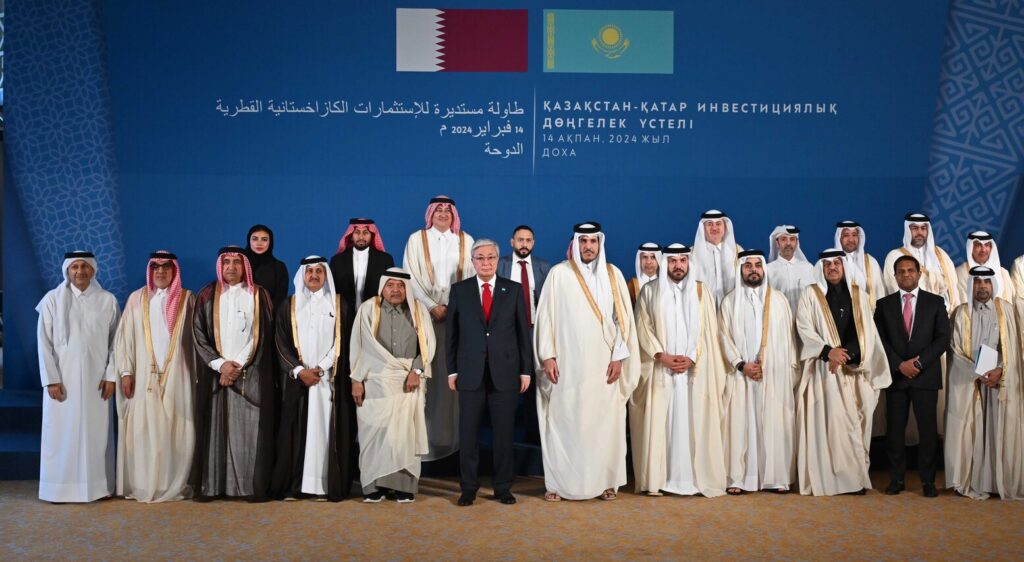
Doha Hosts Kazakhstan–Qatar Investment Roundtable

During his visit to Qatar on February 14th, Kazakhstan’s president Kassym-Jomart Tokayev took part in the Kazakhstan–Qatar Investment Roundtable in Doha. 

Mr Tokayev invited Qatari companies to invest in the Kazakh economy and explore new business opportunities, mentioning that his government is ready to provide tax and customs preferences, project co-financing, partial guarantees and export support mechanisms, the president’s press office reported.

Mr Tokayev also suggested expanding the work of the Kazakhstan-Qatar Joint High-Level Commission and Business Council.

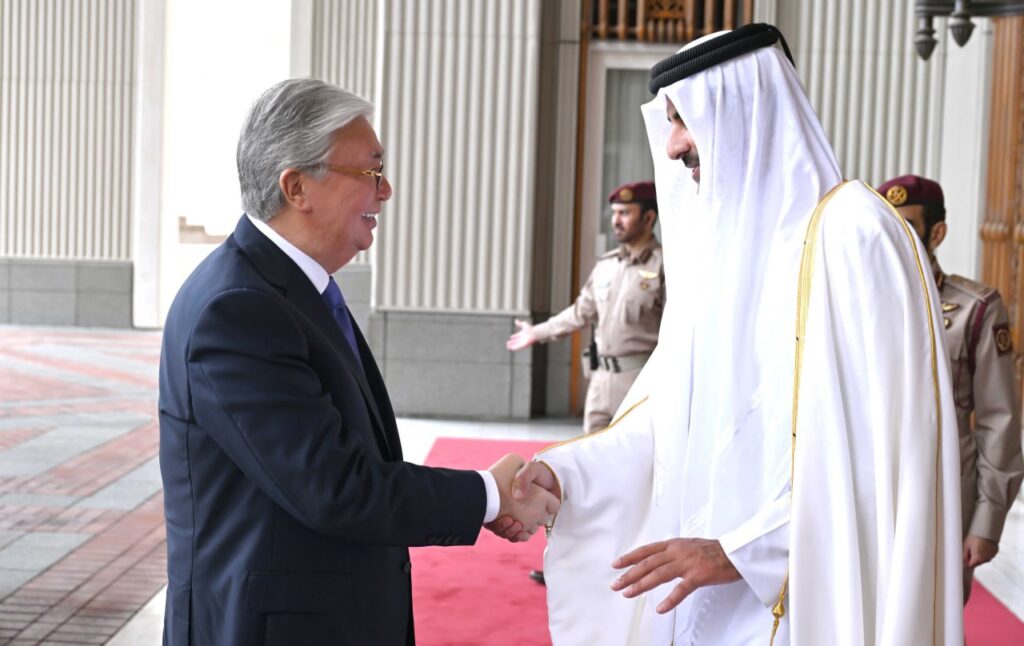
The Kazakh president said that during his meeting with the Amir of Qatar, Sheikh Tamim bin Hamad Al Thani, earlier in the day, he proposed to increase bilateral trade up to $500m as a first step. “We can offer the Qatari market high-quality goods such as machinery, iron, steel, and agricultural products. Our market also offers access to the Eurasian Economic Union market with a total GDP of $2.6tn. We have a common border with China as well, which gives good opportunities to make trade with this juggernaut using the Belt and Road project,” Tokayev said. 

Today Kazakhstan and Qatar are more closely connected than ever before, due to a visa-free regime and several direct flights per week. 

Mr Tokayev invited Qatari energy companies to cooperate with their Kazakh counterparts in geological exploration, petrochemicals, transportation, and oil and gas processing projects. 

He emphasized that Kazakhstan’s renewable energy potential, estimated at one trillion kilowatt-hours, has attracted the attention of global players who have committed to projects with a capacity of 43 gigawatts. “We welcome Nebras Power’s intentions to implement a 350 megawatt hydroelectric power plant and Pearl Overseas’ plans to construct a 1.1 gigawatt combined-cycle plant in Kazakhstan,” he said. 

The Kazakh president also encouraged Qatari companies to participate in the extraction and processing of critical raw materials such as cobalt and lithium. 

In the agricultural sector, Kazakhstan can supply halal and organic agricultural products to the Qatari market, Tokayev said, adding that Kazakhstan is also interested in developing the production of meat, fruit, vegetable, grain, flour and other products with further direct supply to Qatar.

Kazakhstan’s Proposed Nuclear Power Plant: a Geopolitical Tightrope amid Environmental Concerns

Renowned for its abundant uranium reserves and expansive mining ventures, Kazakhstan is making substantial progress in the realm of nuclear power. Currently, approximately 60 nuclear reactors are under construction worldwide in 17 countries, and with more in the pipeline, demand for uranium has skyrocketed. Kazakhstan is by far the world’s largest producer of nuclear fuel, mining 21,227 tons in 2022, which equates to 43% of global production. Kazatomprom, the national atomic company, is the world’s largest uranium producer, with its subsidiaries, affiliates, and joint ventures developing 26 deposits. Russia, Japan, China, Canada, and France are all heavily invested, whilst international agreements exist with a plethora of other nations.

Kazakhstan’s inaugural venture into the nuclear field was marked by the BN-350 fast-neutron reactor in Aktau, which ran from 1973 to 1999 before being decommissioned. Now, President Tokayev has announced a referendum will be held to decide whether to build the nation’s first fully-fledged nuclear power plant. “On the one hand, Kazakhstan, as the world’s biggest uranium producer, should have its own nuclear power capacity,” Tokayev stated. “On the other hand, many citizens and some experts have concerns about the safety of nuclear power plants.”

The Proving Ground

With Kazakhstan having endured the most contamination of all the former Soviet Republics, anything nuclear is a contentious issue. Between 1949 and 1989, the authorities executed more than 750 nuclear tests in Kazakhstan, the bulk of these, including the USSR’s first successful atomic explosion – codenamed Joe-1 – taking place in the Semipalatinsk Polygon (proving ground) in the north-east of the country. By far the hardest hit area, Semipalatinsk saw 456 tests, which affected two million people across 300 square kilometers.

Eager to know what to expect in the event of a nuclear war, in 1957 the Soviets secretly opened Dispensary Number Four in Semipalatinsk. Shipping in spectators – teachers were instructed to have their pupils watch explosions – the facility observed and analyzed the effects of radiation on the populous and reported their findings back to Moscow.

In this post-apocalyptic land, elevated levels of cancer, tuberculosis and mental illness persist. Today, people swim in crater lakes left by blasts which dot the steppe, though animals won’t go near the water. With all agriculture banned, a vast swathe of land still remains off-limits. Pregnancies are still screened for possible termination, with 6% of babies born “polygon.” Even in inhabited areas, Geiger counters read over 250; the normal level is just fifteen.

In their headlong rush to abandon the empire upon the collapse of the USSR, the Russians left more than an undetonated payload in the mines of Semipalatinsk. As soldiers rioted over conditions and unpaid wages, upon its independence Kazakhstan inherited the fourth largest nuclear arsenal in the world. With Libya’s Colonel Gaddafi sniffing around, it was widely rumored that the Iranians, who the CIA publicly alleged to be “actively shopping,” had offered $300 million for weapons-grade uranium.

Arriving in Kazakhstan post-haste, through a combination of threats, the promise of a seat at the international table and hard cash, U.S. Secretary of State James Baker persuaded President Nazarbayev to give up Kazakhstan’s cache, which the Americans duly dismantled and disposed of.

“Fierce Disputes”

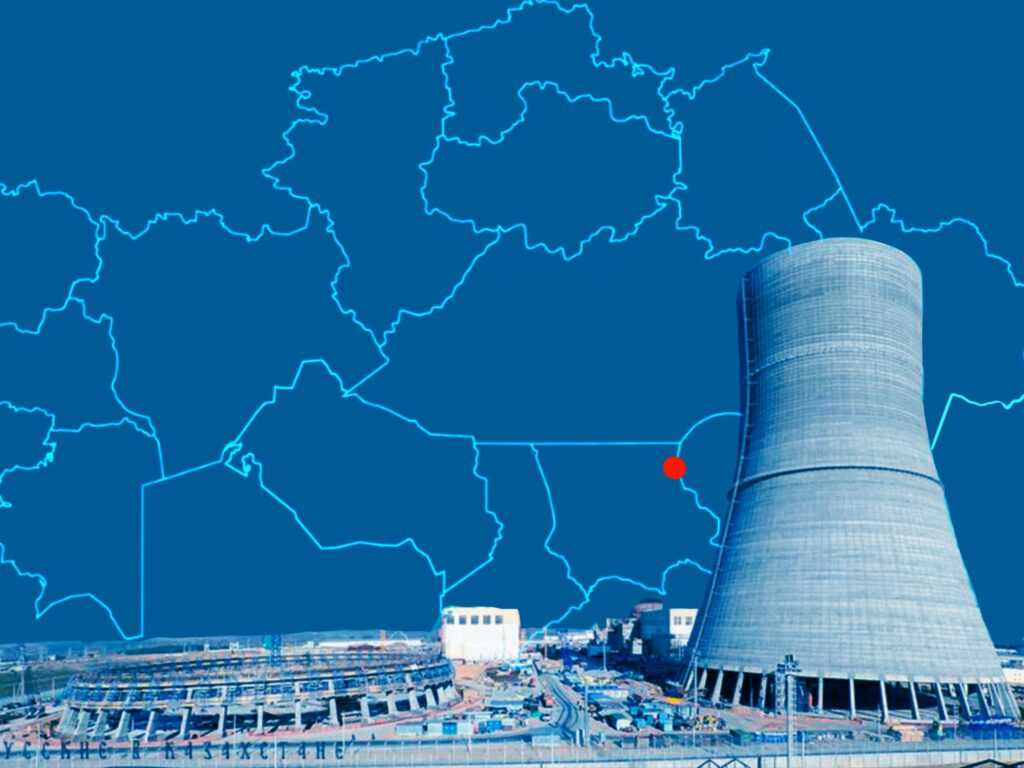
With provisional plans for the new facility to be operational by 2035 to cater to the country’s escalating energy needs, the proposed nuclear power plant is expected to house two reactors, each with a capacity ranging from 1,000 to 1,400 megawatts. An optimal location has also been identified in the village of Ulken on the shores of Lake Balkhash, just over 200 miles due north-west of the nation’s most populous city, Almaty. However, a public hearing held in Ulken in August saw “fierce disputes” between supporters and opponents of the project.

The fifteenth largest lake in the world, Lake Balkhash is already in decline, and a nuclear power plant would likely use its dwindling supplies as a coolant. As recently as the 1960s, fishermen were netting a catch of over 30,000 tons annually, but by the 1990s, this had fallen to 6,600 tons. Between 1970 and 1987 alone, the water level fell by 2.2 meters, impacting biodiversity, with 12 types of bird and 22 vertebrates indigenous to the region listed in the Red Book of Kazakhstan as endangered, whilst the Caspian tiger is, in all likelihood, extinct.

“The ‘successful’ completion of a nuclear power station in Ulken is, at best, a distant and problematic proposition,” Dr. Kristopher White, an Economic Geographer and associate Professor at KIMEP University in Almaty told TCA. “Under no circumstances will this improve the ecological situation for the lake or its entire basin – which includes the city of Almaty. A power station at this location would also increase the geopolitical significance of the lake and expand the power and influence of Chinese actors. Increased Ili River water withdrawals, to say nothing of a complete blockage, could force a shutdown of the power station. Being even more reliant on decisions from the Chinese side of the border might also lead to significantly more apprehension here in Kazakhstan.”

Should the referendum return a positive result, another contentious issue is the choice of potential partners in the project. Currently, the contenders include the China National Nuclear Corporation (CNNC), South Korea’s Korea Hydro and Nuclear Power (KHNP), France’s Électricité de France (EDF), and Russia’s state corporation, Rosatom. Given the fraught state of international affairs, this decision itself represents a geopolitical tightrope act.

Divergent Views

On the streets of Almaty, opinions vis-à-vis the project are mixed, with many complaining they feel ill-informed. “to be honest, I don’t know much about this topic, but I do know that such projects have a negative impact on the environment,” a 25-year-old resident of Almaty who preferred to remain anonymous told TCA. “Of course, I realize the huge potential for stable electricity, but I’m frightened by the possibility of a nuclear power plant being built. Since Kazakhstan is often negligent about the environment, I’d rather slow this down in favor of saving nature.”

“Nuclear power plants provide a reliable energy supply, but their impact on the environment raises concerns,” another resident of Almaty, 45-year-old Raushan told TCA. “Given the context of the unstable environmental situation in Kazakhstan, the use of nuclear power may lead to negative consequences. I believe that before establishing such projects, the potential risks should be studied thoroughly.”

Others, though, point to the potential for job creation. Almost 18,000 people are already employed in the peaceful use of nuclear energy in Kazakhstan, and construction of the plant would see this figure rise substantially. Nuclear power could also help Kazakhstan realize its goal of achieving carbon neutrality by 2060; as of 2022, coal accounted for over 70% of the nation’s electricity generation. With these factors in mind, local experts expect the referendum to return a favorable result.

James Walker, the CEO of Nano Nuclear Energy, a U.S.-based microreactor company agrees that sentiments towards nuclear energy are changing. “Even countries like Kazakhstan, who experienced the dismal hardships from weapons tests conducted during the Cold War, are realizing that nuclear energy is uniquely positioned to provide the power necessary to advance the country and improve the lives of its citizens,” he told TCA. “Kazakhstan is poised to be a major player in both the supply chain of this change and a major beneficiary of this energy transformation.”

Further consultations and a feasibility study lie ahead.

Bridging East and West: Kazakhstan’s Changing Foreign Policy in the 2020s

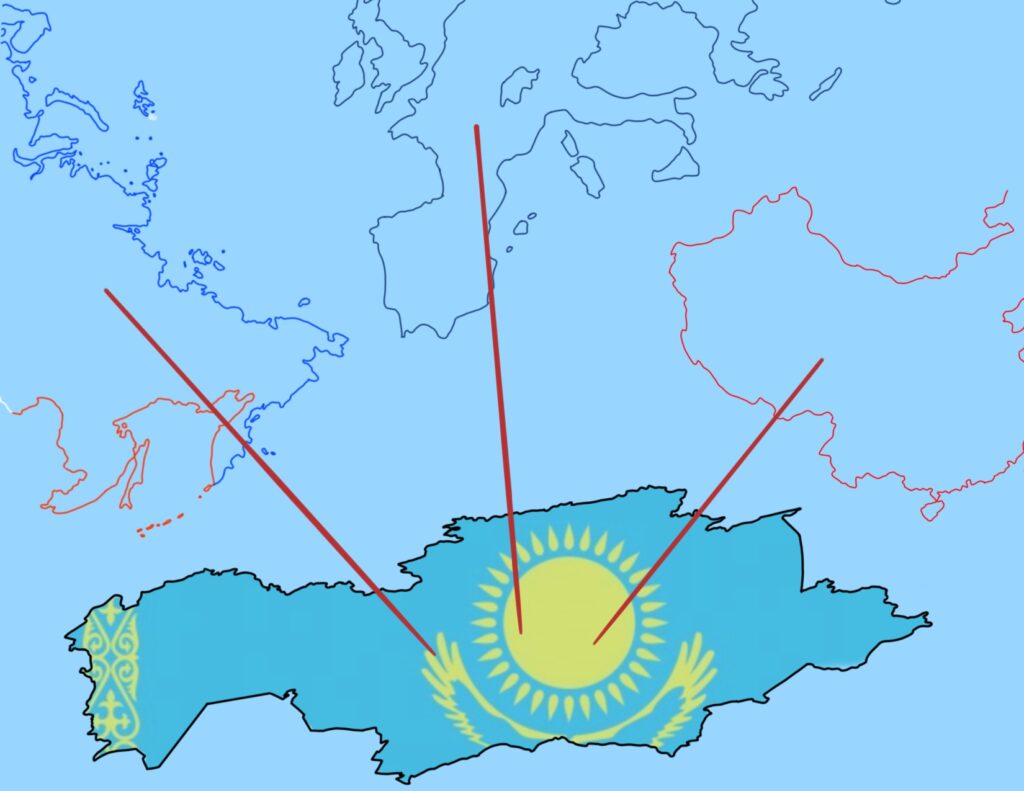
In the wake of significant geopolitical and social change, Kazakhstan has been noticeably reassessing its official and economic relations with foreign powers. Formerly a part of the USSR, Kazakhstan has positioned itself since the collapse of the bloc in 1991 as a country with a triangulated approach to foreign relations. This means that it attempts to maintain cordial relationships with both of its powerful neighbors, Russia and China, whilst also improving relations with countries in the West. Now, this multi-vector foreign policy appears to be shifting as Kazakhstan re-evaluates its priorities in a world that has seen both a global pandemic and Russia’s invasion of Ukraine.


Russia

Kazakhstan is allied with Russia in the Collective Security Treaty Organisation (CSTO), but this relationship was put under strain even prior to Russia’s war in Ukraine. In a memorable speech from September 2014, Russian President Vladimir Putin expressed his view that “Kazakhs never had any statehood,” and that their desire to align themselves more closely with Russia was “profound.” These statements caused Nursultan Nazarbayev, then President of Kazakhstan, to threaten to remove his country from the Eurasian Economic Union (EAEU), a bloc largely dominated by Russia. This threat was not acted upon, however, and Kazakhstan remains a member to this day. Nonetheless, it was an indication of cooling relations long before the current global state of affairs, and a precursor to a shift in how Astana sees Kazakhstan being positioned on the world stage in future.

Since Russia launched its full-scale invasion of Ukraine on 24th February 2022, Kazakhstan’s foreign relations have taken an ever more decisive turn. While Astana does not officially support international sanctions against Russia, citing the knock-on effects these sanctions create for Kazakhstani businesses – Russia remains a strong trade partner and a key part of Kazakhstan’s supply chain for land-based trade due to their long, shared border – it has nevertheless complied with them. This purely economic reasoning for not officially supporting international sanctions places Kazakhstan at odds with Belarus, which is an example of a former Soviet state that remains allied to Russia and whose leader, Aleksandr Lukashenko, derided by many as a dictator, has been vocal in his support of Russia’s political actions, allowing Belarusian territory to be used to further Russia’s strategic goals in the war against Ukraine. In sharp contrast, Astana has made it clear that it will not allow Russia to use Kazakh territory in an attempt to circumvent international sanctions.

In an effort to avoid incurring secondary international sanctions due to its ties with Russia, Kazakhstan has invested in an electronic monitoring system, launched in spring 2023, for goods purchased from Western countries passing through its territory for re-export to the EAEU. This system tracks goods until they reach their final destination, thus aiming to prevent foreign players who wish to help Russia evade international sanctions through this method, known as “parallel imports”. In October 2023, Kazakhstan also halted the export of over 100 products to Russia (including drones, military equipment, microchips and specialized electronics), in line with Western sanctions. The following month, President Kassym-Jomart Tokayev spoke in Kazakh at a press conference to which Russian officials had been invited in an obvious snub towards the status of the Russian language in Kazakhstan (Russian is an official language of the country alongside the state language of Kazakh), which left Russian officials flustered as they were not prepared for the need for interpreters. Despite these issues with translation, the message was clear: Kazakhstan is no longer prepared to play by Russia’s rules.


China

Kazakhstan’s relations with China are also a legacy of the country’s Communist past. Following the collapse of the Soviet Union, Kazakhstan and China have worked together to pursue stronger ties and cordial relations. Kazakhstan officially recognizes the One China principle, which includes China’s rightful ownership of Taiwan, and President Tokayev not only studied in China, but also served at the Soviet embassy in Beijing during the early days of his career. The two countries are involved in various cooperation agreements, such as the Shanghai Cooperation Organisation (a political, economic and defense organization in the region which also includes Russia), and the China-Central Asia Summit, a diplomatic summit composed of China and the five Central Asian countries which held its inaugural meetings in Xi’an in May 2023, with the second summit set to be held in Kazakhstan in 2025.

With Russia increasingly funneling its resources into its war in Ukraine, the importance of China to Kazakhstan’s economy has increased, and trade between the two countries has grown as a result. In 2022, total trade between China and Kazakhstan reached $31.17 billion, an increase of 23.6% on the previous year. China is Kazakhstan’s second-largest trading partner, and currently stands as the largest importer of Kazakh goods, while Kazakhstan imports a range of products from China, including clothing and electronics, and is a significant beneficiary of China’s Belt and Road Initiative, receiving 15% of investment pledges announced in 2023, totaling over $16 billion. This includes an agreement to develop the Trans-Caspian International Transport Route (TITR), a rail and sea transport corridor connecting China and Kazakhstan to Europe, Turkey, and the Caucasus.

The limitations of Kazakhstan’s strengthening relations with China are twofold – firstly, Chinese investment into countries via the Belt and Road Initiative provides leverage for Beijing to wield political influence over those countries, both in bilateral disputes and on the global stage. Kazakhstan may not be immune to such pressures if the threat of terminated investment is applied. A secondary consequence of this partnership lies in the balance Astana will need to find diplomatically between its negotiated obligations to China and its desire to cultivate a closer relationship with the EU, as competing interests are certain to arise along the way. In addition, China in 2024 is not in the same economic position as it was when it launched the Belt and Road Initiative back in 2013. Since then, the country’s market competitiveness has stagnated and its internal market is battling deflation, with the Financial Times reporting earlier this month that prices within the country have fallen at the fastest rate in 15 years. It is with this in mind that Astana seems eager not to rely solely on Beijing’s economic support, and is also looking to develop its relationships with countries in the West.


The West

On March 1st 2020, Kazakhstan’s Enhanced Partnership and Cooperation Agreement with the European Union came into effect. This agreement was significant for both parties, being the first such agreement to be signed by the EU and a Central Asian state. This agreement was a formal statement of intention from Astana to strengthen its relationship with the Western bloc, in the hope that this would lead to an upturn in its domestic economy. The agreement sets out a framework for bilateral relations, which includes Kazakhstan’s transition to a green, more diversified economy, and a simpler legal environment for businesses when operating in both territories.

The EU is Kazakhstan’s most significant trade partner, accounting for almost 30% of Kazakhstan’s foreign trade in 2021. Kazakhstan’s exports (to countries within the EU, but also to other Western nations such as the U.S. and the U.K.) are almost entirely made up of oil and gas, minerals and chemicals, with some food products, hence why a diversified economy is a key focus for its development. Kazakhstan’s imports from the EU and the U.K., meanwhile, include machinery, chemicals, beverages, tobacco, vehicles, scientific instruments, and agricultural products. From the U.S., in 2021 Kazakhstan mainly imported vehicles and spacecraft. These statistics paint a picture of Kazakhstan as a country rich in land and natural resources, capable of acting as a launching pad for space programs, but lacking in the investment and technical sophistication to domestically produce the spacecraft for these missions, or the machinery needed to farm and mine its own land. This is something that the government in Astana will be hoping to change.

There are signs that the international community is willing to provide some of the investment necessary to further develop Kazakhstan’s economy. In 2022, Kazakhstan entered the top five countries receiving the highest amounts of foreign direct investment (FDI) globally, with an increase of 83% to $6.1bn. In the same year, Russia reported a negative FDI result totaling -$18.7bn due to businesses and investors ceasing operations in Russia because of the war in Ukraine. The two figures are undoubtedly linked – as Russia poured money and resources into its battlefields on European territory, the international community largely sought to distance itself from any association with a warmongering state, and Kazakhstan’s perception as a regional investment opportunity became increasingly attractive, particularly for those looking for an alternative to Russian energy and natural resources. At the same time, FDI in Ukraine also plummeted, as investors found the risks of investing in a war-torn country unpalatably high. Kazakhstan continues to position itself as an alternative provider for global buyers boycotting Russian-produced energy.

In addition to the Enhanced Partnership and Cooperation Agreement, Astana has signaled that it wishes to discuss with Brussels the possibility of Kazakhstan’s eventual accession to the EU as a member state, despite its Central Asian location. While the EU is unlikely to seriously entertain such a proposal, the bloc is clearly committed to developing a closer relationship with Kazakhstan, and will naturally want to avoid this becoming a potential hinderance to future diplomatic relations as Kazakhstan’s star rises on the international stage. Instead, the EU may look to explore other options, such as an eventual special status for Kazakhstan which, while stopping short of granting full EU membership, could afford Kazakhstan and its citizens some privileges in trade and travel with EU countries. Or, the EU may seek to encourage Kazakhstan to build ever closer relationships with its neighbors in Central Asia, with the goal of one day forming something akin to a “Central Asian Union.” The diplomatic tightrope that Brussels will need to walk in future will consist of encouraging Kazakhstan to cooperate with Western countries from both an economic and political standpoint so they can be sure of its status as an ally in the region, without leading Astana to ultimately become disillusioned with what it receives from the relationship, or alienated by the lack of a European appetite for Kazakh membership of the EU.

Developing and diversifying the Kazakh economy will take time, and this is by no means a process that will be completed by the end of the decade. Astana’s increasing eagerness to cooperate with the West, and the EU in particular, is indicative of a long-term foreign policy plan that seeks to limit the influence of Russia on Kazakhstan’s future. In doing so, the intention is clear – by diversifying its foreign policy and strengthening relations with Western nations, Kazakhstan hopes to diversify and strengthen its own economy, and secure an independent future. The question remains as to how independent this future can be if it involves an increased reliance upon Chinese investment at a time when Beijing is facing its own economic crisis, and while many remain uncertain as to how Kazakhstan will fit in to a changing geopolitical order.

Emily Rowland holds a BA in Modern Languages and an MSt in Slavonic Studies from the University of Oxford. Her research interests include social and geopolitical issues affecting the Central and Eastern European region.


Kazakhstan Uses Income Declaration to Fight the Shadow Economy

Kazakhstan’s third stage of universal income declaration is underway. As part of the current stage, declarations must be submitted by entrepreneurs, company founders and directors, and their spouses. In 2025 yet another new stage of declarations, will commence which will oblige all adult citizens to submit declarations.

Currently, many entrepreneurs and small business owners use mobile transfers, which are intended for personal purposes. Such actions are illegal and violate the guidelines of the Entrepreneurial Code – Article 27, which stipulates that an entrepreneur may only use business accounts when carrying out commercial activities.

It’s specified in the law that mobile transfers and payments made for personal purposes are not taxable.

Regarding taxation of individuals in Kazakhstan, every adult citizen is obliged to pay taxes to fund the budget. Currently, individuals pay taxes applicable to their wages. One tax and two mandatory contributions are withheld from an employee’s official salary in Kazakhstan: Individual Income Tax (IIT); contributions for compulsory medical insurance (VOSMS); and mandatory pension contributions (MPC).

Individual income tax (IIT) is levied on the income of employees and transferred to the state treasury by the employer. According to Article 322 of the Tax Code, such income includes wages and salaries. In addition, income classified as in-kind (transfer of goods, securities, provision of services to an employee, non-paid transfer of property, etc.) and material benefit (cancellation of debt to an employee, sale of goods to them, etc.) are subject to personal income tax. According to paragraph 1 of Art. 320 of the Tax Code, the individual income tax rate for all types of income is 10%.

All Kazakhstan citizens who have a car are also subject to transportation tax. It includes excise tax on fuel and lubricants — the larger the engine volume of the car, the higher the tax burden due to high consumption of fuel and lubricants; a vehicle tax — the larger the engine displacement, the higher the tax burden; utilization fee, and fee for the initial registration of a motor vehicle.

Real estate owned by citizens is also taxed in Kazakhstan. The amount of tax depends on one’s type of property and is calculated for each object separately.

The value of property for tax purposes is determined on the basis of a formula by multiplying several indicators: the base cost per square meter, which depends on the specific city or type of settlement; usable area of the property ( in sq. m.); a coefficient indicating the physical deterioration of the dwelling, which is determined by taking into account the age of the building from the date of commissioning and depreciation; a functional wear coefficient, which depends on the floor, location, amenities, engineering condition and type of heating; a zoning coefficient, which takes into account the location of the property in a particular community; and the MRP change factor, which shows how much this indicator has increased compared to the previous year.

Kazakhstan’s President Among First Foreign Leaders to Address Quorum of Qatar’s Parliament

The President of Kazakhstan Kassym-Jomart Tokayev paid a working visit to Qatar on February 13-14, during which he delivered a speech to the members of the Consultative Assembly (Majlis al-Shura) in Doha.

About a dozen documents were signed after negotiations between the Kazakh side and the Emir of Qatar, Tamim bin Hamad Al-Thani. The main agreement focuses on cooperation in the construction of gas processing plants at Kazakhstan’s Kashagan field between the state company, JSC QazaqGaz, and Qatar’s UCC Holding – as well as projects in the field of energy and gas between JSC Samruk-Kazyna, the Kazakh Ministry of Energy, and Qatar’s Power International Holding.

According to the Ambassador Extraordinary and Plenipotentiary of Kazakhstan to Qatar, Arman Isagaliyev, President Tokayev’s speech contained comments and observations about the upcoming reforms in Kazakhstan, as well as an assessment of events in the Middle East and the world in general.

Qatar appears keenly interested in the structure and operations of state institutions given that the first parliamentary elections in the country were held just three years ago.

Tokayev proposed after state-level talks that the countries could enter a fully-fledged strategic partnership. Furthermore, Tokayev noted that it’s necessary to develop an inter-modal transport network connecting the Persian Gulf and Central Asia, and to expand cooperation in agriculture and organize cultural exhibitions from Kazakhstan and Qatar in each other’s capitals in 2025.

During the talks, Tokayev said he is ready to increase exports to Qatar on 60 non-resource-based commodity items by $250 million, and proposed bilateral trade be increased to $500 million.

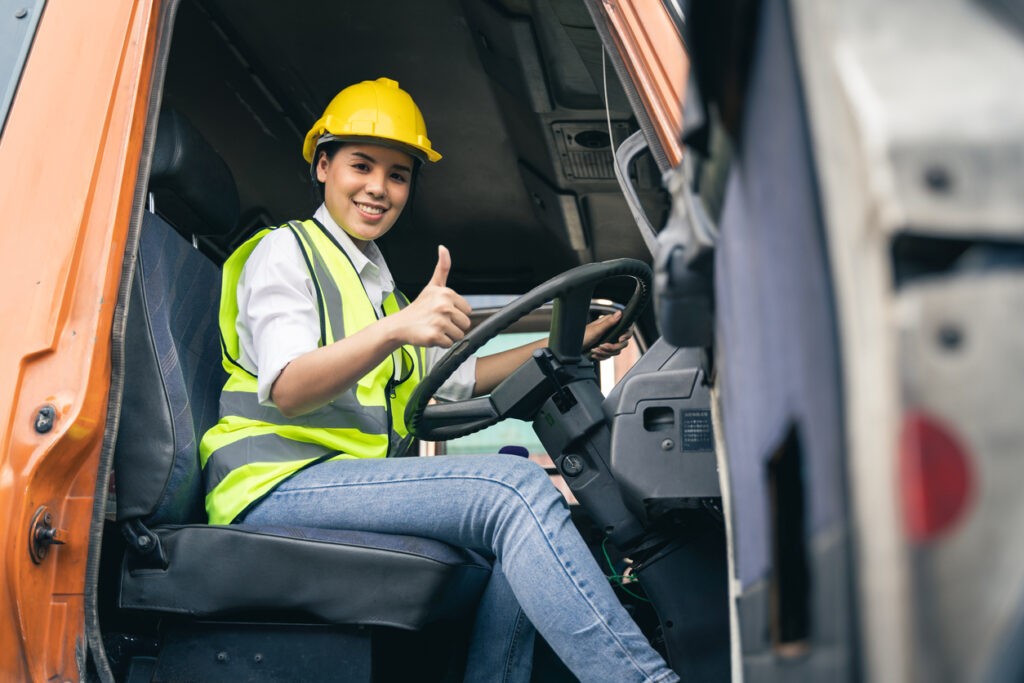
Women in Uzbekistan May Now Drive Buses and Heavy Trucks

Labor code regulations in place in Uzbekistan since 2018 that prohibited women from driving vehicles with a capacity of 2.5 tons or more, and buses with a capacity of more than 14 people, have been abolished by new rules which came into force on February 12, 2024. According to the Ministry of Transport of Uzbekistan, these changes were adopted to ensure gender equality in transportation and to attract women to jobs driving conventional buses and electric buses.

Uzbekistan is pursuing a policy of providing equal rights and opportunities for women in society and the economy. Consequently, since May 2019, a ban on women working in certain industries was lifted, though restrictions have been retained in fields such as oil and gas extraction, ferrous metallurgy, mining, construction, and installation work.

The government is also trying to create favorable conditions for women in the workplace. For example, since September 2022, women employed in the private sector have been paid maternity benefits by the state. Currently, women working for private companies receive a stipend of $160 for four months.