In June, it will be three years since the signing of a declaration at a forum held in the city of Turkestan between the heads of the Ministries of Education of Kazakhstan, Uzbekistan, Tajikistan, Turkmenistan, and Kyrgyzstan. According to the document, the Central Asian states agreed to expand cooperation and unite the scientific, intellectual, and creative potential of higher education institutions throughout the region. However, only Kazakhstan and Uzbekistan have made progress in terms of synergy during this time. The reason for this is the serious gaps between the Central Asian states in the level of provision of higher education for their citizens.
The pace of reform
In the 1990s, the reform of education in Central Asia occurred at different rates. Although the Central Asian republics had similar problems at the time of the collapse of the Soviet Union, they began to address them depending on the degree of influence of global trends.
For example, Kazakhstan signed the Bologna Declaration and joined the European Higher Education Area in 2010, while Turkmenistan switched to two-stage higher education under the “Bachelor’s – Master’s” system only in 2013.
Some started organizing English-language curricula at their universities as soon as the early 1990s, such as Kazakhstan’s KIMEP University or the University of Central Asia in Kyrgyzstan. Uzbekistan, on the other hand, only came around to the idea of the need for English-language education in the noughties.
In the 2000s, universities established jointly with foreign partners, such as the Kyrgyz-Russian Slavic University and the Kazakh-British Technical University, began to open in the region. Uzbekistan was again somewhat late to the trend, first opening the International Westminster University (a branch of the University of London) and a branch of Turin Polytechnic University. In 2014, the first university established jointly with foreign partners from South Korea – Inha University, specializing in the training of IT specialists – appeared.
Kazakhstan, Kyrgyzstan, and Uzbekistan are currently implementing reforms in the recognition of diplomas and attracting foreign employees and students, while Tajikistan and Turkmenistan are experiencing problems of a different nature related to low levels of enrollment in higher education.
Kazakhstan
Kazakhstan has been the most successful nation in reforming higher education. Degrees have been reduced to four years, and the Unified National Testing (UNT) and credit system of education appeared, creating favorable conditions for accession to the Bologna Process in 2010. By 2016, almost every second Kazakhstani was studying at a higher education institution.
Now, Kazakhstan has more than 120 universities. There are more than 600,000 students, and about 40% of Kazakhstanis are certified specialists.
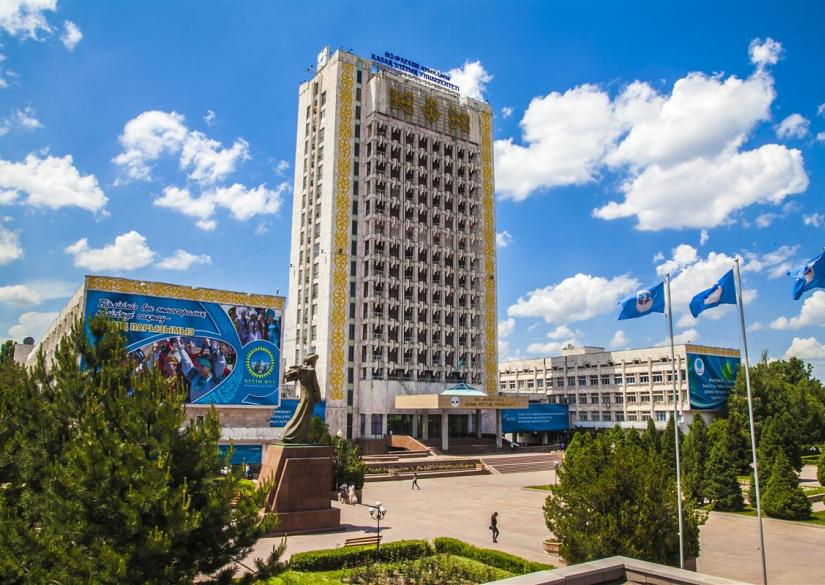
Kazakhstan’s supremacy in this arena is confirmed by international rankings. For example, the international organization, Times Higher Education included four Kazakhstani universities in its rating for 2024: the Eurasian National University named after L.N. Gumilev; Satpayev University; the Kazakh National University named after Al-Farabi; Nazarbayev University (NU). Participating in these rankings for the first time, the latter was recognized as the best in Central Asia. NU is the first university of its kind in the region, where the educational process is built on the model of an American university, combining teaching and research.
Uzbekistan
Serious reforms in higher education only became of concern in Tashkent in 2017. Since then, the country has managed to make significant progress. In 2017, Uzbekistan had 79 universities with 140,000 students, but by 2023 the number of universities in the country had almost tripled to 210. The number of students has now passed a million.
As mentioned, Tashkent bet on the English-language educational process later than its neighbors, Kazakhstan and Kyrgyzstan. The International Westminster University in Tashkent (IWUT) opened in 2002, the Singapore Institute of Management Development in 2008, and Korea’s Inha University in 2014.
In 2021, Uzbekistan drew its’ conclusions from observing processes in Kazakhstan. That year, on the initiative of President Mirziyoyev, Tashkent opened a university based on the Western model – New Uzbekistan University (NewUU). The bar was set high – to make the university a leader in Central Asia. NewUU’s partners are the Massachusetts Institute of Technology (MIT) and the Technical University of Munich. Teaching at the university is conducted entirely in English, and many professors are invited from abroad.
Kyrgyzstan
As of April, last year, there are 63 universities in Kyrgyzstan, of which 28 are state-run and 35 are non-state.
In addition, eight interstate higher education institutions with dual subordination have been established to integrate the educational systems of different countries: the Kyrgyz-Russian University mentioned above, the Kyrgyz-Uzbek University, the Kyrgyz-Turkish Manas University, the private American University of Central Asia, the Kyrgyz-Russian Academy of Education, the Oriental University, Ala-Too International University (Turkey), and the Aga Khan University.
There are more than 600,000 students in Kyrgyzstan, accounting for over 37% of the total number of young people in the republic.
At the same time, though, experts criticize Kyrgyzstan’s higher education system for its unsystematic and inconsistent policies.
“The dynamics that are observed in Kyrgyzstan – turning universities into profitable diploma enterprises; decreasing teacher salaries; and the growing demand for a university diploma as a pass to get a job – are the main factors that affect the quality of higher education,” according to Aigul Kantoro-kyzy, an economic policy specialist.
Tajikistan and Turkmenistan
The situation with higher education is far worse in these two republics. In Tajikistan, only one out of every ten school graduates can enter higher education at the expense of the state. At the same time, almost 60% of all university places are in Dushanbe, where only 9% of the population lives.
Even under these trying conditions, Tajikistan has a systemic shortage of applicants. For example, last August, Sabzaali Jafarzoda, head of the National Testing Center, reported that 59,123 applicants were enrolled for 110,940 places at secondary and higher education institutions.
“This is 53.29% of the admission plan,” he reported.
In Turkmenistan, government interference in higher education and the science has led to its degradation. During the lifetime presidency of Saparmurat Niyazov, the introduction of new teaching methods and institutes for advanced training were banned. It was possible to obtain a higher education only after working for two years after leaving school, and the time spent in higher education was reduced to two years. By Niyazov’s orders, all foreign diplomas were invalidated.
Most of these reforms were reversed after Niyazov’s death, but they still had long-term consequences: only 8% of Turkmen citizens have a higher education.
The possibility for Turkmen citizens to obtain higher education is still significantly limited – tuition is paid, and the state does not allocate any grants (as it does in Kazakhstan, for example). In addition, the cost rises significantly due to bribes to be paid to officials, and quotas for education abroad are shrinking.
Duumvirate
The unified educational space of Central Asia declared three years ago in Turkestan has so far only been created by the efforts of two states – Kazakhstan and Uzbekistan. The dynamics of cooperation between the universities of these two leading Central Asian republics is evidenced, for example, by statistics announced by the rector of the Kazakh National University, Zhanseit Tuimebaev at last year’s international conference. Therein, he reported that within the framework of mutually beneficial partnerships, KazNU has concluded cooperation agreements with universities of Central Asian states: with Turkmen – only two, with Tajik – five, with Kyrgyzstan – nine, and with Uzbekistan – 18.
In addition, only the authorities of Kazakhstan and Uzbekistan have a clear understanding of what they want from their higher education systems. Uzbekistan aims to train 300,000 IT specialists, whilst Kazakhstan is successfully introducing professional orientation for high school students to prepare them for university.
It seems that Astana and Tashkent will determine educational trends in the whole of Central Asia, in no small measure displacing Russia from the market due to the well-known geopolitical circumstances.