• KGS/USD = 0.01144 0%
  • KZT/USD = 0.00192 -0%
  • TJS/USD = 0.10866 0.18%
  • UZS/USD = 0.00008 0%
  • TMT/USD = 0.28571 0%
  • KGS/USD = 0.01144 0%
  • KZT/USD = 0.00192 -0%
  • TJS/USD = 0.10866 0.18%
  • UZS/USD = 0.00008 0%
  • TMT/USD = 0.28571 0%
  • KGS/USD = 0.01144 0%
  • KZT/USD = 0.00192 -0%
  • TJS/USD = 0.10866 0.18%
  • UZS/USD = 0.00008 0%
  • TMT/USD = 0.28571 0%
  • KGS/USD = 0.01144 0%
  • KZT/USD = 0.00192 -0%
  • TJS/USD = 0.10866 0.18%
  • UZS/USD = 0.00008 0%
  • TMT/USD = 0.28571 0%
  • KGS/USD = 0.01144 0%
  • KZT/USD = 0.00192 -0%
  • TJS/USD = 0.10866 0.18%
  • UZS/USD = 0.00008 0%
  • TMT/USD = 0.28571 0%
  • KGS/USD = 0.01144 0%
  • KZT/USD = 0.00192 -0%
  • TJS/USD = 0.10866 0.18%
  • UZS/USD = 0.00008 0%
  • TMT/USD = 0.28571 0%
  • KGS/USD = 0.01144 0%
  • KZT/USD = 0.00192 -0%
  • TJS/USD = 0.10866 0.18%
  • UZS/USD = 0.00008 0%
  • TMT/USD = 0.28571 0%
  • KGS/USD = 0.01144 0%
  • KZT/USD = 0.00192 -0%
  • TJS/USD = 0.10866 0.18%
  • UZS/USD = 0.00008 0%
  • TMT/USD = 0.28571 0%
12 December 2025

Kazakhstan Invites EU Community to Expand Participation in Joint Projects

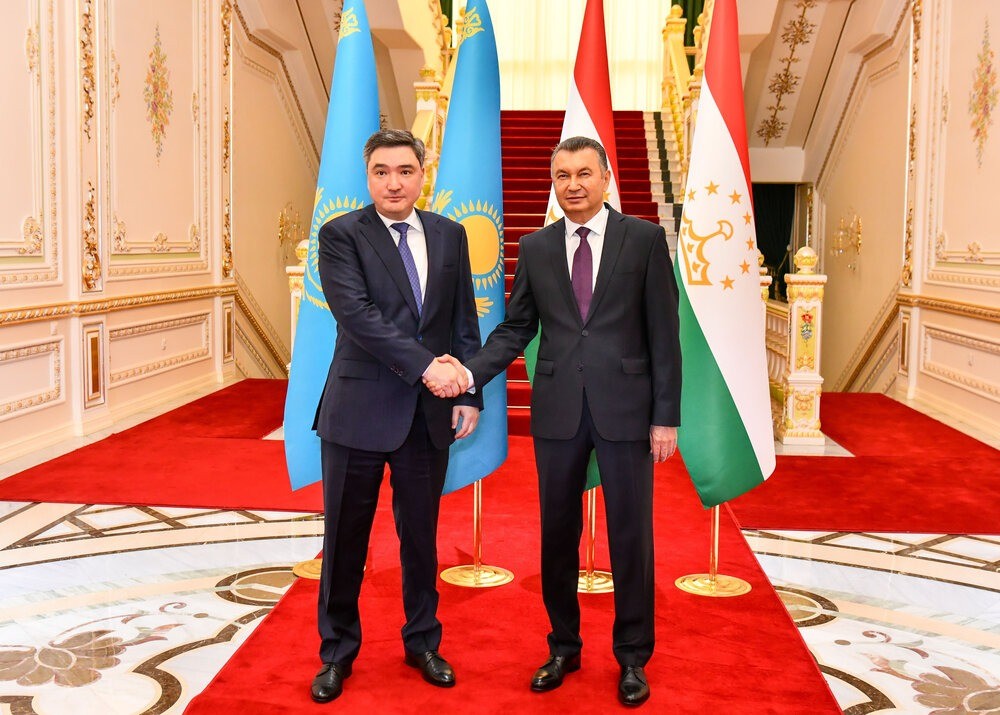
Further steps to strengthen trade and economic relations between Kazakhstan and the European Union were discussed by the Prime Minister of Kazakhstan, Alikhan Smailov, and the Vice-President of the European Commission, Margaritis Schinas on January 15th in Astana. The parties focused on issues of increasing trade turnover, attracting investment, strengthening cooperation in the transport and logistics sector, easing the visa regime, and increasing industrial cooperation, Smailov’s press service reported.

The Prime Minister stressed that strengthening relations with the EU is of particular importance for Kazakhstan, with the new Enhanced Partnership and Cooperation Agreement and the new EU Strategy for Central Asia playing a significant role in the bilateral relationship. As Smailov noted, the EU is one of the largest trade and investment partners of Kazakhstan, accounting for roughly 30% of the country’s foreign trade and 40% of investment attracted.

Trade turnover over eleven months of last year increased by almost 5%, reaching around $38 billion. In 2022, investment from the EU in Kazakhstan amounted to $12.5 billion, a record high.

“Today there are almost 6,000 joint ventures [with European partners] operating in Kazakhstan, 130 of which appeared in the past year. This highlights the sustainability and attractiveness of our economy for European partners. We call on the European investment community to expand their participation in joint projects,” Smailov stated.

The Prime Minister added that an important area of cooperation is the transit and transport sector. Today, about 85% of goods coming from China to Europe are transported through Kazakhstan. Last year, the volume of cargo shipped along the Trans-Caspian corridor increased by 65%. In the medium term, cargo traffic is expected to increase to 10 million tons.

The Vice-President of the European Commission stated that Kazakhstan is an important partner for the EU. “We know that you are undergoing major modernization processes. On behalf of the European Union, I would like to note the importance of the reforms initiated by President Kassym-Jomart Tokayev, which make Kazakhstan a very significant player in the Central Asian region,” said Schinas.

Ministry Looks to Tackle Air Pollution in Tashkent Amid Flash Mob Protest

Uzbekistan’s capital, Tashkent, has long been ranked among the worst cities in the world with the highest levels of air pollution by the international service, IQAir. In 2022, the portal ranked Tashkent as the worst in the world in terms of air pollution based on data from Uzhydromet (State Hydrometeorological Service). Tashkent is particularly prone to fine particles of PM-2.5, which is the most dangerous indicator for health, according to the World Health Organization.

On January 12th, the Ministry of Ecology, Environmental Protection and Climate Change of Uzbekistan stated that increasing levels of air pollution in Tashkent are caused by emissions from coal-burning heat and power plants, and from motor vehicles. The levels of air pollution are also due to the illegal felling of 49,000 trees and construction work being carried out without planning permission.

Another contributing factor is an increase in the amount of pollutants being emitted by vehicles, the number of which is growing rapidly. In 2021, there were 3.14 million cars, but by 2023 there were 4.6 million, an increase of 32%. On average, 730,000 vehicles are on the move in Tashkent every day, with between 160,000 to 300,000 entering the capital from the regions. Cars using A-80 gasoline, which does not meet international standards, emit more harmful substances into the atmosphere.

The burning of coal to generate electricity is also on the rise. In 2019, 3.9 million tons of coal were used; by 2022, this had increased to 5.3 million tons, and by the end of 2023 it was 6.7 million tons, the ministry stated.

The levels of air pollution are also due to the fact that Tashkent is located is surrounded by mountains, meaning the wind cannot circulate, and the polluted air is not blown away.

In order to reduce air pollution in Tashkent, the ministry proposed the following measures:

– a ban on motor fuel below the Euro-4 standard (AI-80 gasoline);

– a restriction on the movement of cargo vehicles in Tashkent weighing more than 3.5- and 12-tons during rush hour (from 07:00 to 10:00 and from 17:00 to 20:00);

– a ban on vehicles manufactured before 2010;

– providing preferential treatment and subsidies to owners of electric vehicles;

– a scheme to reduce congestion wherein vehicles with odd number plates are allowed to drive on odd days, and those with even numbers on even days;

– pedestrianized zones in the center of the city;

– the transfer of public transport to the use of electric and gas-cylinder fuel;

– a moratorium on construction except for facilities of social and state significance;

– a ban in the Tashkent region on the use of coal for industrial purposes;

– the creation of a “green belt” around the city.

Meanwhile, on the same day, activists in Tashkent staged a flash mob to protest about the state of affairs. Among those fighting for the right to life and health were eco-blogger, Mutabar Khushvaktova (Urikguli), the singer, Konsta, stand-up comedian, Mirshakar Faizullaev, bloggers Umid Gafurov and Mirzayor Erkinov, and YouTube podcast co-authors Sarvinoz Tolibayeva and Sa’dulla Abdullaev. Those in attendance expresses their fears that the government’s response may prove to be a “one-off,” when a long-term strategy is desperately needed.

On January 14th, the air in Tashkent exceeded the permissible level of pollution by 11.4 times.

Uzbekistan and Kazakhstan Among Nations Prepared to Invest in Afghanistan

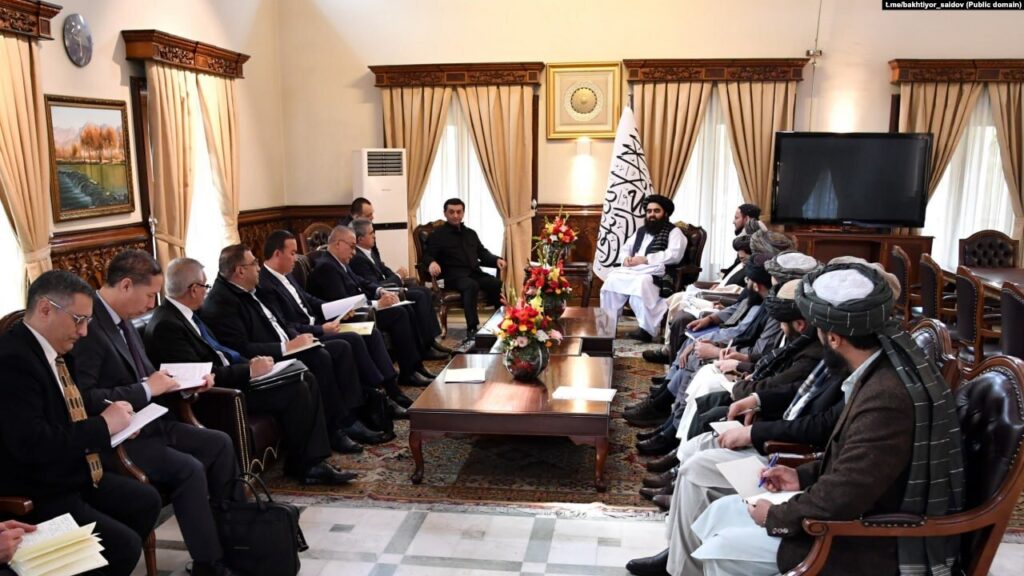
Uzbekistan and Kazakhstan, as well as Turkey, Russia, and Iran are ready to invest in Afghanistan, Taliban press secretary, Zabihullah Mujahid has told TOLOnews. A number of companies from these countries could invest in the mining and energy sectors, and the construction of hydroelectric power stations in 2024, he stated.

Mujahid said that in 2023, great work had been done to attract foreign investment, and this work will continue in 2024. This issue is currently in the negotiating stage with some companies, whilst others have already started work.

The Ministry of Economy noted that foreign investors will be provided with all necessary assistance, adding that foreign parties are ready to invest in agriculture, trade, energy, railway and infrastructure projects.

The Ministry of Industry and Trade spokesman, Okhundzoda Abdulsalam Javad also informed TOLOnews that Afghanistan’s trade turnover with Uzbekistan increased in 2023 to $266 million, up from $44 million in 2022.

Central Asian Governments Pass Comment on Election Result in Taiwan

Taiwan’s presidential election took place last Saturday, and made a lot of noise over the weekend. Many countries, including Central Asian states, such as Kazakhstan and Tajikistan, are in favor of preserving the territorial integrity of China. This became clear from the statements published by the foreign ministries of these countries:

“Turkmenistan expresses its firm support for the principle of ‘one China’ and reaffirms that the government of the People’s Republic of China is the only legitimate government representing the whole of China.” – Turkmenistan.

“The Government of the People’s Republic of China is the sole legitimate government of China, and Taiwan is an integral part of the territory of China.” – Uzbekistan.

“Recognizing Taiwan as an integral part of China’s territory, Tajikistan firmly opposes any attempts of external interference in the internal affairs of this friendly country.” – Tajikistan.

“We support the efforts of the government of the People’s Republic of China to realize the peaceful reunification of the country.” – Kazakhstan.

With 40% of the vote, the nominee of the Democratic Progressive Party, Lai Ching-te won the election, whilst the representative of the pro-Chinese National Party (Kuomintang), Hou Yu-ih secured 33.5% of the votes, and the representative of the neutral Taiwanese People’s Party, Ke Wen-je, secured 26.5%. “The election has shown the world the commitment of the Taiwanese people to democracy, which I hope China can understand,” Ching-te stated.

Interest-Free Loans for SMEs in Kyrgyzstan

The Ministry of Finance of Kyrgyzstan has published a report on the amount of interest-free loans granted to enterprises under the project, “Emergency Support to Micro, Small and Medium Enterprises” as of January 1st, 2024. The report indicates that loans of 5,921,800,000 som ($6,629,870) were granted to 8,929 entrepreneurs. This includes loans of up to 1,000,000 som ($11,196) to 7,788 entrepreneurs totaling 4,219,300,000 som ($47,238,020), and up to 3,000,000 som ($33,587) to 1,141 entrepreneurs totaling 1,702,400,000 som ($19,059,561).

The project, “Emergency Support to Micro, Small and Medium Enterprises,” which started its activities in September 2021, and will continue until June 2027, is supported and financed by the World Bank and the Asian Infrastructure Investment Bank (AIB). Several agreements with commercial banks have also been signed under the project.

Small and medium-sized businesses play a significant role in the private sector, which in turn forms the basis of Kyrgyzstan’s market economy. The main reason for this is the lack of the need for large start-up investments, and the speed of resource turnover.

Due to their scale, small businesses represent the largest layer of the economy, determining the socioeconomic and partly the political level of development within the country. They act as both direct producers and consumers of a wide range of goods and services. The small business sector operates mainly in local markets. Micro, small and medium-sized businesses account for approximately 50% of Kyrgyzstan’s GDP, and are fundamental to job creation in the country.

Organ Transplantation Developing in Kyrgyzstan

Kyrgyz President Sadyr Japarov has signed a law on the protection of citizens’ health, according to which private and state clinics can now transplant internal organs, but on one condition.

On the instructions of the President, while considering the draft law “On Protection of Citizens’ Health in the Kyrgyz Republic,” the Parliament of the Republic considered additional norms that provide for the removal of organs from a living donor, but only if the donor “is genetically related to the recipient.” According to the law, a genetic link is defined as a relationship between persons who share common ancestors up to great-grandparents.

Despite the fact that this law has not yet entered into force, last week Kyrgyz Health Minister, Alymkadyr Beishenaliev traveled to Turkey, where, according to the press center of the Ministry of Health of the Kyrgyz Republic, he took part in a liver transplant operation. He also discussed the development of bilateral Kyrgyz-Turkish cooperation on liver and bone marrow transplantation in Kyrgyzstan with the rector of the Turkish university where the operation took place. It had earlier been agreed between the presidents of the two countries agreed that Turkey will help Kyrgyzstan in this matter.

“Sadyr Japarov has set a task on the need to solve the issue of liver and bone marrow transplantation in Kyrgyzstan in a short period of time, which has not been solved for many years,” Beishenaliyev said. In turn, his Turkish counterpart noted that Turkey is ready to help Kyrgyzstan organize the work of the transplantology department, train specialists, and conduct joint operations in Bishkek on liver and bone marrow transplantations.

Liver transplant operations have been carried out in Kyrgyzstan before, with Kyrgyz doctors being assisted by colleagues from Belarus, Russia, and Turkey. Since 2016, Kyrgyz doctors have performed around fifty kidney transplant operations.

However, the law on organ transplantation which was adopted in 2001 is outdated. Kyrgyz doctors prepared additions to it, in particular on organ donation and the transplantation of bone marrow, kidneys and liver, but for about five years, the issue has stagnated. It was only in August 2023 that, for the first time, Kyrgyz doctors conducted a successful kidney transplant unaided.

In addition, equipment has now been purchased to analyze the compatibility of donor organs. Previously, patients had to travel to neighboring countries to find out if they were compatible with the donor.

If liver transplants start to be performed in Kyrgyzstan on a permanent basis, the operation will cost about $10,000. Abroad, such an operation costs $50-60,000.