• KGS/USD = 0.01144 0%
  • KZT/USD = 0.00212 0%
  • TJS/USD = 0.10456 0.19%
  • UZS/USD = 0.00008 0%
  • TMT/USD = 0.28490 0%
  • KGS/USD = 0.01144 0%
  • KZT/USD = 0.00212 0%
  • TJS/USD = 0.10456 0.19%
  • UZS/USD = 0.00008 0%
  • TMT/USD = 0.28490 0%
  • KGS/USD = 0.01144 0%
  • KZT/USD = 0.00212 0%
  • TJS/USD = 0.10456 0.19%
  • UZS/USD = 0.00008 0%
  • TMT/USD = 0.28490 0%
  • KGS/USD = 0.01144 0%
  • KZT/USD = 0.00212 0%
  • TJS/USD = 0.10456 0.19%
  • UZS/USD = 0.00008 0%
  • TMT/USD = 0.28490 0%
  • KGS/USD = 0.01144 0%
  • KZT/USD = 0.00212 0%
  • TJS/USD = 0.10456 0.19%
  • UZS/USD = 0.00008 0%
  • TMT/USD = 0.28490 0%
  • KGS/USD = 0.01144 0%
  • KZT/USD = 0.00212 0%
  • TJS/USD = 0.10456 0.19%
  • UZS/USD = 0.00008 0%
  • TMT/USD = 0.28490 0%
  • KGS/USD = 0.01144 0%
  • KZT/USD = 0.00212 0%
  • TJS/USD = 0.10456 0.19%
  • UZS/USD = 0.00008 0%
  • TMT/USD = 0.28490 0%
  • KGS/USD = 0.01144 0%
  • KZT/USD = 0.00212 0%
  • TJS/USD = 0.10456 0.19%
  • UZS/USD = 0.00008 0%
  • TMT/USD = 0.28490 0%

Bishkek Cable Car Plan Gets Mixed Reaction

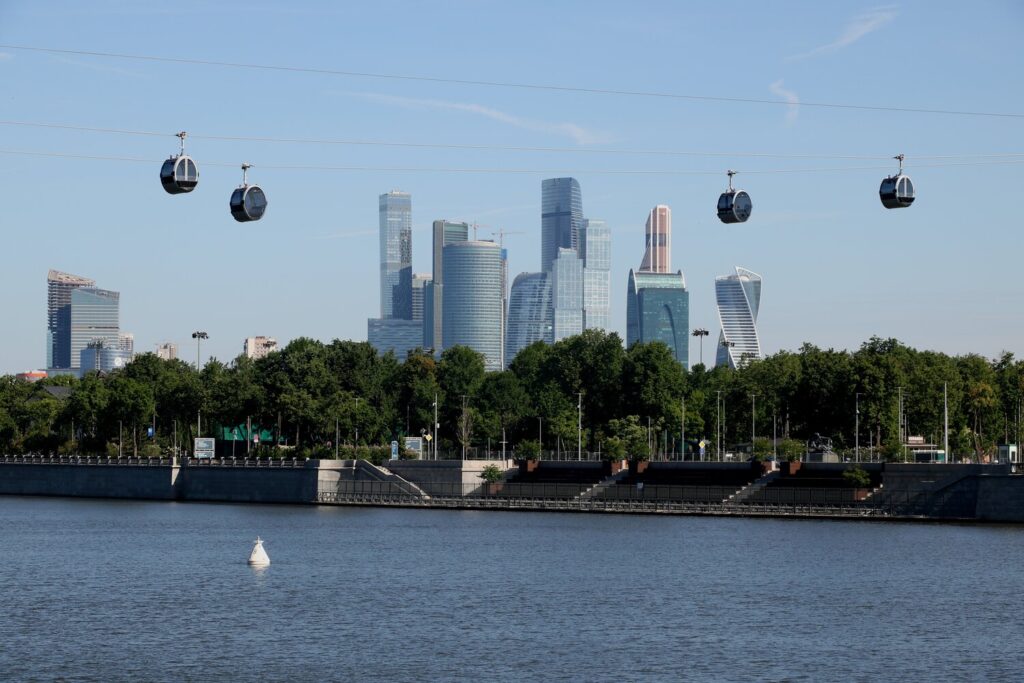
The Bishkek municipality’s plan to build a cable car line to solve transport problems in Kyrgyzstan’s capital has received a mixed response from the city residents. Many believe the proposed project is too expensive and will not achieve the declared goal of providing comfortable transport options.

In January, the Mayor of Bishkek, Aibek Junushaliev visited Switzerland to meet with Roland Bartholet, CEO of the engineering company, Bartholet Maschinenbau AG, with the parties signing an agreement and approving a plan to build a cable car line in Bishkek.

Bishkek’s Deputy Mayor, Maksatbek Sazykulov said this week that the project’s designer is expected to arrive from Switzerland late in February, that construction may begin in May or June, and the line could be in operation in the third quarter of 2025. According to the deputy mayor, the line is planned to stretch for six kilometers from north to south along a major central avenue, have five stations and 65 cars, and a daily capacity of up to 100,000 passengers. The approximate cost of the project is $50m-$60m.

Bishkek City Council member, Kadyrbek Atambayev, believes the project to build a cable car line leaves many unanswered questions. “Cable cars are usually used in areas with very rough terrain, where other modes of transport cannot function effectively. In our case, in the absence of significant natural obstacles or large water barriers inside the city, the use of a cable car line does not provide significant advantages over existing types of urban transport,” Atambayev wrote on Facebook.

Atambayev stated that the cost of construction and maintenance of the cable car line significantly exceeds the cost for city buses. “Six kilometers of cable line [would] cost of up to $60m… $100m allowed Bishkek to purchase 1,000 buses last year,” he stated.

The city of Bishkek’s press service earlier called the cable line project an important step in the modernization of urban infrastructure aimed at providing comfortable transport options for the people of the city.
Kazakhstan Seeks to Tap Huge Wind Power Potential

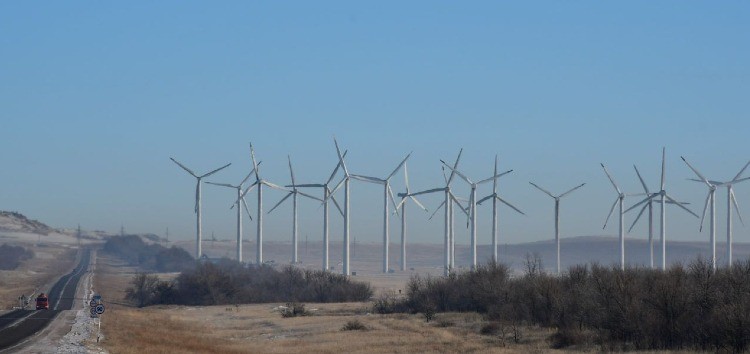
Kazakhstan may soon become one of the world leaders in wind power generation, the country’s Minister of Energy, Almasadam Satkaliev told a parliamentary commission on February 23rd. According to the minister, as the world’s ninth-largest country, Kazakhstan has significant potential for the development of the renewable energy sector, with its vast territory highly suited to wind and solar power generation.

Kazakhstan’s climate is favorable for the construction of wind power plants as the country has wind corridors with wind speeds of more than five meters per second, a requirement for the operation of turbines. Experts estimate the potential of wind energy in Kazakhstan at 920 billion kWh per year. The Caspian Region, south Kazakhstan, and the Shelek Corridor and Dzhungar Gate located in the southeast have the most potential.

The minister also noted the possibilities for the utilization of solar energy. The southern regions of the country see 2,200-3,000 hours of sun per year, among the most in the world. The best areas for solar generation are the Aral Sea region and south Kazakhstan.

In 2023, Kazakhstan consumed 115 billion kWh of electrical energy, compared with 112.9 billion kWh in 2022, and produced 112.8 billion kWh, the same amount as in 2022. Last year Kazakhstan imported 3.4 billion kWh, and exported 1.4 billion kWh. In 2024, the country plans to generate 115 billion kWh.

According to the minister, renewable energy has shown steady growth, and since 2014 its capacity has increased more than 16-fold — from 178 MW in 2014 to 2,868 MW in 2023.

In 2023, the volume of electricity generated by renewable energy facilities amounted to 6.675 billion kWh, including 3.8 billion kWh from wind power plants, 1.8 billion kWh from solar plants, and 993.8 million kWh from hydropower plants. That accounted for 5.9% of the total electricity generation in the country. Kazakhstan’s goal is to achieve a 15% share of renewable energy sources in power generation by 2030, and a 50% share by 2050.

U.S. Company to Process Medical Waste in Uzbekistan

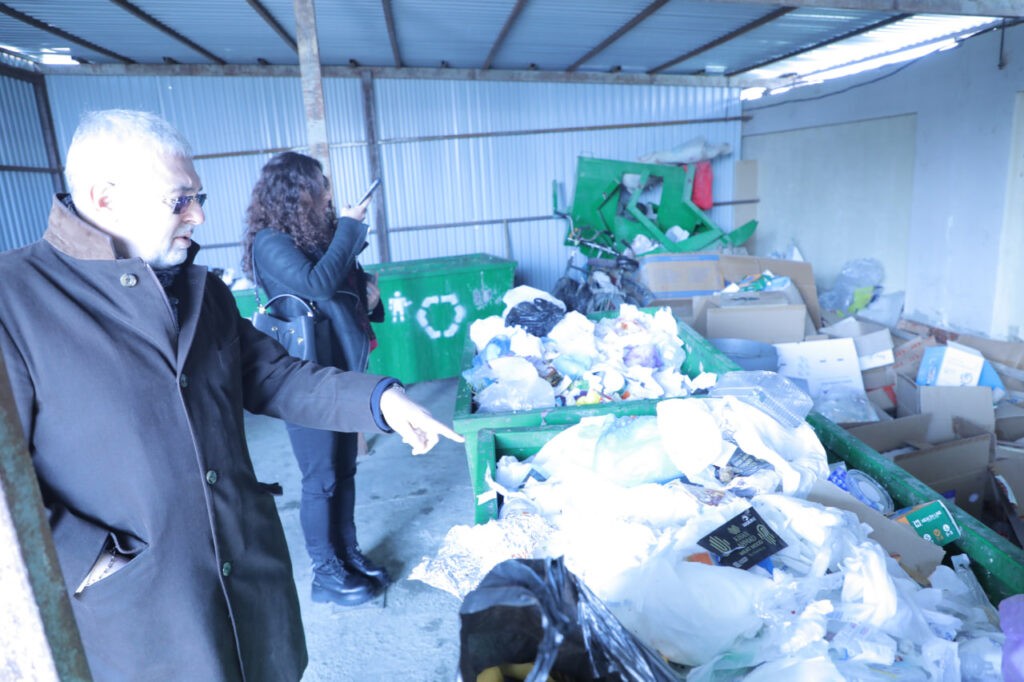
Uzbekistan’s Ministry of Ecology, Environmental Protection and Climate Change announced on February 23rd that a U.S. company, SAYAR LLC, will begin the processing of medical waste in a test mode in the city of Tashkent and the Samarkand Region.

An agreement on the project was reached with the American company following its delegation’s visit to the Samarkand Region, where company representatives inspected local medical institutions and examined the storage conditions and quantity of medical waste.

The disposal of medical waste will produce thermal energy which will be used to heat hospitals; special filters will be installed to prevent harmful emissions into the atmosphere.

Tashkent to Introduce Monthly ‘Car-Free Day’

One working day each month will now be “Car-Free Day” in the capital of Uzbekistan.

The plan is to reduce the environmental impact of vehicles and encourage people to use bicycles to get around the city. Restrictions will not apply to public transportation, or emergency vehicles. Government officials have been instructed to “set a personal example by arriving at the workplace on public transportation.”

The idea for car-free days originated in Switzerland in 1973, during a fuel crisis, before spreading to other European countries. In 1998 the European Union initiated a campaign called “In town, without my car!,” which is held from September 16 to 22 every year.

The need to reduce air pollution in Tashkent is especially acute. The Uzbek capital is among the five cities worldwide with the worst air quality — and often tops the ranking. This was the case on February 21, for example, when the content of fine particulate matter (PM2.5 measurement) in the city’s air amounted to 140.3 µg/m3 (micrograms per cubic meter) — which exceeded the WHO recommendations by a whopping 28.1 times (5 µg/m3). The public is sounding the alarm and calling on the Tashkent authorities to take urgent measures to prevent an ecological disaster.  Specialists believe that single actions are not enough to preserve clean air in big cities; comprehensive work is needed to address the root causes of the pollution.

This critical situation has prompted the government to include measures to improve the country’s ecology in the large-scale state program for implementing the “Uzbekistan-2030” strategic roadmap. For example, it plans to phase out vehicles from the capital and regional centers that do not meet Euro-5 standards by 2030, and to ban trucks weighing more than 10 tons from driving through Tashkent — except for those of the Armed Forces and municipal services.

From March 1, the population will be notified about excessive content of fine particles in the local atmosphere, and measures will be taken to protect against dust at large construction sites (500 square meters and larger) in the country. Special attention will be paid to persons with diseases of the cardiovascular system and respiratory tract.

In addition, Uzbekistan plans to abandon the production of 80-octane (AI-80) gasoline by 2026, in part to help popularize the use of electric cars and electric urban transport. Currently, the only countries that still produce AI-80 gasoline are Uzbekistan and Afghanistan. Medical experts believe that automotive exhaust is one of the main causes of lung cancer in humans. Yahye Ziyayev, Secretary General of the Uzbekistan Oncology Association, noted that “when AI-72 and AI-76 were banned in Uzbekistan, the incidence of lung cancer decreased over the course of ten years.”

Ninety-Nine Kyrgyz Citizens Brought Home From Syria

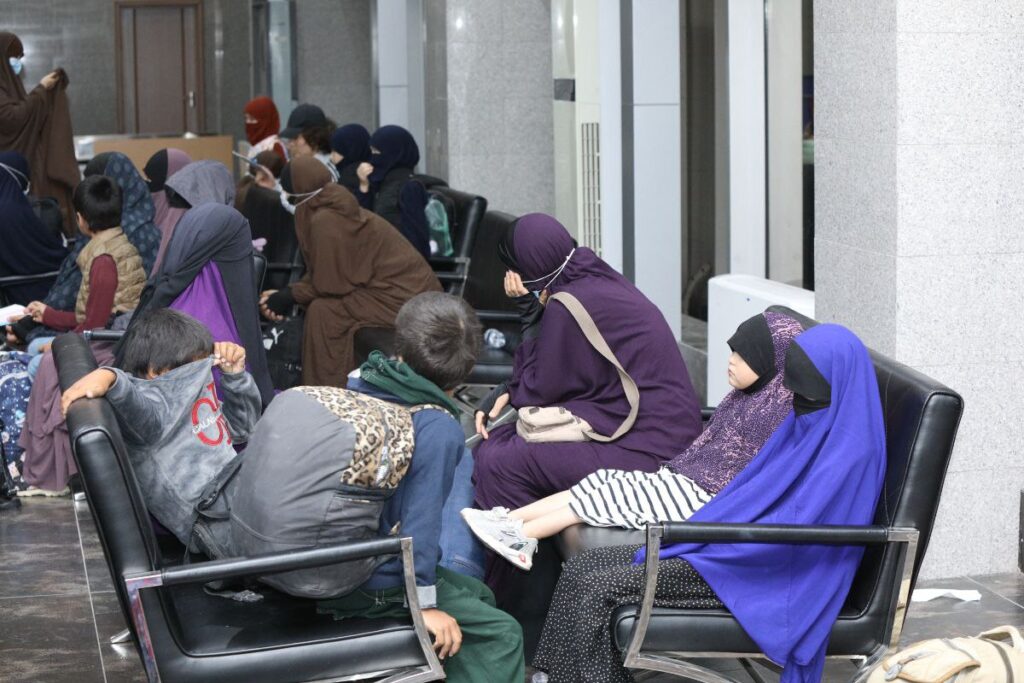
The Kyrgyz Foreign Ministry has reported that 99 citizens of Kyrgyzstan – 28 of women and 71 children – have been brought home from Syria. The mission to return them from special camps in the north-east of the country was organized with the support of the U.S. government.

The ministry said: “The Kyrgyz side expresses its special gratitude to the American side and international partners for their full assistance in the special operation and logistical support for the successful implementation of the fifth major campaign for the repatriation of citizens left in a difficult situation.”

This is the fifth mission to repatriate Kyrgyz citizens from the combat zone in Syria. The first stage of repatriation was carried out a year ago. In total, about 130 women and 300 children have returned home on special airplanes. According to authorities, all Kyrgyz arriving from Syria are being accommodated in a rehabilitation center to receive appropriate services to help them adapt to life in a peaceful environment.

According to the latest public data from Kyrgyzstan’s State Committee for National Security, more than 850 Kyrgyz have traveled to the combat zone in Syria — 150 of whom have died in fighting. Active recruitment of Kyrgyz citizens began at the beginning of the war in Syria, mainly in the south of the country, where the influence of extremist Islamic movements was strong. Both men and women were recruited.

After arriving in Syria, Kyrgyz women married jihadists and lived there, while Kyrgyz men joined militant groups. At the same time, some men returned from the ATS and recruited members for terrorist groups on the instructions of the Syrian jihadists. On many occasions Kyrgyz intelligence officers have found large quantities of banned extremist literature and propaganda materials in the possession of men who came home to recruit.

Today the Kyrgyz special services are still searching for those Kyrgyz who fought in Syria and haven’t returned home. Investigations focusing on those people are ongoing, and if it’s proven that they took part in extremist activities abroad, criminal cases will be brought against them.

Turkmenistan Again Takes First Place as World Leader of VPN Searches

The digital technologies information platform Techopedia has published data about virtual private network (VPN) usage around the world. At the end of 2023, 77% of users used a VPN for work, and 51% did so to maintain privacy on public Wi-Fi networks.

Forty-four percent did so to protect their anonymity online, while 37% used a VPN for secure communications, and 20% used it to hide their activities from authorities.

The countries whose authorities restrict human rights and freedom of speech in one way or another are in the lead in terms of online searches for VPNs. The ranking of countries where VPN use was most popular is based on Google Trends data and Freedom House’s 2023 Freedom on the Net report. Internet censorship in illiberal countries is widespread, often used as a way of suppressing opposition views, or creating a certain image of the country’s authorities. Consequently, the use of VPNs in some countries is limited or even totally illegal.

The outright leader in the world in terms of VPN searches in 2023, as it was in 2022, was Turkmenistan, where VPNs are illegal. Turkmenistan has only one authorized internet provider, Turkmentelecom, which controls the entire flow of information and blocks content undesirable to the authorities. In addition, it has the lowest Internet penetration rate in Central Asia (38.2%), one of the lowest connectivity speeds, and one of the highest prices. Turkmenistan is one of the five countries — along with Oman, North Korea, Belarus and Iraq — where the use of a VPN is prohibited.

When buying a new or used phone in Turkmenistan, buyers immediately ask staff to install a VPN for them, which can be done for about $5. However, under such restrictions, VPNs never work for long — only until the next blocking by the authorities.