• KGS/USD = 0.01144 0%
  • KZT/USD = 0.00196 -0%
  • TJS/USD = 0.10899 0%
  • UZS/USD = 0.00008 0%
  • TMT/USD = 0.28490 0%
  • KGS/USD = 0.01144 0%
  • KZT/USD = 0.00196 -0%
  • TJS/USD = 0.10899 0%
  • UZS/USD = 0.00008 0%
  • TMT/USD = 0.28490 0%
  • KGS/USD = 0.01144 0%
  • KZT/USD = 0.00196 -0%
  • TJS/USD = 0.10899 0%
  • UZS/USD = 0.00008 0%
  • TMT/USD = 0.28490 0%
  • KGS/USD = 0.01144 0%
  • KZT/USD = 0.00196 -0%
  • TJS/USD = 0.10899 0%
  • UZS/USD = 0.00008 0%
  • TMT/USD = 0.28490 0%
  • KGS/USD = 0.01144 0%
  • KZT/USD = 0.00196 -0%
  • TJS/USD = 0.10899 0%
  • UZS/USD = 0.00008 0%
  • TMT/USD = 0.28490 0%
  • KGS/USD = 0.01144 0%
  • KZT/USD = 0.00196 -0%
  • TJS/USD = 0.10899 0%
  • UZS/USD = 0.00008 0%
  • TMT/USD = 0.28490 0%
  • KGS/USD = 0.01144 0%
  • KZT/USD = 0.00196 -0%
  • TJS/USD = 0.10899 0%
  • UZS/USD = 0.00008 0%
  • TMT/USD = 0.28490 0%
  • KGS/USD = 0.01144 0%
  • KZT/USD = 0.00196 -0%
  • TJS/USD = 0.10899 0%
  • UZS/USD = 0.00008 0%
  • TMT/USD = 0.28490 0%
08 December 2025

Viewing results 1 - 6 of 106

Nazarbayev’s Nephew Returns $1.6 Billion to Kazakhstan Following Embezzlement Conviction

Kazakhstan's Anti-Corruption Service has completed an investigation into the case of Kairat Satybaldyuly, the nephew of former president Nursultan Nazarbayev. Following the investigation, around 733 billion KZT ($1.6 billion) worth of assets have been returned to the state. In September 2022, Satybaldyuly was sentenced to six years in prison for embezzling funds, and causing damage to companies such as Kazakhtelecom and CTC. In 2023, the investigation was expanded to look into into other crimes that he committed. The full investigation revealed numerous cases of legalization of illegal income and evasion of customs duties. Satybaldyuly pleaded guilty and cooperated with the investigation, allowing the return of assets in Kazakhstan and abroad. Most assets were found in Austria, Liechtenstein, the UAE, and Turkey. The recovered assets included 28.8% of shares of the national telecom operator Kazakhtelecom, assets of CTC JSC, and stakes in four companies. The state has also recovered 115 real estate objects in Kazakhstan, including buildings, apartments, and land plots. The returned assets include luxury real estate and jewellery confiscated in various countries.

Uzbekistan to Supply Extra Water to Kazakhstan for Irrigation

Kazinform has reported that following a  meeting in Astana between Kazakh  Minister of Water Resources and Irrigation, Nurzhan Nurjigitov, and Uzbek Minister of Water Management Shavkat Hamroev, Uzbekistan is to provide Kazakhstan with an additional 500 million cubic meters of water until the end of the irrigation season. Since April 1, Uzbekistan has supplied more than 4 billion cubic meters of water to Kazakhstan through the Syr Darya. It had been previously agreed that Uzbekistan would provide Kazakhstan with 3.7 billion cubic meters of water within six months but the Uzbek side fulfilled its obligation in just 4 months. The report states that the key goal was to fully satisfy the demand for irrigation water from farmers of  Kazakhstan's southern regions and today, the Shardara Reservoir holds 1.5 billion cubic meters of water, almost 500 million more than last year. A total of 4 billion cubic meters of water entered the Shardara reservoir. Commenting on the success of the project, the official representative of the Ministry of Water Resources and Irrigation of Kazakhstan, Moldir Abdualieva stated, “Due to the preliminary agreement with our neighbors on the working order of the Toktogul and Bahri-Tajik reservoirs, water regularly flows to the Kazakh part of the Dostlik interstate canal. Now, 90 cubic meters of water per second comes to the country through this channel. This is enough to fully supply the farmers of the Turkestan region with irrigation water,”

EBRD Supports Kazakhstan’s Critical Raw Materials Sector

The European Bank for Reconstruction and Development (EBRD) says it is making its first direct equity investment in the graphite and critical raw materials sector in Central Asia by acquiring a stake in Sarytogan Graphite Limited, an Australian Securities Exchange-listed company involved in the exploration of the Sarytogan graphite deposit in the Karaganda region of central Kazakhstan. The EBRD’s investment of AUD 5 million (€3 million), representing a 17.36% shareholding in the company, and will finance Sarytogan Graphite’s development program, including preparing a feasibility study and meeting its working capital needs. According to the EU's critical raw materials (CRM) classification, graphite is a CRM mineral with a wide range of applications. It is used for producing electric vehicle batteries, the electric power industry, and metallurgy. The Sarytogan graphite deposit is one of the largest known graphite deposits in the world, with the potential to become one of the main suppliers of natural graphite in the region and beyond. The project aligns with the EU-Kazakhstan strategic partnership on raw materials, batteries, and renewable hydrogen. According to the country's Ministry of Industry and Construction, Kazakhstan produces 19 of the 34 critical raw materials listed by the European Union. Kazakhstani manufacturers currently supply the European market with metal and chemical products, including beryllium, tantalum, titanium, phosphorus, and ammonium metavanadate. Kazakhstan is among the world’s ten largest copper producers. It has the potential to produce battery raw materials such as nickel, cobalt, manganese, and lithium, which are essential for producing electric vehicles.

Kyrgyzstan and Tajikistan to Test Facilities Prior to Launch of CASA-1000

On August 9, Ministers of Energy of Kyrgyzstan and Tajikistan agreed to a plan to test overhead lines, transformers, and substations prior to launching the Central Asia-South Asia (CASA-1000) electricity transmission project, scheduled for completion by the end of 2024. The construction of a 500 kV transmission line with a length of 456 kilometers is now nearing completion in Kyrgyzstan. All of the supports have been installed and 428 km of the 456 km of the transmission line have been strung. The remaining section will be finished before the end of August 2024. The CASA-1000 project aims to connect the energy systems Kyrgyzstan and Tajikistan with those of Afghanistan and Pakistan and through the new infrastructure, transport 1,300 megawatts of surplus electricity from Central Asia to high-demand electricity markets in South Asia. With spring and summer rainfall and significant water flow from the mountains, hydropower-rich Kyrgyzstan and Tajikistan produce surplus electricity during the summer. At the same time, neighboring South Asia, Afghanistan and Pakistan experience chronic electricity shortages, especially during the summer months. By connecting the four countries through a shared electricity transmission system, Kyrgyzstan and Tajikistan can sell clean hydropower-produced surplus electricity in the summer months to Afghanistan and Pakistan.

Turkmen Students To Be Able to Apply for British Scholarships

The British Embassy in Turkmenistan has announced the opening of applications for the Chevening Scholarship program for the 2025-2026 academic year. The scholarship, funded by the UK government, gives Turkmen students a unique opportunity to earn a Master's degree at leading British universities within one year. The Chevening program covers many specialties, and the scholarship covers all tuition, accommodation, and transportation costs, allowing students to focus fully on their studies. Candidates wishing to participate in the program must be at the beginning or middle stage of their professional career, and have an excellent command of English. Chevening provides young professionals in Turkmenistan with an opportunity to enhance their qualifications, gain invaluable learning experience at one of the world's leading universities, and broaden their professional horizons.

Inland Water Transportation in Kazakhstan

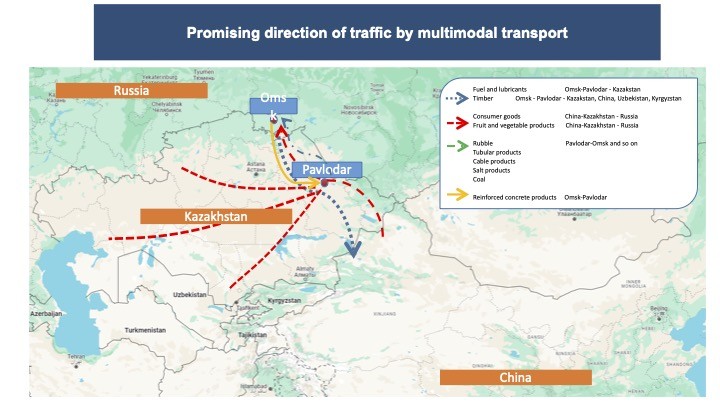
Kazakhstan’s inland waterways run to 4,302 km with an infrastructure that includes inland ports in Atyrau and Pavlodar, along with small cargo wharves and docks with access roads and ferry lines. Inland navigation is concentrated in the Ural-Caspian, Ili-Balkhash, and Irtysh river basins, and the Irtysh River is navigated via three locks at Bukhtarma, Ust-Kamenogorsk, and Shulbinsk. As such, Kazakhstan's inland waterways have great potential. Transporting cargo and passengers by ship is cheaper and more environmentally friendly than overland alternatives and has a significant multiplier effect on the development of  recreation and tourism in surrounding areas. However, there are a number of challenges to realizing this potential, including the unsatisfactory condition of navigable routes, an insufficient amount and high wear of coastal infrastructure, the state of the inland fleet and waterway locks, and a shortage of specialists. Over time, the Kazakh government's lack of proper attention to developing inland waterways has translated into falling transportation volumes along the country’s main navigable rivers. In turn, the lower handling volumes have led to a dearth of funds to update and repair port facilities, along with a deterioration of coastal infrastructure on navigable waterways, industrial ships, and waterway locks. In the last five years, Kazakhstan’s inland waterway fleet has decreased from 171 to 150 vessels. Meanwhile, 70% of those in operation are past their service life, while the existing coastal infrastructure is unable to process modern types of cargo at the pace required by the market. As reported by  Kazakhstan’s statistics agency, in the first half of 2024, 156,300 tons of cargo and 74,200 passengers travelled  on inland waterways, down 40.8% and 40.1%, respectively, from the same period last year. A key problem lies in the lack of a comprehensive analysis of the classification and volume of cargo carried through inland waterways. Current developments in shipping are focused around the Irtysh, home to the inland fleet and the main cargo base from which crushed stone is exported to Russia. On the Russian side, plans are in place to further increase shipped imports of both stone and other inert materials, alongside a proposal to import timber to Kazakhstan from Khanty-Mansiysk. The shipment of petroleum products to Chinese refineries from Kazakh and Russian plants is also being explored in tandem with the Chinese side sending back construction materials and consumer goods. At the initial stage, the volume of cargo transportation along the Irtysh is estimated at 350,000-400,000 tons a year, which could be ramped up to 1.5 million tons in the future. Experts note the important role of a strategic task set by the government to develop the transit logistics of integrating inland waterways into the multimodal logistics chain. This is especially relevant amid congestion on Kazakhstan’s railways and roads, the gravitation of export-import cargo to the transport system, and energetic discussions on developing the Russia-Kazakhstan-China transit corridor using the Irtysh. The project entails shipping cargo via the river to Lake Zaysan where reloaded onto trains, it continues its journey through a new Maykapshagay–Jeminay border...