• KGS/USD = 0.01144 0%
  • KZT/USD = 0.00198 -0%
  • TJS/USD = 0.10901 0%
  • UZS/USD = 0.00008 0%
  • TMT/USD = 0.28490 0%
  • KGS/USD = 0.01144 0%
  • KZT/USD = 0.00198 -0%
  • TJS/USD = 0.10901 0%
  • UZS/USD = 0.00008 0%
  • TMT/USD = 0.28490 0%
  • KGS/USD = 0.01144 0%
  • KZT/USD = 0.00198 -0%
  • TJS/USD = 0.10901 0%
  • UZS/USD = 0.00008 0%
  • TMT/USD = 0.28490 0%
  • KGS/USD = 0.01144 0%
  • KZT/USD = 0.00198 -0%
  • TJS/USD = 0.10901 0%
  • UZS/USD = 0.00008 0%
  • TMT/USD = 0.28490 0%
  • KGS/USD = 0.01144 0%
  • KZT/USD = 0.00198 -0%
  • TJS/USD = 0.10901 0%
  • UZS/USD = 0.00008 0%
  • TMT/USD = 0.28490 0%
  • KGS/USD = 0.01144 0%
  • KZT/USD = 0.00198 -0%
  • TJS/USD = 0.10901 0%
  • UZS/USD = 0.00008 0%
  • TMT/USD = 0.28490 0%
  • KGS/USD = 0.01144 0%
  • KZT/USD = 0.00198 -0%
  • TJS/USD = 0.10901 0%
  • UZS/USD = 0.00008 0%
  • TMT/USD = 0.28490 0%
  • KGS/USD = 0.01144 0%
  • KZT/USD = 0.00198 -0%
  • TJS/USD = 0.10901 0%
  • UZS/USD = 0.00008 0%
  • TMT/USD = 0.28490 0%
08 December 2025

Viewing results 1 - 6 of 106

Kazakhstan Deepens Caspian Ports to Boost Middle Corridor Potential

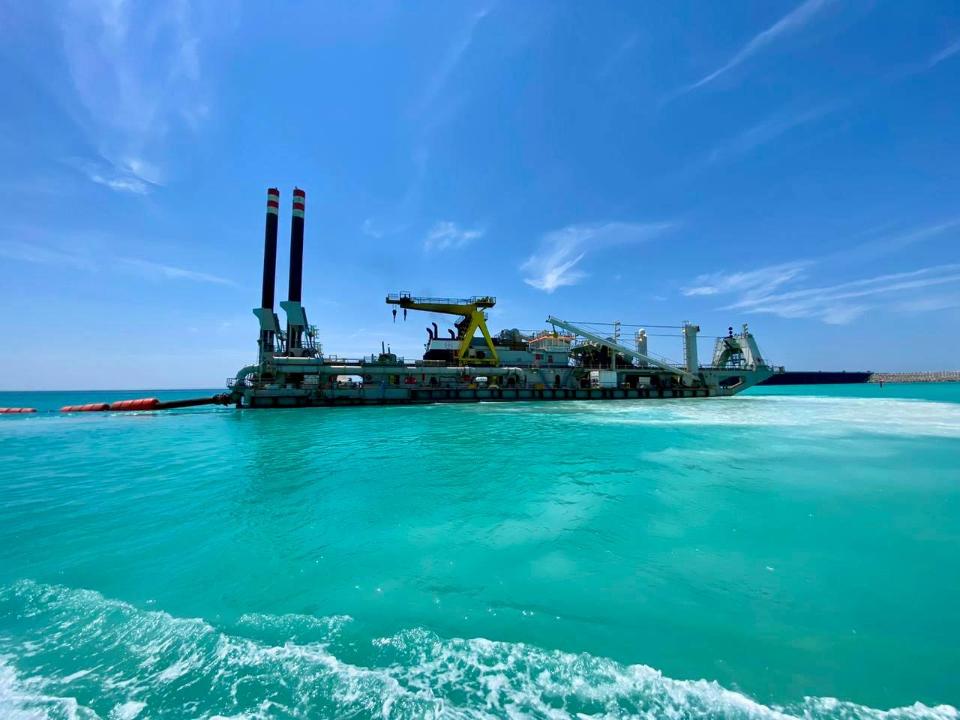
To further increase the potential of the Trans-Caspian International Transport Route (TITR), the Kazakh Ministry of Transport has begun dredging the port of Kuryk to provide sufficient depth for ships to enter the harbour. Specialized equipment to deepen the port by approximately 1.5-2 meters, has been supplied by Jan de Nul, a European company contracted to complete dredging works on a turnkey basis. Dredging Kuryk's port will allow for the further expansion of its terminal capacity which currently has provision for  6 million tons of cargo (railway terminal—4 million tons, automobile terminal—2 million tons). The port can also simultaneously accommodate 250 trucks. Similar dredging works will also be carried out in the port of Aktau. The project is part of the comprehensive measures to develop the Trans-Caspian International Transport Route, also known as the Middle Corridor, which will connect China and Europe via Central Asia and the Caucasus. According to the Kazakh Ministry of Transport, the volume of cargo transportation through Kazakhstan along the TITR for the  first seven months this year increased by 62%; amounting to 2.5 million tons, compared to 1.6 million tons in the same period in 2023.

Central Asia to Forecast Energy Risks

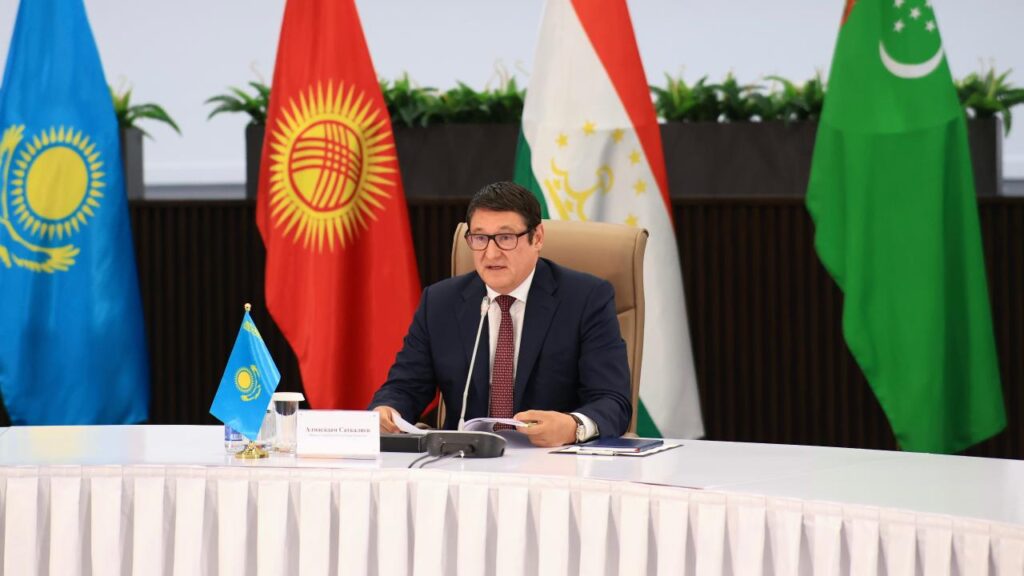
On August 6, Astana hosted the first meeting of energy ministers of Central Asian states, chaired by Kazakhstan’s Minister of Energy Almasadam Satkaliyev. Noting the considerable potential for developing energy cooperation between the five Central Asian countries, Minister Satkaliyev stated that today, the challenges faced by the Central Asian countries include global disruptions of the stability of energy supplies and fluctuations in oil and gas prices. "To ensure the reliability of energy supplies, it is necessary to develop mechanisms for forecasting and managing these challenges and to strengthen cooperation between our countries," ventured Satkaliyev. Calling on his colleagues to strengthen cooperation in energy trade, speed up low-carbon development, and move towards achieving carbon neutrality, the minister stressed, "An important factor in the development of regional cooperation is the comprehensive attraction of investments and the implementation of large joint technological projects in the energy sector to stimulate the development of modern energy infrastructure in Central Asian countries." Satkaliyev added that Kazakhstan is currently progressing the implementation of a large-scale project in the development and transmission of green energy with Azerbaijan and Uzbekistan, as well as continuing discussions on the planned construction of a central hydroelectric power plant, Kambarata HPP-1, with Kyrgyzstan and Uzbekistan. Following the meeting, the Central Asian energy ministers signed a communiqué, laying the foundation for further cooperation in all key energy areas between the countries.

Tajikistan Aims to Employ AI to Achieve 5% of GDP by 2040

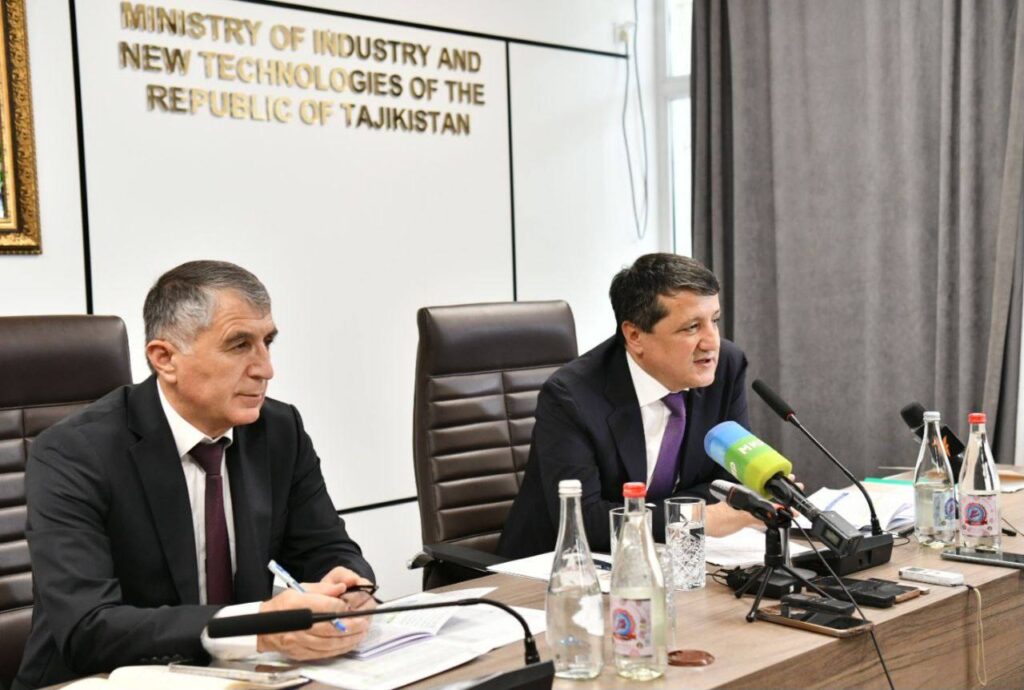
As previously reported by TCA, Tajikistan is the only Central Asian country with a national strategy for the development of AI. In 2022, President Emomali Rahmon signed off a national strategy to achieve 5% of the GDP from developing artificial intelligence by 2040. On August 1, the Minister of Industry and New Technologies of Tajikistan, Sherali Kabir, announced at a press conference  that work had begun in securing the first patent for the artificial intelligence algorithm 'zGAN' , developed by the local research laboratory of Tajikistan, and stated: “At a time when two-thirds of the world’s countries have yet to develop their national AI strategies, these steps highlight Tajikistan’s ambition to take a key position in technology and innovation." Referencing Tajikistan's progress in the field, Azizjon Azimi, chairman of the Council on AI under the Ministry of Industry, said more than 300 experts had been trained in artificial intelligence and its applications in the economy were expanding. "The leading case is using 'zGAN' algorithms for credit scoring. More than 30 banks in over ten countries have already implemented this algorithm by the Tajik fintech zypl.ai, which automatically issued loans worth over $200 million. To date, zypl.ai has attracted more than $3 million in private direct investment in the development of AI in Tajikistan." Azimi emphasized that in addition to the impact of 'zGAN' in the economic sphere, plans are in place for its application in agriculture, industry, and healthcare. He also reiterated that an agreement had been signed to develop AI programs for the Emirate of Ras al-Khaimah based on Tajikistan's national AI development strategy.

SCO and Afghanistan on the Cusp of a New Relationship

The hype surrounding the recent summit of the Shanghai Cooperation Organization Council of Heads of State in Astana has died down, and the expert community has offered differing takeaways, with some experts optimistic and others cautious. Few, however, have considered what new this summit delivered on Afghanistan. In general, what is the role of the Shanghai Cooperation Organization (SCO) in resolving the political issues around long-suffering Afghanistan and rebuilding its economy? Despite the SCO’s previous hands-off approach to Afghan affairs, the issue of Taliban-ruled Afghanistan was raised for the first time at the highest level of the SCO in Astana, which gives hope that the organization will expand its role. In their remarks, almost every SCO head of state touched on Afghanistan in essentially the same vein, stating the need for peace, stability and security, while underlining the fact that Afghanistan is an integral part of Central Asia. Indeed, Afghanistan was mentioned in the final declaration of the Astana summit, with Member States “reaffirming their commitment to asserting Afghanistan as an independent, neutral and peaceful state free from terrorism, war, and narcotic drugs [and voicing] their readiness to support the international community’s efforts to facilitate peace and development in that country.” At the same time, there was a clear message to the Taliban that “the establishment of an inclusive government involving multiple representatives of all ethnic and political groups of Afghan society is the only way toward attaining lasting peace and stability in that country.” These statements represent a rather big step, considering that previously the SCO failed to find a consensus on Afghanistan and develop its own mechanisms to interact with Kabul. The creation of the SCO-Afghanistan Contact Group back in 2005 was rather a spontaneous reaction to the US-led coalition's Operation Enduring Freedom in the wake of the 9/11 terrorist attack. The SCO itself says the contact group was created because of the "concerns of the SCO countries about the negative development of the situation in Afghanistan and the intention of the SCO to establish a specific consultative dialogue with Kabul." While the contact group included the members’ permanent representatives to the SCO, only a few events were ever held. Indeed, interest in the contact group was only really apparent from the Afghan side, which was looking for SCO assistance in rebuilding the Afghan economy and SCO participation in implementing various energy and transport infrastructure projects and creating favorable conditions for Afghan goods to access the markets of SCO countries. However, none of this was realized. The SCO states preferred, as they still do, to conduct relations with Afghanistan bilaterally, and did not support the efforts of the SCO Secretariat to intensify the work of the contact group. In 2010, Uzbekistan directly indicated its interest in building relations with Afghanistan exclusively on a bilateral basis and stated that it would no longer take part in the contact group. In June 2012, Afghanistan’s application for SCO observer status was granted. Yet this step was more symbolic and failed to...

Japan to Offer Aid to Central Asia

Japanese Prime Minister Fumio Kishida is set to announce an economic aid package for Central Asia. According to The Japan Times, details will be revealed during the Japanese prime minister's meeting with heads of  the five Central Asian states during his visit to Uzbekistan, Kazakhstan, and Mongolia from August 9 to 12. Tokyo is seeking to strengthen ties with the region by helping to create a trade route across the Caspian Sea that would link Central Asia and Europe, bypassing Russia. According to the Japanese government, the initiative will reduce the heavy influence of both Russia and China on the region and afford Central Asia economic independence. Kishida is expected to announce the economic support package in a joint statement following the six-party summit in Kazakhstan on  implementing a new trade route, helping to decarbonize the economy, and promoting people-to-people exchanges. Japanese companies will also help Kazakhstan and other Central Asian countries reduce their dependence on coal by providing technology and loans to develop natural gas production and processing. In exchange, the Central Asian states will send skilled labor to Japan.

China to Invest in Electric Scooter Production in Uzbekistan

The Chinese company ECOMOTO has announced plans to become a joint producer of electric scooters in the Yangiyul district of Uzbekistan. A memorandum was signed at a meeting between Odiljon Ataullayev, hokim of Yangiyul district and investors whereby the project will be funded by direct foreign investment of 10 million dollars and create 50 jobs. The production of modern, competitively-priced electric scooters is expected to begin in the second quarter of 2025. A metal construction plant, built by the Chinese company Da Fu which recently started operating near Yangiyul, will produce up to 500 tons of products per year.