• KGS/USD = 0.01144 0%
  • KZT/USD = 0.00200 0%
  • TJS/USD = 0.10553 -0.19%
  • UZS/USD = 0.00008 0%
  • TMT/USD = 0.28571 0.28%
  • KGS/USD = 0.01144 0%
  • KZT/USD = 0.00200 0%
  • TJS/USD = 0.10553 -0.19%
  • UZS/USD = 0.00008 0%
  • TMT/USD = 0.28571 0.28%
  • KGS/USD = 0.01144 0%
  • KZT/USD = 0.00200 0%
  • TJS/USD = 0.10553 -0.19%
  • UZS/USD = 0.00008 0%
  • TMT/USD = 0.28571 0.28%
  • KGS/USD = 0.01144 0%
  • KZT/USD = 0.00200 0%
  • TJS/USD = 0.10553 -0.19%
  • UZS/USD = 0.00008 0%
  • TMT/USD = 0.28571 0.28%
  • KGS/USD = 0.01144 0%
  • KZT/USD = 0.00200 0%
  • TJS/USD = 0.10553 -0.19%
  • UZS/USD = 0.00008 0%
  • TMT/USD = 0.28571 0.28%
  • KGS/USD = 0.01144 0%
  • KZT/USD = 0.00200 0%
  • TJS/USD = 0.10553 -0.19%
  • UZS/USD = 0.00008 0%
  • TMT/USD = 0.28571 0.28%
  • KGS/USD = 0.01144 0%
  • KZT/USD = 0.00200 0%
  • TJS/USD = 0.10553 -0.19%
  • UZS/USD = 0.00008 0%
  • TMT/USD = 0.28571 0.28%
  • KGS/USD = 0.01144 0%
  • KZT/USD = 0.00200 0%
  • TJS/USD = 0.10553 -0.19%
  • UZS/USD = 0.00008 0%
  • TMT/USD = 0.28571 0.28%
20 February 2026

Viewing results 1 - 6 of 46

U.S. Expands Visa Bond Policy for Kyrgyzstan, Tajikistan and Turkmenistan

The United States has expanded a visa bond policy that increases the upfront cost of short-term travel for citizens of Kyrgyzstan, Tajikistan, Turkmenistan, and dozens of other countries. Under the policy, applicants for B-1 and B-2 business and tourism visas may be required to post bonds of $5,000, $10,000, or $15,000. The State Department set out the latest rules and the country list on its visa bond policy page. The program now covers nationals from 38 countries. In Central Asia, it was applied to Turkmenistan on January 1, and is scheduled to extend to Kyrgyzstan and Tajikistan starting from January 21. The bond is refundable when travelers follow visa terms and leave on time, but it can tie up large sums for the duration of a trip and may put U.S. travel beyond reach for many applicants. Turkmenistan, where emigration is tightly controlled, sees low numbers of its citizens entering the United States. Department of Homeland Security data for Fiscal Year 2024 indicates that the total number of Turkmen nationals issued B-1/B-2 visas to the U.S. was 1,759. Tajikistan, meanwhile, saw 1,772 visas granted, and Kyrgyzstan 9,625. By way of comparison, Saudi Arabia saw over 54,000 visas granted. The expansion has already triggered public pushback in Kyrgyzstan. In a post on X on Thursday, Edil Baisalov, the deputy chairman of Kyrgyzstan’s Cabinet of Ministers and a prominent ally of President Sadyr Japarov, urged the Kyrgyz authorities to review visa-free access for U.S. citizens. Kyrgyzstan currently allows U.S. travelers to enter without a visa for stays of up to 30 days. “I believe that we should initiate a review of our visa-free regime for U.S. citizens following the new visa requirements announced yesterday by the State Department, under which Kyrgyz citizens are required to pay a visa deposit of up to $15,000 when submitting visa applications,” Baisalov wrote. “Visa policy is a matter of parity and mutual respect. If such high barriers are introduced for our citizens, we cannot pretend that nothing has happened.” Baisalov did not specify precisely what changes Kyrgyzstan might pursue, and any escalation risks provoking a dispute with a far stronger partner. The remarks also come as Kyrgyzstan and other Central Asian governments seek closer engagement with President Donald Trump’s administration while managing competing pressures from Russia and China. The measure is a setback for Kyrgyz efforts to ease travel barriers with the United States. Kyrgyz Foreign Minister Zheenbek Kulubaev raised visa issues with U.S. Deputy Secretary of State Christopher Landau during a meeting on the sidelines of the U.N. General Assembly in New York in September. So far, Tajikistan has not matched Kyrgyzstan’s public stance, with no prominent statement appearing on Tajik government channels addressing the bond requirement or signaling reciprocity. Discussion has instead focused on what the new U.S. rules mean for applicants, the implementation timeline, and the bond amounts that may be set at the interview stage. For Turkmenistan, the requirement adds another hurdle to an already narrow path to U.S. travel. The country’s...
Kyrgyz Official Concerned Over “High Barriers” in U.S. Visa Bond Policy

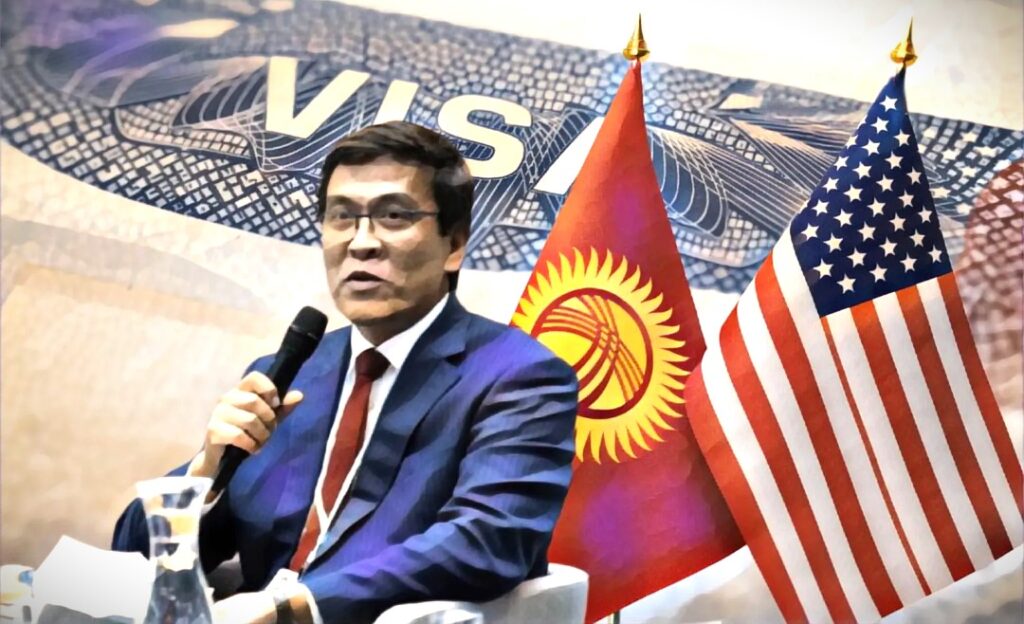
Kyrgyzstan should review its visa-free system for American citizens after the United States expanded its visa bond policy to include the Central Asian country, according to a senior Kyrgyz official who said there should be “mutual respect.” The suggestion that there should be some reciprocity following the U.S. measure came from Edil Baisalov, deputy chairman of Kyrgyzstan´s Cabinet of Ministers and a prominent ally of President Sadyr Japarov. Currently, U.S. travelers to Kyrgyzstan can stay for up to 30 days without obtaining a visa. “I believe that we should initiate a review of our visa-free regime for U.S. citizens following the new visa requirements announced yesterday by the State Department, under which Kyrgyz citizens are required to pay a visa deposit of up to $15,000 when submitting visa applications,” Baisalov said on X on Thursday. “Visa policy is a matter of parity and mutual respect. If such high barriers are introduced for our citizens, we cannot pretend that nothing has happened.” However, he did not offer any analysis about what, if any, changes should be made to the visa-free system for U.S. visitors. Any visa dispute with the far more powerful United States could be risky for Kyrgyzstan, which has meanwhile joined with other Central Asian countries in trying to develop closer ties to the administration of U.S. President Donald Trump. Nationals from 38 countries, including Kyrgyzstan, Tajikistan and Turkmenistan, are subject to visa bonds under the U.S. State Department policy, which is part of a wider crackdown on immigration. The policy took effect for citizens from Turkmenistan on January 1 and will be implemented for nationals from Kyrgyzstan and Tajikistan starting on January 21. “Any citizen or national traveling on a passport issued by one of these countries, who is found otherwise eligible for a B1/B2 visa, must post a bond for $5,000, $10,000, or $15,000.  The amount is determined at the time of the visa interview,” the State Department said. B-1 (business) and B-2 (tourism) refer to non-immigrant visas for people who want to stay temporarily in the U.S. Visa holders who have posted bond are also required to enter the United States via designated international airports, including seven in the U.S. and two in Canada. The U.S. visa bond policy is a setback for Kyrgyzstan, which had previously appealed to the United States to relax its visa requirements. Kyrgyz Foreign Minister Zheenbek Kulubaev raised the issue during a meeting with U.S. Deputy Secretary of State Christopher Landau on the sidelines of the U.N. General Assembly in New York in September.

U.S. Adds Turkmenistan to Visa Bond List, Raising Entry Costs for Travelers

The Trump administration has added seven countries, including Turkmenistan, to a list requiring some visa applicants to post bonds of up to $15,000 to enter the United States, according to a notice published on the U.S. State Department’s travel website. The measure took effect on January 1. The newly designated countries are Bhutan, Botswana, the Central African Republic, Guinea, Guinea-Bissau, Namibia, and Turkmenistan. With these additions, the total number of countries subject to the bond requirement has risen to thirteen, most of them in Africa. As reported by the Associated Press, the policy applies to passport holders from the listed countries seeking certain non-immigrant visas who are considered at higher risk of overstaying. According to U.S. officials, the bonds, ranging from $5,000 to $15,000, are intended to ensure compliance with visa conditions. The State Department has stated that the requirement is designed to encourage timely departure from the U.S. Payment of the bond does not guarantee visa issuance; if a visa is denied, or if the applicant complies with all visa terms, the bond is refunded. The policy is part of a broader tightening of U.S. entry rules under President Donald Trump. Recent changes include mandatory in-person interviews for most visa applicants, expanded disclosure of social media histories, and more detailed reporting of personal travel and residency records. For Turkmenistan, the move marks a shift in U.S. policy. Although the six-month suspension on issuing new U.S. visas to Turkmen citizens has been partially lifted, access to the U.S. has, in practice, become significantly more restricted. Heightened scrutiny and increased financial requirements have sharply narrowed the pool of applicants eligible for tourist and business visas. In effect, travel to the U.S. is now largely limited to a small segment of Turkmen citizens who can demonstrate sufficient financial means and meet stricter security and compliance criteria. As a result, the formal easing of visa restrictions has not translated into broader mobility but instead introduced new filtering mechanisms. A similar approach has previously been observed in Turkmenistan’s outbound travel policies. According to turkmen.news, Turkmen travel agencies require a security deposit of $500 when arranging 60-day visas to the United Arab Emirates. The measure is intended to offset fines imposed if travelers fail to leave the UAE after their visa expires. In December of last year, The Times of Central Asia reported that the United States had lifted its suspension on the entry of Turkmen citizens holding non-immigrant visas. That suspension had been imposed under a June executive order signed by President Trump that restricted entry from nineteen countries. A subsequent order expanded controls on nations the White House said had serious deficiencies in screening and vetting procedures, paving the way for measures such as the visa bond requirement. Tajikistan and Kyrgyzstan were also added to the U.S. list. Restrictions on citizens of these countries are set to take effect on January 21, 2026. In July of last year, the U.S. State Department imposed additional restrictions on the issuance of B-1/B-2 visas for Kyrgyz...

The Silk Visa Deadlock: The Long Road to a Borderless Central Asia

The year 2025 will likely be remembered as a milestone in Central Asian diplomacy. Regional leaders signed landmark agreements on water and energy cooperation and launched major investment projects. At high-level meetings, Central Asian presidents emphasized a new phase of deeper cooperation and greater unity, highlighting strategic partnership and shared development goals. But at ground level, at border crossings such as Korday between Kazakhstan and Kyrgyzstan, or the congested diversion routes replacing the closed Zhibek Zholy checkpoint, the picture is far less seamless. Long queues, heightened scrutiny, and bureaucratic delays remain the norm. While political rhetoric celebrates unity, the reality on the ground tells a different story. The region’s physical borders remain tightly controlled. A key symbol of unrealized integration is the stalled “Silk Visa” project, a proposed Central Asian version of the Schengen visa that would allow tourists to travel freely across the region. The project has made little headway, with experts suggesting that, beyond technical issues, deeper concerns, including economic disparities and security sensitivities, have played a role. Silk Visa: A Stalled Vision Launched in 2018 by Uzbekistan and Kazakhstan, the Silk Visa was envisioned as a game-changer for regional tourism and mobility. Under the scheme, tourists with a visa to one participating country could move freely across Central Asia, from Almaty to Samarkand and Bishkek. Seven years on, the project has yet to materialize. Official explanations point to the difficulty of integrating databases on “undesirable persons.” But as Uzbekistan’s Deputy Prime Minister acknowledged earlier this year, the delay stems from the need to harmonize security services and create a unified system. Experts also cite diverging visa policies and resistance from national security agencies unwilling to share sensitive data. As long as each country insists on determining independently whom to admit or blacklist, the Silk Visa will remain more aspiration than policy. Economic Imbalance: The Silent Barrier The most significant, albeit rarely acknowledged, hurdle to regional openness is economic inequality. Kazakhstan’s GDP per capita, at over $14,000, is significantly higher than that of Uzbekistan or Kyrgyzstan, which hover around $2,500-3,000. This disparity feeds fears in Astana that full border liberalization would trigger a wave of low-skilled labor migration, putting strain on Kazakhstan’s urban infrastructure and labor market. While Kazakhstan is eager to export goods, services, and capital across Central Asia, it remains reluctant to import unemployment or social tension. Migration pressure is already high: according to Uzbekistan’s Migration Agency, the number of Uzbek workers in Kazakhstan reached 322,700 in early 2025. Removing border controls entirely could exacerbate this trend, overwhelming already stretched public services. Security Concerns and Regional Tensions The geopolitical landscape further complicates the dream of borderless travel. A truly open regional system would require a strong, unified external border, something unattainable given Afghanistan’s proximity. The persistent threats of drug trafficking and extremist infiltration compel Uzbekistan and Tajikistan to maintain tight border controls. Kazakhstan, while geographically removed, remains cautious about loosening controls along its southern frontier. Moreover, despite recent agreements on delimiting the Kyrgyz–Tajik border, tensions in...

Kazakhstan Issues First Residence Permit Under Digital Nomad Residency Program

Kazakhstan has issued its first residence permit under the newly launched Digital Nomad Residency program, a key component of the country’s strategy to attract global talent in digital technologies and artificial intelligence. The Ministry of Digital Development, Innovation, and Aerospace Industry announced that the inaugural 10-year residence permit was granted to Pavel Filatov, a Senior Analytics & BI Engineer. According to the ministry, the program simplifies the process for qualified foreign specialists to obtain permanent residency. Since its launch in January 2025, over 270 applications have been submitted by professionals from more than 20 countries, including the United States, Canada, France, Turkey, and several post-Soviet states. Most applicants work in fields such as programming, cybersecurity, UI/UX design, and DevOps. “The Digital Nomad Residency program provides a truly rare opportunity to combine comfortable living conditions with a dynamically developing technology ecosystem,” Filatov said. “The entire process was convenient and modern. For IT specialists around the world, this program really opens up new horizons. Kazakhstan has huge potential for professional growth and international cooperation, and it is a great honor for me to become the first holder of this residency.” The residency program builds upon Kazakhstan’s Digital Nomad Visa, introduced earlier this year along with two other new visa categories: the Neo Nomad Visa and the Residence Visa. Together, these initiatives form part of a broader government effort to attract skilled professionals, entrepreneurs, and foreign investors. The Digital Nomad Visa offers long-term stay options for freelancers, entrepreneurs, IT specialists, and startup founders. The Neo Nomad Visa targets remote workers who travel while working, requiring proof of at least $3,000 in monthly income, valid health insurance, and a clean criminal record. The Residence Visa is aimed at foreign professionals in medicine, science, innovation, education, and the creative industries, allowing stays of up to 90 days. The ministry confirmed that the first Digital Nomad Visas, issued without income requirements, have already been granted to IT professionals from Algeria and Botswana. Visa holders are permitted to work with both foreign and Kazakh companies and may apply for residency during the visa’s validity period. At the same time, Kazakhstan has taken additional steps to attract long-term foreign investment. As The Times of Central Asia previously reported, new regulations allow foreign nationals who invest at least $300,000 into Kazakh companies or securities listed on local exchanges to apply electronically for an investor visa. This so-called “golden visa” offers a residence permit valid for up to 10 years and is part of Kazakhstan’s plan to build itself into a regional hub for business and innovation.

Long Airport Screenings for Uzbek Fans Ahead of World Cup Qualifier in UAE

Football fans from Uzbekistan have experienced lengthy airport screenings on arriving in the United Arab Emirates to attend a World Cup qualifying match that could, in the event of a win for their team, send the Central Asian country into its first FIFA World Cup. More than 100 Uzbek fans who traveled to the UAE ahead of the June 5 game between Uzbekistan and the United Arab Emirates were “detained” at Sharjah airport for seven to nine hours on Monday, the Gazeta.uz media outlet reported. A journalist from the outlet who was among the passengers on the flight said women and elderly people were let through first, but many men were held for long periods. The delays, which prompted the two governments to hold negotiations aimed at improving the situation, come just over a month after warnings that the visa-free arrangement between Uzbekistan and the United Arab Emirates could be in jeopardy because of an increase in violations by Uzbek citizens in the emirates. In March, a court in Abu Dhabi sentenced three Uzbek citizens to death after they were convicted of murdering Zvi Kogan, an Israeli-Moldovan rabbi whose body was discovered in the Emirati city of Al Ain in 2024. In April, more than a dozen Uzbek nationals were detained after a street brawl in Dubai in which some people were stabbed and one was reportedly killed. Following the recent airport delays for football fans, a spokesman for Uzbekistan’s Ministry of Foreign Affairs said its diplomats in Abu Dhabi and Dubai held urgent negotiations with UAE officials. “According to the UAE, screening times at airports are increasing due to increased security measures in the country in connection with various international events,” ministry spokesman Akhror Burkhanov said on Telegram. “Currently, all resources have been mobilized to quickly screen our citizens, and as a result, they have begun to enter the country.” Uzbekistan’s national team is second with 17 points in Group A after Iran, which has already qualified. FIFA says “a point in Abu Dhabi would send Uzbekistan into a maiden FIFA World Cup,” but the Central Asian team can still qualify if it then beats Qatar at home. The World Cup will be held in the United States, Canada, and Mexico in 2026.