Kazakhstan’s President Kassym-Jomart Tokayev has embraced the voluntary artificial intelligence accord signed by President Donald Trump and leaders of major U.S. technology companies as a model for wider international adoption. Tokayev has termed this approach the “Washington Model,” arguing that it could eventually form the basis of a treaty under the auspices of the United Nations.
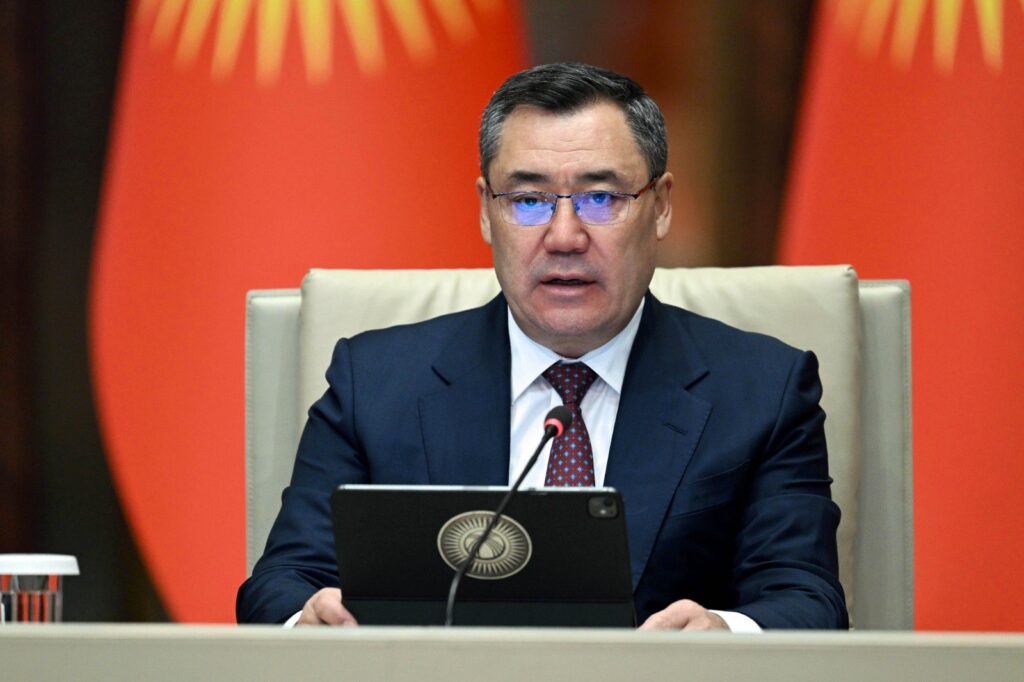
Tokayev made the proposal at the third meeting of Kazakhstan’s Artificial Intelligence Development Council on October 2, a presidential body that brings together senior Kazakh officials with international technology and AI experts to help shape the country’s AI strategy. He said the risks associated with advanced AI cross national borders and require coordinated action by governments and businesses.
Following expert consideration, Tokayev said the agreement signed in Washington could be considered by interested countries as a model for global adoption. He instructed council members to prepare concrete proposals for a Kazakh international initiative and said Kazakhstan would present its vision on international AI cooperation at the G20 Summit in Miami in December.
Tokayev’s intervention went beyond endorsing Trump’s initiative. He proposed turning a U.S. government-industry accord into an international model that could eventually underpin a UN-backed treaty, with Kazakhstan helping advance the process. He also said Kazakhstan was ready to serve as a platform for substantive international dialogue on the safe and responsible development of AI.
The accord originated in Washington. On September 29, Trump unveiled the White House Accord on Super Intelligence, signed by leaders of Google, Anthropic, Meta, OpenAI, xAI and Nvidia. The voluntary agreement relies on companies to police advanced AI through robust internal controls, dedicated monitoring, independent external assessments and board-level oversight. Trump described it as “morally binding” and said it would involve substantial self-policing, while the companies committed to meet regularly to develop standards and best practices.
The accord also fits Tokayev’s approach to AI regulation at home.
At AI & Digital Bridge in Astana on October 1, attended by senior figures from major global technology and investment companies, Tokayev called for a risk-based approach and warned against imposing rules so heavy that promising companies, technologies and capital move elsewhere. Kazakhstan has already adopted its Law on Artificial Intelligence and Digital Code, but Tokayev said requirements should be “strict, but not excessive” where safety, rights and vital interests are involved.
Both governments are trying to accelerate AI development while guarding against the most serious risks, and both see the private sector as central to that effort.
The harder question is whether the same approach can work across borders.
Tokayev has identified cybersecurity, data protection, information integrity, algorithmic transparency and accountability for decisions as among the issues requiring a timely response.
Kazakhstan has already taken the question of cross-border cooperation into the UN process. In July, Deputy Prime Minister and Minister of Artificial Intelligence and Digital Development Zhaslan Madiyev told the inaugural UN Global Dialogue on AI Governance that international cooperation should be built around inclusivity and interoperability.
Tokayev’s endorsement of the Washington Model also fits a broader pattern in his engagement with Trump. In July, he said the Trump administration’s “common-sense policies” matched Kazakhstan’s own vision of building a Just Kazakhstan based on Law and Order and explicitly expressed support for Trump’s approach. Kazakhstan has also backed initiatives closely identified with the U.S. president, including its decision to join the Abraham Accords and the Board of Peace initiated by Trump. Tokayev has also said that elements of Trump’s political outlook — including traditional values, national interests and ending wars — resonate in Kazakhstan.
There is also some convergence in their criticism of existing international institutions. Tokayev has called comprehensive reform of the United Nations a “strategic necessity”, while continuing to describe the organization as indispensable.
Kazakhstan has simultaneously been deepening its ties with the U.S.-led technology ecosystem. On June 25, it became the first country from the region to join Pax Silica and sign the AI Opportunity Partnership statement. Pax Silica links technology cooperation to investment, research, computing infrastructure, secure supply chains and private-sector participation, giving it a concrete commercial and industrial dimension.
Separately, Kazakhstan has sought to establish itself as an international convening point for technology and AI cooperation. Tokayev has described AI & Digital Bridge as a “golden bridge for international engagement” in emerging technologies. This year’s meetings brought senior figures from Nvidia, General Atlantic, G42 and leading Asian AI institutions to Astana. Tokayev used the forum to call for greater international knowledge exchange, joint research, investment and technological cooperation, while stressing that Kazakhstan’s approach would remain guided by “respect for national interests and the peaceful use of technology”.
Tokayev is proposing that the Washington Model itself become the starting point for a wider international discussion. He has asked Kazakhstan’s AI Council to develop concrete recommendations for that initiative, while leaving the eventual form of any broader agreement to expert consideration and international dialogue.
That proposal will get an early international test in Miami in December. The meeting will provide an early indication of whether the Washington Model can move from a U.S. government-industry compact into a broader international framework.