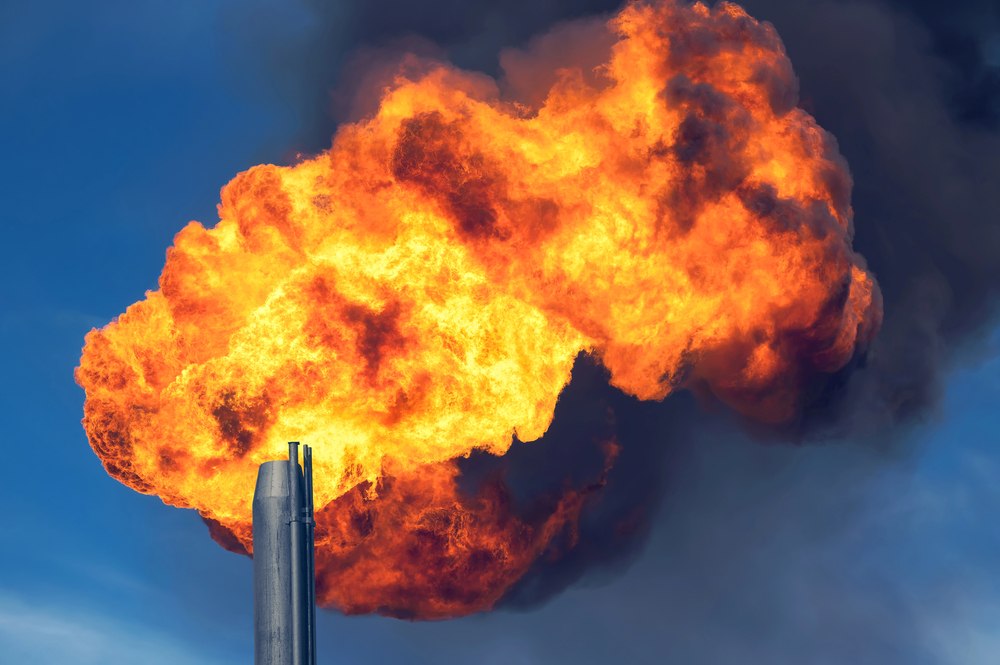
UN satellite monitoring has identified Turkmenistan as one of the world’s most serious methane hotspots, with 192 alerts for the country issued over the past year. Three of the six largest leaks detected globally by the system over the past six months were in Turkmenistan, as were nine of the top 50. Eight major leaks have since been stopped after repairs.
For Ashgabat, however, the issue is also taking on commercial significance: new EU rules are gradually linking access for imported gas to the European market with its methane footprint.
The United Nations Environment Programme (UNEP) has confirmed eight cases in which major methane leaks in Turkmenistan were stopped after operators took action. The first two were recorded in November 2024, with further cases confirmed at several oil and gas sites over the following year. In February 2026, two leaks were stopped at Dauletabad, one of Turkmenistan’s largest gas fields. The latest confirmed case dates to March, in Lebap Province, one of the country’s main gas-producing regions.
The leaks are detected by the UN’s Methane Alert and Response System (MARS), which uses data from more than 30 satellite instruments. After detecting a major methane plume, MARS provides the information to the government or facility operator and then uses satellite observations to determine whether the emissions have stopped.
Meghan Demeter, program manager for MARS at UNEP’s International Methane Emissions Observatory, called the first repairs an “incredible first step.” In comments to The Guardian on August 31, she stressed that significantly more work remains to be done, saying the repairs did not yet represent a breakthrough in the overall scale of Turkmenistan’s emissions.
The scale of the problem is also reflected in data from the International Energy Agency (IEA). In its Global Methane Tracker 2026, Turkmenistan and Venezuela have by far the highest methane emissions intensities from upstream oil and gas production among major producers. The gap between the best and worst performers is more than 100-fold.
Methane intensity measures emissions relative to the amount of fuel produced, allowing producers of different sizes to be compared. According to the IEA, large emissions events visible from satellites are particularly common in Turkmenistan: the country accounts for more than a third of all oil- and gas-related MARS observations in Eurasia.
Satellite studies point to a worsening trend in recent years. One found that super-emitter activity on Turkmenistan’s western coast increased by about 8% annually between 2020 and 2023. The IEA’s own analysis shows that emissions from super-emitter events across Turkmenistan grew by more than 15% a year on average over the same period. The study of the western coast also estimated that methane emissions there rose by around 7% annually between 2020 and 2023, broadly in line with growth in natural gas production.
Methane has a much stronger short-term warming effect than carbon dioxide. At the same time, it is the main component of natural gas, meaning leaks also represent a loss of fuel that could otherwise be sold. The IEA notes that high emissions intensity is not an inevitable feature of the oil and gas industry: it can be substantially reduced through existing technologies, operational standards, and equipment repairs.
Satellite monitoring is particularly important for Turkmenistan because of limited access to information about its oil and gas sector. It makes it possible to identify major emissions independently of operators’ reporting. Since MARS was launched in 2022, the system has moved beyond detecting plumes to checking whether emissions stop after governments or operators respond. By the end of August 2026, MARS had recorded 43 such cases worldwide.
Central Asia features prominently on the list. In addition to the eight cases in Turkmenistan, UNEP has confirmed that emissions stopped at eight sites in Kazakhstan between October 2024 and March 2026.
Turkmenistan joined the Global Methane Pledge in December 2023. The initiative sets a collective goal of reducing global anthropogenic methane emissions by at least 30% from 2020 levels by 2030.
For Ashgabat, cutting emissions is also gradually becoming relevant to its gas export ambitions. Turkmenistan has some of the world’s largest natural gas reserves, but most of its exports go to China. The country is seeking additional markets and has for years considered the possibility of supplying gas to Europe. Turkmen gas also began reaching Turkey in limited volumes through a swap arrangement with Iran in 2025, while the much larger Trans-Caspian route remains unbuilt.
Meanwhile, the European Union is gradually introducing requirements governing the methane footprint of imported fuels. From January 1, 2027, importers under contracts signed or renewed after August 4, 2024, will have to show that the gas was produced under methane oversight equivalent to EU standards, or meets an accepted company-level standard. For older contracts, importers must make all reasonable efforts to obtain the necessary information.
From August 5, 2028, importers must report the methane intensity of gas covered by contracts signed or renewed after August 4, 2024. From August 5, 2030, gas under contracts signed or renewed after that date will have to meet a maximum methane-intensity threshold set by the European Commission. In practical terms, methane performance will increasingly become one of the conditions suppliers must meet to sell gas into the EU.
Turkmenistan’s interest in these requirements has already surfaced in discussions with international organizations. The Clean Air Task Force, which works on methane reduction in Central Asia, has reported discussions with Turkmenistan’s Deputy Minister of Environmental Protection Nury Jumashov on methane regulation and related work. CATF also says the government is interested in understanding the EU’s import standards as it considers access to the European market.
Reducing methane leaks alone will not open the way for Turkmen gas to Europe. The long-discussed Trans-Caspian gas pipeline, which could carry significantly larger volumes west through Azerbaijan and Turkey, still needs to be built.
But the requirements governing the gas itself are already changing. If large-scale exports to Europe ever become commercially viable, Turkmenistan will have to demonstrate the methane intensity of its production and its ability to systematically monitor and control leaks.