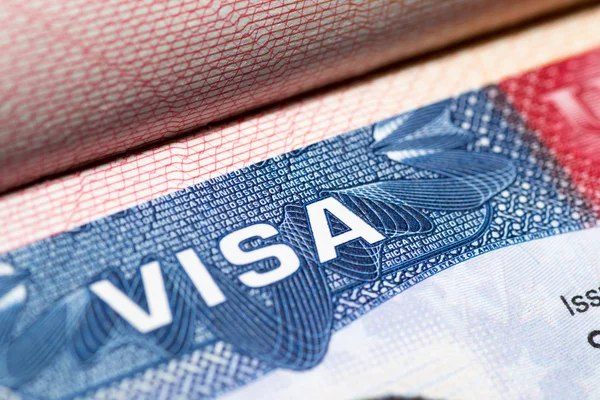
In 2024, the United States rejected 64.41% of B-1/B-2 visa applications submitted by citizens of Uzbekistan, the highest refusal rate among Central Asian countries, according to the U.S. State Department. B-1/B-2 visas are issued for short-term travel related to business and tourism.
Uzbekistan has consistently topped the region in visa denials. In 2023, the rejection rate for Uzbek applicants stood at 59.56%. The trend reflects continued challenges faced by Uzbek travelers in securing U.S. entry permits.
The refusal rates for other Central Asian countries in 2024 were also significant:
- Turkmenistan: 58.8%
- Kazakhstan: 46.29%
- Tajikistan: 45.24%
- Kyrgyzstan: 39.14%
Similar patterns were observed in 2023, with Turkmenistan at 51.10%, Kazakhstan at 41.93%, Tajikistan at 54.96%, and Kyrgyzstan at 41.54%.
Trade Volumes Remain Low Across the Region
Trade between Central Asia and the United States remains limited. In 2024, Uzbekistan exported only $42.4 million worth of goods to the U.S., while its total foreign trade turnover reached $66 billion, highlighting the minimal share of U.S.-bound exports.
Kazakhstan remains the region’s largest trading partner with the United States. Bilateral trade in 2024 reached $3.4 billion, primarily driven by exports of crude oil, uranium, and silver. Notably, only $95.2 million of Kazakhstan’s exports to the U.S. are expected to be impacted by new U.S. tariffs, a small fraction of the country’s total trade volume of $141.4 billion.
Other Central Asian nations also maintain modest trade flows with the U.S.:
- Kyrgyzstan exported $16.7 million in goods, with a total trade turnover of $16 billion.
- Tajikistan exported $4.6 million, out of a total trade turnover of $8.9 billion.
Limited Mobility and Economic Ties
The data underscores broader limitations in U.S.-Central Asia engagement both in terms of mobility and economic integration. High visa refusal rates continue to hinder travel for business and personal reasons, while trade volumes remain a marginal component of most Central Asian economies.
While diplomatic and economic ties between Washington and the region have grown in recent years, the figures suggest that significant barriers to deeper cooperation remain.