For Central Asia, the central question is not simply whether a wider conflict involving Iran would destabilize the Middle East, but how that instability could spill north into a region that has repeatedly absorbed the consequences of crises to its south. Central Asian states have seen before how militant infiltration, narcotics trafficking, and extremist mobilization can intensify when neighboring wars weaken state control and create more permissive transit corridors.
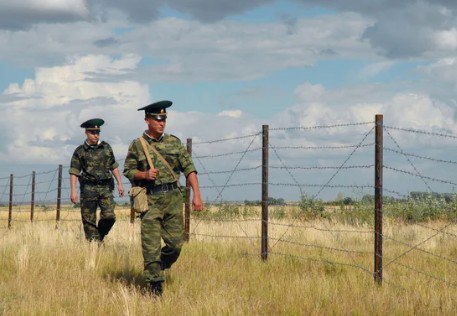
History gives Central Asia specific reasons to take that risk seriously. During the Tajik civil war and its aftermath, the Tajik-Afghan border became a frontline against crossings by Afghan militants and narcotics traffickers. In 1999 and 2000, fighters from the Islamic Movement of Uzbekistan, or IMU, carried out the Batken incursions into southern Kyrgyzstan, took hostages, and demonstrated how quickly insecurity from the Afghan theater could penetrate Central Asia. At the same time, Afghan opiates moved north through the Northern Route, tying militancy, organized crime, and border insecurity into a single regional problem.
Afghanistan remains the most important precedent, but the comparison with Iran must be made carefully. After the fall of Najibullah in 1992, Afghanistan fragmented into competing militias and warlord zones. The Taliban later emerged from that disorder, and the Afghan state collapsed again when the Taliban captured Kabul and returned to power in 2021. Iran is structurally different. It has a centralized state, a denser security apparatus, and the Islamic Revolutionary Guard Corps, or IRGC, which is deeply embedded in regime security and domestic politics. For that reason, the most plausible risk is not an immediate Afghanistan-style collapse, but a slower weakening of control in peripheral regions that could open space for armed groups, trafficking networks, and extremist recruiters.
Those peripheral regions matter because Iran’s borderlands already contain armed actors with their own agendas. In the northwest, PJAK remains part of the Kurdish militant landscape. In the southeast, Jaysh al-Adl operates in Sistan-Baluchistan and adjoining border areas. Their capabilities should not be exaggerated, and they do not represent entire Kurdish or Baloch populations. But in a period of prolonged instability, such groups could exploit weaker local control, greater arms circulation, and more permissive smuggling corridors.
For Central Asia, however, the greatest concern is the interaction between any Iranian crisis and the threat environment centered on Afghanistan. United Nations reporting in 2025 assessed ISIL-K as the predominant extra-regional terrorist threat, and the U.S. National Counterterrorism Center says ISIS-K has carried out attacks in Afghanistan, Iran, Pakistan, and Russia while using media to recruit new members and advance a vision of “Khorasan” that explicitly includes parts of Central Asia and Iran. In other words, Central Asia already faces a live extremist ecosystem to its south; wider instability involving Iran could amplify that pressure rather than replace it.
This is why Central Asia should not be seen as a passive observer. The region sits at the junction of security corridors linking Afghanistan, Iran, the Caspian basin, and Russia. A wider conflict involving Iran could intensify trafficking through existing routes, strain border services, and create new openings for covert movement and extremist recruitment. The lesson from the Tajik-Afghan frontier, the Batken incursions, and the Northern Route is that spillover usually reaches Central Asia not through conventional invasion, but through networks, logistics, and cumulative pressure on weak points along the regional periphery. Regional governments therefore need tighter intelligence coordination, stronger border monitoring, and more realistic contingency planning for how instability around Iran could interact with the enduring threat landscape south of Central Asia.