Kazakhstan’s aviation industry is demonstrating steady growth. By the end of 2025, the country’s airports had served 31.8 million passengers, up from 29.7 million in 2024, and handled 173,300 tons of cargo compared with 170,900 tons a year earlier. Total airline passenger traffic reached 20.7 million, and more than 35 new international routes were launched.
The government plans to expand regional transport links and attract investment into the aviation sector. It also aims to increase the number of international routes. The industry is working to develop airport hubs and accommodate growing passenger demand, while positioning Kazakhstan as a transit country. These plans will depend in part on the availability of aviation fuel.
Shortages of aviation kerosene in Kazakhstan have moved beyond an industry concern and are becoming an issue of energy and transport policy, as well as a potential source of economic risk.
Despite being one of the world’s major oil producers, Kazakhstan continues to rely on imports of petroleum products. Of roughly 100 million tons of oil produced annually, only about 18 million tons are refined domestically. Although refining volumes and petroleum product output increased in 2025, the country still imports diesel and jet fuel at higher prices.
According to Argus data, the cost of imported jet fuel at the Russian-Kazakh border averaged $765 per ton at the beginning of 2025. By early summer, the price had fallen to $610 per ton, before rising by nearly 60% in November to $975 per ton, excluding VAT.
In 2026, the domestic supply situation may become more complicated. In addition to volatility in global markets, including tensions in the Middle East, scheduled maintenance shutdowns at oil refineries are expected to affect output.
This year, all three major refineries, Atyrau Oil Refinery, Pavlodar Petrochemical Plant, and PetroKazakhstan Oil Products, are scheduled for maintenance, which will temporarily reduce fuel production.
According to data provided by the national oil and gas company KazMunayGas, Kazakhstan’s refineries produced 726,000 tons of jet fuel last year. Under the Ministry of Economy’s indicative plan, output is expected to reach 750,000 tons in 2026.
Demand for jet fuel is rising due to the active development of the air transport market and an increase in flight frequency.
KazMunayGas is implementing measures to expand production and introduce new technologies. By 2030, refinery modernization is expected to increase jet fuel output.
Deputy Minister of Energy Kaiyrkhan Tutkyshbaev told The Times of Central Asia that plans are being considered to increase jet fuel production from the current 0.7 million tons to 1.7 million tons per year through phased refinery capacity expansion from 17 million to 27.7 million tons by 2030. This includes expanding the Shymkent refinery from 6 million to 12 million tons of crude per year, the Pavlodar refinery from 5.5 million to 9 million tons in two phases and increasing secondary refining capacity at the Atyrau refinery by 0.7-1.2 million tons.
Additionally, domestic jet fuel production is expected to grow by 50,000 tons annually between 2026 and 2028. With consumption projected at 1.18 million tons in 2026, production is expected to reach about 750,000 tons, leaving imports at roughly 450,000 tons.
Sarsen Zharylgasov, deputy chairman of the Civil Aviation Committee of the Ministry of Transport, said measures have been introduced to ensure supply availability. These include diversifying imports from outside the Eurasian Economic Union, particularly from China and Turkmenistan, as well as exempting aviation fuel from import customs duties until June 30, 2026, under a decision of the Eurasian Economic Commission, and from VAT when used in air transport services.
These steps are expected to reduce the overall cost of imported aviation fuel and help lower prices for airlines.
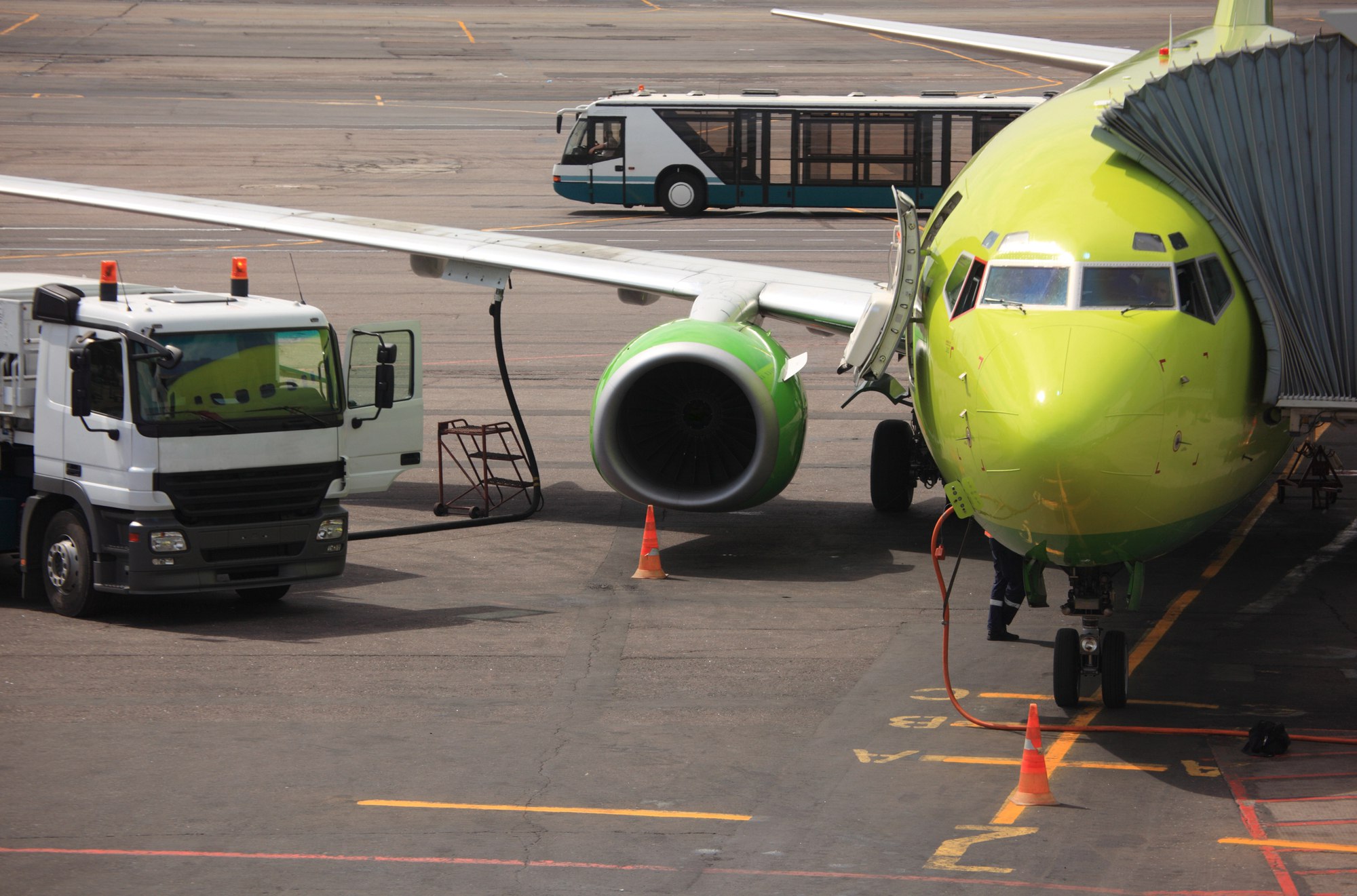
KazMunayGas-Aero has been designated as the sole operator responsible for fuel supply and aircraft refueling at Kazakhstan’s airports.
According to Tutkyshbaev, this decision has reduced aviation fuel prices at airports by around 25%, while capping profit margins at 5%, creating conditions for increasing international flights and strengthening the country’s transit potential. As a result, aviation fuel prices at Kazakhstani airports have declined to approximately $950 per ton.
Nevertheless, industry experts warn that these measures may be insufficient over the next two to four years to fully meet growing demand. By 2028, the aviation sector is expected to double cargo volumes to 300,000 tons annually.
Rising Demand for Aviation Fuel
The sector’s plans to develop hubs, expand routes, and handle rising passenger traffic, as well as to position Kazakhstan as a transit country, all depend on fuel availability.
In the medium and long term, experts expect further increases in demand as the aviation sector expands.
Plans to strengthen Kazakhstan’s hub status include the construction of second runways at airports in Astana and Shymkent, new terminals in Almaty, Atyrau, and Aktau, modernization of airports in Arkalyk and Pavlodar, and the construction of new airports in the resort areas of Katon-Karagay, Zaisan, and Kenderli.
In addition, nine new aircraft are expected to join airline fleets this year, increasing the total number to 118 and enabling route expansion.
Under the country’s “open skies” policy, a key driver of international air travel growth, more than 35 new international routes were launched in 2025, including flights to Budapest, Shanghai, Seoul, Guangzhou, Munich, and Bangkok.
New routes to destinations in Asia, the Middle East, and Europe are also planned this year, which will further increase demand for aviation fuel.
Expand Existing Refineries or Build a New One?
The government faces a strategic decision regarding the construction of a new oil refinery.
Tutkyshbaev said that work is planned between 2026 and 2033 on feasibility studies, design, construction, and commissioning of a new refinery with a capacity of 10 million tons per year. This would raise Kazakhstan’s total refining capacity to 40 million tons annually.
Alongside efforts to address domestic fuel shortages, the authorities also aim to develop export potential to neighboring regions. The Ministry of Energy says priority should be given to expanding existing refinery capacity before launching construction of a new plant.
Industry forecasts suggest jet fuel demand could reach 2 million tons by 2030, requiring significant investment in refining capacity and adjustments to tariffs.
As demand for aviation fuel continues to grow, Kazakhstan will need to balance imports with bringing modernized refineries to full capacity.
The Ministry of Energy and KazMunayGas expect that reducing import dependence will free up resources for exports. Much will depend on the timely commissioning of a new refinery by 2040, which is expected to eliminate jet fuel shortages and improve export capacity.
Despite strong growth in aviation, fuel constraints pose a risk to Kazakhstan’s ambitions to serve as a regional aviation hub at the crossroads of major international air corridors. This is particularly important given the sector’s role in regional connectivity, international cooperation, and investment.