Developing a transport corridor linking China and Central Asia with Europe across the Caspian Sea will require more than $55 billion in investment through 2040. But the World Bank’s recent report, Integration: World-Class Trade Logistics Along the Trans-Caspian Transport Corridor, argues that infrastructure alone will not resolve the difficulties of moving freight across borders and between rail and ships.
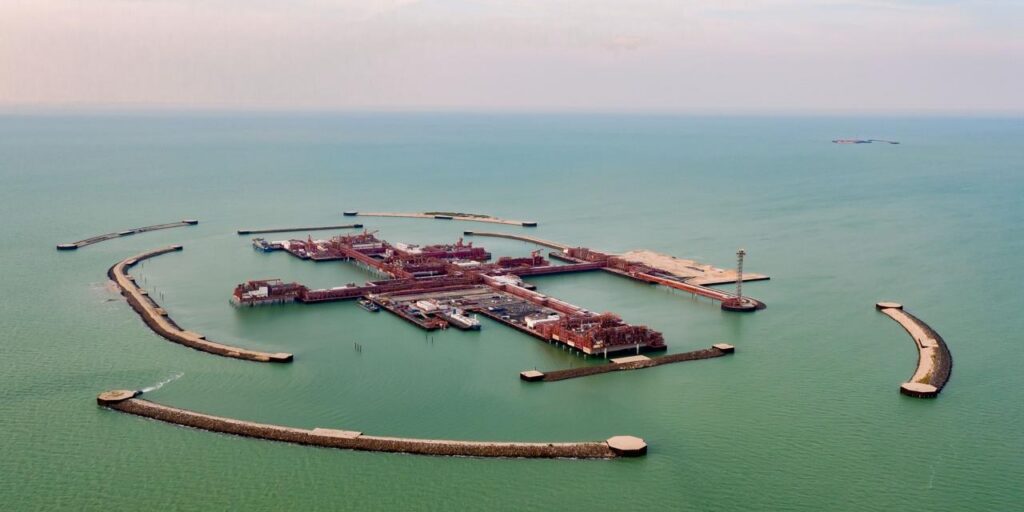
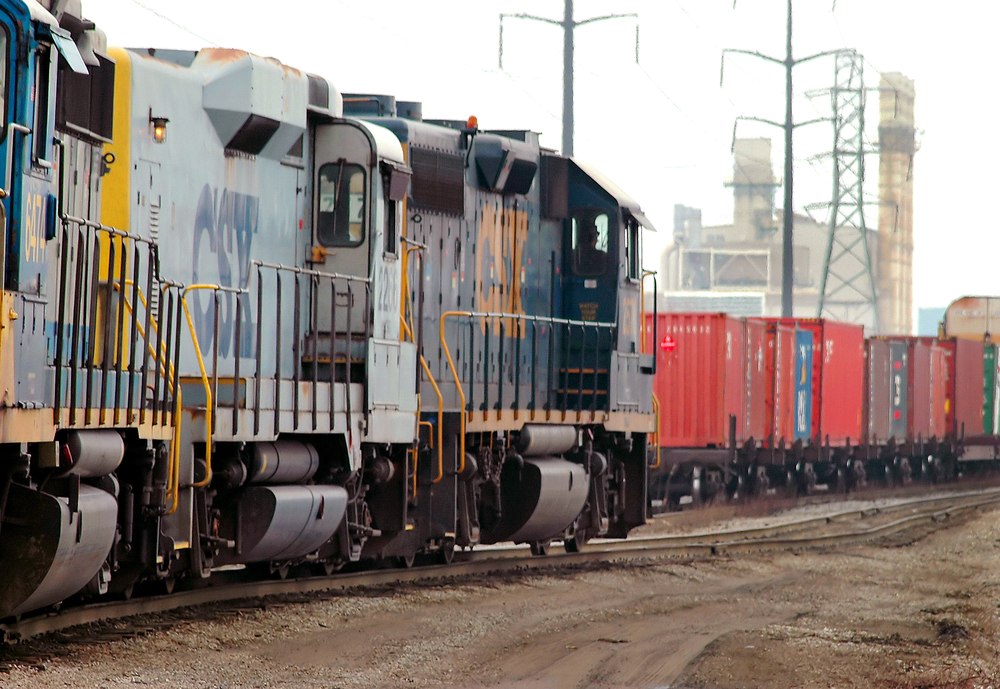
The route is the Trans-Caspian Transport Corridor, better known as the Middle Corridor. Trains typically travel from China through Kazakhstan to the Caspian ports of Aktau and Kuryk, where containers are transferred to ships. In Azerbaijan, they return to rail and continue through Georgia and Turkey toward Europe. The report covers nine countries with a combined population of nearly 200 million.
With targeted investment, the World Bank estimates that trade volumes along the corridor could more than triple and travel times could be halved. GDP across those countries could be around 3.3% higher by 2040, with about 2 million additional jobs. If infrastructure investment is combined with reforms to make trade and transport more efficient, corridor volumes could quadruple compared with 2023 and travel times could fall by about two-thirds.
At least $25 billion would be needed to relieve bottlenecks on railways and at Caspian ports. Another estimated $30.5 billion would improve connections between the main corridor and local economies, including terminals and digital systems.
In February, the World Bank approved an $846 million guarantee from the International Bank for Reconstruction and Development, alongside a $564 million co-guarantee from the Asian Infrastructure Investment Bank. The package is intended to help mobilize $1.41 billion in long-term commercial financing for rail infrastructure along Kazakhstan’s section of the Middle Corridor.
One of the principal projects is the roughly 322-kilometer Mointy-Kyzylzhar railway. The new line is expected to shorten the route by 149 kilometers and relieve pressure on the existing rail network. But hours saved on the Kazakh rail leg could still be lost waiting for a ship or crossing a border.
The World Bank proposes a single digital corridor system built around a Transport, Transit, and Trade (T3) document. A carrier would enter cargo information once, allowing transport and customs authorities in different countries to use the same data.
The bank also proposes a joint venture between railway and Caspian shipping operators. It would allow customers to buy a single container freight service for the route rather than arranging rail and maritime transport separately.
During a September visit to Kazakhstan, World Customs Organization Secretary General Ian Saunders called for common international data standards and closer coordination between neighboring customs administrations.
The Middle Corridor is often described as an alternative route for Chinese goods traveling to Europe. Its railways and ports also need to carry goods produced by Central Asia’s own economies.
The five Central Asian countries exported $8.1 billion worth of goods to one another in January-July 2026, up 25.4% from a year earlier.
The World Bank expects cheaper and more predictable transport to help local producers sell to neighboring countries and more distant markets. Kazakhstan and Turkey could see larger gains in absolute terms, while smaller economies such as Kyrgyzstan and Armenia could benefit more in relative terms.
The Middle Corridor is not the only new transport route being developed for Central Asia. Kyrgyzstan and Uzbekistan are building the China-Kyrgyzstan-Uzbekistan railway with China. Kazakhstan and Uzbekistan have also agreed with the United Arab Emirates to study a line through Afghanistan toward Pakistani ports.
These routes lead to different markets, but their long-term economics will depend in part on whether Central Asian economies generate enough cargo of their own.
In a recent post about proposed routes through the South Caucasus, Dauren Ilesaliev, a professor at Tashkent State Transport University, wrote: “The most important question is not how many kilometres are being built. Who will provide the cargo volumes needed to make the route economically viable?”