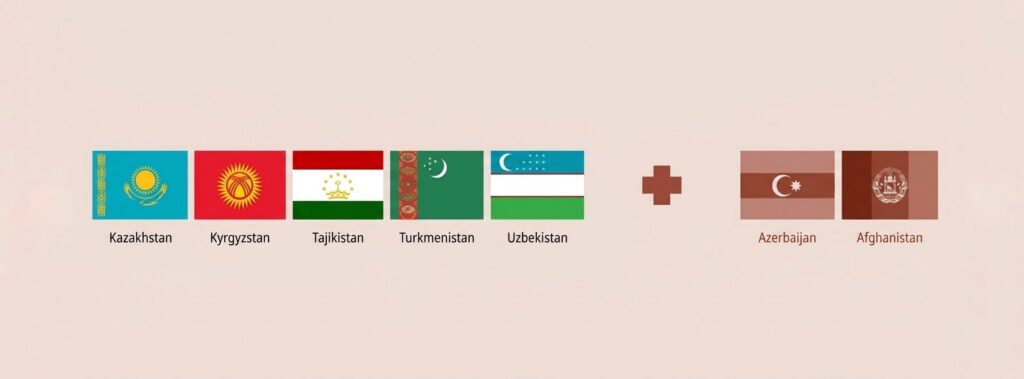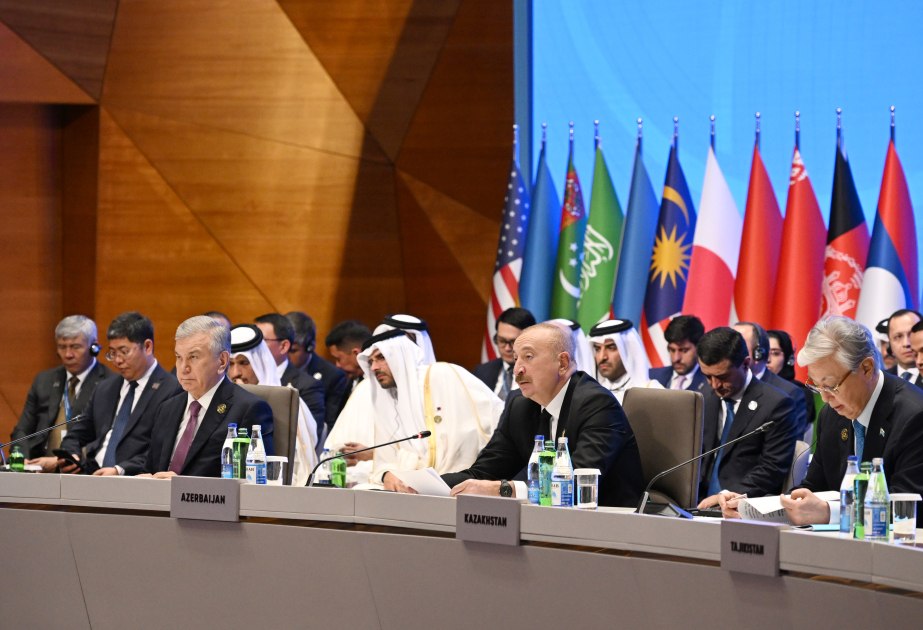
Kazakhstan has proposed developing a common transport strategy for Asia, Kyrgyzstan has called for expanded joint investment and industrial cooperation, and Uzbekistan has put forward proposals for cooperation on artificial intelligence. The leaders of the three countries presented these initiatives on October 15 at the seventh summit of the Conference on Interaction and Confidence Building Measures in Asia (CICA) in Baku. The proposals came amid negotiations to transform the forum into a full-fledged international organization.
CICA has particular historical significance for Kazakhstan. The idea of establishing the forum was first proposed in 1992 by Nursultan Nazarbayev, then the country’s president, at the United Nations General Assembly. Thirty-four years later, Astana is proposing to use the platform to coordinate transport routes connecting Eurasia’s largest markets.
President Kassym-Jomart Tokayev called for the development of a CICA Transport Connectivity Strategy. It would cover China’s Belt and Road Initiative, the International North–South Transport Corridor, the Trans-Caspian route, also known as the Middle Corridor, and the TRIPP project, a planned transport link through Armenia.
These routes differ in geography and participating countries. The Middle Corridor connects China and Central Asia with European markets through the Caspian Sea, Azerbaijan, Georgia, and Turkey. The North–South Corridor focuses on freight transportation between Russia, the Caspian region, Iran, and India. For Central Asian countries, developing several routes simultaneously means having more export options and reducing dependence on individual transit routes.
Tokayev also linked the prospects for improved transport connectivity to better relations between Azerbaijan and Armenia. Opening transport links in the South Caucasus could expand shipping options between Asia and Europe, although the specific arrangements for operating new routes have yet to be agreed upon.
Another Kazakh proposal is a CICA Water Partnership Platform for joint research, technology exchange, and water conservation. Tokayev also raised the issue of protecting the Caspian Sea. For Central Asia, water management is closely linked to growing demand from agriculture and the energy sector, as well as the effects of climate change.
Kyrgyz President Sadyr Japarov focused on investment and industrial cooperation. He called on CICA member states to pursue more joint projects and expand digital connectivity. Japarov also invited investment in the Tamchy special financial and investment zone and proposed developing cross-border digital infrastructure. For Kyrgyzstan, which is involved in building new transport routes between China and Central Asia, attracting investment and developing manufacturing have direct economic significance.
Uzbek President Shavkat Mirziyoyev presented proposals on the responsible use of artificial intelligence, confidence-building, and climate cooperation. He proposed establishing a CICA expert platform to develop common recommendations and coordinate practical measures on AI. Tashkent is pursuing digitalization domestically and is interested in international standards and technological partnerships. However, the proposed platform has yet to be established.
The summit also adopted the Baku Declaration and admitted Laos as CICA’s 29th member, marking another step in the forum’s development. It followed an October 8 meeting in the Turkmen resort city of Avaza, where regional leaders agreed to prioritize East–West and North–South transport routes, as The Times of Central Asia previously reported.