• KGS/USD = 0.01143 0%
  • KZT/USD = 0.00216 0%
  • TJS/USD = 0.10633 -0.28%
  • UZS/USD = 0.00008 0%
  • TMT/USD = 0.28571 0%
  • KGS/USD = 0.01143 0%
  • KZT/USD = 0.00216 0%
  • TJS/USD = 0.10633 -0.28%
  • UZS/USD = 0.00008 0%
  • TMT/USD = 0.28571 0%
  • KGS/USD = 0.01143 0%
  • KZT/USD = 0.00216 0%
  • TJS/USD = 0.10633 -0.28%
  • UZS/USD = 0.00008 0%
  • TMT/USD = 0.28571 0%
  • KGS/USD = 0.01143 0%
  • KZT/USD = 0.00216 0%
  • TJS/USD = 0.10633 -0.28%
  • UZS/USD = 0.00008 0%
  • TMT/USD = 0.28571 0%
  • KGS/USD = 0.01143 0%
  • KZT/USD = 0.00216 0%
  • TJS/USD = 0.10633 -0.28%
  • UZS/USD = 0.00008 0%
  • TMT/USD = 0.28571 0%
  • KGS/USD = 0.01143 0%
  • KZT/USD = 0.00216 0%
  • TJS/USD = 0.10633 -0.28%
  • UZS/USD = 0.00008 0%
  • TMT/USD = 0.28571 0%
  • KGS/USD = 0.01143 0%
  • KZT/USD = 0.00216 0%
  • TJS/USD = 0.10633 -0.28%
  • UZS/USD = 0.00008 0%
  • TMT/USD = 0.28571 0%
  • KGS/USD = 0.01143 0%
  • KZT/USD = 0.00216 0%
  • TJS/USD = 0.10633 -0.28%
  • UZS/USD = 0.00008 0%
  • TMT/USD = 0.28571 0%

Viewing results 7 - 12 of 982

Kyrgyz Banks Hold $1.3 Billion in Liquidity, but Businesses Lack Long-Term Financing

Kyrgyzstan’s banking sector holds a substantial volume of liquidity, yet small and medium-sized enterprises (SMEs) continue to face a shortage of development financing, according to a report by the Asian Development Bank. The ADB estimates that the system has accumulated around $1.3 billion in excess liquidity. At the same time, more than 45% of bank loans, and a similar share of microloans, are directed toward consumer needs, while lending to industry has steadily declined. Representatives of the banking sector say they are familiar with the report’s findings but consider them only partially accurate. “Commercial banks in Kyrgyzstan do indeed have sufficient funds, but the bulk of these deposits are short-term. The figures mentioned in the report mainly refer to balances on corporate accounts that are not time-bound, they are demand deposits and can be withdrawn at any moment. As for long-term funding for large-scale projects in industry and agriculture, banks lack such resources,” Anvar Abdraev, President of the Union of Banks of Kyrgyzstan, told The Times of Central Asia. According to Abdraev, this helps explain the perception that banks are reluctant to lend to industry and SMEs. He added that large businesses generally do not face financing constraints, as they tend to secure funding from international financial institutions and intergovernmental funds on concessional terms, often bypassing commercial banks. Banking sector representatives also point to structural challenges on the borrowers’ side, including underdeveloped business plans, which increase credit risk. In addition, a significant share of applications comes from startups, which banks classify as high-risk projects. Another limiting factor is the lack of sufficient liquid collateral among entrepreneurs. Banks also emphasize that non-performing loans in their portfolios are maintained at around 5-6%, prompting stricter borrower assessment criteria. As a result, the loan approval process for businesses can be lengthy, and rejection rates remain high. “The growth rate of consumer lending does indeed exceed the volume of loans directed toward business development. This is primarily because consumer loans are much easier to obtain today. This has largely been made possible by new banking technologies. Consumer loans can be issued online using remote identity verification. Moreover, the average size of such loans is significantly smaller than that of business loans,” Abdraev added. Thus, despite the high level of liquidity in the banking system, the shortage of long-term funding, combined with borrower-related risks, continues to constrain lending to Kyrgyzstan’s real sector.

Kyrgyz Minister Sydykov Courts Investment in Washington

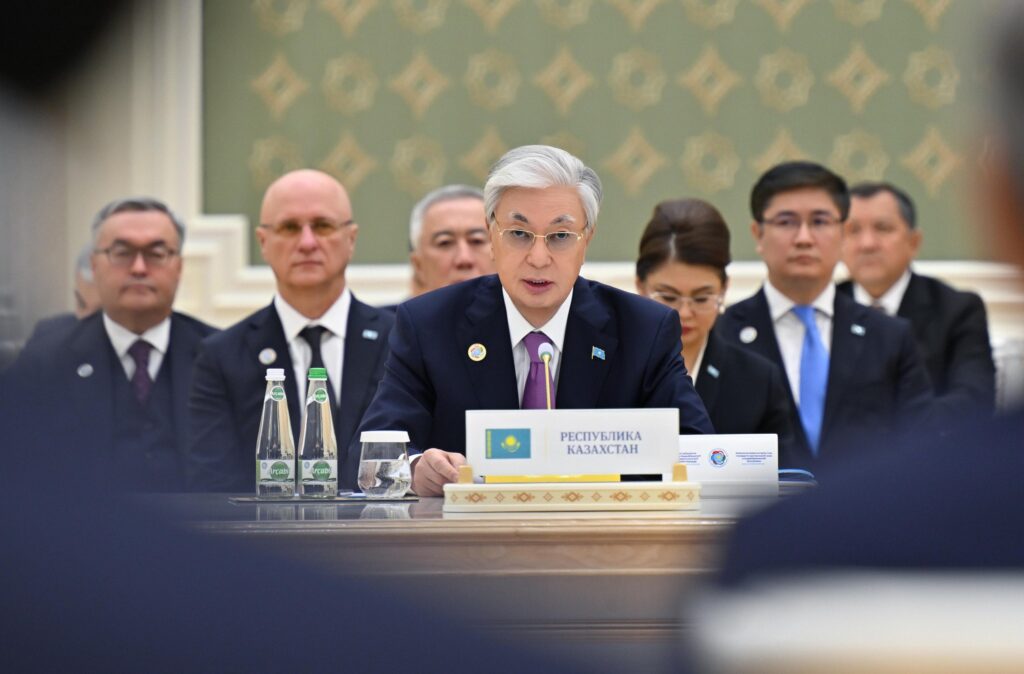
On the occasion of the annual IMF/World Bank meetings in Washington this week, the Prime Minister of Kyrgyzstan, Adylbek Kasymaliev, led a delegation to Washington D.C. for World Bank and IMF meetings, the Department of State Annual Bilateral Consultations, a meeting with Secretary of State Rubio, Deputy Secretary Landau and Under Secretary Hooker, as well as a number of other constructive dialogues and engagements with scholars, researchers, and authors. This trip marks the second high-level U.S. visit in a year, signaling Washington’s strategic interest and Kyrgyzstan’s willingness to deepen cooperation. Bakyt Sydykov, Kyrgyzstan’s Minister of Economy and Commerce, accompanied the Prime Minister. The delegation’s visit to Washington reinforces President Sadyr Japarov’s statement to President Donald Trump during the November 2025 C5+1 Summit, “I am confident that this event will provide an excellent opportunity for U.S. businesses to expand cooperation in sectors such as agriculture, e-commerce, information technology, transportation and logistics, tourism, and banking.” Following Japarov’s lead, Sydykov is actively engaging private and multilateral partners; state and Commerce meetings are meant to keep things moving and steady investor confidence. This shift towards deeper diplomatic, investment, and development ties is striking and certainly welcome in Washington. The shift reflects both an evolving Central Asian geopolitical landscape, post-Afghanistan dynamics, economic needs, diversification goals, and troubles in West Asia. Deeper engagement is also driven by ambitions to enhance regional transport and logistics integration. Kyrgyzstan’s approach departs from zero-sum logic, prioritizing win-win pragmatism and mutual gains. Minister Sydykov In an interview with The Times of Central Asia, Minister Sydykov said that this visit builds on the International Monetary Fund’s (IMF) recent official mission to Bishkek (March 18–April 1, 2026) and that “our banking sector is strong and well capitalized, as affirmed by the IMF, and we are well prepared against risk, enhancing oversight in the context of global volatility.” Commenting on the government’s fiscal management following the IMF’s guidance, Sydykov said: “To expand fiscal flexibility, we are mobilizing revenue across a range of standard taxation measures and raising expenditure efficiency with responsible internal wage policies, rationalized energy subsidies, and public investment management. We are pinpointing more prudent debt management measures, enhancing risk oversight, and rolling out tracking metrics to uphold long-term sustainability and credibility.” ⁠Looking forward, Sydykov noted that Kyrgyzstan is monitoring outlook risks related to external volatility, while also insisting that “we are working to hold down domestic inflation – always a challenge with rapid economic growth – and lower fiscal pressures. We assess that these endogenous variables remain manageable, even with increased exposure to cross-border trade and capital flows. While external volatility lies beyond our direct control, Kyrgyzstan is working with the IMF, other multilaterals, and domestic banks to maintain and build resilience. We are therefore strengthening buffers, recalibrating policies, and advancing accounting reforms to support performance and sustainable growth.” Responding to the ADB’s latest forecasts, Sydykov said Kyrgyzstan’s economy is moving toward greater stability and growth. After an 11.1% surge in 2025, growth is expected to slow to 8.9% in 2026 and 8.4%...

Why Strong Economic Growth in Central Asia Masks Underlying Risks

Central Asian countries are significantly outperforming the global average in GDP growth, largely due to differing economic models across the region. However, rapid expansion does not remove deep structural vulnerabilities. As early as March, data showed that the combined economies of Central Asian countries grew by nearly 7% in 2025 compared to the previous year. The World Bank estimates regional growth at 6.2%, while the Eurasian Development Bank (EDB) places it at 6.6%. These calculations include Kazakhstan, Uzbekistan, Kyrgyzstan, and Tajikistan; Turkmenistan is excluded due to limited statistical transparency. By comparison, growth rates in advanced economies are much lower. The EDB expects around 1.6% growth in the U.S. and approximately 1.1% in the eurozone in 2026, while China’s economy is projected to expand by about 4.6%. Nevertheless, experts note that the region’s economic outlook remains complicated by high inflation, income inequality, and continued dependence on external factors. Investment activity and domestic demand have been the key drivers of growth, according to the EDB. Kazakhstan recorded its highest growth in 13 years (6.5%), with industry leading the expansion: mining grew by 9.4% and manufacturing by 6.4%. In 2026, the non-resource sector is expected to play a greater role. Kyrgyzstan has led the region in GDP growth for the third consecutive year: GDP grew by 11.1% in 2025 and by 9% in January 2026. In Uzbekistan, GDP increased by 7.7% in 2025 (up from 6.7% a year earlier), supported by investment, trade, services, and construction. Tajikistan’s GDP rose by 8.4% in 2025, matching the previous year’s performance. Growth continues to be driven by expanding industrial production and strong domestic demand. Early 2026 data suggest this momentum is holding. Uzbekistan’s Record In April, the World Bank highlighted Uzbekistan’s resilience to external challenges and strong growth dynamics. According to its updated report, the country’s 2025 GDP growth was revised upward by 1.5 percentage points to 7.7%. The outlook is 6.4% for 2026 and 6.7% for 2027. Key drivers include high global gold prices, investment inflows, expanded lending, and ongoing structural reforms. Rising household incomes have also played an important role, supported by remittances, which increased by 37% last year to reach $18.9 billion. By the end of 2025, Uzbekistan ranked among the fastest-growing economies in developing countries in Europe and Central Asia, alongside Kyrgyzstan and Tajikistan. The region as a whole is experiencing its highest growth rates in 14 years. At the same time, analysts point to persistent structural constraints, including a large public sector and the dominance of state-owned enterprises, which hinder private sector development. External risks, including geopolitical instability and potential disruptions in energy and fertilizer supplies, remain significant. In 2025, Uzbekistan’s GDP exceeded €133 billion, compared to approximately €56 billion nine years earlier. Over the same period, GDP per capita rose from about €1,750 to around €3,220, nearly doubling average income levels. Investment in fixed capital increased by more than 15% year-on-year in 2025, while export value grew by over 33%. Persistently high global gold prices played a major role: export...

Beyond the Belt and Road: China’s New Playbook in Central Asia

In the Kyzylorda Region, near the town of Shieli, the silos and conveyor belts of a Chinese-backed plant rise out of the fine brown dust that dominates the landscape. It is the kind of project the Belt and Road was supposed to deliver in Central Asia: heavy industry, fixed capital, and a visible mark on the landscape. But it is also a reminder that China’s role in the region has become narrower, more contested, and less sweeping than the old rhetoric suggested. In photographs, the Gezhouba Cement Plant looks like a self-contained industrial island on the steppe. For nearby villagers, it became something else: a source of jobs and local prestige for some, but also of years of complaints about dust clouds and whether the state was quicker to defend a flagship Chinese-backed project than the people living beside it. Projects like the plant in Shieli also help explain why views of China across Central Asia remain mixed. Beijing is seen as a source of trade, investment, and technology, but that promise is tempered in some places by concerns over transparency, environmental costs, and who really benefits when a project arrives. China has become Central Asia’s dominant trading partner, but investment has not kept pace with the surge in commerce. The gap says a lot about how Beijing now works in the region: with a sharper focus on sectors that matter to its long-term influence. In 2025, trade in goods between China and the five Central Asian states reached $106.3 billion, up 12% year on year. Chinese exports to the region totaled $71.2 billion, while imports from Central Asia reached $35.1 billion. Trade has grown fast enough to reshape the region’s external balance, but long-term investment has been far more selective. Over 2005–2025, the five Central Asian states accounted for about 3% of China’s global overseas investment and construction total. The picture changes once direct investment is separated from trade and construction contracts. China’s FDI stock in the five Central Asian states stood at about $36 billion by mid-2025. Roughly 90% was concentrated in Kazakhstan, Uzbekistan, and Turkmenistan. The structure of that capital has also changed. Extractive industries still accounted for 46% of the portfolio, but manufacturing and energy together made up more than one third, and greenfield projects rose from 43% to 60%. China has not poured money into Central Asia on the scale once implied by early Belt and Road rhetoric. Instead, it has invested in sectors that strengthen its industrial position. Kazakhstan remains at the center of this relationship. It is China’s biggest commercial partner in Central Asia, and the main destination for Chinese capital in the region. Kazakhstan-China trade reached $43.8 billion in 2024. The country’s portfolio of projects with Chinese participation includes 224 ventures worth about $66.4 billion. Some are still at the planning stage, but the range of projects is telling. Recent developments have included a hydrogen energy technology innovation center in Almaty and a large wind farm with electricity storage. Kazakhstan still sells...

Kyrgyzstan Accelerates Small Hydropower Construction to Achieve Energy Independence

Kyrgyzstan plans to significantly expand its hydropower capacity by commissioning new hydroelectric power plants with a combined capacity of 81 megawatts and expected annual generation of 348.3 million kWh, according to the Ministry of Energy. The largest number of new facilities will be built in Chuy region, where four plants are planned. At the same time, projects will be implemented across all regions of the country. Individual plant capacity will range from 1.5 to 9 MW, with the largest developments concentrated in Chuy and Issyk-Kul regions, with total capacities of 39.5 MW and 21 MW, respectively. The ministry noted that between 2021 and 2025, 27 small plants with a combined capacity of 109.8 MW were commissioned, generating around 427 million kWh annually. Over the next four years, authorities plan to continue expanding the sector by launching an additional 48 hydropower plants with a total capacity of 421 MW. The government views the development of small hydropower as a key element of its strategy to achieve energy independence and shift from electricity imports to exports. Energy Minister Taalaibek Ibraev emphasized that the country has significant hydropower potential. “We have substantial hydropower potential. There is an opportunity to generate 142 billion kWh. Today, we are using about 13-14 percent of this. As you can see, development is underway across the country. Many new hydropower plants are currently under construction, and we are also modernizing existing plants using new technologies,” Ibraev told The Times of Central Asia. The minister stressed that the expansion of small plants is linked to the goal of eliminating energy shortages and ending rolling blackouts during the winter period. According to Ibraev, Kyrgyzstan is adopting modern technologies for small hydropower construction from partners in Russia and European countries. Investors from Russia, Southern Europe, and Canada have also expressed interest in the country’s energy sector, including solar and wind projects. “Currently, much of the equipment for the energy sector is purchased from Russia. During our last meeting with Russian energy specialists, we agreed to procure equipment directly from manufacturers, without intermediaries,” the minister said. He added that such arrangements are expected to reduce the cost of constructing new hydropower plants.

IMF Warns of Risks for Rapidly Growing Kyrgyz Economy

Kyrgyzstan continues to record strong economic growth and rising per capita income. At the same time, elevated inflation above the National Bank’s 5%-7% target range, rapid credit expansion, strong wage growth, and high liquidity point to signs of economic overheating, requiring timely macroeconomic policy adjustments. These are the key points of an International Monetary Fund (IMF) statement following consultations with Kyrgyz authorities in Bishkek between March 18 and April 1. The IMF noted that after recording fiscal surpluses between 2023 and 2025, the overall fiscal balance is projected to shift into deficit in 2026, reflecting higher public-sector wages and increased capital spending. The mission also emphasized that monetary policy should remain focused on bringing inflation back within the National Bank’s target range. Strengthening the central bank’s independence and governance remains critical to safeguarding price stability. Repeated transfers of National Bank profits to the state budget, while capital remains below statutory thresholds, risk undermining institutional credibility and the effectiveness of monetary policy. The IMF urged the authorities to uphold the provisions of the constitutional law governing the National Bank and to suspend regular profit transfers until capital is adequately restored. According to the IMF, Kyrgyzstan’s banking sector is stable, well capitalized, and liquid. However, nonperforming loans remain elevated, and rapid credit growth could increase vulnerabilities if macroeconomic conditions deteriorate. The mission stressed that structural reforms remain essential to support sustainable and inclusive growth. These should focus on strengthening governance, reducing the state’s role in the economy, and fostering private-sector-led development. Key priorities include reforming state-owned enterprises, improving the business environment and competition, strengthening the rule of law and anti-corruption efforts, and addressing informality and labor market rigidities. According to the National Statistical Committee, Kyrgyzstan’s gross domestic product (GDP) grew by 11.1% in 2025, while inflation reached 9.4%. The government aims to sustain economic growth under the National Development Program through 2030, targeting average annual GDP growth of 8%, total GDP of at least $30 billion, and GDP per capita of $4,500. The Asian Development Bank (ADB) also forecasts continued strong growth, projecting GDP expansion of 8.9% in 2026 and 8.4% in 2027, following 11.1% growth in 2025. Growth is expected to moderate as construction and trade normalize, although domestic demand will remain the main driver, supported by resilient remittance inflows and sustained investment under the National Development Program. ADB projects inflation to rise to 10.3% in 2026 before easing to 8.5% in 2027, driven by strong domestic demand and planned increases in electricity and heating tariffs. Concerns about overheating are not new. A July 2025 meeting at the Kyrgyz Ministry of Economy and Commerce highlighted structural imbalances, including a widening gap between income growth and labor productivity, rising inflation, labor shortages, increased public spending, and rapid growth in consumer lending. Economist Azamat Akeneev told 24.kg that sustainable growth is not possible without improvements in labor productivity and exports. “If the economy grows through consumption and government spending rather than competitiveness and expansion into foreign markets, sooner or later an adjustment phase...