Water scarcity is rapidly transforming from a regional environmental concern into one of the defining global security challenges of the 21st century. UN-linked assessments estimate that around four billion people experience severe water scarcity for at least one month each year, and nearly three-quarters of the global population lives in countries facing water insecurity.
Against this backdrop, Central Asia is not an exception but rather a concentrated example of global dynamics: climate pressure, population growth, and inefficient resource management. Regional initiatives, including proposals put forward by Kazakhstan, therefore have the potential to contribute not only to stability in Central Asia but to the development of a more coherent global water governance architecture.
The Water Crisis as a Global Reality
Water is increasingly regarded as a strategic resource on par with energy and food. Climate change is intensifying droughts, floods, and the degradation of aquatic ecosystems across all regions, from Africa and the Middle East to South Asia, Europe, and North America.
Recent mapping and analysis by investigative groups and international media indicate that half of the world’s 100 largest cities experience high levels of water stress, with dozens classified as facing extremely high levels. Major urban centers, including Beijing, New York, Los Angeles, Rio de Janeiro, and Delhi, are among those under acute pressure, while cities such as London, Bangkok, and Jakarta are also categorized as highly stressed.
In this context, Central Asia is not an outlier. It is confronting today what may soon become the global norm.
Central Asia: Where Global Trends Converge
A defining feature of the current environmental situation is that factors beyond natural ones drive the water crisis. Experts increasingly stress that shortages are often less about absolute physical scarcity and more about outdated management systems, infrastructure losses, and inefficient consumption patterns. In this respect, Central Asia can be seen as a testing ground for global water challenges, where multiple stress factors converge.
The region, with mountain peaks exceeding 7,000 meters, contains some of the largest ice reserves outside the polar regions. The Pamir and Hindu Kush ranges, together with the Tibetan Plateau, the Himalayas, and the Tien Shan, form part of what is sometimes referred to as the “Third Pole,” the largest concentration of ice after the Arctic and Antarctic.
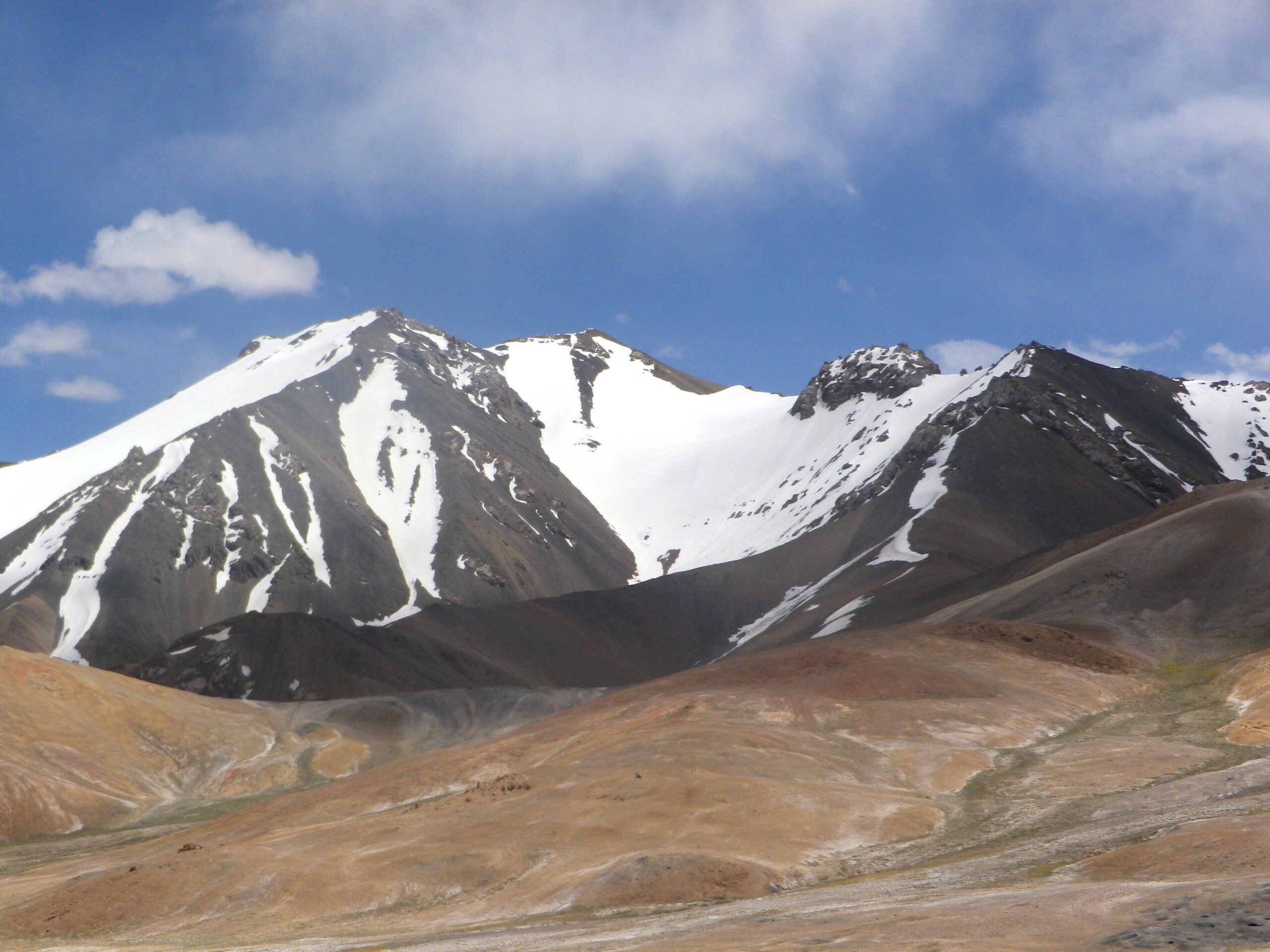
The White Horse Pass, Tajikistan; image: TCA, Stephen M. Bland
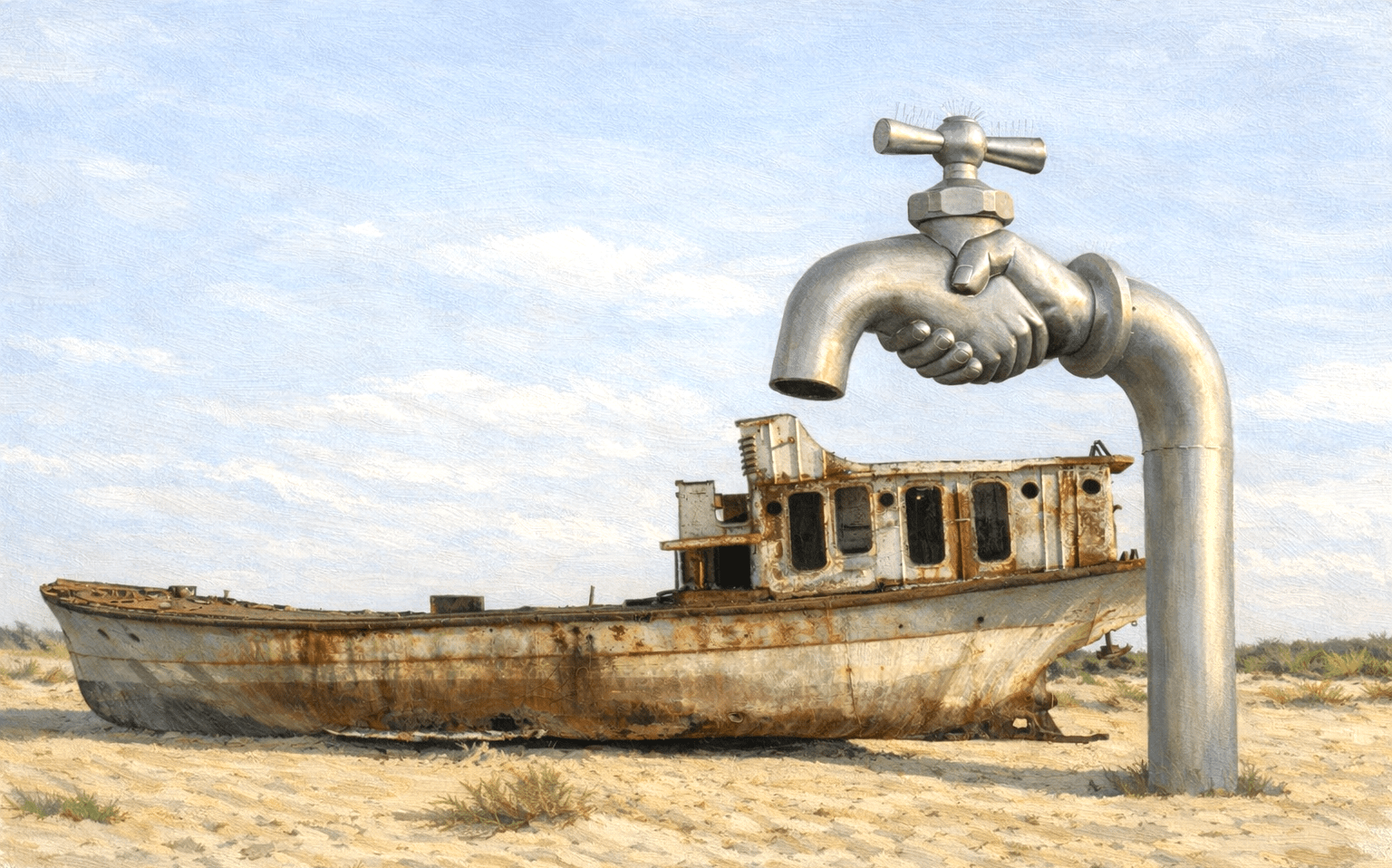
However, the pace of change is alarming. By 2030-2040, water scarcity in Central Asia risks becoming chronic. Glaciers in the Western Tien Shan, for example, have reportedly shrunk by roughly 27% over the past two decades and continue to retreat, posing a direct threat to the flow of the Amu Darya and Syr Darya rivers. These rivers increasingly fail to reach the Aral Sea in sufficient volume, while the exposed seabed has become a major source of salt and dust storms.
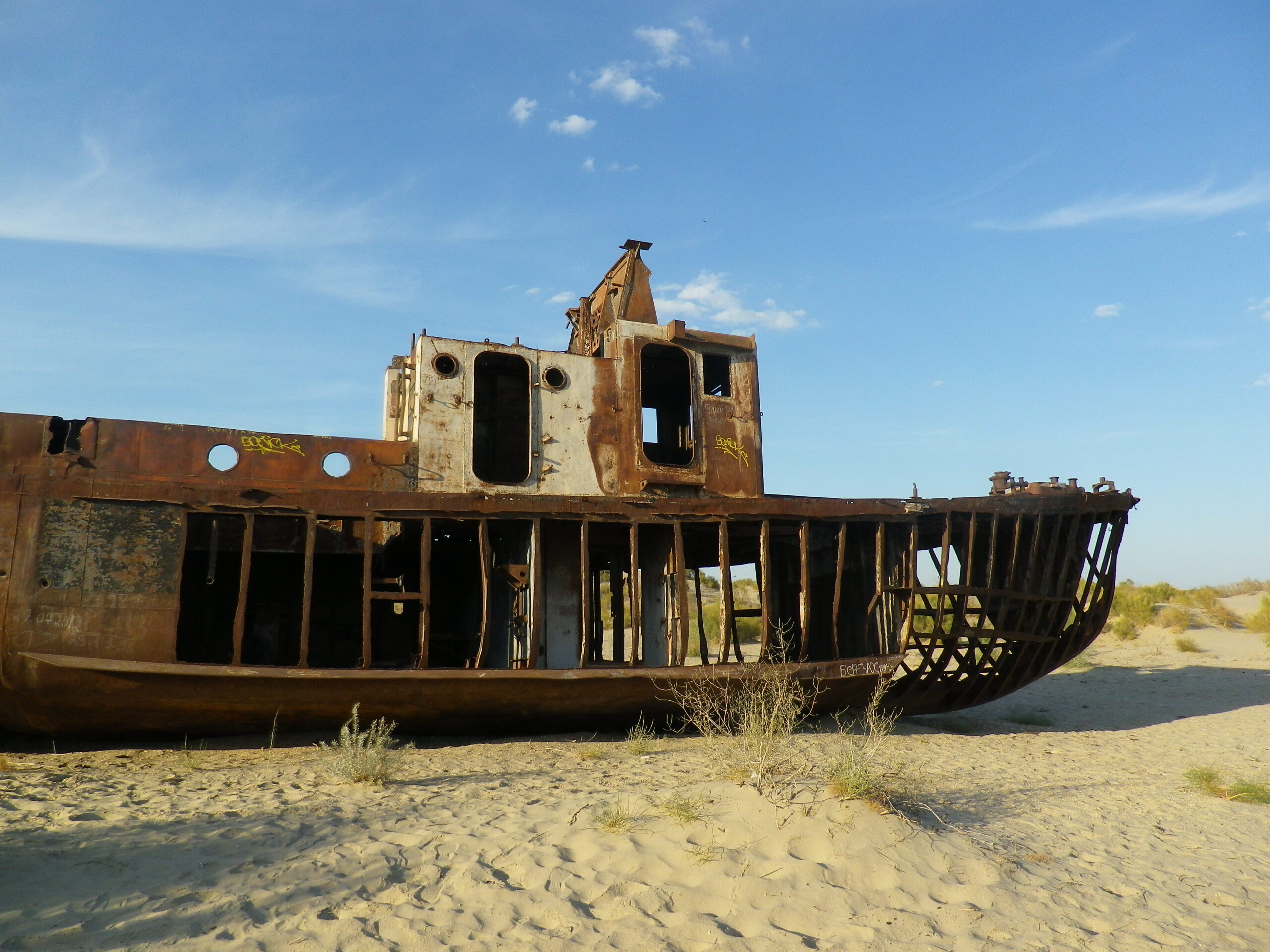
Moynaq, Karakalpakstan; image: TCA, Stephen M. Bland
Infrastructure inefficiencies compound the problem. Estimates suggest that in some systems, 40-50% of water can be lost in deteriorating canals and distribution networks before reaching end users. Agriculture accounts for approximately 80-90% of total water withdrawals, much of it directed toward water-intensive crops cultivated using outdated irrigation techniques. Meanwhile, the region’s population could grow by almost 25% by 2040 compared with current levels, placing additional pressure on drinking water supplies and public utilities.
Taken together, these factors make water scarcity not only an environmental and economic issue but also a potential source of social instability. In this context, water is gradually becoming a matter of domestic and regional security rather than solely a question of resource management.
The challenge of water security, particularly the use of transboundary rivers, lakes, and seas, as well as climate-related impacts on aquatic systems, has long transcended national borders. In Central Asia, this is reflected in asymmetries between upstream and downstream states. Globally, it manifests in growing tensions between regions with relative water abundance and those facing chronic deficits.
The United Nations has repeatedly warned that, under conditions of accelerating climate change, water could become a significant trigger of conflict in the 21st century. Developing global rules, monitoring systems, and early-warning mechanisms is therefore becoming as important as implementing national conservation programs.
Technology and Management: Unlocking Hidden Reserves
International experience demonstrates that a substantial share of water deficits can be mitigated through improved governance and technology. Properly designed and maintained drip irrigation systems can reduce water use by 30-50% compared with traditional surface irrigation while supporting higher yields and improved crop quality.
Laser land leveling can cut irrigation water use by 25-30% without reducing yields. It enhances water efficiency, reduces weed growth, and promotes more uniform crop maturation, while also lowering the volume of water required for field preparation.
Replacing open earthen canals with pipeline systems can significantly reduce conveyance losses. Digital water metering, sensors, satellite monitoring, and information technologies help transform water from an “invisible” input into a measurable and manageable asset. In urban settings, water meters, efficient plumbing fixtures, and the reuse of treated wastewater provide additional savings.
Across regions, experts reach a similar conclusion: the crisis stems less from climate conditions alone and more from outdated management models. Modernizing governance and infrastructure often delivers the most immediate and substantial gains.
Regional Cooperation as Part of the Global Response
For Central Asia, a central priority is shifting from competition to cooperation. Proposals such as the creation of an International Water and Energy Consortium for the region reflect efforts to reconcile upstream and downstream interests, integrate water and energy considerations, and reduce the risk of conflict.
In late 2025, the Interstate Commission for Water Coordination of Central Asia reached agreement on water allocations from the Amu Darya and Syr Darya rivers for the 2025–26 non-growing season — setting specific quotas for each state and ensuring a minimum flow through key hydrological points and the Aral Sea delta — underscoring that shared management is an operational reality as well as a strategic imperative
The importance of such mechanisms extends beyond the region. They illustrate how transboundary resources can be governed through shared rules, transparent data, and mutual benefit, elements that remain underdeveloped in the global water management system.
In this context, the initiative proposed by Kazakhstan’s President Kassym-Jomart Tokayev to establish an International Water Organization within the United Nations framework carries broader significance. It represents not merely a regional proposal but an attempt to strengthen institutional foundations for global water governance.
Over the long term, such an organization could serve as a platform for developing universal principles of water management, facilitating data exchange and scientific cooperation, providing early warnings of emerging crises, and preventing transboundary disputes over allocation.
As water-related risks increasingly affect countries across continents, initiatives of this kind align with wider efforts to adapt to climate change and enhance resilience.
Central Asia as an Early Indicator of a Global Shift
Central Asia is not on the periphery of the global water crisis; it is an early indicator of broader trends. Developments in the Amu Darya and Syr Darya basins may foreshadow similar challenges elsewhere.
Water scarcity represents a global governance challenge affecting Central Asia, the Middle East, Africa, and advanced economies alike. The region, therefore, has the potential to act not only as a zone of risk but also as a source of practical solutions. If water diplomacy, technological innovation, and institutional reform can succeed here, their lessons may prove applicable worldwide.
Water has become a test of the capacity of states and international institutions to act strategically. The sustainability of global development in the 21st century will depend in part on how that test is met.