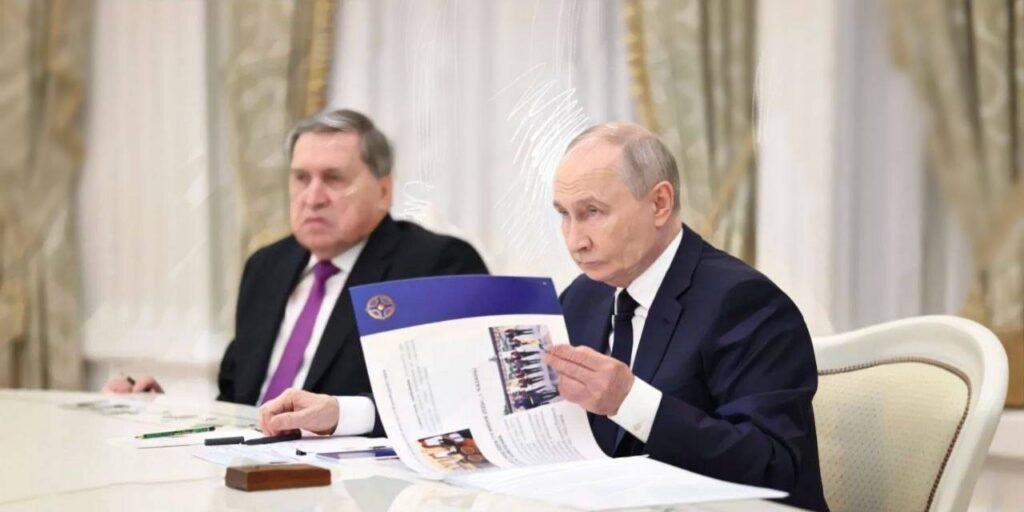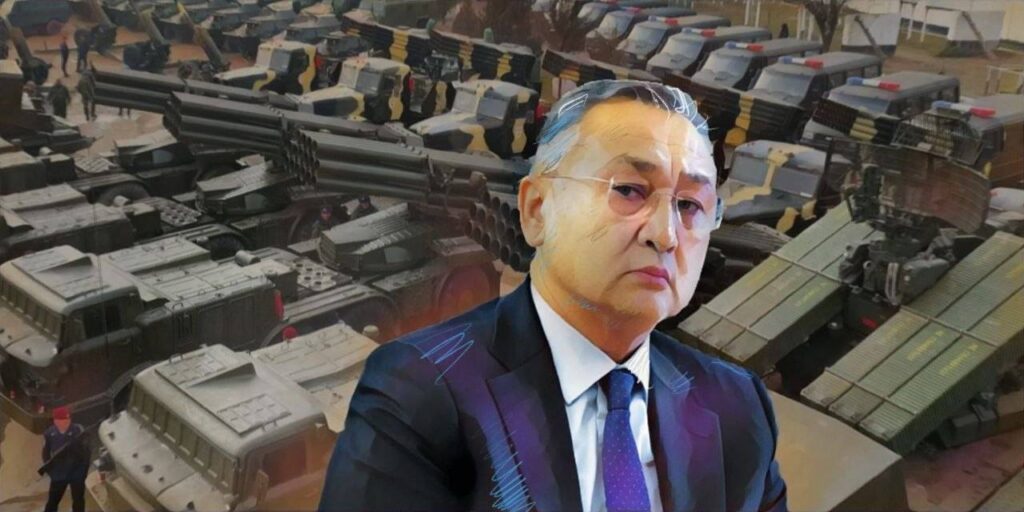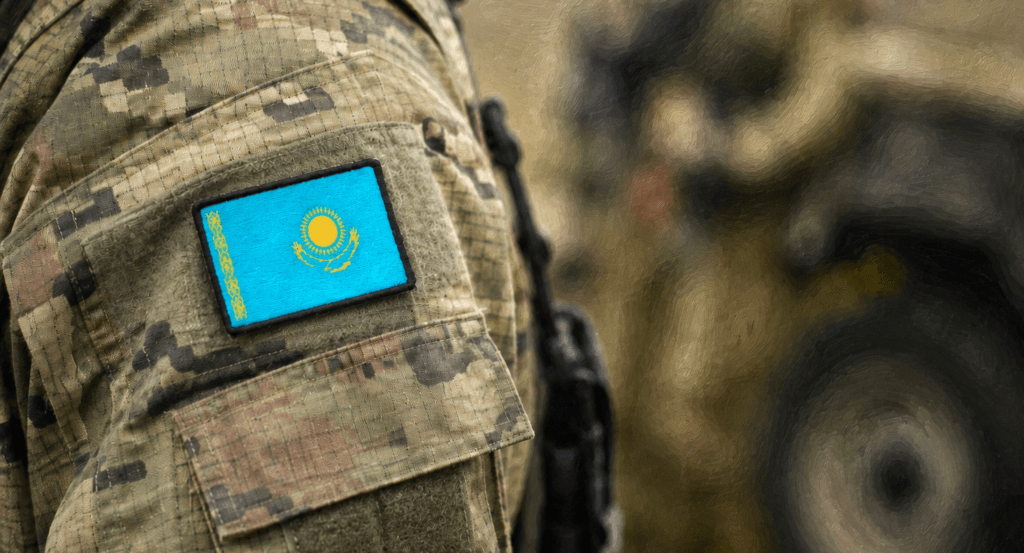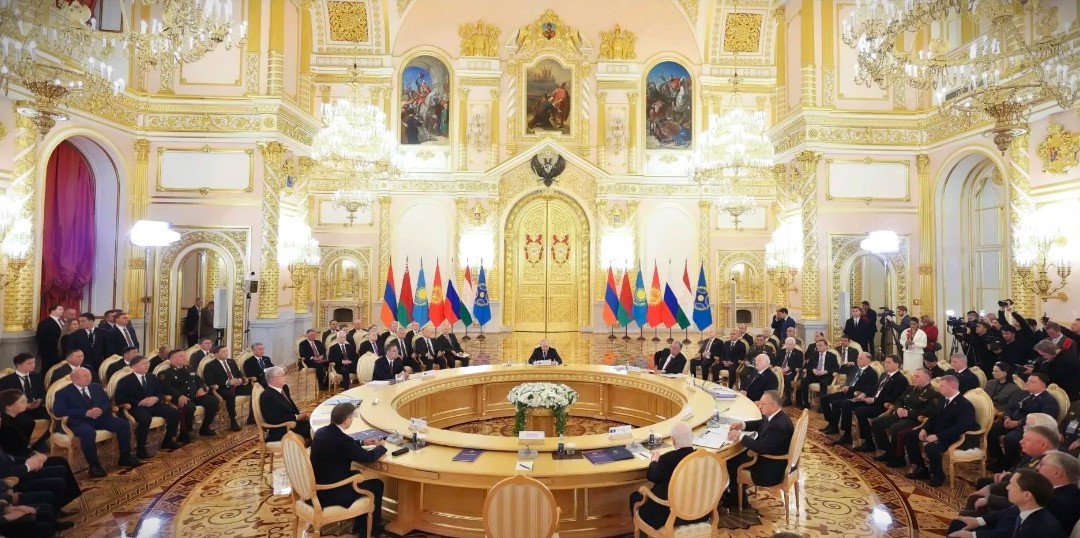
Armenia has effectively stopped participating in the Collective Security Treaty Organization (CSTO) but has not formally withdrawn from the military alliance. At the November 11, 2026, summit in Moscow, Armenia lost its voting rights because of unpaid membership dues, while the CSTO’s five other members — Russia, Kazakhstan, Kyrgyzstan, Tajikistan, and Belarus — agreed to develop collective aviation forces and mobile air defense units. Kazakh political analyst Maksim Kaznacheyev explained to The Times of Central Asia why Armenia’s leadership is reluctant to sever ties with the CSTO and what the new military agreements could mean for Central Asian countries.
Why Armenia Has Not Left the CSTO
Yerevan froze its participation in the organization in February 2024, accusing its allies of failing to ensure Armenia’s security during armed clashes with Azerbaijan. Armenia stopped paying membership dues and sending representatives to CSTO bodies.
At the November 11 summit, CSTO members decided that Armenia would lose its voting rights and the ability to nominate candidates for senior positions because of unpaid contributions. CSTO Secretary-General Taalatbek Masadykov said, however, that the organization was not considering expelling Armenia.
Kaznacheyev attributes Yerevan’s reluctance to sever ties with the CSTO to Armenia’s domestic political situation.
“If Armenia leaves the CSTO or the EAEU, pro-Western actions could trigger an internal crisis and destabilize the country,” Kaznacheyev said. He believes Prime Minister Nikol Pashinyan is seeking to avoid deepening divisions within Armenia as his government pursues closer ties with the European Union.
Yerevan, however, has pursued different policies toward the two organizations. Armenia has suspended its participation in the CSTO but continues to operate within the Eurasian Economic Union (EAEU). On November 5, Pashinyan said the country was not preparing to leave the EAEU.
The CSTO has experienced the departure of member states before. Uzbekistan signed the Collective Security Treaty in 1992, declined to renew it in 1999, rejoined the CSTO in 2006, and suspended its membership again in 2012. Kaznacheyev believes Armenia’s situation is substantially different.
“Uzbekistan’s experience does not apply to Armenia because Uzbekistan had a unified political elite when it left the CSTO,” Kaznacheyev said. He noted that Tashkent also had a bilateral security agreement with Russia, allowing it to maintain military cooperation outside the CSTO.
For Kazakhstan, Armenia’s dispute with the CSTO does not create an immediate security threat. Kaznacheyev said Astana’s restrained position reflects its limited direct interests in Armenia and its growing transport links through Azerbaijan and Georgia toward Turkey. “That is why Kazakhstan maintains a restrained, neutral position,” he said.
What the New Air Defense Agreements Mean for Central Asia
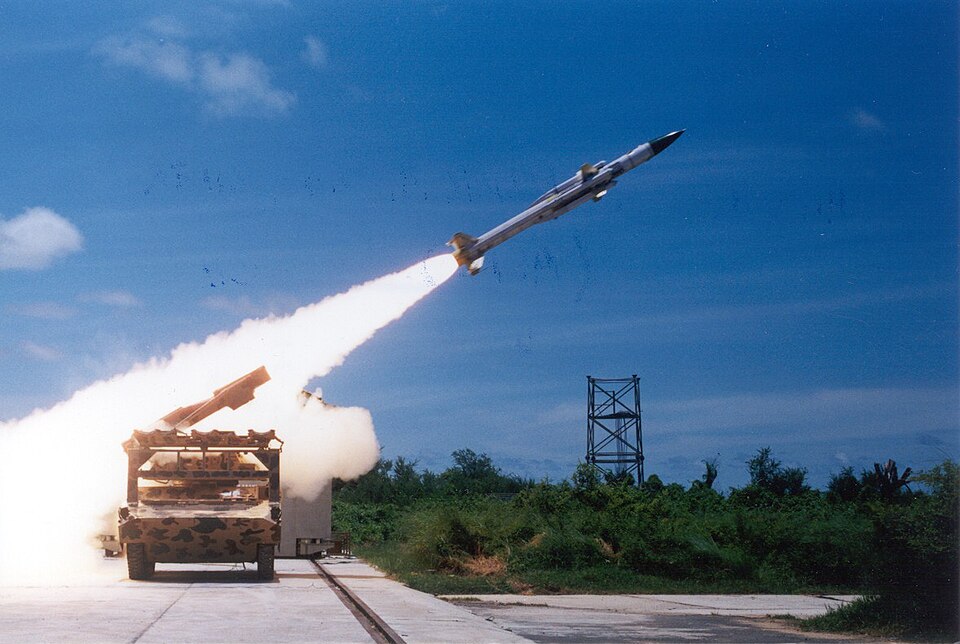
At the Moscow summit, CSTO members agreed to develop the organization’s Collective Aviation Forces and approved plans for mobile air defense units to protect joint military formations. Plans call for incorporating combat aviation units alongside transport and special-purpose aircraft.
Kaznacheyev believes the agreements could expand Russian military-technical assistance to Kazakhstan, Kyrgyzstan, and Tajikistan.
He argues that Russia could help other CSTO members modernize their air forces and air defenses, particularly in Kyrgyzstan and Tajikistan, whose capabilities are more limited than Kazakhstan’s. Such assistance could include additional military equipment and aviation technology, he said.
CSTO allies have long had the opportunity to purchase Russian weapons and military equipment on preferential terms. The new agreements do not, in themselves, mean that deliveries of missile systems or transfers of aviation technologies have begun.
Kaznacheyev believes Russia’s military role determines the nature of relations within the CSTO.
“It is Russia’s geopolitical project,” he said, arguing that other members depend heavily on Moscow for military assistance. He cited the CSTO’s intervention in Kazakhstan in January 2022 as an example.
During the mass protests and unrest in Kazakhstan, the CSTO deployed approximately 2,000 troops to guard strategic facilities. Russia provided the largest share of the contingent. It was the organization’s first deployment of collective forces in response to an internal crisis in a member state.
For Kazakhstan, the January operation remains an example of the CSTO’s security mechanisms being put into practice. Armenia’s experience has been the opposite: Yerevan did not receive the military assistance it requested following clashes with Azerbaijan on Armenian territory in 2022.
The Caspian Sea: Does the CSTO Need Additional Forces?
In the final declaration of the Moscow summit, CSTO members expressed concern about attacks on commercial vessels and port infrastructure involving uncrewed systems, including in the Caspian Sea.
For Kazakhstan, security in the Caspian has direct economic implications. The country’s seaports handle freight moving along the Trans-Caspian International Transport Route, which connects Central Asia with Azerbaijan, Georgia, and European markets. The Caspian route also plays a role in Kazakhstan’s efforts to diversify its oil exports.
Kaznacheyev sees no need to establish separate CSTO forces to protect the sea. In his view, the Caspian littoral states can address the main security challenges through existing cooperation arrangements.
The analyst acknowledges potential risks from the war in Iran and the possibility of strikes against its Caspian coastline. He believes, however, that Tehran has an interest in maintaining good relations with its Caspian neighbors, which provide important trade routes.
“There may be isolated incidents, such as drones accidentally entering neighboring airspace,” Kaznacheyev said, but he does not believe these warrant deploying additional CSTO forces in the Caspian.