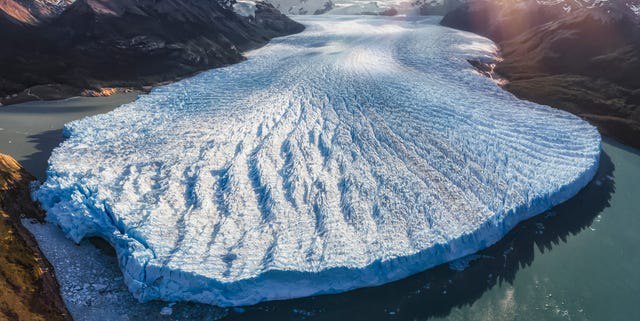
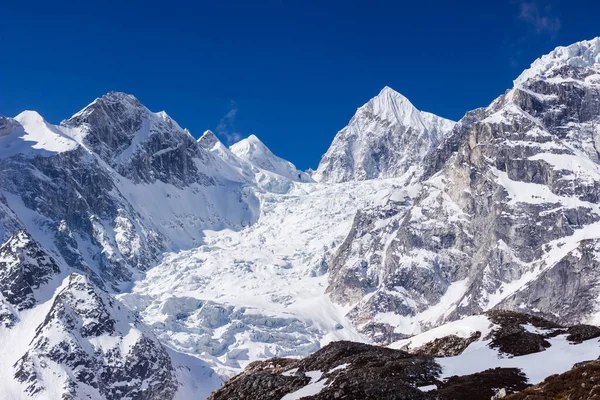
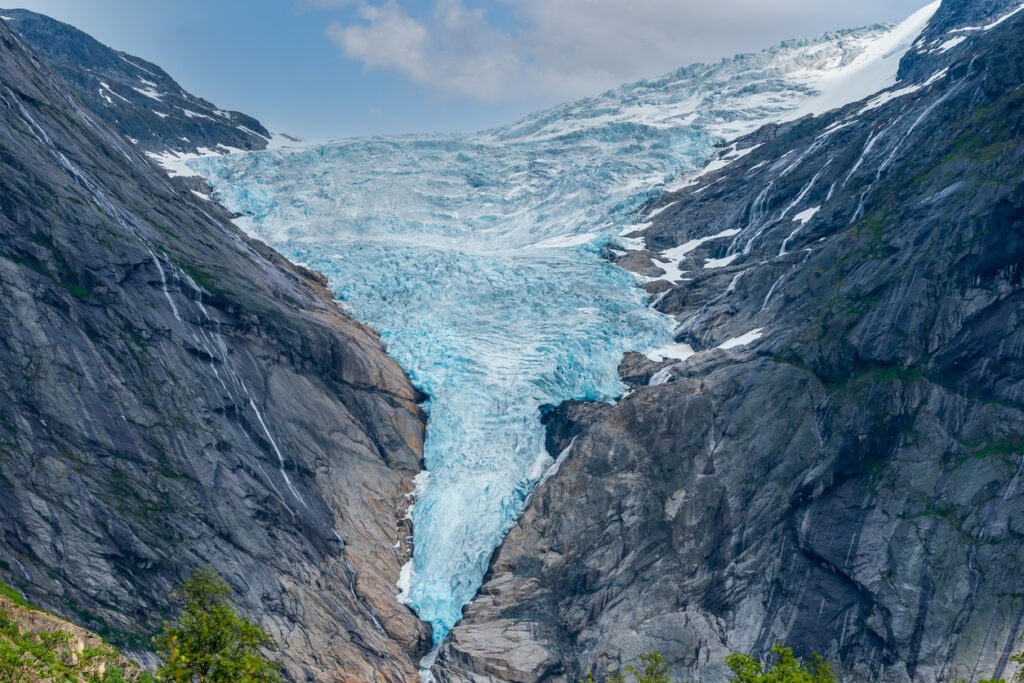
A significant portion of the Didal Glacier in Tajikistan’s Tajikabad district has detached and slid more than five kilometers downslope, according to a report by Russian state news agency TASS, citing the Agency for Hydrometeorology of Tajikistan.
Experts from the agency’s Center for Glaciology confirmed that the glacier has continued to shift over the past three days, advancing an additional 72 meters and remaining in an “unstable” state.
A field expedition to the Surkhob River basin revealed that the detached ice mass measures between 1.3 and 1.5 kilometers in length, 170-200 meters in width, and 25-50 meters in height. Satellite imagery reviewed by glaciologists confirmed the glacier’s ongoing movement and indicated significant displacement since its initial shift began in September. Experts attribute the detachment to unusually high temperatures during the summer and autumn months.
The Geophysical Service of the National Academy of Sciences noted that seismic activity may also be a contributing factor. On November 3, an earthquake struck the region at 01:29 local time, with tremors measuring four points in Dushanbe and six to seven in northern Afghanistan, the location of the epicenter. Scientists believe the combination of warming temperatures and recent seismic shocks has rendered the glacier’s behavior increasingly unpredictable.
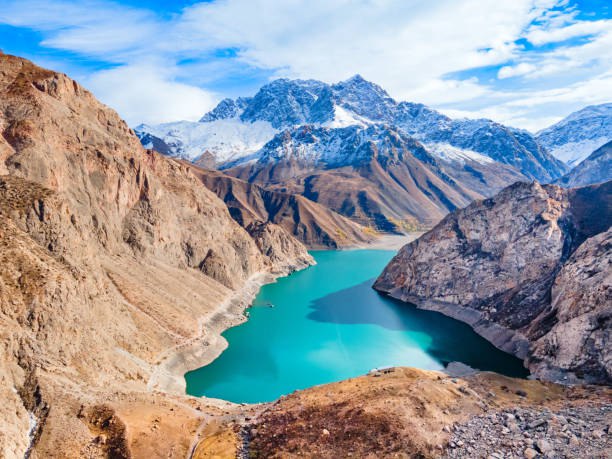
Officials from the Hydrometeorology Agency warned that continued movement of the Didal Glacier could lead to the formation of glacial lakes and possible outburst floods, endangering downstream settlements and infrastructure. The unstable ice mass also raises the risk of secondary natural hazards such as landslides and mudflows. Monitoring teams are conducting regular field assessments to track developments.
Authorities have described the glacier’s shift as a broader warning about the urgency of climate adaptation and glacier conservation. Tajikistan, 93 percent of which is mountainous, hosts roughly 14,000 glaciers that supply nearly 60 percent of Central Asia’s water resources. Of these, approximately 1,300 have already melted completely, and the rate of glacial retreat is accelerating.
Earlier this year, President Emomali Rahmon warned of the growing threat posed by glacial lake outbursts, noting their potential to destroy villages and infrastructure and potential to cause casualties. He cited climate change, air pollution, and heavy dust deposits as key factors driving glacier loss.
A similar incident occurred on October 25, when a large section of the Ismoil Somoni Glacier broke away in the same district. Emergency services quickly contained the situation, though authorities warned that continued rainfall and further collapse remained possible.