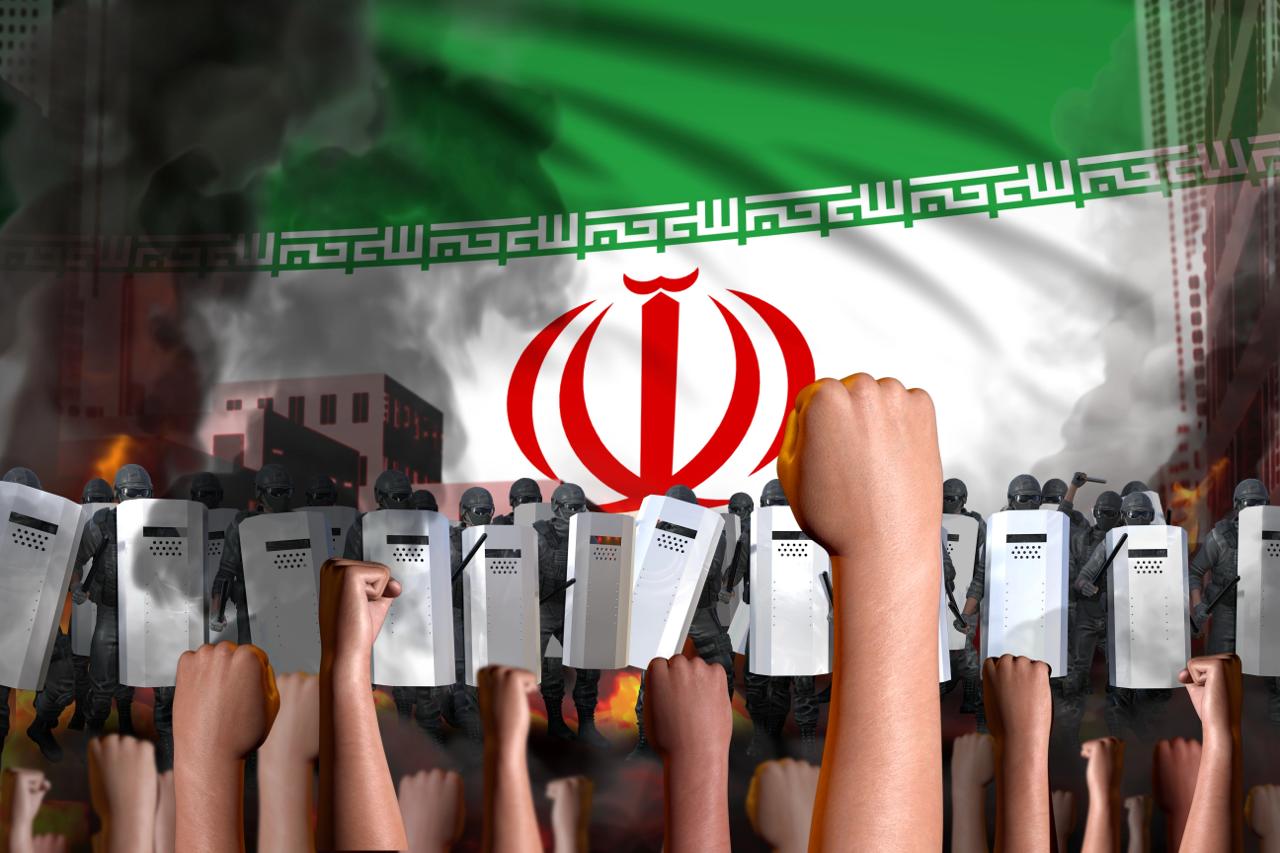
The protests that spread across Iran in late 2025 and early 2026 reflected more than short-term public discontent, instead exposing the cumulative effects of a prolonged socio-economic crisis. Persistently high inflation, declining real incomes, and falling living standards have placed sustained pressure on households and weakened the social contract between the state and society.
Against this backdrop, the unrest increasingly acquired a foreign policy dimension. Strong statements from U.S. officials warning of consequences in response to Iran’s handling of the protests, combined with Tehran’s rejection of what it described as external interference, heightened the risk of the crisis becoming internationalized. Thus, the protests in Iran ceased to be an exclusively domestic issue and became a factor of regional instability.
A key feature of the current situation is that the Iranian crisis is developing simultaneously on three fronts:
- socio-economic, where protests are fueled by deteriorating living conditions;
- political, linked to a crisis of confidence and governability; and
- geopolitical, where internal processes are used by external actors as a tool of pressure.
Consequences for Afghanistan
For Afghanistan, developments in Iran carry direct and practical significance. Since late 2024, Iran has become a source of large-scale returns of Afghan migrants, both voluntary and forced. By 2025, this process had become systematic, placing a heavy burden on Afghanistan’s western provinces, particularly Herat.
In the event of prolonged instability and a deepening economic crisis in Iran, the likelihood of additional waves of migrant returns would increase. This would place further strain on Afghanistan’s labor market, healthcare system, social infrastructure, and already limited economic resources. In a fragile economy, the return of large numbers of migrants intensifies competition for jobs and raises the risk of local social tensions.
The trade and logistics dimension is equally significant. Iran remains Afghanistan’s key economic partner and a vital transit corridor, including through the Islam Qala border crossing. Any deterioration in Iran’s socio-economic conditions has a direct impact on trade flows, supply chains, and broader regional economic stability.
Significance for Central Asia
The ongoing protest movements and the deterioration of the situation in Iran, driven by a systemic economic crisis and growing political and social discontent, could have a significant impact on political and economic dynamics, as well as security, across Central Asia.
On the one hand, governments in the region are responding with cautious concern, mindful of the potential spillover effects of instability and rising internal discontent. A prolonged crisis in Iran increases the risks of migration pressure, border instability, and cross-border threats, all of which directly affect regional security.
On the other hand, a further deterioration of Iran’s internal situation could disrupt trade, transit, and energy ties with Central Asia, weakening Tehran’s regional influence and reshaping the balance of power. Under such conditions, the role of other regional and external actors, including Russia, China, Turkey, and Western countries, is likely to grow as they gain opportunities to strengthen their positions in the region.
As a result, the crisis in Iran is evolving beyond a domestic challenge and is becoming a factor in the transformation of the regional landscape, compelling Central Asian states to contend with heightened uncertainty and adjust their foreign policy and economic strategies accordingly.
Conclusions
Protests can lead to political change only when accompanied by a clear vision of the future. In the current Iranian case, mass discontent appears to reflect a protest of despair rather than an organized project of transformation, even amid external attempts to politicize events on the ground.
For the region, this translates into heightened uncertainty. The Iranian crisis is already extending beyond national borders, affecting migration, trade, food security, and regional stability. Afghanistan, within this configuration, is among the most vulnerable neighbors, confronting consequences over which it has little objective influence.
The issue of double standards in international responses to protests also warrants special attention. Identical actions by states are interpreted either as expressions of sovereignty or as violations of human rights, depending on the political context. Such selectivity not only fails to contribute to crisis resolution but also deepens societal distrust in existing political and legal mechanisms.
Under these circumstances, recognizing the right to peaceful protest, refraining from exploiting internal crises, and accounting for cross-border consequences emerge as essential conditions for preventing further destabilization at both the national and regional levels.
Adapted translation: Aidar Borangaziyev, Open World Policy Lab, Astana, Kazakhstan