• KGS/USD = 0.01144 0%
  • KZT/USD = 0.00212 0%
  • TJS/USD = 0.10456 0.19%
  • UZS/USD = 0.00008 0%
  • TMT/USD = 0.28490 0%
  • KGS/USD = 0.01144 0%
  • KZT/USD = 0.00212 0%
  • TJS/USD = 0.10456 0.19%
  • UZS/USD = 0.00008 0%
  • TMT/USD = 0.28490 0%
  • KGS/USD = 0.01144 0%
  • KZT/USD = 0.00212 0%
  • TJS/USD = 0.10456 0.19%
  • UZS/USD = 0.00008 0%
  • TMT/USD = 0.28490 0%
  • KGS/USD = 0.01144 0%
  • KZT/USD = 0.00212 0%
  • TJS/USD = 0.10456 0.19%
  • UZS/USD = 0.00008 0%
  • TMT/USD = 0.28490 0%
  • KGS/USD = 0.01144 0%
  • KZT/USD = 0.00212 0%
  • TJS/USD = 0.10456 0.19%
  • UZS/USD = 0.00008 0%
  • TMT/USD = 0.28490 0%
  • KGS/USD = 0.01144 0%
  • KZT/USD = 0.00212 0%
  • TJS/USD = 0.10456 0.19%
  • UZS/USD = 0.00008 0%
  • TMT/USD = 0.28490 0%
  • KGS/USD = 0.01144 0%
  • KZT/USD = 0.00212 0%
  • TJS/USD = 0.10456 0.19%
  • UZS/USD = 0.00008 0%
  • TMT/USD = 0.28490 0%
  • KGS/USD = 0.01144 0%
  • KZT/USD = 0.00212 0%
  • TJS/USD = 0.10456 0.19%
  • UZS/USD = 0.00008 0%
  • TMT/USD = 0.28490 0%

Viewing results 5995 - 6000 of 12376

IFC Invests in Tajikistan’s First Green Bond

The International Finance Corporation (IFC), a member of the World Bank Group, has announced a subscription of up to $10m in a landmark local currency green bond issued by Tajikistan's Eskhata Bank. This green bond is the first for the country, and is aimed at boosting access to climate finance for smaller businesses amid a challenging macro-economic environment. Eskhata Bank is one of the country's leading private banks, with a focus on serving micro, small and medium enterprises (MSMEs) and retail clients. The proceeds of the green bond will enable Eskhata to support MSMEs in undertaking climate-smart initiatives, supporting economic activity at a challenging time for the country. "IFC's investment in Eskhata Bank's green bond is a testament to our dedication to supporting MSMEs in driving environmental sustainability," said Akmaljon Saifidinov, Eskhata Bank's CEO. "By channeling funds towards climate-smart projects, we are helping to build a more resilient and sustainable economy in Tajikistan.”  Tajikistan recently approved its Green Economy Development Strategy for 2023–2037, which sets a clear vision for its transition to a low-carbon and resilient economy. IFC is supporting this process through its climate finance program in Central Asia, which aims to increase the flow of green finance into the country.  "This first green bond issuance in Tajikistan by our long-standing client, Bank Eskhata, is a remarkable achievement that demonstrates the bank's commitment to sustainable development," said Zafar Khashimov, IFC Regional Manager. Green bonds raise funds for projects with positive environmental benefits, such as renewable energy, energy efficiency, waste management, or green building. 

Kyrgyzstan Sees Surge In Car Imports From China

In 2023 Kyrgyzstan imported 79,131 cars worth nearly $1.2bn from China, an almost 45-fold increase compared to the 1,773 cars imported in 2022, the National Statistics Committee has reported.  The import of cars from South Korea also increased, reaching 50,397 for almost $435m.  The sharp increase in Kyrgyzstan’s car imports is largely due to the zeroing out of customs duties of the Eurasian Economic Union on the import of electric vehicles from third countries. Kyrgyzstan is a member of the EEU, together with Armenia, Belarus, Kazakhstan, and Russia.    Since the introduction of Western sanctions against Russia over its invasion of Ukraine, China has become the main supplier of new cars to the Russian Federation. Chinese vehicles are mainly exported to Russia via Central Asian countries. In total, 184,789 cars worth $2.7bn were imported into Kyrgyzstan last year, a 4.5-fold increase since 2022. At the same time, in 2023 Kyrgyzstan re-exported 8,733 cars worth $69.6m, almost nine times more than in 2022. Most of the cars were re-exported to Russia — 6,253 for $52.5m, and 2,374 cars worth $10.8m were sent to Kazakhstan.

It Has Been 25 years Since the Terrorist Attack in Tashkent

TASHKENT, Uzbekistan - A lot of people in Uzbekistan remember where they were on that traumatic day 25 years ago. There are no public commemorations on the Feb. 16 anniversary. But every year, Uzbek media publish details about the 1999 bombings in Tashkent, the capital. School teachers briefly tell students about it. The Uzbek government blamed Islamic militants for the coordinated bombings that killed at least 16 people and injured about 100. Islam Karimov, president at the time, said extremists had intended to kill him. Abduvali Soyibnazarov, a political commentator in Uzbekistan, spoke about the attacks in a conversation with The Times of Central Asia. He said since his office – the Broadcasting Center of Uzbekistan is located in the central part of the city, the sounds of explosions were clearly heard by him. It was 10:40 a.m., Soyibnazarov recalled. “There was supposed to be a meeting of the government of Uzbekistan dedicated to the results of the economic development of the republic in the past year. Shortly before the start of the meeting, a shootout took place between the president’s guards and militants in the main square of Tashkent - in front of the government building,” he said. International news organizations scrambled to figure out what was happening. There was a false rumor that the Cabinet of Ministers building had been attacked with grenades. “The first explosion occurred shortly after the start of the shooting, on Yusuf Khos Khajib street of the capital, near the building of the Ministry of Internal Affairs. A ZAZ-968M car exploded,” Soyibnazarov said. The second explosion, the most powerful of the day, occurred at 10:55 a.m., 15 minutes after the first blast. “The explosion was in a car parked near Independence Square. Some residents, whose houses are two to three kilometers away from the place of the explosion, believed that an earthquake had started. Our Uzbek radio broadcasting center is also located in the central part of the city, so the explosion was very loud. Even the windows of our office almost broke,” he said. A third car blew up near the entrance of the Cabinet of Ministers building, during a meeting that Karimov was scheduled to attend. Karimov, however, had not yet arrived. After being informed about the attacks, he went to the scene and was addressing the nation on live television when – at 11:20 a.m. - a fourth bomb exploded a few kilometers away, near the National Bank of Uzbekistan. “As a result, the windows of the bank and surrounding buildings were shattered. People injured by broken glass were shown on TV. We heard explosions going off at different intervals in other parts of the city. The fifth and last explosion took place at 12 p.m. in the garage of a private house,” Soyibnazarov said. The casualties included three internal affairs officers, one of whom later died. Several days after the attacks, Karimov said he had narrowly escaped death. “I usually arrive at meetings 10-15 minutes early. But I was a...

Uzbek Children for Sale: What Compels Mothers to Part With Their Young Ones?

In Uzbekistan, yet more cases of children being sold have been uncovered by officers of the State Security Service. Law enforcement officers recently detained women trying to sell their children in four cities in Uzbekistan. A 29-year-old resident of Namangan tried to sell her ten-year-old son for $18,000 and was detained while receiving an advance payment of $4,000. A 31-year-old resident of Termez agreed to sell her newborn daughter for $2,000. She was detained while handing over the baby and receiving the money. A 33-year-old woman from Bukhara region, more recently living in Gulistan, was detained while trying to sell her two-week-old son for $40,000. And in the capital, a 27-year-old woman from Chirchik was detained for trying to sell her six-year-old son for $3,000. Child trafficking has taken on horrific proportions in recent years in Uzbekistan. According to the World Report on Trafficking in Persons, over the timespan from 2014 to 2020, 380 cases of trafficking in newborns were uncovered here. Year after year, these figures continue to increase. Prices for babies range from $200 to $40,000. There are several reasons that drive mothers to such drastic measures. The first is the overall plight of the mother. Often they have no way to make a living, have lost their husbands, or already have several older children. Another child becomes an impossible burden for her -- which can be eased by earning money to feed, clothe, and house herself and the remaining family members. There have been cases when children were offered in exchange for an apartment. The weak state system of support for women in difficult life situations puts these mothers in an impossible situation, having to choose between living in poverty or giving their children and themselves a chance to live in better conditions in the future. Secondly, fear of shame and being publicly ostracized are major factors. Young women and girls who become pregnant for reasons deemed socially unacceptable -- as well as victims of rape -- experience this. In an attempt to hide the pregnancy and the child, such mothers often temporarily move to another city or region. This can culminate in the mother trying to get rid of the child by selling it far away from their home regions after giving birth. Furthermore, Uzbekistan has a very complicated bureaucratic system of adoption, which helps drive the black market for the trafficking of newborns and children. Because of this bureaucracy, only a few people manage to take the desired child home from an orphanage. Therefore, childless couples look for a way to get a child directly from a maternity hospital. The mediator in such transactions is often the medical staff, who negotiate all the terms of sale with the biological mother and adoptive parents in advance. The problem of selling children in Uzbekistan must be addressed comprehensively, experts say. The introduction of sex education lessons in schools is a necessity, as well as the introduction of state programs to support women in need, tougher penalties for...

Kazakhstan’s Dimash Kudaibergen becomes UN Ambassador

The Kazakhstani musician, singer and composer Dimash Kudaibergen has been named a United Nations Goodwill Ambassador for Migration, according to a post by Kudaibergen on his Instagram page. The UN's International Organization for Migration (IOM) called Dimash "an extremely popular singer in Central Asia and beyond".  The 29-year-old singer is originally from Aktobe, and became a global celebrity after participating in the Chinese musical competition The Singer in 2017. "Our new regional and national Goodwill Ambassadors are inspiring people around the world. With IOM, they will contribute to improving people's lives. We welcome you to IOM!" the organization said in a statement. The United Nations International Organization for Migration is an intergovernmental organization in the field of migration. It was founded in 1951 and is committed to the principle that humane and orderly migration benefits migrants and society. The organization has 175 member states and eight observer states.

Qatari Companies to Invest $500m in Kazakhstan’s Agriculture

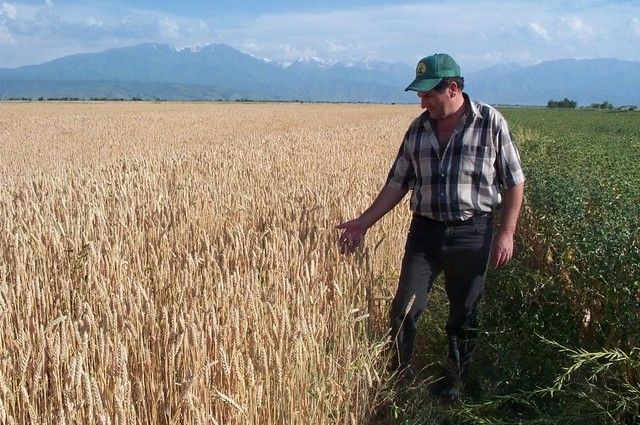
Companies from Qatar intend to invest in the deep processing of crop produce in Kazakhstan, the Kazakh Ministry of Agriculture has reported.  The Qatari company Hassad Food, the Turkish company Tiryaki Agro, and Kazakhstan’s National Management Holding, Baiterek, have signed a memorandum of cooperation on the construction of a grain processing plant in Kazakhstan’s northern Akmola region. The project is estimated to cost $200m, and the plant will process up to 250,000 tons of wheat and 100,000 tons of peas per year. Hassad Food has attracted Tiryaki Agro and a Canadian company, Sunrise Foods International, as technical partners.  Elsewhere, Kazakhstan’s agricultural holding Dinara Group and Qatar National Enterprises have signed a partnership agreement that provides for creation of a joint direct investment fund for the development of the agricultural sector in Kazakhstan and Central Asia. As part of this agreement, Dinara Group plans to scale up existing dairy, meat, and crop production, develop its own breeding stock base and build additional dairy farms, build a milk processing and cheese production plant, and export finished products to China and the Middle East. Qatar’s investment in the project is planned at about $300m.  Kazakhstan’s Ministry of Agriculture also announced that the country plans to double lamb exports to Qatar in 2024.