• KGS/USD = 0.01144 0%
  • KZT/USD = 0.00212 0%
  • TJS/USD = 0.10456 0.19%
  • UZS/USD = 0.00008 0%
  • TMT/USD = 0.28490 0%
  • KGS/USD = 0.01144 0%
  • KZT/USD = 0.00212 0%
  • TJS/USD = 0.10456 0.19%
  • UZS/USD = 0.00008 0%
  • TMT/USD = 0.28490 0%
  • KGS/USD = 0.01144 0%
  • KZT/USD = 0.00212 0%
  • TJS/USD = 0.10456 0.19%
  • UZS/USD = 0.00008 0%
  • TMT/USD = 0.28490 0%
  • KGS/USD = 0.01144 0%
  • KZT/USD = 0.00212 0%
  • TJS/USD = 0.10456 0.19%
  • UZS/USD = 0.00008 0%
  • TMT/USD = 0.28490 0%
  • KGS/USD = 0.01144 0%
  • KZT/USD = 0.00212 0%
  • TJS/USD = 0.10456 0.19%
  • UZS/USD = 0.00008 0%
  • TMT/USD = 0.28490 0%
  • KGS/USD = 0.01144 0%
  • KZT/USD = 0.00212 0%
  • TJS/USD = 0.10456 0.19%
  • UZS/USD = 0.00008 0%
  • TMT/USD = 0.28490 0%
  • KGS/USD = 0.01144 0%
  • KZT/USD = 0.00212 0%
  • TJS/USD = 0.10456 0.19%
  • UZS/USD = 0.00008 0%
  • TMT/USD = 0.28490 0%
  • KGS/USD = 0.01144 0%
  • KZT/USD = 0.00212 0%
  • TJS/USD = 0.10456 0.19%
  • UZS/USD = 0.00008 0%
  • TMT/USD = 0.28490 0%

Viewing results 5989 - 5994 of 12376

Kazakhstan Mulls Alternative Freight Routes

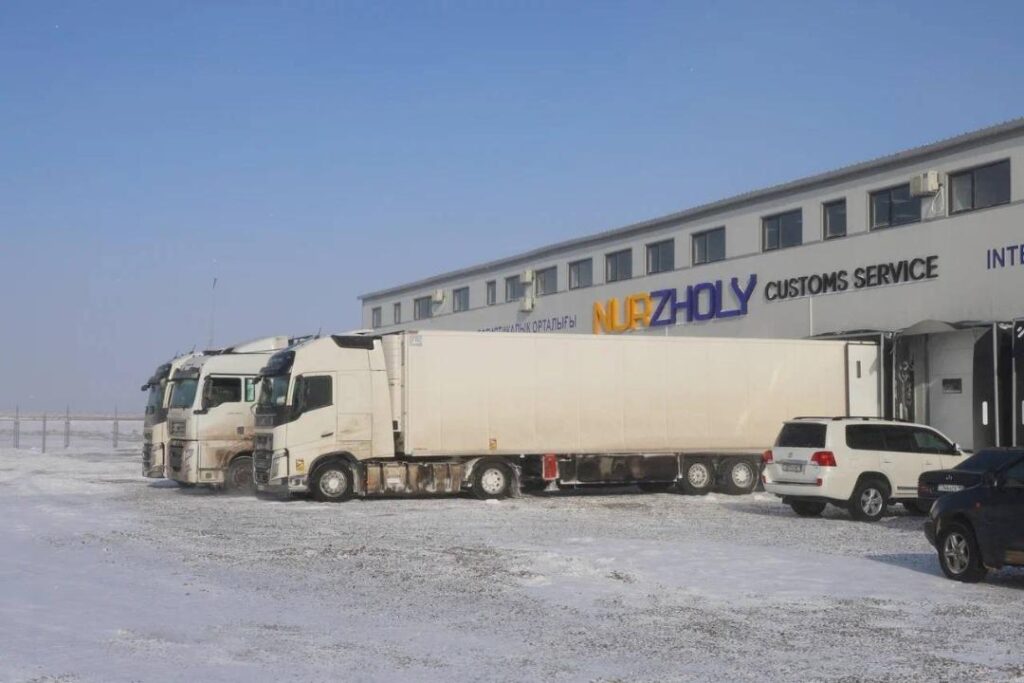
On February 19th Kazakhstan’s deputy prime minister Serik Zhumangarin held a government meeting on the subject of road freight routes to and from Kazakhstan.  According to the Ministry of Transport, last year 7.6m tons of goods were transported through the country by automobile transport, comprising 2.8m tons of exports and 4.8m tons of imports. Kazakhstan’s freight forwarders accounted for 50.2% of the total volume (Uzbekistan – 10.6%, Turkey – 5.5%, Russia – 3%, and Tajikistan – 2.5%.) As an alternative to existing international routes, Kazakh officials proposed a route through Turkmenistan to Turkey. For this to happen, Kazakhstan’s visa procedures with Turkmenistan would need to be simplified. In addition, a route through Latvia was proposed as an alternative for the supply of goods to EU countries. European countries accounted for 1.6m tons of the goods transported to and from Kazakhstan by road in 2023, with Kazakh companies carrying 50% of the total volume. However, the closure of all checkpoints for international road transport in Poland, and the availability of only one checkpoint on the border of Russia and Belarus, became serious obstacles to international trade.

Germany and Kazakhstan Expand Their Partnership

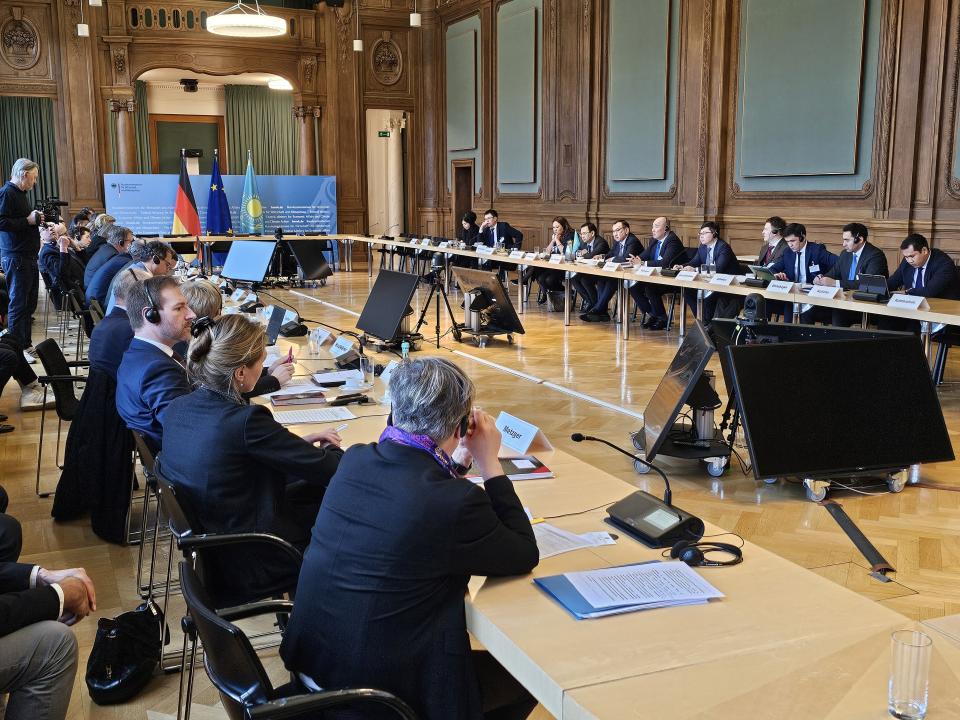
A meeting of the Kazakh-German Intergovernmental Working Group on Trade and Economic Cooperation was held in Berlin on February 16th. It was co-chaired by Kanat Sharlapaev, Kazakhstan’s minister for industry and construction, and Dominik Schnichels, the director for foreign trade policy of Germany’s Federal Ministry of Economic Affairs and Climate Protection.  The meeting discussed bilateral trade and economic relations, cooperation in energy, environment, agriculture and water management, transport, logistics and infrastructure, as well as cooperation in raw materials, industrial and technological spheres, the Kazakh Embassy in Germany reported.  Mr Schnichels commented: "To confirm once again the level of Strategic Partnership between Kazakhstan and Germany, constructive and fruitful talks were held at today's meeting of the Intergovernmental Working Group, which made it possible to identify specific projects in priority areas.”  “The agreements reached today demonstrate that this bilateral platform contributes to improving the framework conditions for further rapprochement of government and business circles, as well as practical promotion of mutual trade and investment. Kazakhstan is a resource-rich country with unique opportunities. Germany is interested in further deepening trade and economic cooperation in the way of the ongoing economic and social reforms in the country.”  In his speech, Mr Sharlapaev stressed that the strategic synergy between Kazakhstan and Germany, together with a convenient geographical location at the crossroads of intercontinental transport routes, including energy supply routes, strengthens Kazakhstan’s position as a regional investment hub and one of the key players in the global energy arena. "The development of the Trans-Caspian International Transport Route (Middle Corridor) is of great importance for Kazakhstan as a reliable supplier of energy resources and strategic goods to Europe,” he said. “Strengthening Kazakhstan's industrial potential is also among the strategic areas of cooperation with Germany." 

EDB Reports Economic Growth in Three Central Asian Countries

The Eurasian Development Bank (EDB) has released the latest Macroeconomic Review for its six member states — Armenia, Belarus, Kazakhstan, Kyrgyzstan, Russia, and Tajikistan. In the face of a challenging external economic environment, the EDB region saw a strong recovery in 2023, with the aggregate GDP of the six nations increasing by almost 4%. According to EDB analysts, this growth was propelled by internal drivers such as robust consumer and investment demand, as well as effective adjustments in production to accommodate changing operating conditions. In Central Asia, Kazakhstan’s economy showed particularly robust growth, surpassing 5% by the end of 2023, largely due to government programs aimed at unlocking the country’s investment potential. Investment and trade increased by 13.7% and 11.3% respectively over the year. Inflation in Kazakhstan continued to decline, with the year-on-year inflation rate dropping from 9.8% in 2023 to 9.5% in January 2024, laying the groundwork for further monetary policy easing. Kyrgyzstan's GDP grew by 6.2% in 2023, supported by stronger consumer demand and increased investment activity. Inflation in the country halved to 7.3% year-on-year in 2023, but the National Bank kept its discount rate unchanged at 13% per annum due to persistent pro-inflationary risks. Furthermore, abnormally cold weather in December-January 2022-23 contributed to an increase in production from the energy sector. However, there are factors that still hinder the pace of growth for businesses in the country. Against a backdrop of persistent, pro-inflationary risks, the National Bank of the Kyrgyz Republic is maintaining its base lending rate at 13 percent per annum to help control price growth. "We believe that domestic demand will weaken against the backdrop of constraining monetary policy conditions and the projected state budget surplus. According to our estimates, GDP will grow by 4.5 percent in 2024," EDB analysts report. For its part, the Ministry of Economy and Commerce of Kyrgyzstan said that the greatest contribution to GDP growth was made by industrial production. According to the department, the economy received an additional boost due to an increase in the output of basic metals. As has been reported previously, Kyrgyz gold miners have exported a record amount of gold in recent years. In Tajikistan, strong domestic demand and increased exports drove an 8.3% GDP growth in 2023. Inflation declined to 3.8% year-on-year at the end of 2023, close to the lower bound of the National Bank’s target range. Uzbekistan and Turkmenistan were not included in the report as they aren't EDB member countries. However, according to local media reports, they also showed strong growth at the end of 2023. The Uzbek economy grew by 6 percent, mainly due to growth in industry and increased agricultural  output in agriculture. Turkmenistan's GDP in 2023 showed growth of 6.3 percent -- mainly due to growth in the economic spheres of trade, industrial production and agriculture. According to international organizations, Turkmenistan's GDP has almost doubled in the last five years to $82 billion from $46.5 billion. Turkmen authorities are actively investing in the oil & gas sector, which...

Problems and Prospects for Development: Raushan Yeschanova on Art in Kazakhstan

It is said that art can open doors to the depths of the human soul, transport one to other worlds and allow one to see and experience things from a new perspective. The history of Almaty is rich in culture and creativity, and today, Almaty-based art historian Raushan Yeschanova shares her thoughts on contemporary art in Kazakhstan, the problems of its development, and the role that will be played by the new Museum of Contemporary Art, which is scheduled to open this year.   TCA: Tell us how you came to study art? Traveling has always made me think about how mankind was able to create such masterpieces and what moved them. And it's not just about the Renaissance, Art Nouveau and or contemporary art; it’s also about ancient Egyptian art and artifacts from lost civilizations. In addition, I worked as an interior designer, and this required a good knowledge of interior styles. After all, art is not only paintings and sculptures, but also architecture, and I always wanted to immerse myself in it.   TCA: How do you assess the influence of the national culture of Kazakhstan on the development of contemporary art in the country? If we talk about the present time, at the moment our country is experiencing, I would say, "a period of revival in art". Since the formation of the fine arts school in Kazakhstan occurred during the accession of Kazakhstan to Russia, our art developed under the influence of Russian painting, which in turn looked to Western European art. After all, before the period of annexation there was only decorative applied art, and to engage in painting was forbidden due to religious traditions. After a century of development, once ideological principles became less strict, artists have returned to their "nomadic" past in which they find more and more sacred knowledge about life   TCA: What themes and motifs from history and culture most often inspire contemporary artists? They are inspired by rock art, symbols, mythological subjects… Kazakhstan is first of all a steppe, it is a yurt - and this universe is a source of inspiration for many. Artists use different styles, for example, combining ancient techniques with painting or, for example, placing the meaning of human existence into the national female headdress, the "saukele".   TCA: What problems do contemporary artists face in Kazakhstan? The main problem facing contemporary artists is the underdeveloped art market within the country. Many established artists live and work outside of Kazakhstan. As for young artists, it is the lack of quality institutions aimed at the realization of their creativity. There is no opportunity to participate in exhibitions, and the basis for promotion is social networks. Despite the presence of galleries in the cities, not all artists have the opportunity to display their works, as the issue of selling work is often controversial. Also, many talented artists have second jobs where their labor is better paid; for example, in the field of interior design, wall painting or creating...

What to Expect from Central Asian Economies in 2024

The pandemic dealt a major blow to the global economy and to the economies of Central Asia in particular, which, despite some domestic production, rely on imports for a significant share (in monetary terms) of their consumption. The Russia-Ukraine war acted as an economic shock to these economies, which had yet to recover from the damage done by Covid. While there is considerable intra-regional potential in terms of manufacturing and trade, most of the imports into Central Asia come from China, Turkey and Europe. At the same time, transnational corporations in Russia account for almost half of Central Asian demand for consumer goods. In 2022, Central Asian countries began to reconfigure their supply chains to comply with sanctions. However, since almost half of the Russian economy was integrated with international corporations and supplied Central Asia, severing these trade links proved almost impossible. This is clearly reflected in the statistics for 2023, where almost all Central Asian countries saw re-exports of Western goods to Russia increase by tens or hundreds of times. In terms of information and statistics, the most open countries of the region are Kyrgyzstan and Kazakhstan. Uzbekistan is quickly catching up, with government agencies launching websites where a significant amount of data can be accessed, both about the economy and the country as a whole. Economic indicators for Central Asian countries in 2023 Countries (alphabetical order) GDP (in $ bln)* Growth, y-o-y Inflation, y-o-y Kazakhstan 237.00 5.1% 9.80% Kyrgyzstan 11.90 6.2% 7.30% Tajikistan 11.36 8.3% 3.80% Turkmenistan 60.10 6.3% 5.90% Uzbekistan 90.80 6.0% 8.77% * Approximations Excluding Kazakhstan, the region's largest economy (though still resource-based), whose GDP is larger than the other four countries’ combined, Central Asia can be characterized as a low-income region. With average wages in a range of $250–400 per month, the countries rely heavily on trade (imports) for food, clothing, and basic goods. No country in the region is fully self-sufficient in terms of producing consumer goods, which, given the complex logistics, poses a challenge during swings in markets or geopolitical instability. Still, the last five years have been favorable for the region: there have been fewer territorial disputes and border conflicts, while politicians in all five countries share the view that the C5 and C5+ formats can be an effective tool to develop intra-regional ties and a common market. Last year, the five presidents from the region met with the leaders of China, Russia and the United States. In 2023, the countries fully recovered from the pandemic downturn, and each economy grew in annual terms. Due to its high base ($200+ billion GDP), Kazakhstan turned in the lowest growth at 5.1%. Its economy is driven mainly by resource extraction, metallurgy and agriculture. Given its size – an area of 2.7 million square kilometers – logistics is a big challenge for doing business in the country. Last year, according to preliminary data, Kazakhstan produced 90 million tons of oil, with exports mostly heading to Russia’s Novorossiysk port through the Caspian Pipeline Consortium (CPC). Kazakh...

Kazakhstan and Uzbekistan To Build ‘Central Asia’ Industrial Center

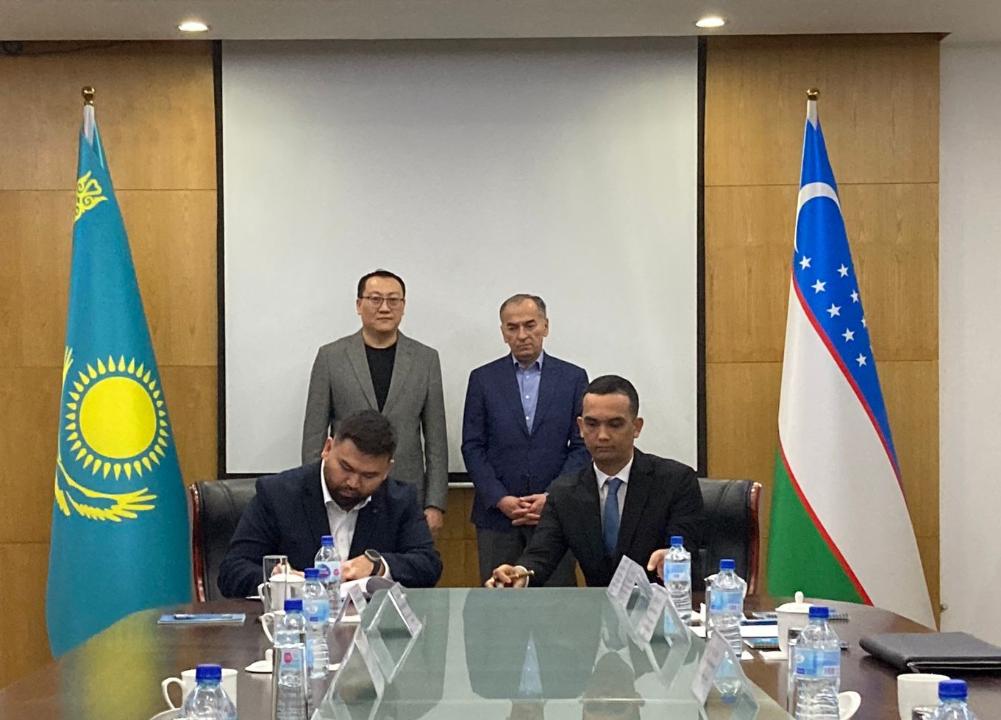
Kazakhstan and Uzbekistan are working to accelerate the creation of an international center for industrial cooperation, called ‘Central Asia’. It will be constructed at the border of the two countries, near the Gulistan checkpoint on the Uzbek side and the Atameken checkpoint on the Kazakh side, the Kazakh Ministry of Trade and Integration has reported.  The Kazakh investor in the project, TCL Group, together with the administration of Kazakhstan’s Turkestan region, plans to begin construction of the Central Asia Center this year. TCL Group has also signed a memorandum of cooperation with the Uzbek company Global Textile on the center’s first investment project, which will produce finished textile products. Kazakhstan’s deputy minister for trade and integration, Kairat Torebaev, has commented that the Central Asia Center is expected to start its operations in the fourth quarter of 2026, and the official opening is planned for the first half of 2027. Mr Torebaev believes the center will help intensify business ties between manufacturers from Kazakhstan and Uzbekistan, and stimulate the growth of trade turnover between the two countries.  Trade turnover between Kazakhstan and Uzbekistan has grown to over $4.6bn in 2023. The sides aim to bring bilateral trade to $10bn in the coming years.