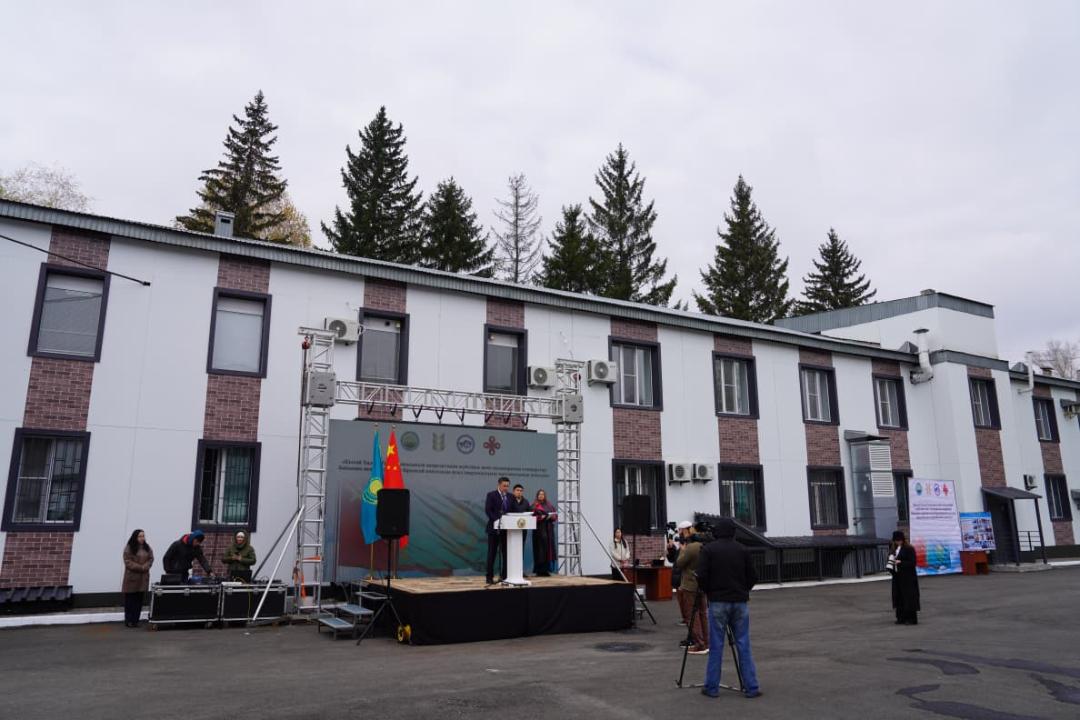
A joint Kazakh-Chinese veterinary laboratory has opened in the East Kazakhstan region, aiming to streamline and accelerate the export of Kazakh agricultural products to China.
According to the Ministry of Agriculture of Kazakhstan, the facility was outfitted with modern equipment and furniture provided by the Chinese government. Accredited under Chinese and international ISO 17025 standards, the laboratory is equipped to conduct high-precision veterinary diagnostics, quality control, and food safety testing.
Chinese specialists assisted with the installation and provided training for local staff. The facility can perform up to 550,000 tests annually on particularly dangerous infections, along with approximately 4,000 food safety tests.
The new laboratory is expected to remove technical trade barriers and boost Kazakhstan’s export potential for agricultural and livestock products to China and other international markets.
Speaking at the opening ceremony, Minister of Agriculture Aidarbek Saparov said:
“The opening of this laboratory is the result of the strategic partnership between Kazakhstan and China, aimed at advancing science and technology and enhancing the competitiveness of domestic products. I am confident that this new facility will play a key role in ensuring the quality and safety of agricultural goods.”
Kazakhstan’s agricultural exports to China have been rising steadily. According to the Ministry of Agriculture, bilateral trade in agricultural products increased by 10.5% in 2024, reaching $1.4 billion. Of that, Kazakh exports accounted for $1.05 billion, primarily consisting of animal feed, grain, oilseeds, and vegetable oil.
Kazakhstan has also made progress in ensuring its meat exports meet Chinese quality and safety standards. In May 2025, Minister Saparov and Sun Meijun, head of China’s General Administration of Customs, signed the Protocol on Inspection,
Quarantine, and Food Safety Requirements for the Import and Export of Poultry Meat. The agreement opened the Chinese market to Kazakh poultry products.
Since 2019, Kazakhstan has aligned its veterinary standards with Chinese requirements, signing 11 bilateral protocols regulating the trade of meat and livestock products. These agreements now cover 29 categories of plant and animal goods approved for export to China.
Currently, over 2,400 Kazakh enterprises are registered as exporters to China, supplying products such as safflower meal and cake, peas, lentils, and rapeseed.
In 2025, Kazakhstan plans to open the Chinese market to sugar beet cake, and in 2026 to rice, mung beans, cotton, and melons.
Additionally, regional restrictions related to foot-and-mouth disease and avian influenza have been lifted, further clearing the path for meat and meat product exports to China.