• KZT/USD = 0.00211
  • TJS/USD = 0.10820
  • UZS/USD = 0.00008
  • TMT/USD = 0.29760
  • KZT/USD = 0.00211
  • TJS/USD = 0.10820
  • UZS/USD = 0.00008
  • TMT/USD = 0.29760
  • KZT/USD = 0.00211
  • TJS/USD = 0.10820
  • UZS/USD = 0.00008
  • TMT/USD = 0.29760
  • KZT/USD = 0.00211
  • TJS/USD = 0.10820
  • UZS/USD = 0.00008
  • TMT/USD = 0.29760
  • KZT/USD = 0.00211
  • TJS/USD = 0.10820
  • UZS/USD = 0.00008
  • TMT/USD = 0.29760
  • KZT/USD = 0.00211
  • TJS/USD = 0.10820
  • UZS/USD = 0.00008
  • TMT/USD = 0.29760
  • KZT/USD = 0.00211
  • TJS/USD = 0.10820
  • UZS/USD = 0.00008
  • TMT/USD = 0.29760
  • KZT/USD = 0.00211
  • TJS/USD = 0.10820
  • UZS/USD = 0.00008
  • TMT/USD = 0.29760

Our People > Lidia Savina

Lidia Savina's Avatar

Articles

Kyrgyzstan: Legal import from Kazakhstan would help meet demand for motor fuel

BISHKEK (TCA) — The tense situation with petroleum products has not been decreasing for several months in Kyrgyzstan. According to the National Statistics Committee, over eleven months of this year, prices for gasoline have increased by 3.5 soms, or 8.8%, and for diesel fuel by 6.9 soms, or 17%. Supply of petroleum products from Russia and neighboring Kazakhstan could improve the situation. Earlier this month, the Oil Traders Association of Kyrgyzstan informed about the delay in signing of an indicative balance of duty-free deliveries of fuel from Russia to Kyrgyzstan. The Association warned of a possible increase in retail prices for fuel by 2.5-3 soms per liter from January 1, 2019. The signing of the document was to take place back in October. The local media predicted a gasoline collapse and discontent of the population, drawing an analogy with the situation in France, where the decision of the authorities to slightly increase gasoline prices turned into violent clashes of tens of thousands of citizens with the police this month. Kyrgyzstan monthly imports an average of 70 thousand to 100 thousand tons of motor fuel. The country’s demand for petroleum products is 90% covered by supplies from Russia and Kazakhstan. The remaining 10% is mainly provided by the Junda refinery in the Chui province and the Jalal-Abad refinery in the south of the country. Agreement reached On December 6, the situation was safely resolved. Kyrgyzstan and Russia signed the indicative balance for duty-free supplies of fuel for 2019. The volume of supply remained the same as for the last year — about 1 million tons, including 460 thousand tons of gasoline, 485 thousand tons of diesel fuel, 100 thousand tons of jet fuel, and 50 thousand tons of oil. However, the terms of the contract provide for a change in the volume of deliveries. In early September, the Oil Traders Association submitted proposals to the 2019 balance with the following forecast indicators: gasoline — 485 thousand tons, diesel fuel — 580 thousand tons, and jet fuel — 130 thousand tons. But the Russian side did not agree to increase the amounts. Rating Thanks to the signed document, conditions have been created for the further stable and reliable duty-free supply of petroleum products, the Association concluded, adding that Kyrgyzstan ranks first in terms of cheap fuel among the countries dependent on its import. According to the GlobalPetrolPrices rating, Kyrgyzstan ranks the 22nd among 181 countries in terms of the cost of gasoline ($0.67 per liter) and ranks first in terms of cheap fuel among import-dependent countries. All other countries in the top twenty are producers and exporters of oil, including Kazakhstan, Turkmenistan, the United Arab Emirates, Iran, and Saudi Arabia. The average price of gasoline around the world is $1.12 per liter. However, there is substantial difference in these prices among countries. As a general rule, richer countries have higher prices while poorer countries and the countries that produce and export oil have significantly lower prices. One notable exception is the U.S....

8 years ago
Kyrgyzstan: How to make the mining sector investor friendly

BISHKEK (TCA) — Investors in Kyrgyzstan’s mining industry are facing three main problems — inconsistent fiscal policy, unjustified inspections by regulatory authorities and relations with the local population, Executive Director of the International Business Council (IBC) based in Bishkek, Askar Sydykov, said at a roundtable to discuss challenges of the mining industry's regulatory framework. For the first time, the Parliament’s Committee on Fuel and Energy Complex and Subsoil Use initiated a broad-based meeting with the business, and the IBC supported the idea to build an open dialogue useful for all stakeholders. Committee head MP Kojobek Ryspaev and First Deputy Prime Minister Kubatbek Boronov listened to subsoil users, assuring that the Parliament and the Government were ready to support investors of the budget-forming industry. “Over recent years, the Parliament has been developing normative legal acts aimed at creating favorable conditions for mining companies,” Ryspaev said, adding that he recognized the existence of problems in the industry. “Conflicts with the local population remain the main problem for us,” he said. Pressure on businesses According to the National Statistics Committee, foreign direct investments declined by 33.2% in the first half of the year. “There are currently few investors in the mining industry due to the unpredictable legislation and poor protection of private property,” the IBC’s Askar Sydykov said. According to the State Tax Service, in 2017, out of 256 court cases involving tax disputes, only 19 decisions were made in taxpayers’ favor. Recently, several largest companies, including those with foreign participation, were involved in financial and criminal liability cases. The actions of law enforcement agencies were accompanied by violations of the fiscal and criminal legislation. The situation is aggravated by the Procedure of distribution of funds reimbursed to the State by the law enforcement agencies. According to this document approved by the Government in June, certain percentage of funds reimbursed in favor of the State as a result of judicial acts in criminal cases initiated by law enforcement and supervisory authorities shall be transferred to the law enforcement agencies. To obtain a designated percentage of funds, law enforcement agencies initiated and transferred to the judicial authorities cases against business people without sufficient legal grounds. It turned out that law enforcement agencies, using various power levers of influencing the business, “earn” bonuses. Having analyzed the accumulated total amount of the Single Deposit Account, experts concluded that a significant part was paid by businesses, but not corrupt ones. Inconsistent state policy According to the business, Kyrgyzstan’s subsoil use legislation contains many uncertain provisions and does not allow the subsoil users to make independent and effective decisions on production activities. The current legislation is burdensome for subsoil users who pay taxes not practiced in countries aimed at attracting foreign investment. The current subsoil legislation is subject to frequent changes and the environmental one has a repressive bias, which creates a threat of bankruptcy of subsoil users or loss of business, which is a deterring factor for investors. Since 2012, several innovations have been introduced into Kyrgyzstan’s...

8 years ago

Kyrgyzstan: Governments change but the environmental problems remain

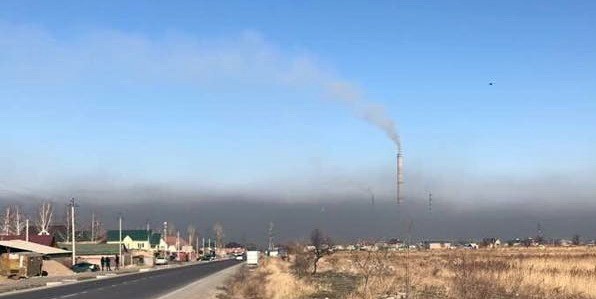
BISHKEK (TCA) — Kyrgyzstan’s capital Bishkek is gradually turning from one of the greenest cities of the former Soviet Union into a gassed and smoggy one. The public outrage intensifies in cold seasons, when a shroud of smog covers Bishkek, and subsides in spring. The Government and state agencies regularly make decisions to improve the environmental situation in the capital but it is getting worse every year. Continue reading

8 years ago

Central Asia countries pin hopes on tourism

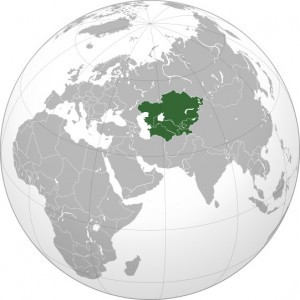
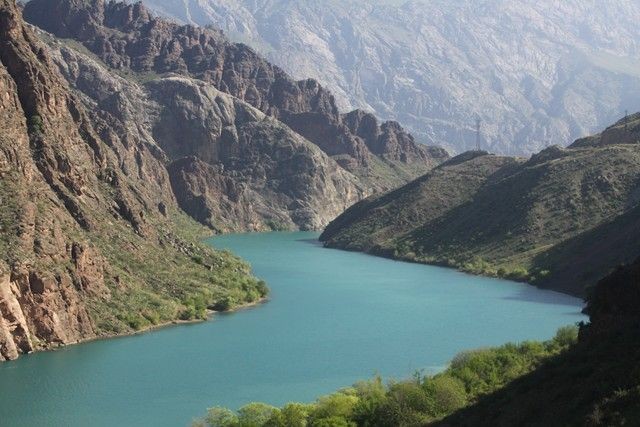
BISHKEK (TCA) — Central Asia countries possess abundant resources and great potential for tourism development. The unique heritage, nature and traditions of different peoples and cultures along the Great Silk Road attract tourists from all over the world. Continue reading

8 years ago

Kyrgyzstan: Textile and Clothing Week held in Bishkek

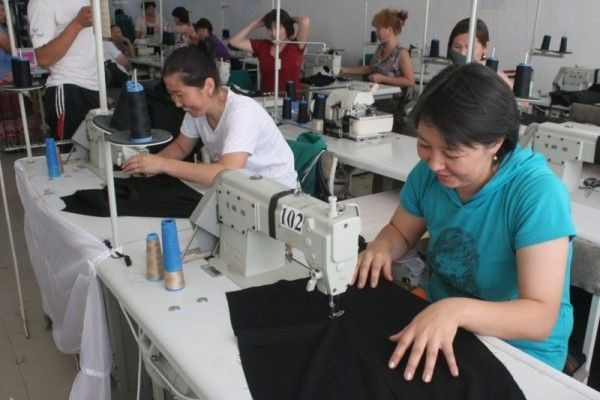
BISHKEK (TCA) — A Textile and Clothing Week was held in Bishkek from November 7 to 16. It was the first large-scale event in the history of Kyrgyzstan devoted to the development of the textile and apparel sector. As part of the event, roundtables, a Fashion Week and a High Level Forum were held. At the awarding ceremony, winners of competitions of young designers, industrial enterprises, craftsmen and the media were announced. An exhibition-fair of garments from local manufacturers took place, where local companies showcased their fabrics, clothes, shoes, and accessories. The event was organized by the Kyrgyz Government, the Legprom Light Industry Enterprises Association of Kyrgyzstan, Fashion Designers Association of Kyrgyzstan, development partners including UNDP, EBRD, and ILO, and Russian-Kyrgyz Development Fund. On November 16, a high-level Forum discussed how the State could support the industry to attract labor to the sector, improve the training system and ensure decent working conditions and tools for financing the clothing industry, as well as to enhance its export competitiveness. At the end of the forum, its participants adopted a Resolution on the State’s measures to support the industry. Priority sector Textile and clothing production is among the priority sectors of Kyrgyzstan’s economy. The industry has a high export potential and is of special social significance for the country, as it creates mass jobs. According to the National Statistical Committee, more than 45 thousand people are employed in the textile and clothing industry of Kyrgyzstan. Considering that many enterprises work in the shadow economy, the number of people employed in this sector, according to various estimates, ranges from 200,000 to 300,000. Over 90% of the sector’s workers are women. The garment products rank third in Kyrgyzstan’s export. Over the eight months of this year, garment enterprises exported goods worth $157 million. According to the Economy Ministry, production of the clothing industry has increased by 15% over the past three years. In terms of the volume of imported garment products to Russia, Kyrgyzstan ranks the fifth after China, Turkey, Italy, and Germany. This indicates high quality of Kyrgyzstan’s products. Shortage of labor The garment industry badly lacks personnel while the existing staff has low qualifications, said President of the Legprom Association Saparbek Asanov at the forum.Most industry companies are located in Bishkek and near it, while the bulk of the workforce is available in rural areas, which results in a systemic gap in the human resources. The problem of personnel outflow is related to a high level of migration of skilled and unskilled sewing workers to Russia. Russian companies offer better working conditions for employees, including wages and benefits. Young people prefer to go abroad to earn money to buy homes in Kyrgyzstan. The average age of workers in the sewing industry is 35-40 years. Women in the garment industry mainly came to Bishkek from the regions and have problems with housing, access to healthcare and education services. According to the Association of Light Industry Enterprises, there are over one thousand vacancies in the...

8 years ago

Kyrgyzstan: Why the agrarian country cannot provide itself with agricultural products

BISHKEK (TCA) — Prime Minister of Kyrgyzstan Mukhammedkaly Abylgaziyev sharply criticized the Ministry of Agriculture, Food Industry and Land Reclamation at a recent Government meeting. Agriculture Minister Nurbek Murashev optimistically reported on the achievements in the sector. However, a good harvest was not due to the Ministry’s efforts, but due to favorable weather and hard work of farmers. Export problems The country cannot fully meet the needs of the domestic market, not to mention the export of products, Abylgaziev said. Despite preferential loans, grants and budget funds allocated, the Ministry still cannot find effective mechanisms for the integrated development of agriculture, he added. There were problems with the export of products, for instance when Uzbekistan imposed a ban on the import of Kyrgyz potatoes. Instead, the Ministry could arrange export to other countries, including the northern regions of Russia. If the Ministry had concluded the necessary agreements in advance and explained the conditions for international certification of goods to farmers, the farmers' labor would have paid off, and the State would also receive a profit. But the farmers are forced to solve all their problems themselves. No creativity The situation in the agrarian sector is difficult mainly due to the poor work of the Agriculture Ministry, MPs believe. There is no creativity and coordination there, and the staff does not apply new methods. The Parliament often receives complaints about the Ministry’s work. MP Irina Karamushkina suggested eliminating the Ministry. “We have the Agriculture Ministry but there is no state land and collective farms, everything is in private hands. Why should the State maintain the huge Ministry staff?” she asked, advising to transfer its functions to the Community Development and Investment Agency. According to official data, the total number of the Ministry’s employees is 4,880 and its budget is 1.7 billion soms for this year. Minister Murashev said he was ready to leave the post if the country's leadership would be displeased with him. However, ex-Minister of Agriculture, Torogul Bekov, believes that the Minister alone is not to blame for the problems of the agricultural sector. Poor management system Murashev is an experienced professional, but due to the existing management system in this sector, any minister would be in the same situation, Bekov told Vesti.kg news agency. The Agriculture Ministry cannot hire good specialists due to extremely low wages, from 4 thousand soms in the field to 12 thousand soms in Bishkek. In Russia, the Agriculture Ministry is a distributor of large financial assets. It provides loans for seeds and pedigree cattle. In Kyrgyzstan, the Agriculture Ministry has no such powers but is responsible for all this. To improve the agro-industrial sector, it is necessary to promote Kyrgyz products abroad, and this should be done not only by the Agriculture Ministry, but also the Economy Ministry, Ministry of Foreign Affairs, embassies, veterinary and customs services, and other state bodies. Two-thirds of the Kyrgyz live in villages. Thus, the issue of the well-being of farmers, good harvests and the ability to sell...

8 years ago

To achieve ambitious goals, Kyrgyzstan seeks international assistance

BISHKEK (TCA) — Corruption hinders economic development and the attraction of foreign investment in Kyrgyzstan. Anti-corruption measures taken by the State are fragmented and uncoordinated, and staff replacement does not make anti-corruption measures more effective. Continue reading

8 years ago

To sell or not to sell? Kyrgyzstan mapping the future of major mobile operator

BISHKEK (TCA) — The Government of Kyrgyzstan has decided not to sell the leading mobile operator, Alfa Telecom CJSC (TM MegaCom), experts believe. The Economy Ministry has submitted for public discussion a draft Government program for the privatization of state property for 2018-2020, and has not included the company in it. According to Kyrgyzstan’s legislation, the Alfa Telecom CJSC is an independent legal entity with a private ownership, with 100% of the state-owned shares. After numerous unsuccessful attempts to sell the company, the State Property Management Fund of Kyrgyzstan (SPMF) proposed that the company should remain on the Fund’s balance, and the Government agreed. Earlier this month, SPMF Chairman Renat Tuleberdiev told journalists that the Fund does not intend to sell MegaCom. The company works well, and in terms of profitability it is the second after the Manas International Airport OJSC, he said. Failed attempts There were many attempts to sell MegaCom. The initial price of its shares was 19.7 billion soms (about $306 million) in May 2016, but over time it was reduced to 13.5 billion. In August 2017, after the failed attempts to sell the company through auctions, it was put up for direct bidding. A Russian citizen Elena Nagornaya, who sells African tea and coffee in Russia, was the only buyer. She was ready to pay 14.5 billion soms, including the 7% commission fees and to take responsibility for possible lawsuits of the company. However, in November the Property Management Fund terminated the deal explaining that “the parties failed to reach mutually acceptable terms of sale.” Nagornaya asked to transfer the company to trust management for three years with subsequent redemption but Kyrgyzstan’s law does not allow this. After that, other potential buyers were from Russia, South Korea and Switzerland, but the SPMF canceled all sales procedures because the new privatization program for 2018-2020 was not approved, and the previous program expired. Given the mistakes of previous years, the Government did not take into account the proceeds from the sale of the company in the national budget revenues for 2018. In 2016, the Government hoped to complete the construction of the road around Lake Issyk-Kul before the start of the World Nomad Games by selling MegaCom. The company was not sold, and the construction of the road stopped. The Cabinet headed by Temir Sariyev was forced to resign due to the scandal over the reconstruction of the Balykchy-Korumdu road. Opinions There were very different points of view about MegaCom’s future. If the company is economically profitable for the State, then it is not necessary to sell it, said Prime Minister Abylgaziyev in May. A new assessment should be carried out, he added. Many experts said that it was necessary to sell MegaCom to create equal conditions for competition. If an enterprise is run by the state, its management system becomes very cumbersome, they said. The telecommunication company should develop, introduce modern technologies, and offer high-quality communication services to subscribers. But due to bureaucratic delays, the state-owned company...

8 years ago

Tolls are coming to Central Asia highways

BISHKEK (TCA) — Kyrgyzstan can no longer afford even preferential loans to repair highways, said Azimkan Jusubaliev, Deputy Minister of Transport and Roads at a Parliament meeting this week. The MPs asked him why and when toll motor roads will be introduced in the country. Continue reading

8 years ago

Energy challenges in Kyrgyzstan: debt repayment and management optimization

BISHKEK (TCA) — The International Court of Justice (ICJ) in The Hague will consider Russia’s RusHydro Public JSC claim against Kyrgyzstan’s Government to return $37 million spent for the construction of the Upper Naryn hydropower plants cascade in the Central Asian country. Continue reading

8 years ago