• KGS/USD = 0.01143 0%
  • KZT/USD = 0.00205 0%
  • TJS/USD = 0.10787 0%
  • UZS/USD = 0.00008 0%
  • TMT/USD = 0.28571 0%
  • KGS/USD = 0.01143 0%
  • KZT/USD = 0.00205 0%
  • TJS/USD = 0.10787 0%
  • UZS/USD = 0.00008 0%
  • TMT/USD = 0.28571 0%
  • KGS/USD = 0.01143 0%
  • KZT/USD = 0.00205 0%
  • TJS/USD = 0.10787 0%
  • UZS/USD = 0.00008 0%
  • TMT/USD = 0.28571 0%
  • KGS/USD = 0.01143 0%
  • KZT/USD = 0.00205 0%
  • TJS/USD = 0.10787 0%
  • UZS/USD = 0.00008 0%
  • TMT/USD = 0.28571 0%
  • KGS/USD = 0.01143 0%
  • KZT/USD = 0.00205 0%
  • TJS/USD = 0.10787 0%
  • UZS/USD = 0.00008 0%
  • TMT/USD = 0.28571 0%
  • KGS/USD = 0.01143 0%
  • KZT/USD = 0.00205 0%
  • TJS/USD = 0.10787 0%
  • UZS/USD = 0.00008 0%
  • TMT/USD = 0.28571 0%
  • KGS/USD = 0.01143 0%
  • KZT/USD = 0.00205 0%
  • TJS/USD = 0.10787 0%
  • UZS/USD = 0.00008 0%
  • TMT/USD = 0.28571 0%
  • KGS/USD = 0.01143 0%
  • KZT/USD = 0.00205 0%
  • TJS/USD = 0.10787 0%
  • UZS/USD = 0.00008 0%
  • TMT/USD = 0.28571 0%

Our People > Lidia Savina

Lidia Savina's Avatar

Articles

Kyrgyzstan: The airline industry badly needs change

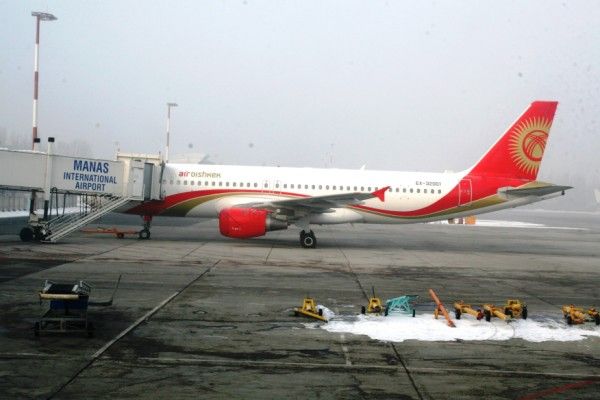
BISHKEK (TCA) — Kyrgyz MPs offered to sell the national airline Air Kyrgyzstan to Chinese investors. Earlier, Chinese companies expressed interest in purchasing Air Kyrgyzstan. If purchased, the investor promised to bring 12 aircraft to the company within five years, the MPs said. Minister of Transport and Roads of Kyrgyzstan Jamshitbek Kalilov confirmed the interest of Chinese investors in the purchase of Air Kyrgyzstan, although there were no official applications to the State Property Management Fund. But even taking into account the difficult financial situation of the airline, the minister considers the idea of selling it to be doubtful. Current situation Kyrgyzstan’s state-owned fleet consists of one aircraft, which is not currently operating because its engine is under repair. Earlier, Kyrgyzstan offered to sell 49% of Air Kyrgyzstan’s shares, but a foreign investor wanted to buy a controlling stake. According to the State Property Management Fund of Kyrgyzstan, the company’s net profit plan for 2017 was 10.6 million soms but the result was 7 million soms without dividends. Air Kyrgyzstan’s assets are 639.8 million soms, and loan debt is 302.6 million soms. Due to the difficult financial situation, the company cannot pay salaries to its employees, and it was forced to reduce the staff. The company has four aircrafts including a Boeing 737-500 which stands idle at the Manas International Airport due to technical malfunction of its engine, and Air Kyrgyzstan’s flights are postponed indefinitely. The second aircraft, a Boeing 737-300, is subleased in Romania. The third one, a Tu-154, has not been operated since 2012, when the Aviation Department imposed a restriction on this kind of aircrafts due to aviation safety rules. The fourth aircraft, a Boeing 737-200, has not been operated since 2009. Unable to compete The analysis of Air Kyrgyzstan’s financial and economic activity revealed two reasons why the airline came to this situation. In 2008, the State Property Fund transferred the shares of the Altyn Air state-owned airline from the Kyrgyzaltyn JSC to Air Kyrgyzstan, which resulted in debts of 94.5 million soms. Kyrgyzaltyn, the state owned gold mining company and the shareholder of Centerra Gold Inc., tried to return this amount in 2010 through the courts, but the then government helped Air Kyrgyzstan to pay off the debt within three years. The second cause is competition. In 2012 and 2013, large Turkish airlines, Atlasjet and Pegasus, entered the Kyrgyz market. In addition, the Russian Aeroflot operated there. Air Kyrgyzstan did not have modern aircrafts to compete. Since January 2018, the airline has not operated flights, and over 30 employees are on leave without pay. Privatization or trust management? The national privatization program for 2015-2017 provided for the privatization of 51% of the state share in Air Kyrgyzstan. The State Property Fund conducted negotiations with Korean, Arab and Chinese investors, but to no avail. The state-owned company did not have support from the State, and investors did not want to deal with it. The Chinese side requested a controlling stake but according to Kyrgyzstan’s law, 51%...

8 years ago
Central Asia states optimistic on solving transportation problems

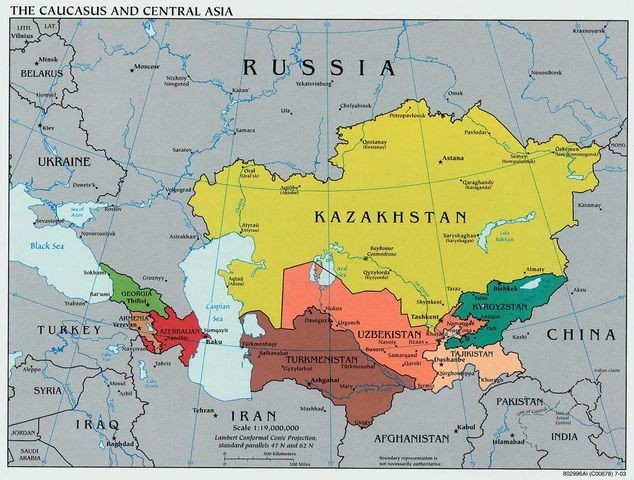
BISHKEK (TCA) — President of Uzbekistan Shavkat Mirziyoyev has proposed to create a regional transport council of the Central Asian countries. Continue reading

8 years ago

To boost agricultural exports, Central Asia states should end child labor

BISHKEK (TCA) — Central Asian countries intend to increase their export of agricultural products to the partner countries in the Eurasian Economic Union, as well as to the European Union. Continue reading

8 years ago

Kyrgyzstan: Entrepreneurs, tired of inspections and barriers, leave for other countries

BISHKEK (TCA) — Kyrgyzstan should create a competitive economy applying innovative technologies and open to attract investments, Kyrgyz President Sooronbai Jeenbekov said at a meeting with representatives of the business community on September 17. Continue reading

8 years ago

Kyrgyzstan urges Russian businesses to invest in five economic sectors

BISHKEK (TCA) — Founders and top managers of more than two hundred leading enterprises of Kyrgyzstan and Russia discussed ways to expand cooperation within the Eurasian Economic Union (EEU). On September 14, a Kyrgyz-Russian business forum was held at the Ala-Archa state residence near the Kyrgyz capital Bishkek. Two contracts were signed at B2B meetings. The Kyrgyz-Russian Development Fund and the Russian Export-Import Bank signed a contract on concessional lending for the supply of Russian equipment to a Kyrgyz state-owned company, and the Imperial Group of Companies, Kyrgyzstan’s footwear manufacturer, and Russian Leather JSC signed a contract for the supply of raw materials. Five promising sectors Kyrgyz Deputy Economy Minister Eldar Abakirov told the guests about five economic sectors profitable to invest in, as well as measures taken by the Kyrgyz authorities to create favorable conditions for doing business and improve the investment climate in the country. Abakirov urged to consider the possibility of investing in the garment industry, processing of agricultural products, tourism, information technologies, and medicine. According to experts, these sectors can give high growth, and invested funds could be paid off in three-five years, he said. Large investors can conclude investment agreements with the Kyrgyz Government and negotiate special conditions as part of the agreements. The country also introduced a stabilization regime under which investors have the right to choose the most favorable way to pay taxes including VAT for ten years. If taxes are raised, the investors will be able to use the tax rates fixed in their contracts. The primary Government’s task is to ensure the private property rights and protect businesses from unreasonable interference of state bodies, Abakirov concluded. Trade relations The adaptation period after Kyrgyzstan’s entry to the Eurasian Economic Union has been passing without significant shocks, and this is the merit of both the state agencies and the business, Charge d'Affaires of Russia in Kyrgyzstan Vadim Chekmazov said. Russia is trying to maintain its role of a strategic partner and ally, helping to smoothly overcome the transition period when the markets of the two countries unite. The Russian-Kyrgyz Development Fund has already allocated hundreds of millions of dollars to entrepreneurs in loans aimed at developing the food industry, transport logistics, agro-industrial complex and construction. As a result, production and exports are growing in Kyrgyzstan. Exports of Kyrgyz goods to Russia increased by 41% over the first half of 2018 and by 47% in 2017. In 2017, trade between Kyrgyzstan and Russia amounted to $1.5 billion and increased by 12.4% compared to 2016, of which Kyrgyz exports were $265 million, and imports — $1.3 billion. Kyrgyzstan exports clothing, machinery, agricultural raw materials, and glass to Russia, and imports oil products, ferrous and non-ferrous metals, consumer goods, timber, cardboard, chemical products, perfumes and cosmetics, plastics, agricultural products, and household appliances. At the same time, imports of goods from Russia are growing more slowly. Over the first six months of 2018, it has grown by 10%, and in 2017 — by 34%. This is encouraging...

8 years ago

Kyrgyzstan and Turkey commit to boosting economic cooperation

BISHKEK (TCA) — Political partnership between Kyrgyzstan and Turkey has been strengthening for many years and has reached a high level. It is time now to give a new impetus to the development of economic cooperation between the two countries, Kyrgyz President Sooronbai Jeenbekov said at the Kyrgyz-Turkish investment forum held in Bishkek on September 2. Turkish President Recep Tayyip Erdogan, who was in Kyrgyzstan on a two-day official visit, attended the forum. Trusting relationship Leading companies from Turkey and Kyrgyzstan from various economy sectors, representatives of state bodies and international organizations took part in the forum. The participation of the Turkish President in the forum’s work raises mutual trust between businesspeople of the two countries, President Jeenbekov said. "We have a particularly trusting relationship with Turkey. For partners from fraternal Turkey, our doors are always open, we are happy with every meeting with you. During my official visit to Turkey last April, we reached important agreements in trade, transportation, agriculture, energy, health, and pensions," Jeenbekov said. In 1994, trade between Kyrgyzstan and Turkey was $20 million. Over the past 23 years, this indicator grew 18-fold and last year amounted to $356 million. "At the same time, I believe that our trade is not fully used. We need to make every effort to increase the trade between our countries up to $1 billion,” Jeenbekov said. Over 27 years of Kyrgyzstan’s independence, hundreds of projects have been implemented in Kyrgyzstan with the participation of Turkish capital. Currently, over 600 joint Kyrgyz-Turkish enterprises operate in Kyrgyzstan. Since 1995, direct investments from Turkey to Kyrgyzstan exceeded $500 million. Creating conditions for doing business Kyrgyzstan has created the most favorable conditions for doing business, Jeenbekov said. As a result of fiscal reforms, the most liberal tax regime in the region was created. In Kyrgyzstan, tax rates are much lower than in some countries of the region. For instance, VAT is 12% and the income tax is 10%. Agricultural producers, trade and logistics centers and machine and tractor stations are completely exempt from the profit tax. From September 2018, VAT is only 2.4% for enterprises processing domestic agricultural produce. To develop the country’s regions, preferential taxation of the industry was introduced. In the settlements of regions defined by the Government, enterprises are completely exempt from the tax on real estate and land from five to ten years. Kyrgyzstan gives priority to the processing of agricultural products, energy, light and processing industries, and tourism. The country will continue reforms to liberalize investment laws and restrict interference in business activities, as well as to respect contractual rights, President Jeenbekov said. He told the forum participants about the stable regime tax option. New enterprises are exempted from inspections for three years. There is a free currency regime in the country. There are no restrictions on buying and selling foreign currency, withdrawal and input of capital. The import of technological equipment is exempt from customs duties. Foreign investors can use inexpensive and skilled labor and cheap electricity. Kyrgyzstan has...

8 years ago

Kyrgyzstan: Economy in decline but government optimistic on growth

BISHKEK (TCA) — Many Kyrgyzstanis are not happy with the current economic situation in their country, and the latest statistical data prove that. According to the National Statistical Committee, the country’s GDP lowered 0.2% over the first seven months of 2018. The state budget deficit is growing, as the state spends more than it earns. Continue reading

8 years ago

Kyrgyzstan’s Development Strategy until 2040: same old goals and promises

BISHKEK (TCA) — The long-term development strategy of Kyrgyzstan until 2040 was approved earlier this month at the meeting of the National Sustainable Development Council of Kyrgyzstan chaired by President Sooronbai Jeenbekov. Continue reading

8 years ago

Kyrgyzstan: How to benefit from labor migration

BISHKEK (TCA) — Labor migrants are the main source of remittance to Kyrgyzstan. If it were not for their money, the country's GDP would have decreased by a third, including budget revenues and wages, Economy Minister Oleg Pankratov said at the fourth Mekendeshter (Compatriots) Forum held on August 8-9 in Cholpon-Ata, a resort city at Lake Issyk-Kul. About 200 compatriots from 27 countries participated in the meeting, organized by the Initiatives of Roza Otunbayeva Public Foundation with the support from the Swiss Bureau for International Cooperation. Representatives of diasporas and compatriots living abroad shared their experience in implementing social and business projects in Kyrgyzstan and told their success stories. Earning abroad According to official data, about 800,000 Kyrgyz citizens are working abroad, mostly in Russia. According to unofficial data, the figure exceeds one million. Their remittances to the homeland amount to about $2.5 billion annually. Over the first half of 2018, the total inflow of remittances to Kyrgyzstan exceeded $1.2 billion, 13% more compared to the same period last year. Traditionally, the largest volume of remittances was from labor migrants from Russia followed by USA and Kazakhstan. According to the World Bank, one from three persons lives below the poverty line in Kyrgyzstan’s villages. Most of the rural population receives income from agriculture and remittances from relatives working abroad. The National Bank of the Kyrgyz Republic forecasts an increase in the inflow of remittances from labor migrants this year. Modern phenomenon? "The fact that many of our compatriots are living and working in different countries is not a tragedy but a modern phenomenon. They master new technologies and study democracy, and learn to develop. Therefore, we should use their experience and intellectual potential. We need to properly manage migration and benefit from it," said Roza Otunbayeva, the initiator of the forum and ex-President of Kyrgyzstan. Labor migration is a temporary phenomenon, Economy Minister Pankratov believes. The Government should ensure that people, having gained experience and capital, were able to return home and work in Kyrgyzstan. The Government is now planning to stimulate the economy’s transition to industrial development. The largest number of jobs is generated in the industrial sector, primarily in the processing and light industry, he said. The money that comes from labor migrants does not replenish the loss of the able-bodied population and the demographic gap in the country. If the migration continues in Kyrgyzstan, a situation may arise when the number of elderly people would prevail over the young population, experts say. Council under the President President of Kyrgyzstan attended the Compatriots’ Forum for the first time in its history since 2012. President Sooronbai Jeenbekov showed that he is seriously concerned about the problems of migrants and wants to help them. "There are successful compatriots who have achieved much abroad and are going to invest in large investment projects in Kyrgyzstan, as well as to attract serious investments into our economy," Jeenbekov said. Such patriotic contemporaries need a single platform for solving problems and achieving common goals....

8 years ago

Kyrgyzstan: growing poverty and poor state budget

BISHKEK (TCA) — The Kyrgyz Government has recently put forward several initiatives aimed at replenishing the state budget at the expense of ordinary citizens. The Government offered to raise the tariffs for cold water and fines for violation of traffic rules, as well as to introduce mandatory paid registration of mobile phones. These suggestions caused a negative reaction of the society. Earlier, the Government appealed to citizens asking them to help pay the country's foreign debt. The total amount of Kyrgyzstan’s external debt amounted to $4.8 billion, or 53.9% of GDP at the end of 2017. Low living standards According to various international ratings, Kyrgyzstan has extremely low living standards of the population. Scanty budgetary expenditures on education, healthcare and social payments do not cover the real needs of citizens, and on average, every fourth Kyrgyz lives below the poverty line. In Kyrgyzstan, there are the lowest average wage ($216.3) and the highest outflow of labor migrants among the Eurasian Economic Union member countries. According to the Russian National Research University at Higher School of Economics, only Tajikistan has the worse situation with $137 wages while it is $670.9 in Russia followed by Kazakhstan ($459.1), Belarus ($421.9) and Armenia ($363.1). According to the Focus Economics Group’s rating of 127 countries based on GDP for 2018, Kyrgyzstan is among the ten poorest countries in the world. Kyrgyzstan’s GDP per capita was $1,081 in 2016, projected at $1,222 in 2018 and at $1,446 in 2022. “Having experienced considerable political and social instability with weak governance and high corruption since gaining independence in 1991, the country’s current democracy is a far cry from those days. Nonetheless corruption is still pervasive in the public sector, which constrains the country’s economic growth potential. The Kyrgyz economy is also vulnerable to external shocks due to its overreliance on its massive gold mine, Kumtor, which accounts for about 10% of GDP, as well as remittances, which amount to about 30% of GDP,” Focus Economics Consensus Forecast panelists say. Number of poor growing The number of citizens living below the poverty line has increased in Kyrgyzstan. According to the National Statistical Committee, the share of low-income citizens increased from 25.4% to 25.6% over the past year. The total number of the poor reached 1.6 million, 40 thousand people more than in 2016. That especially affected the population of the southern regions of the country. In the Batken province, the poverty level increased from 37% to 40.5%, and in Osh, the second largest city of the country, from 24.6% to 33.5%. Some experts do not believe official poverty statistics because poverty is underestimated. Last year, the poverty level was 2,674 soms per month per person, which is almost half of the subsistence minimum (4,900 soms). The extreme poverty line was even lower – 1,456 soms per month ($1 now costs 68 soms). The calculation of the poverty level is based on a methodology that is beneficial to the state, and does not give a real picture, experts say. In...

8 years ago