• KGS/USD = 0.01144 0%
  • KZT/USD = 0.00212 0%
  • TJS/USD = 0.10456 0.19%
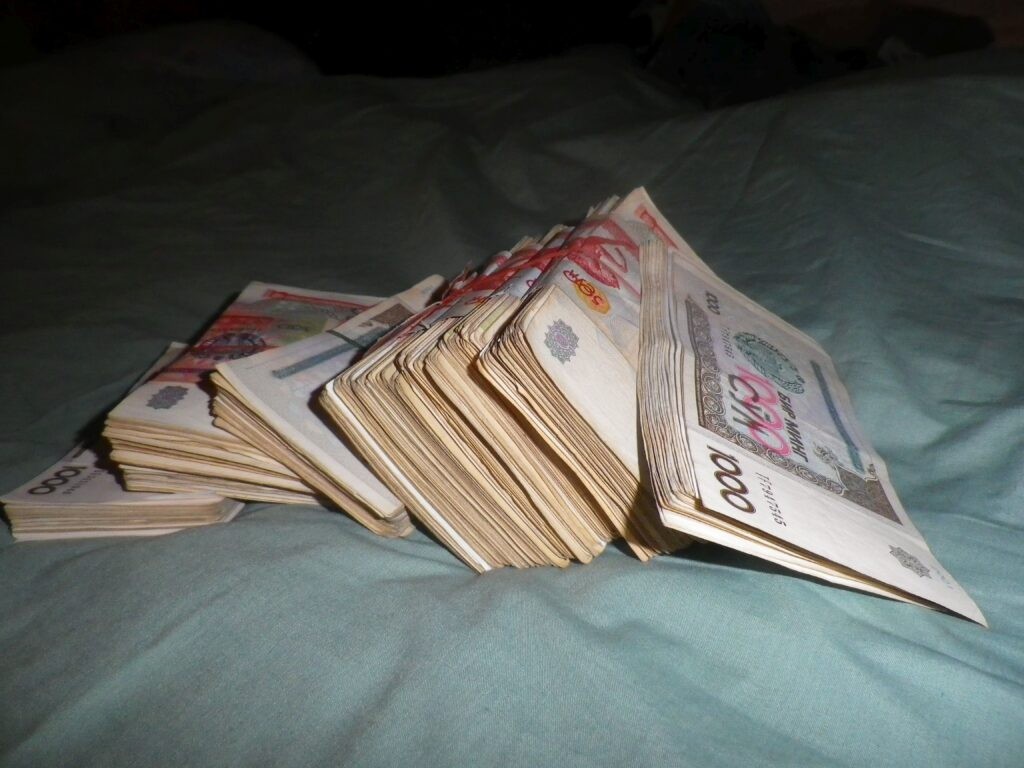
  • UZS/USD = 0.00008 0%
  • TMT/USD = 0.28490 0%
  • KGS/USD = 0.01144 0%
  • KZT/USD = 0.00212 0%
  • TJS/USD = 0.10456 0.19%
  • UZS/USD = 0.00008 0%
  • TMT/USD = 0.28490 0%
  • KGS/USD = 0.01144 0%
  • KZT/USD = 0.00212 0%
  • TJS/USD = 0.10456 0.19%
  • UZS/USD = 0.00008 0%
  • TMT/USD = 0.28490 0%
  • KGS/USD = 0.01144 0%
  • KZT/USD = 0.00212 0%
  • TJS/USD = 0.10456 0.19%
  • UZS/USD = 0.00008 0%
  • TMT/USD = 0.28490 0%
  • KGS/USD = 0.01144 0%
  • KZT/USD = 0.00212 0%
  • TJS/USD = 0.10456 0.19%
  • UZS/USD = 0.00008 0%
  • TMT/USD = 0.28490 0%
  • KGS/USD = 0.01144 0%
  • KZT/USD = 0.00212 0%
  • TJS/USD = 0.10456 0.19%
  • UZS/USD = 0.00008 0%
  • TMT/USD = 0.28490 0%
  • KGS/USD = 0.01144 0%
  • KZT/USD = 0.00212 0%
  • TJS/USD = 0.10456 0.19%
  • UZS/USD = 0.00008 0%
  • TMT/USD = 0.28490 0%
  • KGS/USD = 0.01144 0%
  • KZT/USD = 0.00212 0%
  • TJS/USD = 0.10456 0.19%
  • UZS/USD = 0.00008 0%
  • TMT/USD = 0.28490 0%

Kazakhstan Uses Income Declaration to Fight the Shadow Economy

Kazakhstan’s third stage of universal income declaration is underway. As part of the current stage, declarations must be submitted by entrepreneurs, company founders and directors, and their spouses. In 2025 yet another new stage of declarations, will commence which will oblige all adult citizens to submit declarations.

Currently, many entrepreneurs and small business owners use mobile transfers, which are intended for personal purposes. Such actions are illegal and violate the guidelines of the Entrepreneurial Code – Article 27, which stipulates that an entrepreneur may only use business accounts when carrying out commercial activities.

It’s specified in the law that mobile transfers and payments made for personal purposes are not taxable.

Regarding taxation of individuals in Kazakhstan, every adult citizen is obliged to pay taxes to fund the budget. Currently, individuals pay taxes applicable to their wages. One tax and two mandatory contributions are withheld from an employee’s official salary in Kazakhstan: Individual Income Tax (IIT); contributions for compulsory medical insurance (VOSMS); and mandatory pension contributions (MPC).

Individual income tax (IIT) is levied on the income of employees and transferred to the state treasury by the employer. According to Article 322 of the Tax Code, such income includes wages and salaries. In addition, income classified as in-kind (transfer of goods, securities, provision of services to an employee, non-paid transfer of property, etc.) and material benefit (cancellation of debt to an employee, sale of goods to them, etc.) are subject to personal income tax. According to paragraph 1 of Art. 320 of the Tax Code, the individual income tax rate for all types of income is 10%.

All Kazakhstan citizens who have a car are also subject to transportation tax. It includes excise tax on fuel and lubricants — the larger the engine volume of the car, the higher the tax burden due to high consumption of fuel and lubricants; a vehicle tax — the larger the engine displacement, the higher the tax burden; utilization fee, and fee for the initial registration of a motor vehicle.

Real estate owned by citizens is also taxed in Kazakhstan. The amount of tax depends on one’s type of property and is calculated for each object separately.

The value of property for tax purposes is determined on the basis of a formula by multiplying several indicators: the base cost per square meter, which depends on the specific city or type of settlement; usable area of the property ( in sq. m.); a coefficient indicating the physical deterioration of the dwelling, which is determined by taking into account the age of the building from the date of commissioning and depreciation; a functional wear coefficient, which depends on the floor, location, amenities, engineering condition and type of heating; a zoning coefficient, which takes into account the location of the property in a particular community; and the MRP change factor, which shows how much this indicator has increased compared to the previous year.
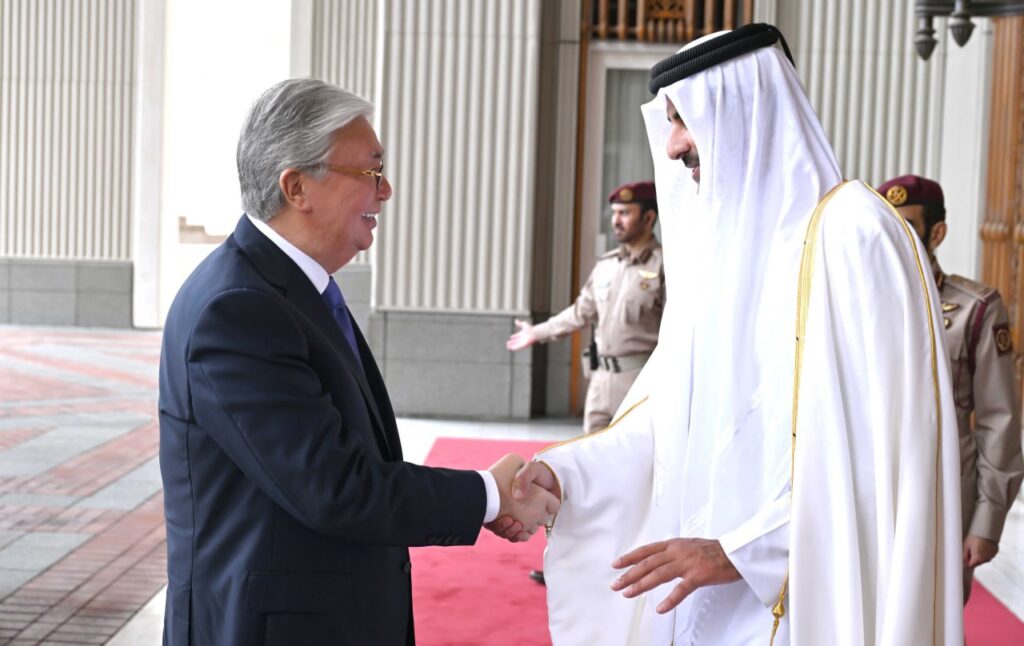

Kazakhstan’s President Among First Foreign Leaders to Address Quorum of Qatar’s Parliament

The President of Kazakhstan Kassym-Jomart Tokayev paid a working visit to Qatar on February 13-14, during which he delivered a speech to the members of the Consultative Assembly (Majlis al-Shura) in Doha.

About a dozen documents were signed after negotiations between the Kazakh side and the Emir of Qatar, Tamim bin Hamad Al-Thani. The main agreement focuses on cooperation in the construction of gas processing plants at Kazakhstan’s Kashagan field between the state company, JSC QazaqGaz, and Qatar’s UCC Holding – as well as projects in the field of energy and gas between JSC Samruk-Kazyna, the Kazakh Ministry of Energy, and Qatar’s Power International Holding.

According to the Ambassador Extraordinary and Plenipotentiary of Kazakhstan to Qatar, Arman Isagaliyev, President Tokayev’s speech contained comments and observations about the upcoming reforms in Kazakhstan, as well as an assessment of events in the Middle East and the world in general.

Qatar appears keenly interested in the structure and operations of state institutions given that the first parliamentary elections in the country were held just three years ago.

Tokayev proposed after state-level talks that the countries could enter a fully-fledged strategic partnership. Furthermore, Tokayev noted that it’s necessary to develop an inter-modal transport network connecting the Persian Gulf and Central Asia, and to expand cooperation in agriculture and organize cultural exhibitions from Kazakhstan and Qatar in each other’s capitals in 2025.

During the talks, Tokayev said he is ready to increase exports to Qatar on 60 non-resource-based commodity items by $250 million, and proposed bilateral trade be increased to $500 million.

Women in Uzbekistan May Now Drive Buses and Heavy Trucks

Labor code regulations in place in Uzbekistan since 2018 that prohibited women from driving vehicles with a capacity of 2.5 tons or more, and buses with a capacity of more than 14 people, have been abolished by new rules which came into force on February 12, 2024. According to the Ministry of Transport of Uzbekistan, these changes were adopted to ensure gender equality in transportation and to attract women to jobs driving conventional buses and electric buses.

Uzbekistan is pursuing a policy of providing equal rights and opportunities for women in society and the economy. Consequently, since May 2019, a ban on women working in certain industries was lifted, though restrictions have been retained in fields such as oil and gas extraction, ferrous metallurgy, mining, construction, and installation work.

The government is also trying to create favorable conditions for women in the workplace. For example, since September 2022, women employed in the private sector have been paid maternity benefits by the state. Currently, women working for private companies receive a stipend of $160 for four months.

Doctors, Teachers Among Lowest-Paid Trained Professions in Uzbekistan

The Bdex.ru website, which publishes open-source statistics on salaries in various countries and cities, has provided data on average salaries in the Central Asian republics. According to their reporting, citizens of Kazakhstan earn the most at $775 per month. Wages in Uzbekistan ($346) and Kyrgyzstan ($360) are almost identical, whilst workers in Tajikistan are paid significantly less at $193. As in many fields, there is no data available for Turkmenistan.

According to the Uzbek Statistics Agency, average monthly wages rose 17.2% last year. The highest wages are still found in the capital at $600, and the lowest in the Namangan Oblast ($267).

Last year, the highest salaries were for those who work in finance and insurance ($1,077), with the lowest salaries going to healthcare ($242) and education workers ($252). At the same time, real per capita income in Uzbekistan grew by only 2.4% in 2023 – the lowest figure in at least five years.

In neighboring Tajikistan, the average monthly nominal wage in 2023 increased by 14.3% on the previous year according to the Minister of Labor, Employment and Migration of the Republic of Tajikistan, Gulnora Hasanzoda. Agricultural and forestry workers earn the least in the country at $74, whilst the highest salaries go to miners at $333, followed by energy workers ($332), and construction workers ($275).

According to official statistics, there are about two million migrant workers from Central Asia currently in Russia. Low wages and unemployment are increasingly forcing citizens of Uzbekistan and Tajikistan to look for work abroad. As a rule, these are low-skilled, low-paid jobs that locals are reluctant to take.

Due to the war in Ukraine and fear of being forced into the Russian military, migrants have recently started to look elsewhere. According to Staffing Industry Analysts (SIA), Uzbekistan was among the leaders in sending seasonal migrant workers to the U.K. in 2022. “We have seen a dramatic increase in the number of seasonal workers coming to the U.K. from Uzbekistan and Kyrgyzstan,” the director of the Gangmasters and Labor Abuse Authority (GLAA), Darryl Dixon observed in the SIA report.

Kazakhstan Continues Countdown Ahead of Move to Single Unified Time Zone

In less than two weeks, the stroke of midnight will unify all of Kazakhstan in a single timezone. On the night of February 29th-March 1st, residents of twelve regions – as well as the cities of Astana, Almaty and Shymkent – will have to move their clocks back an hour unifying the country in a single timezone (UTC+5). But not all citizens are happy about it, with some arguing it will impact their health.

Residents of the East Kazakhstan region are especially fierce in defending their perceived rights. Earlier this year, a lawyer from Ust-Kamenogorsk filed a grievance against then-Prime Minister Alikhan Smailov demanding compensation for damages due to the time change. For that reason, scientists were dispatched to the region to explain the benefits of the timezone change to local residents. Among the advantages they noted were the elimination of time barriers between residents of different regions of Kazakhstan, more favorable conditions for doing business, streamlining the work of government agencies and emergency services, and improved coordination of transport and communication.

Professor Sultan Tuleukhanov, head of the Department of Biophysics and Biomedicine of the Kazakh State University, agrees with the residents of East Kazakhstan. “There is such a concept as desynchronises, a type of inconsistency. In particular, it’s a change to the chrono-structural parameters of biological rhythms of the human organism,” he noted. Desynchronosis causes irritability and fatigue while also reducing the efficiency of the body. However, according to other specialists, residents of most regions will experience this only in the short term.

There is one more concern, however. In some cities, it will get dark earlier after the time change, meaning people will have to work under artificial lights and turn on electricity earlier, meaning expenditure on electricity will increase. Yeraly Shinasilov, the director of the national dispatching center of the system operator, KEGOK (Kazakhstan Electricity Grid Operating Company), said that the change of time zones will only affect the finances of residents slightly. “Our consumption grows about 2% every year. Due to the fact that our peak demand will move to an hour earlier, it will all dissolve into the natural growth of consumption during the year,” he stated.

Only time will tell how effective the single time zone will be for Kazakhstan.

Kazakhstan to Team Up With Turkish Partner to Produce Warships at Caspian Port

One of Turkey’s leading shipbuilding companies will soon begin producing warships in Kazakhstan, according to a report posted on Dearsan Shipyard’s website. An agreement has already been signed between the two countries to establish a shipyard at a Kazakh port.

Dearsan Shipyard is known for building small warships, submarines, frigates and patrol vessels with integrated weapons systems. It is owned by Aziz Yildirim, former president of the Fenerbahçe sports club. In 2023, the shipyard delivered two patrol ships to the Nigerian Navy. Dearsan is also building ships for Turkmenistan.

The company currently produces almost all of its ships in Tuzla, Turkey.