• KGS/USD = 0.01144 0%
  • KZT/USD = 0.00213 0%
  • TJS/USD = 0.10456 0.19%
  • UZS/USD = 0.00008 0%
  • TMT/USD = 0.28490 0%
  • KGS/USD = 0.01144 0%
  • KZT/USD = 0.00213 0%
  • TJS/USD = 0.10456 0.19%
  • UZS/USD = 0.00008 0%
  • TMT/USD = 0.28490 0%
  • KGS/USD = 0.01144 0%
  • KZT/USD = 0.00213 0%
  • TJS/USD = 0.10456 0.19%
  • UZS/USD = 0.00008 0%
  • TMT/USD = 0.28490 0%
  • KGS/USD = 0.01144 0%
  • KZT/USD = 0.00213 0%
  • TJS/USD = 0.10456 0.19%
  • UZS/USD = 0.00008 0%
  • TMT/USD = 0.28490 0%
  • KGS/USD = 0.01144 0%
  • KZT/USD = 0.00213 0%
  • TJS/USD = 0.10456 0.19%
  • UZS/USD = 0.00008 0%
  • TMT/USD = 0.28490 0%
  • KGS/USD = 0.01144 0%
  • KZT/USD = 0.00213 0%
  • TJS/USD = 0.10456 0.19%
  • UZS/USD = 0.00008 0%
  • TMT/USD = 0.28490 0%
  • KGS/USD = 0.01144 0%
  • KZT/USD = 0.00213 0%
  • TJS/USD = 0.10456 0.19%
  • UZS/USD = 0.00008 0%
  • TMT/USD = 0.28490 0%
  • KGS/USD = 0.01144 0%
  • KZT/USD = 0.00213 0%
  • TJS/USD = 0.10456 0.19%
  • UZS/USD = 0.00008 0%
  • TMT/USD = 0.28490 0%

Tajikistan Struggling With Cost of Imports

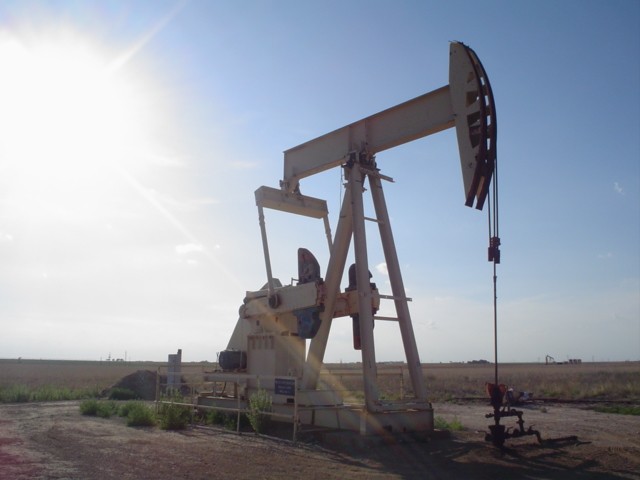
Compared to 2022, Tajikistan imported 164,200 tons more oil products in 2023, an increase of 11.6%, Safarali Qurbanzoda, the Anti-Monopoly Service’s first deputy head has announced.

“According to the customs office, in 2023, 1,413,000 tons of oil products worth $892 million were imported into the republic with an average price of $631 dollars per ton. More precisely, 436,500 tons of diesel fuel, 348,100 tons of gasoline, 411,000 tons of liquefied gas and 218,000 tons of petroleum products were imported,” he stated at a press conference. Qurbanzoda added that 25.9 % of these products came from Kazakhstan, and 0.7 % from Russia, with the cost of purchases increasing by 20%.

Prices at gas stations in Tajikistan also increased throughout 2023. Buses in Khojand, the second-most populous city, were stopped in October 2023 because of a sharp spike in the cost of diesel fuel, according to a report from the regional portal, SugdNews. The anti-monopoly agency attributed the rise in domestic fuel prices to “increased prices in exporting countries.”

Kazakhstan And Great Britain Discuss Further Cooperation

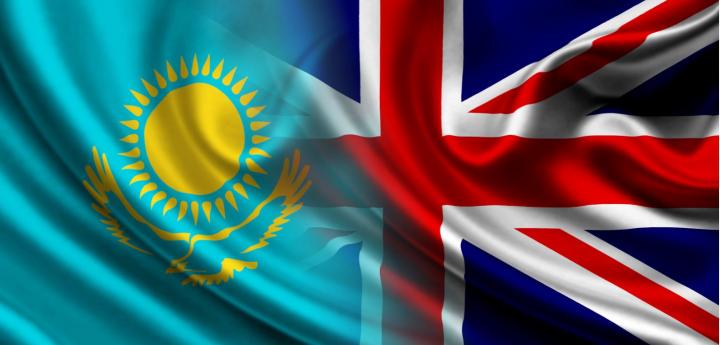
Kazakhstan and Great Britain will sign a Strategic Partnership and Cooperation Agreement (SPCA) in the near future, it was announced after a February 8th meeting between Kazakhstan’s deputy minister of foreign affairs, Roman Vassilenko, and the British ambassador to Kazakhstan Kathy Leach.

Mr. Vassilenko commented that the SPCA will contribute to the further growth of Kazakh-UK strategic cooperation, and pave the way for new trade and investment links. 

The deputy minister and the British ambassador pointed out the positive evolution of political dialogue between the countries, growth in trade and economic relations, as well as cultural ties. They also spoke of their progress working together in the fields of science and education, including in attracting British universities to take an interest in Kazakhstan.

The United Kingdom is one of Kazakhstan’s most important trade partners and investors, with bilateral trade turnover in 2023 amounting to $1.2bn.

Inspection of TPP in Tashkent Region Reveals Harmful Emissions

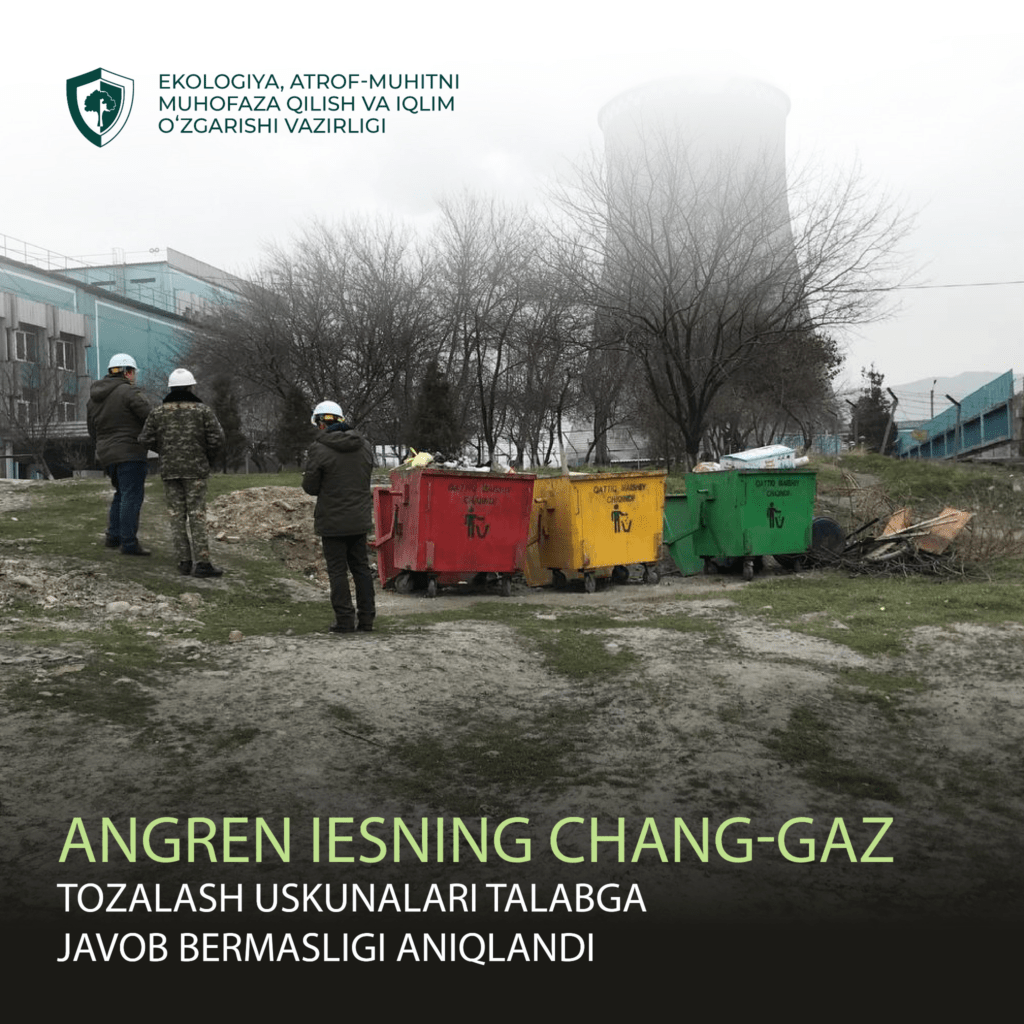
The Ecology Department of the Tashkent Region has inspected the Novo-Angren thermal power plant (TPP) and found violations related to the emission of harmful substances and the insufficient efficiency of dust and gas cleaning equipment. It was discovered that emissions exceeded the established norms, and the efficiency of the equipment had decreased by 80%.

These violations resulted in significant air pollution. In addition, the dumping of industrial waste in unsanctioned places was identified. In total, over a billion som ($80,000) of damage was caused.

To prevent further atmospheric pollution, a plan of urgent measures was developed to improve the efficiency of dust and gas cleaning equipment. In addition, with regard to 11 officials from TPP, relevant documents were sent to law enforcement authorities to take any necessary legal measures.

Karaganda Authorities Refuse Picket Over Renaming Nursultan Nazarbayev Avenue

Karaganda activists insist on returning Nursultan Nazarbayev Avenue to its former name, Peace Boulevard, which it bore until 2019. However, the authorities refused to coordinate eight pickets planned in different parts of the city. For example, in one place, near the Stanislavsky Theater, they explained the reason for their refusal as “snow removal.” Reasons for the other refusals remain unknown, as representatives of the Akimat redirected journalists from one employee to another for two days. The actions were to be held near monuments and state institutions on February 17th.

The organizer of the action, Aitkozha Fazylov, said that if the proposed place is not suitable for the actions, the authorities are obliged to offer an alternative option. He also said that he had already been refused approval for the picket fifteen times already

According to him, Zhumabai Iskakov, another organizer of the action, the deputy akim of Karaganda explained their refusal by stating that holding a picket could lead to uncontrolled actions, whilst the removal of snow from the area was again cited as  the second reason. However, according to Iskakov, sooner or later the renaming will happen anyway, so if people are already coming forward with this proposal the process should not be delayed.

In September 2022, having briefly been renamed Nursultan after the former president, the capital of Kazakhstan returned to its former moniker of Astana. But whilst monuments to Nazarbayev are now actively being removed, the fact that there has been no official decision on reversing the renaming of streets in regional cities remains a cause for consternation.

Central Asia’s First Center for the Support of Women and Girls to Open in Kyrgyzstan

Women whose rights are violated at home and at work will now be able to receive protection at a special center, according to the Kyrgyz Republic’s Ministry of Labor, Social Security and Migration. It will be the first such center in Central Asia in support of female victims of violence, and will offer women and girls free psychological and legal assistance, as well as medical examinations.

“When the one-stop shop opens, women and girls will receive all necessary services in one place, namely investigative and forensic medical examinations, as well as legal and psychological assistance,” Deputy  Minister of Labor, Social Security and Migration, Zhanyl Alybayeva said at a meeting with international organizations and human rights activists. Alybayeva stated that the UN Office on Drugs and Crime is providing technical support for the center’s opening.

According to statistics, the number of cases of domestic violence against women in Kyrgyzstan today remains high. In 2022, according to official data, 8,620 cases of domestic violence against women were registered, and in the first 10 months of 2023, there were more than 8,000 instances. The majority of those who contacted law enforcement are women between the age of 18 and 34.

At the end of last year, parliament ratified the international convention on the eradication of violence and harassment in the field of labor. A draft law “on amendments to some legislative acts of the Kyrgyz Republic in the field of protection and defense against family, sexual and gender violence” was also put forward. In their debate, MPs noted that most women who suffer from violence do not turn to law enforcement, and therefore the real figures are almost certainly much higher. The new bill also stipulates that perpetrators of violence within the family must temporarily leave the dwelling they share with the victim.

“After an act of violence within the family, victims usually move out to acquaintances or to crisis centers, and then the family collapses,” MP Dinara Ashimova said. “With this bill, we propose that it should be the accused who has to leave. Even when he returns, there will be a greater likelihood that the spouses will reconcile and the family will be preserved.”

Currently, ratification of the international convention is awaiting President Japarov’s signature.

Uzbekistan to Strengthen Protections Against Domestic Violence

Following a project board meeting on February 7th, the UNDP has released plans to provide free legal aid in criminal proceedings for victims of domestic and gender-based violence.

In April 2023, Uzbekistan followed Georgia, Moldova, Kyrgyzstan and Ukraine in criminalizing domestic violence. The impetus for this was the ever-increasing number of sex crimes perpetrated on women and minors. For example, in 2019, 99 people were convicted of sexual offenses involving a child under the age of 16, but by 2022, that number was 238.

Last April, President Mirziyoyev signed amendments to legislation on the protection of the rights and freedoms of women and children. Experts from both within the government and NGOs, as well as activists from the Nemolchi.uz project, which helps protect women and children from violence, worked on the changes.

The new version removes the right for perpetrators of sexual violence to use the argument of mitigating circumstances, and abolishes the right to early parole. Forced abortions can also be punishable by up to three years of correctional labor under certain circumstances. In addition, offenders who have committed sexual violence against a minor will no longer be able to use the argument that they did not know the victim’s real age.

One of the most anticipated innovations was the criminalization of domestic violence. According to the Committee of Family and Women of Uzbekistan, 21,871 protection orders were issued to victims of harassment and violence in the first seven months of 2023 alone. In 84.7% of those cases, the violence occurred within the family. Administrative or criminal punishment was meted out corresponding to 5,495 protection orders.

In Uzbekistan, the overwhelming majority of families adhere to traditional patterns and recognize the dominant position of men as head of the family. Very often, women suffering from domestic violence do not speak about their issues out of fear of condemnation by their families and communities. In addition, such victims are usually financially dependent on the aggressor. In rural areas, girls are married off at a young age without receiving any education.

As the UN Development Program (UNDP) Resident Representative in Uzbekistan, Matilda Dimovska observes, “criminalizing public sexual harassment is an important step in combating violence against girls and women. It is a logical continuation of the commitment to gender equality demonstrated at the highest level in Uzbekistan. The adopted legislation makes harassment in public places an administrative offense punishable by a fine of $60-150.” In 2023, 666 people were convicted of sexual harassment in Uzbekistan.

In recent years, along with its international partners, Uzbekistan has made tangible progress in combating violence against women and children. With UNDP support, a mobile application called Najot (Salvation) was developed with the aim of protecting the rights of victims of violence and providing them with timely assistance. The UNDP also launched a pilot initiative, Call Umida in Uzbekistan in March 2022. “Umida” means hope in Uzbek, and is a common name among women. Places and businesses that have joined the initiative are set up to immediately provide a safe place for women to protect them from harassment on the streets.

Additionally, the UNDP, the United Nations Population Fund, the United Nations Children’s Fund, the Organization for Security and Cooperation in Europe and a number of other international organizations regularly hold events in the country promoting a culture of respect for the rights of women and children.