• KGS/USD = 0.01144 0%
  • KZT/USD = 0.00192 -0%
  • TJS/USD = 0.10879 0.28%
  • UZS/USD = 0.00008 0%
  • TMT/USD = 0.28571 0%
  • KGS/USD = 0.01144 0%
  • KZT/USD = 0.00192 -0%
  • TJS/USD = 0.10879 0.28%
  • UZS/USD = 0.00008 0%
  • TMT/USD = 0.28571 0%
  • KGS/USD = 0.01144 0%
  • KZT/USD = 0.00192 -0%
  • TJS/USD = 0.10879 0.28%
  • UZS/USD = 0.00008 0%
  • TMT/USD = 0.28571 0%
  • KGS/USD = 0.01144 0%
  • KZT/USD = 0.00192 -0%
  • TJS/USD = 0.10879 0.28%
  • UZS/USD = 0.00008 0%
  • TMT/USD = 0.28571 0%
  • KGS/USD = 0.01144 0%
  • KZT/USD = 0.00192 -0%
  • TJS/USD = 0.10879 0.28%
  • UZS/USD = 0.00008 0%
  • TMT/USD = 0.28571 0%
  • KGS/USD = 0.01144 0%
  • KZT/USD = 0.00192 -0%
  • TJS/USD = 0.10879 0.28%
  • UZS/USD = 0.00008 0%
  • TMT/USD = 0.28571 0%
  • KGS/USD = 0.01144 0%
  • KZT/USD = 0.00192 -0%
  • TJS/USD = 0.10879 0.28%
  • UZS/USD = 0.00008 0%
  • TMT/USD = 0.28571 0%
  • KGS/USD = 0.01144 0%
  • KZT/USD = 0.00192 -0%
  • TJS/USD = 0.10879 0.28%
  • UZS/USD = 0.00008 0%
  • TMT/USD = 0.28571 0%
12 December 2025

Kazakhstan Ships Grain to Europe via Estonian Port

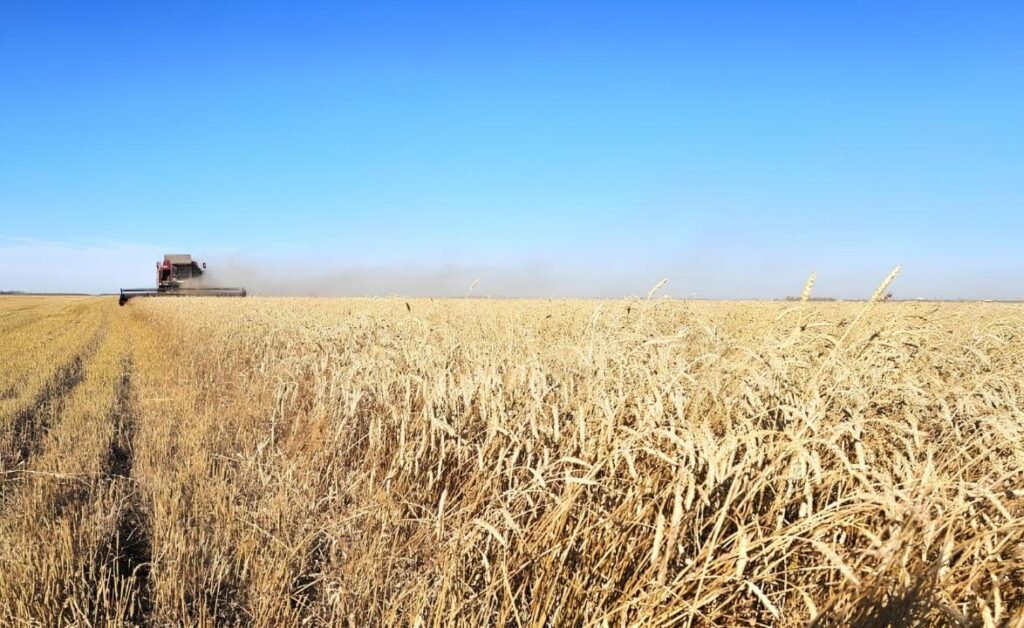
Kazakhstan is expanding its grain exports to European markets, with significant shipments routed through Estonia’s Muuga port. According to the Ministry of Agriculture, the Akmola region, the country’s top grain-producing area, exported 145,000 tons of wheat through Muuga during the first seven months of 2025.

Of this volume, more than 110,000 tons were delivered to Italy, over 28,000 tons to Belgium, and approximately 6,500 tons to Estonia. The shipments followed a memorandum of cooperation signed in February 2025 between the Akmola regional administration and the Muuga Grain Terminal.

A key milestone of Kazakhstan’s 2024-2025 export season has been the diversification of grain destinations. For the first time, Kazakh wheat was exported to Belgium, Poland, Portugal, Norway, and the United Kingdom.

From September 2024 to August 10, 2025, Kazakhstan exported 9.8 million tons of wheat from the new harvest, a 55% increase compared to the same period in the 2023-2024 season. Uzbekistan, Tajikistan, Afghanistan, Kyrgyzstan, Iran, and Azerbaijan remain the country’s primary buyers.

Including flour, Kazakhstan exported a total of 12.4 million tons of wheat grain between September 2024 and July 2025, marking a 34% rise from the 9.3 million tons exported during the same period in the previous season.


Kazakhstan Grounds Light Aircraft Following Two Fatal Crashes

Kazakhstan’s Civil Aviation Committee, working alongside the Aviation Administration, has temporarily suspended flights of TL-2000 and Aerostar R40F light aircraft following two fatal crashes near Astana in recent months.

The suspensions are intended to allow for thorough investigations of both incidents.

On June 22, 2025, a privately owned TL-2000 light aircraft crashed during a training flight near Zholaman Airfield, resulting in the deaths of both people on board. The accident occurred at approximately 11:30 a.m. A special investigation commission was established by the Ministry of Transport to determine the cause.

On August 17, 2025, an Aerostar R40F (registration UP-LA229) crashed during a general aviation flight about 55 kilometers from Astana in the Akmola region. The crash resulted in the death of both the pilot and passenger. A commission was dispatched by the Ministry of Transport’s accident investigation department to the crash site, including representatives from the Transport Police and regional authorities.

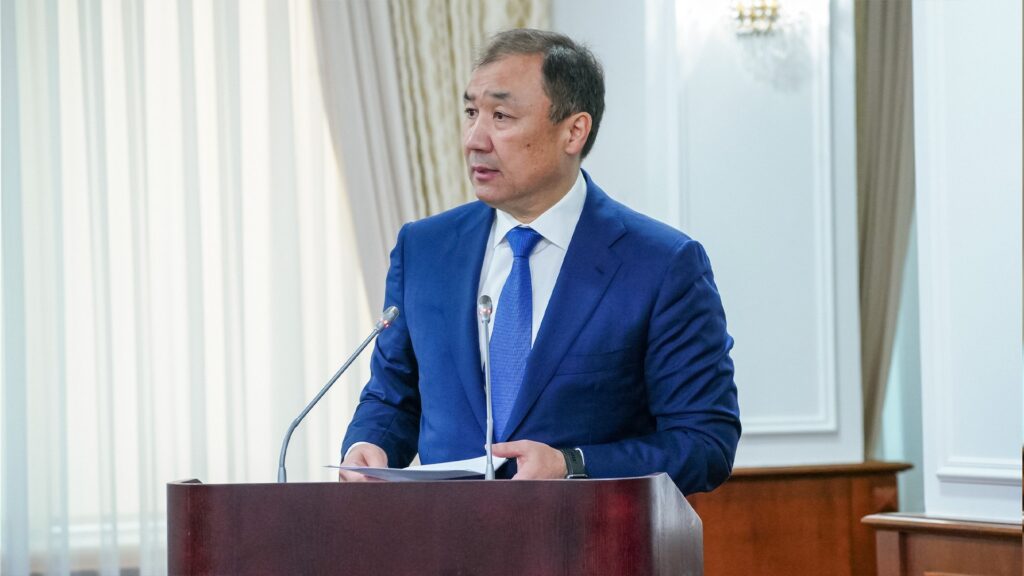
Transport Minister Nurlan Sauranbayev confirmed that each incident is being investigated independently, and that both aircraft models will remain grounded until the investigations conclude.

The Civil Aviation Committee, in collaboration with the Aviation Administration, has suspended flights of both TL-2000 and Aerostar R40F aircraft models pending investigation results. The investigation into the June TL-2000 crash is ongoing, with final conclusions expected before the end of 2025.

Astana Expands International Air Routes with China and Uzbekistan

Kazakhstan is expanding its international air connectivity, with new routes and increased flight frequencies to China and Uzbekistan following the Central Asia-China Civil Aviation Cooperation Working Group Conference (C5+1).

According to the Ministry of Transport, Kazakhstan and China signed a Memorandum of Understanding to enhance bilateral air traffic and broaden the route network. The agreement includes adding a new Chinese destination, Kulja, to the Kazakh airline network and discussing future flights to Kashgar.

Kulja (also known as Yining) lies in the Ili Kazakh Autonomous Prefecture of China’s Xinjiang Uyghur Autonomous Region, about 100 kilometers from the Kazakh border. Kashgar (Kashi), also in Xinjiang, is located approximately 455 kilometers from the border. While launch dates for flights to these cities have not yet been announced, the total number of flights between Kazakhstan and China is set to increase to 124 per week starting in 2025.

SCAT Airlines has already opened three new routes this year:

  • Shymkent-Shanghai (since May, two flights per week)
  • Shymkent-Xi’an (since July, two flights per week)
  • Shymkent-Ürümqi (since July, two flights per week)

In addition, China Eastern Airlines began operating flights from Almaty to Guangzhou in July, with three flights per week. On August 13, a COMAC C909 aircraft flew from Urumqi to Karaganda and back, marking the first landing of the Chinese-made aircraft in Kazakhstan.

During the same conference, Kazakhstan and Uzbekistan’s aviation authorities also reached agreements to boost bilateral air traffic. Designated airlines may now operate up to 42 weekly flights on the Almaty-Tashkent and Astana-Tashkent routes, and up to 14 flights on other routes between the two countries. The list of permissible destinations has also been expanded.

In July, Uzbekistan’s My Freighter (operating as Centrum Air) launched twice-weekly flights between Aktau and Nukus. FlyArystan began flying between began flying between Atyrau and Tashkent three times a week on July 15.

“These steps are aimed at improving transport accessibility, strengthening business and cultural ties, and unlocking the tourism potential of both countries,” the Ministry of Transport stated.

As previously reported by The Times of Central Asia, Kazakhstan, Uzbekistan, and other regional partners established the Eurasian Civil Aviation Conference in 2024 as a joint regulatory body to address rising passenger and cargo demand amid the decline of Russian aviation dominance.”

Kazakhstan Accelerates Railway Modernization to Boost Transit Capacity

Kazakhstan is embarking on a large-scale modernization of its 16,000 kilometer railway network to significantly increase transit capacity, despite 57% of its infrastructure being worn out, Transport Minister Nurlan Sauranbayev announced at a recent government meeting.

Sauranbayev acknowledged that the aging network affects both the speed and safety of freight, including transit trains. “The infrastructure is operating at full capacity,” he said. “To improve efficiency and sustainability by 2030, we plan to build new lines, modernize 5,000 kilometers of existing track, and repair another 11,000 kilometers.”

Five new railway lines are currently under construction:

  • Dostyk-Moyinty (linking the Chinese border to central Kazakhstan)
  • Almaty bypass line (southern Kazakhstan)
  • Darbaza-Maktaaral (Turkestan region)
  • Moyinty-Kyzylzhar (connecting the west and center)
  • Bakhta-Ayagoz (eastern Kazakhstan, to enhance trade with China)

Two projects Dostyk-Moyinty and the Almaty bypass, are scheduled for early completion this year. The remaining lines will be finished by 2026.

This year also marks the launch of a large-scale modernization of 3,000 kilometers of track, which the minister described as equivalent to constructing entirely new lines. “These projects are shaping a full-fledged railway framework for Kazakhstan,” Sauranbayev stated. Additionally, rail traffic to China has resumed through the Dostyk station.

Kazakhstan currently hosts five international railway corridors. Transit volume is expected to rise sharply, from 33 million tons in 2025, to 54 million tons in 2026, and 67 million tons by 2029. Forecasts suggest volumes could reach 100 million tons by 2035, worth an estimated 4.4 trillion tenge (approximately $9.1 billion). “Our goal is to reach this figure even sooner,” the minister noted.

Transit traffic has already doubled over the past decade, reaching 27.4 million tons in 2024. Seven cargo handling terminals now operate at Kazakhstan’s borders, with two more to open soon and five additional facilities planned. “This will establish a terminal network along the East-West route. We offer a transit product based on three pillars: delivery time, tariffs, and service,” Sauranbayev said.

He also highlighted the stability of tariffs along the Trans-Caspian International Transport Route (TITR), or “Middle Corridor,” which connects Kazakhstan to Europe while bypassing Russia. Tariffs have remained unchanged for three years. Preparations for an intergovernmental agreement on further development of the route are set to begin shortly.

As previously reported by The Times of Central Asia, the national railway company Kazakhstan Temir Zholy (KTZ) announced in December that customs declaration procedures for transit cargo along the Middle Corridor have been digitalized.

Uzbekistan and Afghanistan Sign $243 Million Power Transmission Deal

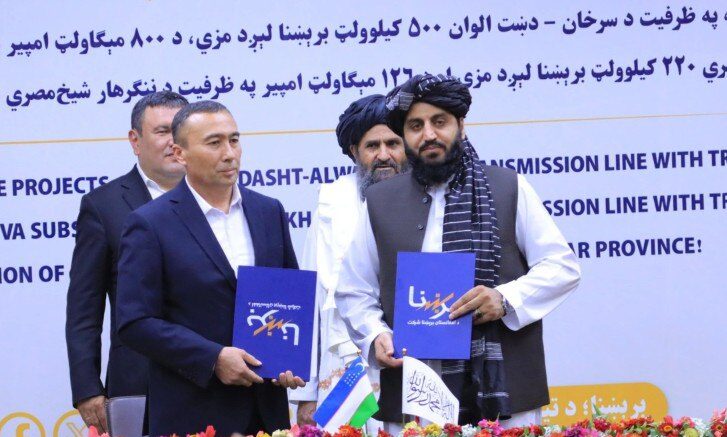
Afghanistan and Uzbekistan have signed four contracts worth $243 million aimed at expanding power transmission infrastructure and building new substations, according to Da Afghanistan Breshna Sherkat (DABS), Afghanistan’s state-owned utility company.

The agreements were concluded between DABS and Uzbekistan’s Ministry of Energy, represented by Nego Energy and Uz Energy. Key components of the project include the extension of the 500-kilovolt Surkhan-Dasht Alwan transmission line, designed to carry up to 1,000 megawatts, the expansion of the Arghandeh substation to 800 megavolt-amperes (MVA), the construction of a new Sheikh Mesri substation in Nangarhar Province, and the extension of the 220-kilovolt Kabul-Nangarhar (Sheikh Mesri) line.

The signing ceremony took place in Kabul and was attended by high-ranking officials, including Deputy Prime Minister for Economic Affairs Mullah Abdul Ghani Baradar Akhund, Head of the General Directorate of State-Owned Corporations Mawlawi Ahmad Jan Bilal, and members of the press.

Describing the projects as “vital for ensuring reliable electricity services,” DABS CEO Dr. Abdul Bari Omar said the upgrades would support Afghanistan’s commercial, industrial, and agricultural development. Uzbekistan’s Minister of Energy, Jurabek Mirzamakhmudov, stressed that the initiative demonstrates “strong joint cooperation and continuous efforts by the leaders of the two friendly nations,” and pledged close collaboration on the implementation phase.

In addition to the infrastructure deals, DABS also signed a separate long-term agreement with Uzbek companies to purchase electricity over a ten-year period, helping to stabilize Afghanistan’s power grid.

As previously reported by The Times of Central Asia, DABS has entered into or prepared agreements for domestic energy generation projects totaling 1,070 megawatts over the past 11 months. Foreign partners are financing 70% of the estimated $1.01 billion investment.

Afghanistan currently generates approximately 250 MW of electricity domestically and imports 800 MW from neighboring countries, Turkmenistan, Iran, Uzbekistan, and Tajikistan, at an annual cost of $250-280 million. Officials estimate national electricity demand at 6,000 to 7,000 MW, with the potential to reach 10,000 MW as industrial output grows.

Kyrgyzstan Restricts Livestock Exports to Stabilize Meat Prices

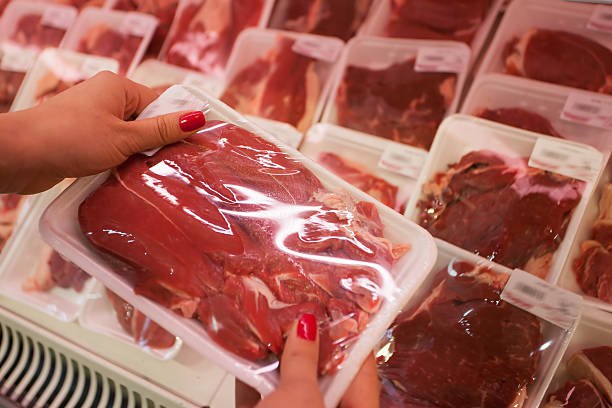
In early 2025, Kyrgyzstan temporarily suspended livestock exports in a bid to curb rising meat prices on the domestic market. The measure has resulted in a significant reduction in export volumes.

According to the Ministry of Water Resources, Agriculture and Processing Industry, between January and mid-August 2025, Kyrgyzstan exported 30,493 cattle, 31,781 sheep and goats, and 1,636 horses. This marks a sharp decline compared to the same period in 2024, when the country exported 77,907 cattle, 70,392 sheep and goats, and 5,113 horses.

Kyrgyz livestock is primarily exported to neighboring Central Asian countries.

Officials say the suspension has helped prevent meat shortages and price surges domestically. To further bolster local meat production and supply, the ministry has proposed extending the export ban for an additional six months.

In the first half of 2025, Kyrgyzstan produced 115,400 tons of meat, an increase of 3,900 tons compared to the same period in 2024. However, demand continues to outpace supply. National meat consumption stood at 309,400 tons in 2024 and reached 157,300 tons in the first half of 2025.

In 2024, Kyrgyzstan met 86.2% of domestic meat demand through local production. That figure dropped to 79.7% in the first half of 2025, underscoring the country’s ongoing reliance on imports to bridge the supply gap.

To contain prices, the government implemented temporary state control over retail meat prices beginning August 11. For a 90-day period, the price of beef and mutton has been capped at 700 Kyrgyz soms ($8) per kilogram.