• KGS/USD = 0.01144 0%
  • KZT/USD = 0.00213 0%
  • TJS/USD = 0.10678 -0.19%
  • UZS/USD = 0.00008 0%
  • TMT/USD = 0.28490 -0.28%
  • KGS/USD = 0.01144 0%
  • KZT/USD = 0.00213 0%
  • TJS/USD = 0.10678 -0.19%
  • UZS/USD = 0.00008 0%
  • TMT/USD = 0.28490 -0.28%
  • KGS/USD = 0.01144 0%
  • KZT/USD = 0.00213 0%
  • TJS/USD = 0.10678 -0.19%
  • UZS/USD = 0.00008 0%
  • TMT/USD = 0.28490 -0.28%
  • KGS/USD = 0.01144 0%
  • KZT/USD = 0.00213 0%
  • TJS/USD = 0.10678 -0.19%
  • UZS/USD = 0.00008 0%
  • TMT/USD = 0.28490 -0.28%
  • KGS/USD = 0.01144 0%
  • KZT/USD = 0.00213 0%
  • TJS/USD = 0.10678 -0.19%
  • UZS/USD = 0.00008 0%
  • TMT/USD = 0.28490 -0.28%
  • KGS/USD = 0.01144 0%
  • KZT/USD = 0.00213 0%
  • TJS/USD = 0.10678 -0.19%
  • UZS/USD = 0.00008 0%
  • TMT/USD = 0.28490 -0.28%
  • KGS/USD = 0.01144 0%
  • KZT/USD = 0.00213 0%
  • TJS/USD = 0.10678 -0.19%
  • UZS/USD = 0.00008 0%
  • TMT/USD = 0.28490 -0.28%
  • KGS/USD = 0.01144 0%
  • KZT/USD = 0.00213 0%
  • TJS/USD = 0.10678 -0.19%
  • UZS/USD = 0.00008 0%
  • TMT/USD = 0.28490 -0.28%

Kazakhstan Develops AI System for Drilling Monitoring with Plans for Export

Kazakhstan has developed a domestically produced AI system for real-time monitoring of drilling operations and plans to promote it in international markets, Energy Minister Yerlan Akkenzhenov has announced.

Speaking at a government meeting on April 28 focused on integrating AI into the economy, Akkenzhenov announced the creation of an AI alliance under the Ministry of Energy. The alliance brings together technology companies, industry participants, and developers to coordinate the deployment of digital solutions, with a priority on local innovations.

One of the alliance’s key initiatives is an intelligent drilling monitoring system currently undergoing pilot implementation.

According to Akkenzhenov, the system covers more than 4,000 wells and analyzes production data in real time, identifying anomalies and forecasting output levels.

The pilot project is being implemented at facilities operated by KazMunayGas and other subsoil users.

The deployment is expected to reduce well downtime by up to 20% and generate an estimated economic benefit of around $2.2 million annually.

“It is important that the system has been developed in Kazakhstan and has export potential. Work is currently underway to promote it in international markets, including the United States,” Akkenzhenov said.

The minister added that AI is also being used to monitor the circulation of petroleum products. The system processes real-time data from oil refineries, storage facilities, the national railway operator Kazakhstan Temir Zholy (KTZ), and government agencies.

This enables more accurate forecasting of fuel reserves and helps identify risks of shortages or excess supply.

“The expected outcome is an increase in planning accuracy to 85% and savings of up to $48.4 million annually,” the minister said.

The system was developed through cooperation between KazMunayGas and the Kazakh-British Technical University as part of the AI-Sana program aimed at strengthening AI capabilities.

According to the ministry, the AI alliance has developed a portfolio of 45 projects, 10 of which are currently under evaluation and preparation for implementation.

The Times of Central Asia previously reported that President Kassym-Jomart Tokayev had instructed the creation of a specialized artificial intelligence university in Kazakhstan.
Kazakhstan’s Auto Industry Expands Output Amid Strong Demand

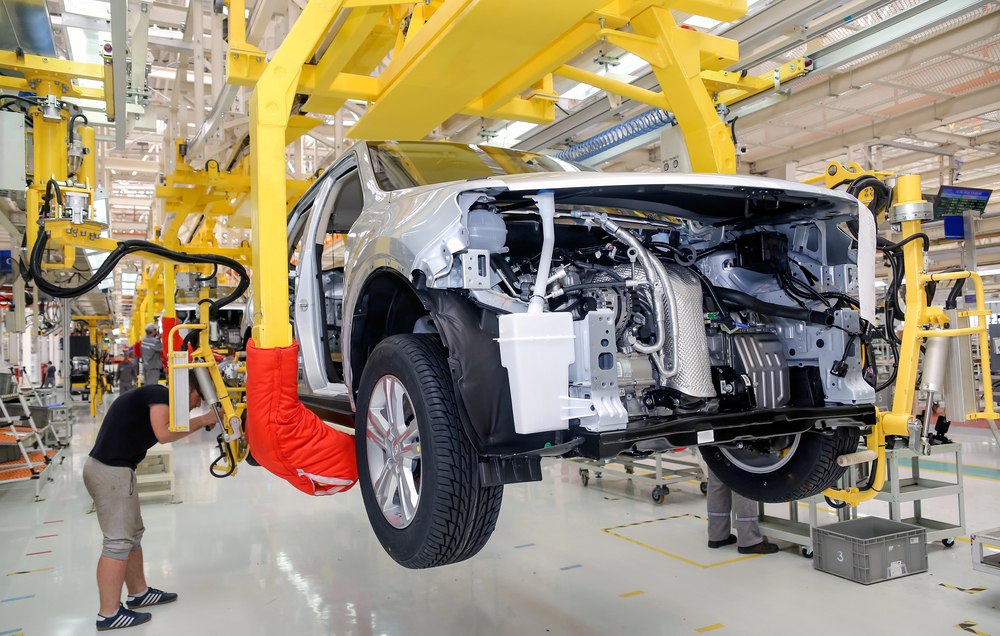
Kazakhstan’s automotive industry is increasing production on the back of strong domestic demand and ongoing localization policies. However, the sector is expected to face challenges in expanding into export markets in the coming years.

In 2025, the country produced approximately 171,000 vehicles, while sales reached around 235,000 units, according to industry data.

The broader engineering sector has expanded 8.5-fold over the past decade, reaching a historic high. Automotive manufacturing accounts for about 41% of this segment, making it one of the key non-resource drivers of the economy.

One of the main factors behind growth is demand for fleet renewal. According to Zhaslan Azenov, advisor to the president of the Kazakhstan Automobile Union, the country’s passenger car fleet totals around 5.9 million vehicles, with more than 40% older than 20 years.

The share of domestically produced vehicles in total sales reached 69% in 2025, reflecting the strengthening of local production, Azenov told The Times of Central Asia.

Kazakhstan currently has 11 automotive manufacturers in operation, with one additional project under development. Major production sites are located in Kostanay, Almaty, Semey, Kokshetau, Saran, and Uralsk.

Among the most popular brands on the market are Hyundai, Chevrolet, and Kia. The Chevrolet Cobalt remains the top-selling model, followed by the Hyundai Tucson, Kia Sportage, Hyundai Mufasa, and Hyundai Elantra.

“Among the most popular models, the absolute leader is the Chevrolet Cobalt. The top five also includes Hyundai Tucson, Kia Sportage, Hyundai Mufasa, and Hyundai Elantra,” the industry representative said.

At the same time, the presence of Chinese manufacturers is growing rapidly. Their market share has increased from 2% in 2020 to 39% by the end of 2025, driven by aggressive market entry strategies and plans for localized production.

Deepening localization remains a key priority. Projects are underway to produce automotive components domestically, including interior elements, body parts, technical systems, and electronics. This is expected to reduce dependence on imports and lower production costs.

“Kazakhstan is transitioning from simple assembly to deep localization. Today, we have a number of production facilities for interior components such as seats, flooring, headliners, and mats. In exterior components, we produce bumpers, plastic parts, and mudguards; in technical systems, exhaust systems, cooling and heating systems, wiring harnesses, fuel and brake lines; as well as consumables such as batteries, tires, paints, and sealants. In electronics, we are developing multimedia systems,” Azenov said.

The electric vehicle segment remains at an early stage of development. As of September 2025, just over 22,000 electric vehicles were registered in the country, including around 21,000 passenger cars.

Industry growth has also been accompanied by rising employment. The number of workers in automotive manufacturing increased from around 2,000 in 2018 to more than 11,000 in 2025.

“It should be noted that the industry’s growth has been accompanied by a significant increase in jobs. If in 2018 just over 2,000 people were employed in automotive manufacturing, by 2025 this figure exceeded 11,000,” Azenov added.

According to industry forecasts, vehicle sales could reach around 247,000 units in 2026, while production is expected to increase further.

Despite current growth, the industry’s key challenge remains the transition from import substitution to export expansion. Experts emphasize the need to integrate into global production chains and strengthen the country’s presence in external markets.

Key challenges include improving cooperation with the domestic metallurgy sector, reducing dependence on imported components, ensuring stable demand, and advancing further digitalization of production.

Kazakhstan to Invest Around $174 Million in Non-Ferrous Metallurgy Projects in 2026

Kazakhstan plans to launch eight projects in the non-ferrous metallurgy sector in 2026, with total investments of around $174 million, the Ministry of Industry and Construction has said.

According to the ministry, the sector remains one of the key pillars of the national economy, supported by a substantial resource base that includes deposits of copper, zinc, nickel, lead, aluminum, and precious metals.

“In 2026, eight projects are expected to be launched with approximately $173.8 million in investments and the creation of more than 1,500 permanent jobs,” the statement said.

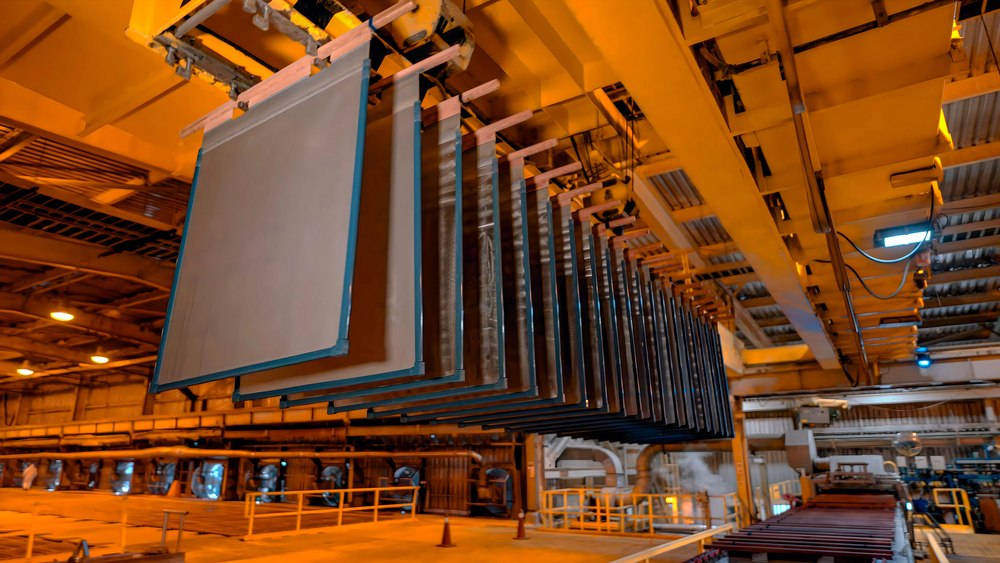
The projects include the production of cathode copper, copper wire rod, cable products, aluminum powder, and cast rods made of unalloyed aluminum.

One project has already been commissioned, a cathode copper production facility in the Karaganda region. The project involved investments of about $17.3 million and created 512 jobs.

“In addition, six projects are currently under implementation, including the production of dore alloy, aluminum billets, and profiles. Their launch is expected in 2027–2028, with total investments exceeding $1.1 billion,” the ministry said.

According to the ministry, these projects will create more than 800 jobs, including around 140 in rural areas.

Additionally, a further 34 projects are at the planning stage, focusing on the production of dore gold and silver, nickel matte, aluminum, tungsten, lead, and zinc. Total investments in these projects are estimated at $14.9 billion, with the potential to create around 17,100 jobs.

The largest projects are planned for implementation in the Kostanay, Pavlodar, Karaganda, and Abai regions.

Overall, total investments across 48 current and prospective projects amount to approximately $16.2 billion, with plans to create around 19,400 jobs, a significant share of which will be in rural areas.

The Times of Central Asia previously reported that Kazakhstan’s reserves of rare earth metals may have exceeded previous projections following new geological surveys.

UN ESCAP Asia and Pacific Digital Solutions Centre for Sustainable Development Established in Kazakhstan

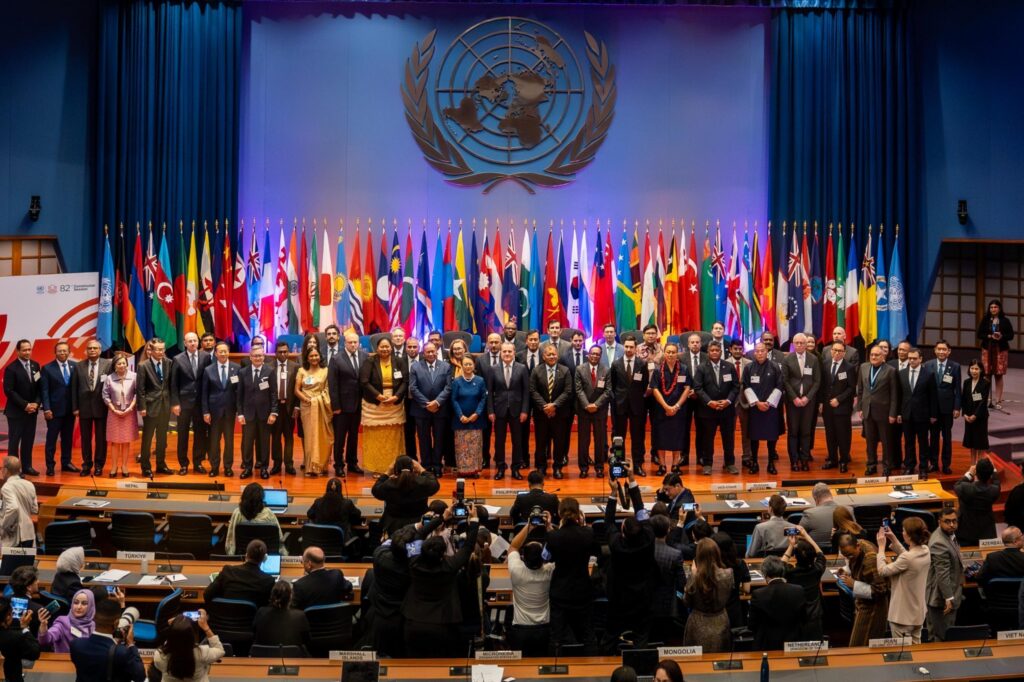
During the 82nd session of the United Nations Economic and Social Commission for Asia and the Pacific (ESCAP), held in Bangkok last week, all 52 member states adopted a resolution establishing the UN ESCAP Asia and Pacific Digital Solutions Centre for Sustainable Development in Almaty. This has been reported by Kazakhstan’s Ministry of Digital Development.

The new center will become ESCAP’s sixth regional institution, alongside existing specialized centers in Japan, China, South Korea, India, and Iran.

The Almaty-based center is expected to have a capacity of up to 130 staff, and be located in the UN Plaza building. The government of Kazakhstan will cover the institution’s operational and administrative costs for five years, with funding of up to $15 million.

It will operate as a neutral international platform under the auspices of the United Nations, aimed at identifying and disseminating best digital solutions from across the Asia-Pacific region, particularly in public and social services.

As noted by Margulan Baimukhan, Kazakhstan’s Permanent Representative to ESCAP, the adoption of the resolution marks the conclusion of a multilateral negotiation process that lasted more than five years.

The center is expected to contribute to bridging the digital divide across the region, with a particular focus on supporting least developed countries, landlocked countries, and small island developing states. In the context of rapid digital transformation, emphasis will be placed on developing inclusive mechanisms for the exchange of technologies and expertise, enabling countries to design solutions tailored to national contexts and ensuring equitable access to the benefits of digitalization.

For Kazakhstan, the establishment of the center is expected to create additional opportunities to attract advanced digital technologies, international expertise, and highly qualified professionals.

Strengthening Almaty’s role as a regional hub under the auspices of the United Nations is also expected to enhance international cooperation, promote partnerships with leading technology companies and development institutions, and reinforce the country’s position as a provider of digital solutions across the Asia-Pacific region.

The initiative may also support Kazakhstan’s export potential in IT services and the promotion of domestic digital solutions in international markets.

Chinese Company to Build Hydropower and Solar Plants in Kyrgyzstan

Construction of a small hydropower plant and a solar power station has begun in Kyrgyzstan’s Jalal-Abad region as part of efforts to expand domestic electricity generation and reduce reliance on energy imports.

The groundbreaking ceremony took place on April 28 and was attended by the presidential envoy to the region, Tilek Tekebayev; the project’s scientific supervisor and former Prime Minister Akylbek Japarov; as well as representatives of the Chinese corporation SINOMACH.

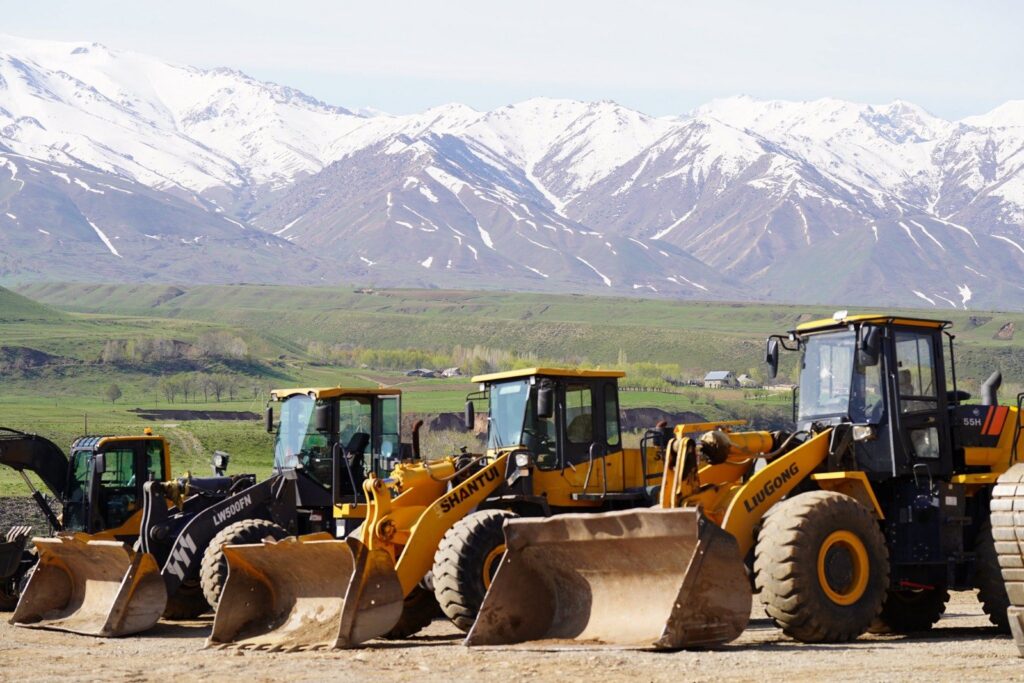
The project involves the construction of two facilities: a small hydropower plant with a capacity of 5 megawatts and an annual output of around 20 million kWh, and a solar power plant with a capacity of 1 megawatt, generating approximately 1.6 million kWh per year.

The total investment, to be implemented under a public-private partnership model, is estimated at $259.8 million.

Once operational, the facilities are expected to help reduce electricity shortages in the region and decrease dependence on imports.

The project is also expected to create more than 100 jobs and provide irrigation for over 1,000 hectares of arid land.

Kyrgyzstan is accelerating the development of small hydropower projects amid rising electricity demand and limited generation capacity.

Currently, 48 small hydropower plants are operating in the country, with a combined capacity of around 180 megawatts. Another 50 facilities are under construction, which authorities say will strengthen the country’s energy independence.

Over 100 Uzbek Workers in Russia Receive Aid After Months Without Pay

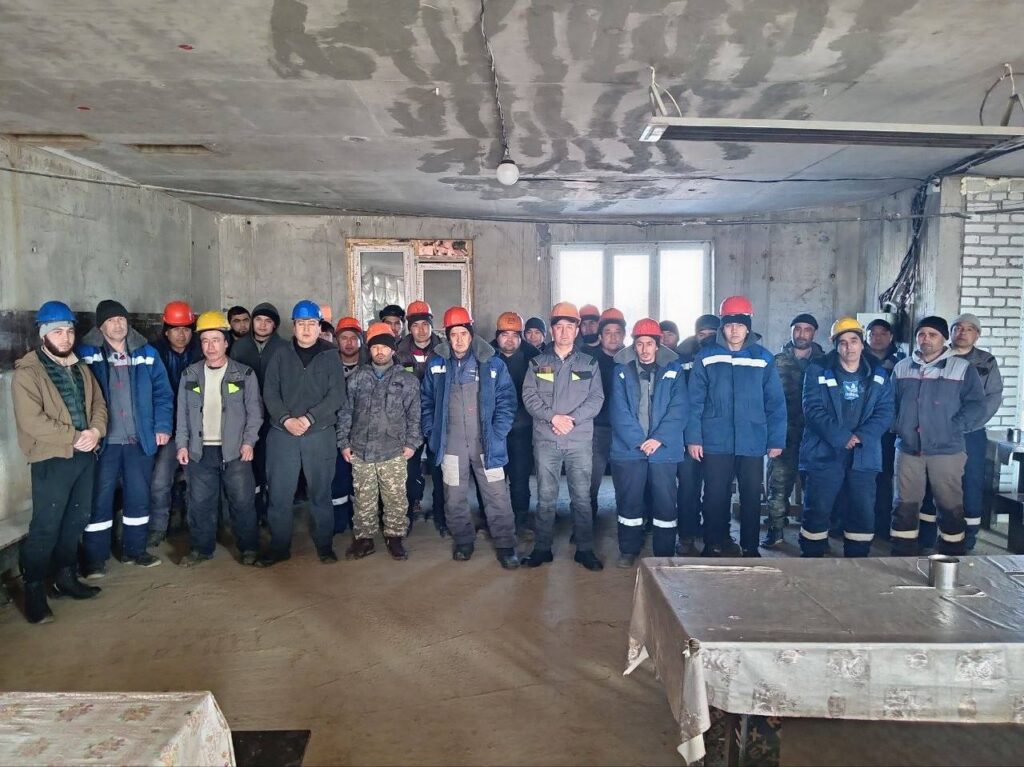
More than 100 Uzbek migrant workers in Russia have received assistance after going without wages and adequate food for four months, according to Uzbekistan’s Migration Agency.

The agency said the workers were jointly owed nearly 24 million rubles (about $324,000) and, in some cases, had fallen into irregular legal status. The situation began to improve after the workers contacted the agency for assistance.

Following the appeals, the agency’s representative office in Russia worked with legal counsel, while Uzbekistan’s Consulate General sent an official diplomatic note to the relevant authorities. As a result, Russian law enforcement agencies opened a criminal case against the employers under Article 145.1 of the Russian Criminal Code, which covers non-payment of wages.

According to the agency, some progress has already been made. A total of 105 workers have received 9.4 million rubles (around $127,000) in unpaid wages. The remaining debt, estimated at 23.9 million rubles, is expected to be paid by May 15.

The agency also said that food supplies for the workers have been restored. Those who had lost legal status were assisted in returning to Uzbekistan, and financial support measures have begun.

The case was handled in cooperation with Uzbekistan’s diplomatic missions in Russia and Russian law enforcement authorities. Officials said the joint efforts helped address both the financial claims and the humanitarian situation faced by the workers.