• KGS/USD = 0.01144 0%
  • KZT/USD = 0.00193 -0%
  • TJS/USD = 0.10838 -0.09%
  • UZS/USD = 0.00008 0%
  • TMT/USD = 0.28490 0%
  • KGS/USD = 0.01144 0%
  • KZT/USD = 0.00193 -0%
  • TJS/USD = 0.10838 -0.09%
  • UZS/USD = 0.00008 0%
  • TMT/USD = 0.28490 0%
  • KGS/USD = 0.01144 0%
  • KZT/USD = 0.00193 -0%
  • TJS/USD = 0.10838 -0.09%
  • UZS/USD = 0.00008 0%
  • TMT/USD = 0.28490 0%
  • KGS/USD = 0.01144 0%
  • KZT/USD = 0.00193 -0%
  • TJS/USD = 0.10838 -0.09%
  • UZS/USD = 0.00008 0%
  • TMT/USD = 0.28490 0%
  • KGS/USD = 0.01144 0%
  • KZT/USD = 0.00193 -0%
  • TJS/USD = 0.10838 -0.09%
  • UZS/USD = 0.00008 0%
  • TMT/USD = 0.28490 0%
  • KGS/USD = 0.01144 0%
  • KZT/USD = 0.00193 -0%
  • TJS/USD = 0.10838 -0.09%
  • UZS/USD = 0.00008 0%
  • TMT/USD = 0.28490 0%
  • KGS/USD = 0.01144 0%
  • KZT/USD = 0.00193 -0%
  • TJS/USD = 0.10838 -0.09%
  • UZS/USD = 0.00008 0%
  • TMT/USD = 0.28490 0%
  • KGS/USD = 0.01144 0%
  • KZT/USD = 0.00193 -0%
  • TJS/USD = 0.10838 -0.09%
  • UZS/USD = 0.00008 0%
  • TMT/USD = 0.28490 0%
10 December 2025

New Report Predicts Surge in Islamic Finance Across Central Asia

A new report co-published by the Eurasian Development Bank (EDB), the Islamic Development Bank Institute, and the London Stock Exchange Group forecasts robust growth for Islamic finance in Central Asia. Titled “The Future of Islamic Finance in Central Asia,” the report was unveiled at the 2025 Annual Meetings of the Islamic Development Bank Group in Algiers, Algeria.

The study offers a comprehensive overview of the Islamic finance landscape across Kazakhstan, Kyrgyzstan, Tajikistan, Turkmenistan, and Uzbekistan. While Sharia-compliant financing remains a relatively recent addition to the global financial system, having developed over the past three decades, it is becoming an increasingly significant component in the sustainable development strategies of Central Asian economies. All five governments are reportedly prioritizing the expansion of Islamic finance.

As of early 2024, the region is home to 18 Islamic banks and 14 non-bank financial institutions, including Islamic banking windows. The sector also features takaful (Islamic insurance) operators, microfinance institutions, Ijara (leasing) companies, and emerging Islamic FinTech ventures such as digital banks and wealth management platforms.

Total Islamic finance assets in Central Asia stood at $699 million at the start of 2024. According to the Islamic Finance Development Report 2024, Kazakhstan ranked 19th globally in terms of Islamic finance development, above the global average, and leads the regional market.

Projections in the report anticipate substantial growth. Islamic banking assets in Central Asia are expected to rise to $2.5 billion by 2028 and $6.3 billion by 2033. Kazakhstan is forecasted to remain the regional leader, followed closely by Uzbekistan, buoyed by favorable demographics, economic momentum, and the depth of national banking sectors.

The sukuk (Islamic bond) market is also poised for rapid expansion. Baseline forecasts suggest sukuk issuance could reach $2.05 billion by 2028 and $5.6 billion by 2033.

EDB Chairman Nikolai Podguzov highlighted the bank’s commitment to fostering this growth: “The further development of Islamic finance in Central Asia will expand financial inclusion and connect local businesses to the global Islamic market, contributing to regional economic growth. With the Islamic Development Bank Group’s support, the EDB has initiated the creation of an Islamic Window to finance projects in compliance with Sharia principles.” He added that key investment priorities will include energy, transport, social infrastructure, food security, and industry.


Kazakh Schoolchildren Offered Summer Job Opportunities

Kazakhstan’s Minister of Labor and Social Protection, Svetlana Zhakupova, announced at a recent government meeting that the ministry is prepared to assist nearly 1.4 million schoolchildren aged 14 to 18 in finding summer employment.

Under the country’s Labor Code, minors are permitted to work under certain conditions, including a reduced schedule of no more than 24 hours per week. Importantly, such work must be undertaken outside of school hours.

“To facilitate employment, the following measures will be available to students during the upcoming summer holidays: selection of suitable vacancies through the Electronic Labor Exchange, online training programs, public works initiatives, and career guidance services,” Zhakupova stated.

The Electronic Labor Exchange, accessible via enbek.kz, now includes a dedicated section titled “My Summer Vacation”, which allows teenagers to register, upload their résumés, and search for job opportunities independently. For students under the age of 16, registration and the creation of a personal account must be handled by a parent or legal guardian.

As previously reported by The Times of Central Asia, approximately 1.8 million young people aged 15 to 28 were employed in Kazakhstan in 2024, a 0.6% increase over the previous year.

PepsiCo to Double Investment in Kazakhstan Plant, Triple Production Capacity

PepsiCo has announced plans to double its total investment in the construction of a snack production plant in Kazakhstan’s Almaty region, marking the launch of the project’s second phase. The expansion aims to triple the plant’s production capacity.

The announcement came during a meeting in Astana on May 20 between David Manzini, President of PepsiCo for Russia, Belarus, the Caucasus, and Central Asia, and Alibek Kuantyrov, Kazakhstan’s Deputy Minister of Foreign Affairs.

Construction of the first phase is currently underway with an initial investment of $160 million. Once fully operational, the facility, expected to be the largest snack production plant in Central Asia, will process up to 210,000 tons of potatoes annually and produce 70,000 tons of finished products. It is set to become a central hub in PepsiCo’s regional supply chain, serving both domestic and export markets across Central Asia. Production is scheduled to begin in spring 2026.

Manzini described the initiative as one of PepsiCo’s most significant investments and its first project of this scale in Central Asia. He noted that contracts have already been signed with 15 Kazakh farmers to supply potatoes, underscoring the company’s commitment to local sourcing. PepsiCo aims to transition entirely to locally grown chip-grade potatoes by 2035, actively integrating Kazakh farmers into its supply chain.

He also highlighted the importance of government support: “Launching a greenfield project of this scale in such a short timeframe is only possible with strong support from national and local authorities. Kazakhstan is creating favorable conditions for foreign investors, which enabled our decision to significantly expand our investment and project scope.”

Kazakhstan Invests in Science, But Economic Impact Remains Low

Over the past five years, Kazakhstan has nearly tripled its research and development (R&D) spending, reaching $430 million in 2024. Despite this, science’s contribution to the national economy remains minimal, just 0.16% of GDP. This figure is among the lowest for countries striving toward technological advancement, according to analysts at Ranking.kz.

Almaty: Kazakhstan’s Scientific Hub

Nearly half of last year’s R&D spending was concentrated in Almaty, which accounted for 43.1% of total investment, equivalent to $186 million. Astana followed with 20.4% ($88 million), while other regions lagged significantly. In the Ulytau region, for instance, only $67,000 was allocated to scientific endeavors.

Almaty retains its status as the country’s scientific capital thanks to its concentration of research institutions. Of the 423 organizations engaged in R&D nationwide, 142 are based in the city. Almaty hosts major institutions such as the National Academy of Sciences, the Fesenkov Astrophysical Institute, the Institute of Seismology, and the Kazakh Institute of Oncology.

Human Capital and Scientist Salaries

Kazakhstan’s researchers are the backbone of its scientific sector. In 2024, spending on salaries for scientific personnel rose to $226 million, marking a 32.1% increase. Almaty employed 10,600 of the country’s 27,100 researchers, representing 39.2% of the national total. This figure has grown by 20% over the past five years.

A key metric of scientific engagement is the number of researchers per 10,000 employed persons. In OECD countries, this figure ranges from 40 to 238. In Kazakhstan, it stands at just 23.7. Almaty leads domestically with 83.2 researchers per 10,000 employed, underscoring its pivotal role.

State Dependency and Business Apathy

One of the major challenges facing Kazakh science is its overwhelming dependence on public funding. More than 77% of research financing in Kazakhstan comes from the state; in Almaty, this figure is 87.5%. In contrast, government contributions in developed countries average around 40%.

This imbalance limits commercialization potential, dampens private sector interest, and constrains technological progress. As noted in a national report on science, “knowledge and innovation in Kazakhstan are separated from the economy. The state’s task is to ensure that R&D results are incorporated into the real sector, to create demand for research, and to stimulate private investment in science”.

Alatau: A New Frontier for Scientific Growth

One proposed solution lies in the development of Alatau, a newly emerging scientific and innovation hub. Plans are underway to build a “science city” equipped with facilities for start-ups, technology parks, and manufacturing based on R&D. The area will form part of a special economic zone offering tax incentives and large-scale investment opportunities.

Combining Almaty’s intellectual capital with Alatau’s potential could catalyze the development of a knowledge-based economy and position Kazakhstan competitively in the global technology race.

CSTO to Begin Arms Supplies to the Tajik-Afghan Border in 2026

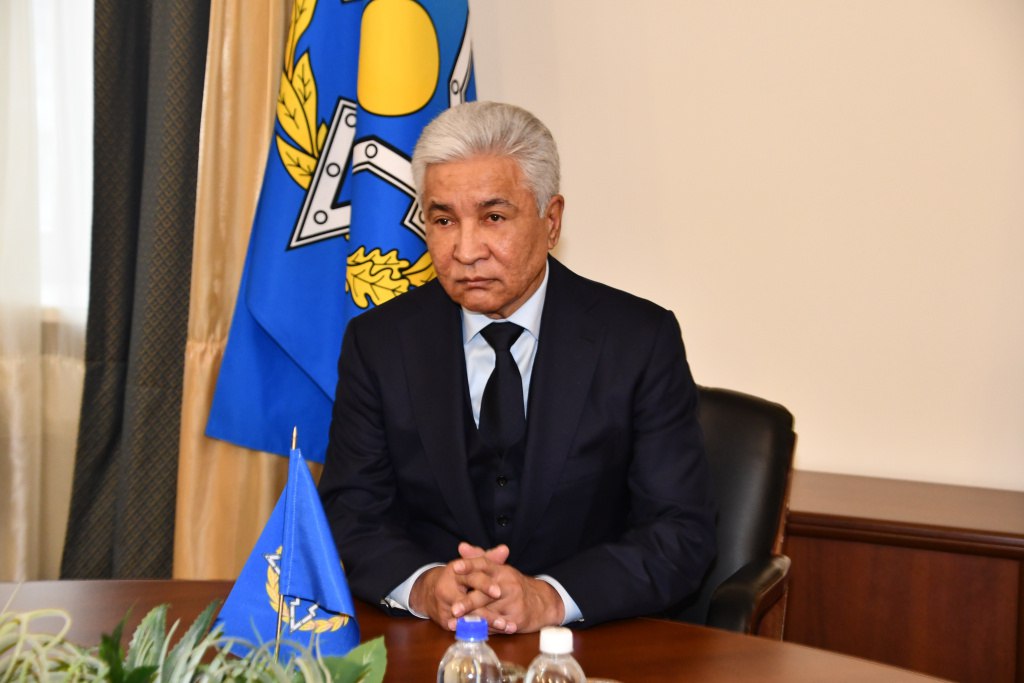
Beginning in 2026, the Collective Security Treaty Organization (CSTO) will start delivering weapons and military equipment to bolster the alliance’s southern borders, particularly to reinforce the Tajik-Afghan frontier. This development was announced on May 19 by CSTO Secretary General Imangali Tasmagambetov during a meeting of the CSTO Parliamentary Assembly in Bishkek.

Armed Response to Regional Threats

Tasmagambetov highlighted that the initiative stems from the Targeted Inter-State Program (TIP), approved in Astana in November 2024. This program reflects the CSTO’s collective resolve to address security vulnerabilities along its southern periphery.

“The task now is to implement it in full,” he stated. These security issues were previously discussed during an April 2025 meeting in Dushanbe with Tajikistan’s President Emomali Rahmon.

Despite regional stabilization efforts, Afghanistan continues to pose serious risks, including terrorism, arms trafficking, and the narcotics trade. Tasmagambetov emphasized, “The Taliban regime is proving to be a long-term political factor.” He noted that CSTO members, Belarus, Kazakhstan, Kyrgyzstan, and Russia, have intensified diplomatic engagement with Afghanistan to support regional stability.

The CSTO Secretariat will maintain vigilance and enhance coordination to counter emerging threats.

Signs of Regional Progress

In contrast to the ongoing security challenges, Tasmagambetov acknowledged promising developments in Central Asia. He pointed to the March 13 state border agreement between Kyrgyzstan and Tajikistan, as well as the March 31 tripoint agreement involving Kyrgyzstan, Tajikistan, and Uzbekistan. These steps are seen as crucial in easing regional tensions.

Tajik-Afghan Border a Strategic Focus Through 2029

The TIP for strengthening the Tajik-Afghan border is scheduled to be implemented in three stages and will run until 2029. Its goals include reinforcing southern Tajikistan’s military infrastructure and improving the region’s capacity to respond swiftly to cross-border threats.

The program outlines measures for allied coordination, arms deliveries, and enhancements to logistics, communications, and border infrastructure.

In the Ancient Uzbek City of Termez, Delegates Talk Ties Between Central and South Asia

The Uzbek city of Termez, which lies on the border with Afghanistan and has hosted pilgrims, traders and soldiers over many centuries, is hosting a conference to promote contacts between Central and South Asia. 

Organized by the Uzbek government, the three-day meeting this week brings together about 200 people from fields including politics, business and research, some of whom have traveled from Europe, the Middle East and the Asia-Pacific region. The so-called Termez Dialogue on Connectivity, the first in the city, ends on Wednesday. 

The forum represents a belief that the countries of Central and South Asia can benefit from expanding trade and other contacts with each other, despite periodic security, logistical and other concerns, and even outright conflict such as the recent crisis between India and Pakistan. Militants killed more than two dozen tourists in Indian-controlled Kashmir on April 22, setting off fighting between the two nuclear-armed rivals in which dozens more people died. The adversaries reached a cease-fire on May 10. 

“In the conditions of global instability, a free and constructive dialogue based on respect and equal participation of all parties is more important than ever,” said Eldor Aripov, director of the Institute for Strategic and Interregional Studies, a state research group in Uzbekistan that helped to organize the conference.  

Aripov said mutual trade turnover between Central and South Asia was more than $5 billion last year, though he characterized the figures as modest because there is more that the regions can do on economic collaboration. He highlighted the importance of the speedy implementation of the Trans-Afghan Corridor construction project, which would provide easier access to Indian Ocean ports for regional countries and more closely connect South Asia to markets in Central Asia, Russia, China and Europe. 

The Trans-Afghan Corridor project, whose current estimated cost is nearly $5 billion, would constitute a core railway that runs from Termez through Kabul, Afghanistan and onward to Peshawar, Pakistan. Subsequent plans envision the railway as the basis for a broader transport network involving more countries. 

There are challenges to the project, including security concerns in Afghanistan and Pakistan as well as difficult, mountainous terrain in Afghanistan that would require considerable engineering expertise. While the railway is consistent with Central Asian goals of diversifying trade routes, potential alternatives to the project and geopolitical maneuvers by big powers could complicate prospects for success.

“The growing involvement of Central Asian countries in the trans-Afghan transportation sector presents a significant opportunity to fully realize the region’s transit potential, offering substantial economic and geopolitical advantages,” researcher Nargiza Umarova wrote in a March analysis for the Central Asia-Caucasus Institute & Silk Road Studies Program. 

“However, this increased engagement may also lead to competition among Central Asian states for new transport initiatives or prompt external rival forces to exploit these opportunities to advance their own interests,” Umarova said.