• KGS/USD = 0.01144 0%
  • KZT/USD = 0.00192 -0%
  • TJS/USD = 0.10849 0.37%
  • UZS/USD = 0.00008 0%
  • TMT/USD = 0.28490 0%
  • KGS/USD = 0.01144 0%
  • KZT/USD = 0.00192 -0%
  • TJS/USD = 0.10849 0.37%
  • UZS/USD = 0.00008 0%
  • TMT/USD = 0.28490 0%
  • KGS/USD = 0.01144 0%
  • KZT/USD = 0.00192 -0%
  • TJS/USD = 0.10849 0.37%
  • UZS/USD = 0.00008 0%
  • TMT/USD = 0.28490 0%
  • KGS/USD = 0.01144 0%
  • KZT/USD = 0.00192 -0%
  • TJS/USD = 0.10849 0.37%
  • UZS/USD = 0.00008 0%
  • TMT/USD = 0.28490 0%
  • KGS/USD = 0.01144 0%
  • KZT/USD = 0.00192 -0%
  • TJS/USD = 0.10849 0.37%
  • UZS/USD = 0.00008 0%
  • TMT/USD = 0.28490 0%
  • KGS/USD = 0.01144 0%
  • KZT/USD = 0.00192 -0%
  • TJS/USD = 0.10849 0.37%
  • UZS/USD = 0.00008 0%
  • TMT/USD = 0.28490 0%
  • KGS/USD = 0.01144 0%
  • KZT/USD = 0.00192 -0%
  • TJS/USD = 0.10849 0.37%
  • UZS/USD = 0.00008 0%
  • TMT/USD = 0.28490 0%
  • KGS/USD = 0.01144 0%
  • KZT/USD = 0.00192 -0%
  • TJS/USD = 0.10849 0.37%
  • UZS/USD = 0.00008 0%
  • TMT/USD = 0.28490 0%
11 December 2025

Astana International Forum: Not Just Another Davos

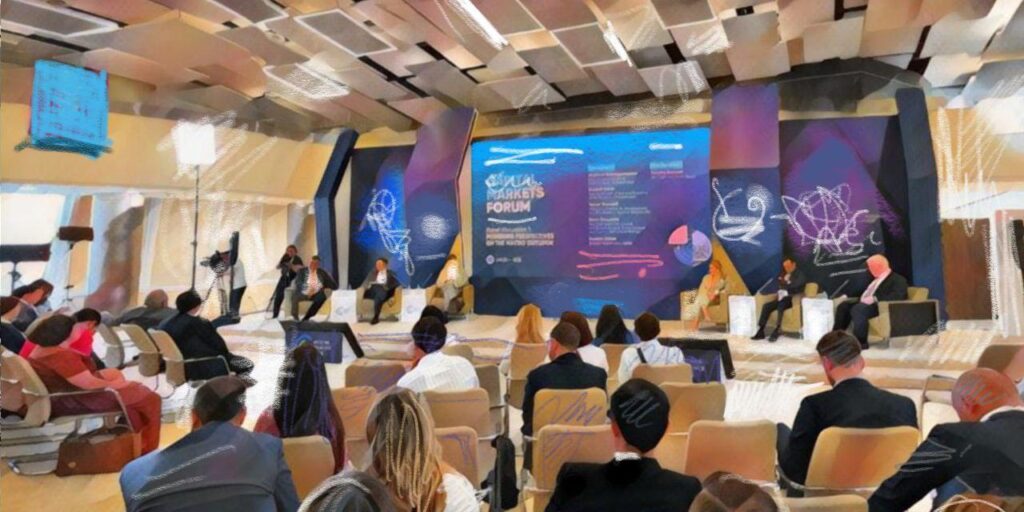
Kazakhstan’s Astana International Forum (AIF) has quietly entered a new phase in its development. Set to convene again this month, it began in 2008 as a targeted economic forum. Over time it has gradually evolved into a broader diplomatic platform aspiring to serve the so-called “Global South” as a whole. The AIF seeks to offer a deliberately open space for structured yet flexible dialogue across economic, political, and security domains, in a world full of international gatherings either overdetermined by legacy institutions or narrowly focused on crisis response.

The AIF does not model itself on any existing institution. It is meant neither to replicate global summits nor to impose consensus, nor to replace regional blocs or legacy mechanisms. Rather, it reflects Kazakhstan’s own diplomatic philosophy — what President Kassym-Jomart Tokayev calls “multi-vector foreign policy” — seeking to extend this philosophy outward through a forum that prioritizes engagement over alignment and dialogue over doctrine.

The AIF’s early period, from 2008 through roughly 2015, was defined by foundational work. Then called the Astana Economic Forum, it brought together central bankers, financial policymakers, and development agencies. The scope was technocratic, focusing on macroeconomic modernization and public-sector reform. Even in this limited format, however, the initiative revealed Kazakhstan’s national aspiration to connect with wider global trends in institutional development and governance.

Those formative years correspond to what, in terms of complex-systems theory, might be called the Forum’s phase of “emergence”: a period of assembling functions, testing formats, and learning the rhythms of international convening. These years were not marked by geopolitical ambition, but they did set in motion a process of institutional self-recognition. Kazakhstan was not just hosting events; it was experimenting with a type of global presence that would grow more distinct in later years.

From 2015 to 2022, the Forum entered a more self-defining stage. It retained its core economic focus, but it increasingly attracted participants from beyond financial and development sectors. This broadened its scope to include questions of connectivity, regional stability, and sustainable development. The shift was not an accident. It accompanied Kazakhstan’s growing involvement in regional diplomacy and its active participation in a range of other multilateral structures.

During this second period, the Forum took on the character of an institution with internal momentum. (This is what complex-systems theorists might term “autopoiesis,” i.e., the ability of a system to reproduce and maintain itself.) By adapting to a wider field of participants and issues, the AIF began to articulate a mission no longer limited to showcasing Kazakhstan’s domestic reforms but extending toward the creation of new transnational linkages. The rebranding of the old Astana Economic Forum as the Astana International Forum affirmed this shift in mandate, scope, and ambition.

That rebranding marked the beginning of what now appears to be a critical inflection point. The cancellation of the 2024 edition due to catastrophic flooding created a rupture; but the organizers, rather than rush a replacement, deferred the Forum and used the intervening time to clarify its structure and message. The thematic architecture of the 2025 edition has been streamlined, reducing four policy tracks to three: Foreign Policy and International Security, Energy and Climate Change, and Economy and Finance.

The AIF shares thematic ground with other Global South initiatives, but its structural logic differs. Probably the UN-led South-South Cooperation Forum (SSCF) has the most in common with it. Like the AIF, the SSCF functions as a coordination mechanism for development partnerships; however, it is embedded within multilateral architecture and guided by established institutional mandates. It also differs from the AIF through its emphasis on technical capacity-building and policy harmonization.

By contrast, the AIF is not development-focused and not multilateral in the traditional sense. It does not implement frameworks; rather, it constructs spaces wherein frameworks may emerge. It is not procedural like the SSCF, but instead diplomatic. It is driven less by an operational agenda than by the search to prototype new modes of cross-regional engagement. One may say that whereas the SSCF presumes a normative grammar rooted in shared postcolonial trajectories, the AIF seeks instead to write a new syntax of cooperation for a fragmenting international order. It is, in this sense, not a derivative platform but a generative one.

The new reconfiguration of the AIF’s agenda is more than logistical. It signals a willingness to redesign the Forum’s internal logic in response to changing global conditions. Its 2025 vision statement explicitly acknowledges the current global environment as one of “unprecedented complexity,” calling for actionable collaboration that “transcends borders and sectors.” The AIF has thus begun to address the demands for “organizational antifragility,” the threshold phase where any institution must reconfigure and reorient itself for new tasks and new relevance, or else risk stagnation.

The Forum’s new mission leans into that challenge with pragmatic optimism. It describes itself as a space where “vision meets action,” aiming to “reignite multilateralism” and to catalyze a movement toward “future-focused” solutions. The AIF’s expanded topical scope now includes climate action, technological innovation, sustainable development, and supply-chain resilience. These adjustments reflect the growing confidence of Kazakhstan’s foreign policy, which sees in the Forum not only a convening tool but a projection of national strategy into a shared international format.

To say that the AIF is not the World Economic Forum (WEF) is not to denigrate it. Such a comparison would simply miss the point. The WEF seeks mainly to reinforce global economic consensus and convene elite stakeholders from advanced industrialized systems. The AIF, by contrast, is a diplomatic instrument shaped by a mid-sized country offering a venue that intentionally includes underrepresented states and perspectives. It does not aim to replace existing institutions but to complement them with a platform more attuned to the network-distributed complexities of the contemporary world.

The AIF’s distinctiveness lies in its state-led but non-hegemonic structure. It is both sovereign and collaborative, national in origin but multilateral in aspiration. This is why it resonates with parts of the Global South that find few opportunities for serious, non-aligned dialogue across sectoral and ideological lines. Kazakhstan’s ambition with the AIF is to create a reliable convening node for political, business, and academic voices that otherwise lack a coherent shared venue.

What happens next depends not only on the Forum’s thematic continuity, but also on its institutional maturation. Will it develop memory, procedures, and expectations that persist beyond annual meetings? Will it build partnerships that last across cycles of participation? Will it decide to convene only every other year and, if so, how will it use the intervening year to prepare outcomes and strengthen effectiveness? If Kazakhstan succeeds in making the AIF more durable in these respects, it may well enter a new phase of evolution, in which Kazakhstan adds to its diplomatic profile the capacity to design international norms.
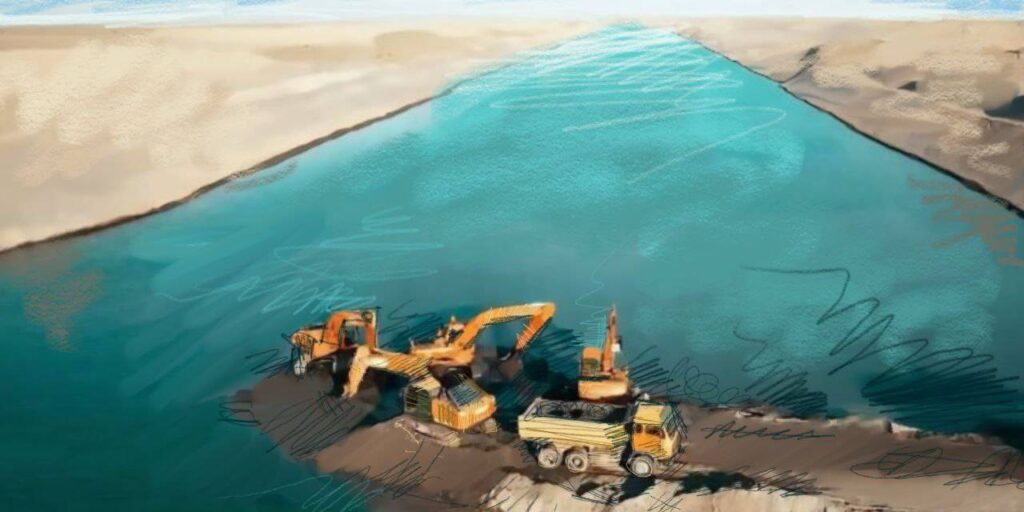

Afghanistan’s Qosh-Tepa Canal Could Impact Kazakhstan’s Water Security

The construction of the Qosh-Tepa Canal in Afghanistan and its potential implications for Central Asia’s water security were central topics at the recent international conference, Water Security and Transboundary Water Use: Challenges and Solutions, held in Astana. Delegates from Turkey, Israel, Tajikistan, Kyrgyzstan, Afghanistan, and Turkmenistan convened to address the canal’s possible repercussions and broader issues of regional water distribution.

Potential Threats to the Syr Darya

Kazakhstan’s Deputy Minister of Water Resources and Irrigation, Aslan Abdraimov, warned that the Qosh-Tepa Canal could significantly reduce the flow of the Syr Darya River, with direct consequences for the already depleted Aral Sea. While Kazakhstan does not share a border with Afghanistan, the canal’s impact is expected to ripple across the region.

“No sharp fluctuations in water resources are expected in the near term, but in the long term, a reduction in the Syr Darya’s flow is inevitable,” Abdraimov stated. He emphasized that this would further strain the fragile water balance in the Aral Sea basin.

The Aral Sea’s degradation has been ongoing for decades, largely due to the diversion of the Amu Darya and Syr Darya rivers for agricultural use, primarily for irrigating cotton and wheat fields. These diversions have contributed heavily to the sea’s dramatic shrinkage.

Azamatkhan Amirtayev, chairman of Kazakhstan’s Baytak Party, expressed concern that the Qosh-Tepa Canal could divert 25-30% of the Amu Darya’s flow. “This means that Uzbekistan and Turkmenistan will receive less water. Consequently, Uzbekistan may draw more from the Syr Darya, leading to reduced water availability for Kazakhstan, potentially by 30-40%,” Amirtayev said. He urged for regional cooperation and scientifically informed policymaking to mitigate water losses.

The Qosh-Tepa Canal and Its Regional Consequences

The Qosh-Tepa Canal, under construction in northern Afghanistan, is designed to stretch 285 kilometers and span approximately 100 meters in width. Once operational, it is expected to irrigate over 500,000 hectares of farmland by diverting up to 10 cubic kilometers of water annually from the Amu Darya, roughly a quarter of the river’s average flow.

Such a significant withdrawal could disrupt the hydrological balance across Central Asia. Reduced flows in the Syr Darya may accelerate the desiccation of the Aral Sea and exacerbate ecological degradation in Kazakhstan’s downstream regions.

Experts at the conference underscored the urgency of strengthening regional water diplomacy and establishing new cooperative frameworks to ensure sustainable water usage and prevent environmental disasters.

Hope for Dialogue

Afghan representatives have previously signaled a willingness to engage in dialogue on water resource management. Observers suggest that joint initiatives in water management could play a key role in easing regional tensions and improving environmental outcomes.

As the region faces mounting water stress due to climate change, population growth, and infrastructure development, coordinated action among Central Asian states and Afghanistan is increasingly seen as essential for long-term water security.

Ukraine Appoints New Ambassador to Türkiye, Born in Uzbekistan

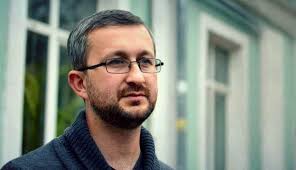
Ukrainian President Volodymyr Zelensky has appointed Nariman Dzhelal as Ukraine’s new ambassador to Türkiye, according to RBC-Ukraine. The appointment was formalized in a presidential decree signed earlier this month, the president’s press service reported.

Dzhelal, a Crimean Tatar politician, journalist, and human rights advocate was born on April 27, 1980, in Navoi, Uzbekistan. His family returned to Crimea in 1989.

According to Ukrainian media, Dzhelal graduated from the Political Science Department at Odesa National University. He began his career as a journalist at Avdet, a Crimean Tatar newspaper, and later worked for the ATR television channel. He also taught history and law at an international school in Simferopol.

Dzhelal entered politics in 2013 when he was elected first deputy chairman of the Mejlis, the representative body of the Crimean Tatar people. Following Russia’s annexation of Crimea in 2014, Dzhelal remained in the region, where he continued to advocate for the rights of Crimean Tatars and Ukrainians. He monitored human rights abuses and participated in trials widely regarded as politically motivated.

In 2021, after attending the inaugural Crimea Platform summit, Dzhelal was detained by the Russian security services and accused of sabotage. In 2022, he was sentenced to 17 years in prison. Ukrainian authorities confirmed that he was released in a prisoner exchange in June 2024 and returned to Ukraine.

Dzhelal’s appointment to the post in Ankara underscores Türkiye’s pivotal role in Ukraine’s diplomatic strategy.

Baikonur Cosmodrome Gears Up for 70th Anniversary; Trespassers Detained

Two European tourists have been detained while trying to take photographs at the Baikonur Cosmodrome in Kazakhstan, Russian media reported on Thursday, as officials prepare to celebrate the 70th anniversary of the Russia-operated spaceflight center on June 2.

“The men were trying to sneak to the Buran rocket and take photos,” an unidentified law enforcement official told Russia’s state news agency TASS, which reported on Thursday that the men, who were from Czechia, also known as the Czech Republic, were released after being fined 5,000 rubles, or $60.

The trespassers were the latest in a long list of space enthusiasts and adventure-seekers who have tried to get close to a Soviet-era facility that pioneered early space exploration and remains a vital if aging part of Russia’s space program. The disused Buran spacecraft, a space shuttle that was developed in the 1970s and 1980s by the Soviet Union, is an object of particular fascination. The Buran flew once in 1988, but the program was abandoned because of high costs and a lack of purpose.

Russian and Kazakh media, meanwhile, are reporting on plans for anniversary celebrations at the cosmodrome, which is serviced by a city of the same name in the desert environment in southern Kazakhstan.

Some rocket mock-ups will be on display and an open-air museum is being set up, the Kazinform news agency reported.

One of the mock-ups is 22 meters high and is a model of the Soviet N1 lunar rocket that failed in its four test launches in the late 1960s and early 1970s. Space journalist Anatoly Zak was not impressed by the planned display, saying on X that he is concerned about reports that Russia is destroying “artifacts and documents” that illuminate the historical record of the Soviet space program.

Another piece of Baikonur history occurred on Saturday when a Venus-bound lander probe, which launched from the cosmodrome in 1972 but never got out of Earth’s orbit, made an uncontrolled re-entry into Earth’s atmosphere. Russian space agency Roscosmos said the lander fell in the Indian Ocean west of Jakarta, though questions remain about its fate, including whether it burned up during re-entry or somehow remained intact.

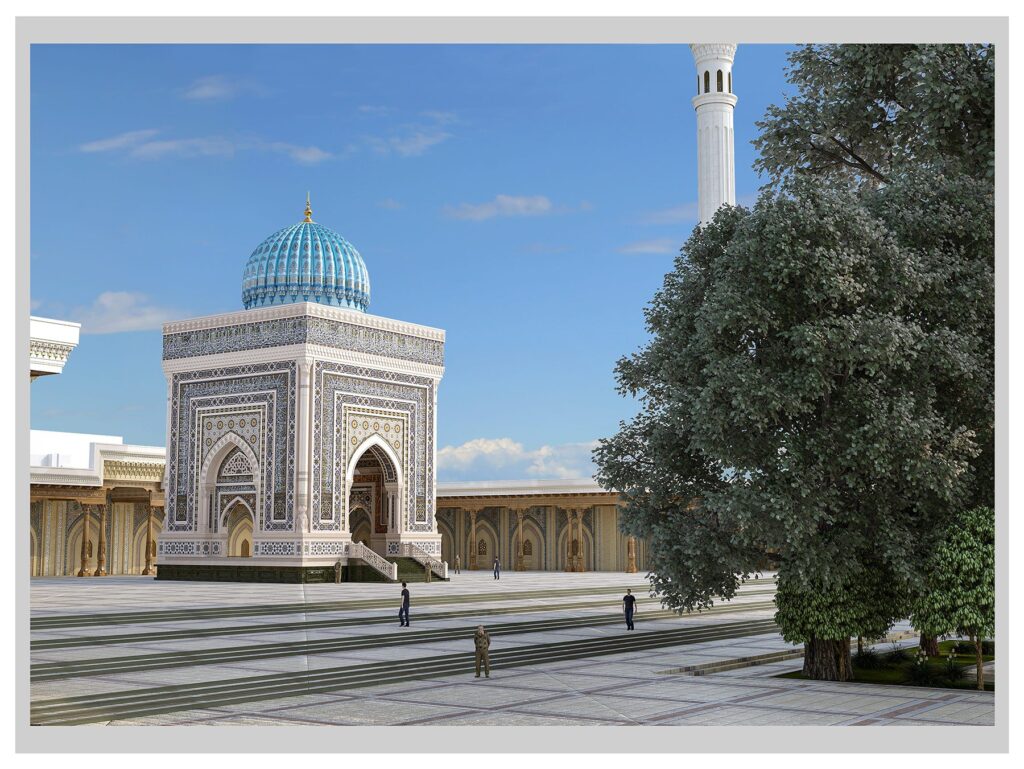
Afghanistan Delivers White Marble to Uzbekistan for Imam Bukhari Complex

Afghanistan has delivered 16 truckloads of white marble from Herat to Uzbekistan for use in the construction of the Imam Bukhari complex in Samarkand, according to the Surkhandarya regional administration. The marble will contribute to the ongoing development of the religious and cultural site dedicated to the revered Islamic scholar.

The marble was officially transferred at the Termez International Trade Center during a meeting between Uzbek and Afghan officials.

According to Uzbekistan’s state news agency UzA, the first shipment comprises 324 boxes of rare white marble, with each slab measuring 3.5 to 4 centimeters thick.

Expanding Bilateral Relations

Uzbekistan and Afghanistan have been expanding bilateral relations in recent years. In March, Uzbekistan sent nearly 200 tons of humanitarian aid to Afghanistan, including flour, pasta, oil, sugar, and other essential supplies.

Looking ahead, the two nations aim to boost annual trade to $3 billion. In 2023, trade turnover between Uzbekistan and Afghanistan totaled $866 million.

Kazakhstan Declares Kentau Industrial Zone an Ecological Emergency Area

The Ministry of Ecology and Natural Resources of Kazakhstan has officially designated the industrial zone of Kentau, located in the Turkestan region, as an ecological emergency area. Minister Yerlan Nysanbayev signed the corresponding order, introducing a special legal status for a 900-hectare zone on the city’s northern outskirts.

Restrictions and Emergency Measures

Published on the government’s official legal portal, the document outlines a series of prohibitions and restrictions intended to address the long-standing environmental crisis. The status is effective until January 1, 2075, and applies to an unpopulated industrial zone.

The Akimat of the Turkestan region has been directed to consider implementing the following measures:

  • Regulating vehicle entry and exit
  • Prohibiting the construction of new facilities and expansion of existing enterprises unless related to mitigating the environmental disaster or supporting essential public services
  • Resettling residents from hazardous zones, with the provision of temporary or permanent housing
  • Banning the construction and operation of environmentally hazardous facilities
  • Restricting the operations of health and resort institutions within the emergency area
  • Forbidding activities that could endanger human health, flora, fauna, or the environment

Additionally, the regional government is tasked with formulating a comprehensive action plan to stabilize the ecological situation and reduce environmental harm. Continuous monitoring will be carried out under Article 409 of Kazakhstan’s Environmental Code.

Map-of the location declared an emergency zone; image: zan.gov.kz

Background of the Crisis

Kentau, a city with regional subordination, lies at the southern base of the Karatau Ridge, approximately 24 kilometers from Turkestan and 190 kilometers from Shymkent. Founded in 1955 atop the former Mirgalimsay workers’ settlement, the city grew around the development of the Achisai polymetallic deposit. Today, it has a population of around 75,000.

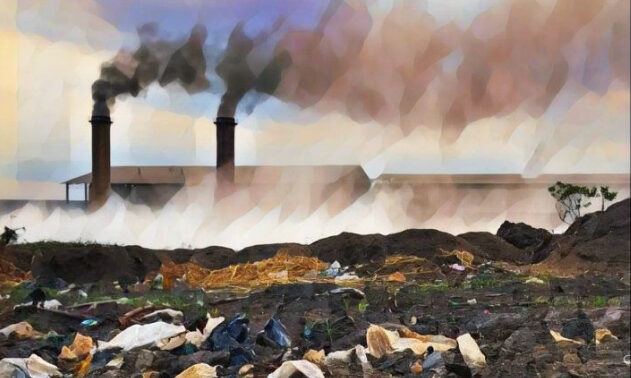
The Kentau industrial zone has long hosted several major enterprises, whose operations have severely impacted the local environment. Calls for governmental intervention have intensified in recent years.

In June 2024, Senator Murat Kadyrbek urged authorities to declare Kentau an ecological disaster zone and allocate 6 billion KZT ($12 million) in compensation to affected residents. He cited studies showing a decline in both public health and environmental quality. Kadyrbek also appealed to the Ministry of Labor and Social Protection to introduce a 20% salary allowance for public sector workers residing in the disaster zone.

Environmental experts and activists have repeatedly flagged dangerous levels of air pollution, elevated concentrations of heavy metals in soil, poor water quality, and a radioactive anomaly within the agglomeration area.

While the Ministry’s recent designation is seen as a positive step toward environmental stabilization, experts stress that sustained investment and strategic long-term planning will be essential for meaningful recovery.

Kentau is not the only locality in the Turkestan region grappling with ecological issues. Other affected areas include the Shardara and Arys districts, as well as the city of Turkestan, all located within the pre-crisis zone of the desiccating Aral Sea.