• KGS/USD = 0.01144 0%
  • KZT/USD = 0.00214 0%
  • TJS/USD = 0.10508 0.48%
  • UZS/USD = 0.00008 0%
  • TMT/USD = 0.28490 -0.28%
  • KGS/USD = 0.01144 0%
  • KZT/USD = 0.00214 0%
  • TJS/USD = 0.10508 0.48%
  • UZS/USD = 0.00008 0%
  • TMT/USD = 0.28490 -0.28%
  • KGS/USD = 0.01144 0%
  • KZT/USD = 0.00214 0%
  • TJS/USD = 0.10508 0.48%
  • UZS/USD = 0.00008 0%
  • TMT/USD = 0.28490 -0.28%
  • KGS/USD = 0.01144 0%
  • KZT/USD = 0.00214 0%
  • TJS/USD = 0.10508 0.48%
  • UZS/USD = 0.00008 0%
  • TMT/USD = 0.28490 -0.28%
  • KGS/USD = 0.01144 0%
  • KZT/USD = 0.00214 0%
  • TJS/USD = 0.10508 0.48%
  • UZS/USD = 0.00008 0%
  • TMT/USD = 0.28490 -0.28%
  • KGS/USD = 0.01144 0%
  • KZT/USD = 0.00214 0%
  • TJS/USD = 0.10508 0.48%
  • UZS/USD = 0.00008 0%
  • TMT/USD = 0.28490 -0.28%
  • KGS/USD = 0.01144 0%
  • KZT/USD = 0.00214 0%
  • TJS/USD = 0.10508 0.48%
  • UZS/USD = 0.00008 0%
  • TMT/USD = 0.28490 -0.28%
  • KGS/USD = 0.01144 0%
  • KZT/USD = 0.00214 0%
  • TJS/USD = 0.10508 0.48%
  • UZS/USD = 0.00008 0%
  • TMT/USD = 0.28490 -0.28%

Video: “Connecting Minds, Shaping the Future,” – Astana International Forum 2025

The Astana International Forum 2025 aims to address global challenges, foster international cooperation, and strengthen Kazakhstan’s role as a bridge between regions and powers. The Times of Central Asia is in attendance, bringing you all the latest developments.

Follow our special coverage on the Astana International Forum here.

Can Kazakhstan Lead Small and Middle Powers in Reforming the UN?

ASTANA – The United Nations, envisioned as a pillar of global cooperation, has often struggled to rise to the challenges it was created to address. Its inability to bridge cultural divides hampers meaningful solutions to regional issues, while structural weaknesses and the exclusion of diverse regional voices from the Security Council deepen its shortcomings. Compounding these flaws is the frequent deadlock among permanent members, whose competing agendas stifle consensus and action. These inefficiencies cast doubt on the organization’s ability to hear and respond to regional voices, grievances, and expectations in a rapidly changing world.

Amid these persistent challenges within the United Nations, Kazakhstan’s proactive stance on global issues highlights its potential to lead efforts toward fostering peace and addressing critical gaps in international cooperation.

For example, although Kazakhstan prioritizes nuclear energy in its national strategy, it simultaneously remains committed to advocating for the non-proliferation of nuclear and biological weapons. Such an approach, combined with its balanced foreign policy, enables the largest Central Asian nation to seek to position itself as a leading advocate for global peace. But how realistic is that in the current geopolitical climate?

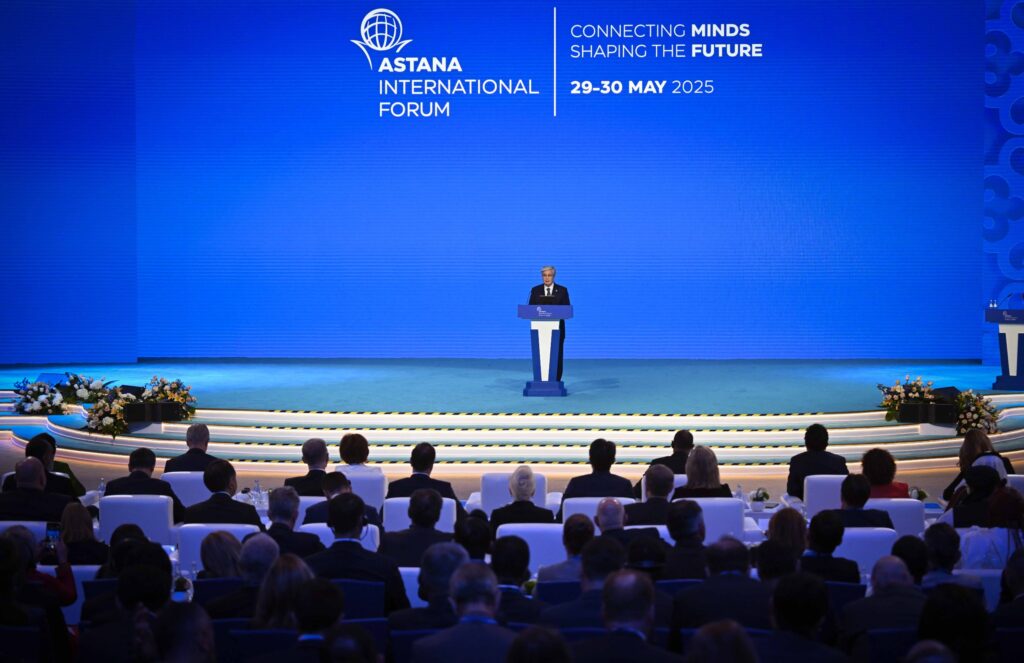
As conflicts and wars continue to rage around the world, leaders from several countries have gathered in Kazakhstan’s capital, Astana, for the Astana International Forum (AIF) to discuss key global challenges ranging from energy security and geopolitical cooperation to international trade and sustainable development. For Kazakhstan’s leadership, the event serves as an ideal opportunity to reaffirm its aspiration to position the country as a middle power. According to the Central Asian state’s President Kassym-Jomart Tokayev, it is middle powers that should be prepared to take on greater multilateral responsibilities.

“We all should strongly remain adherent to the United Nations Charter with no biased and selective approaches to its principles,” Tokayev said on May 29 in calling for the expansion of the United Nations Security Council that, in his view, should include broader regional representation.

This idea was firmly supported by President Gordana Siljanovska-Davkova of North Macedonia, who numbered among the major guests in Astana. She argues that small countries, along with middle powers, should be “the greatest advocates of effective multilateralism,” as they stand to gain the most from institutions like the United Nations.

“The Security Council should be expanded, reformed and democratized to make it more accountable and more responsible in maintaining international peace and security,” Siljanovska-Davkova stressed, adding that the international institution “should take its rightful place as a principal representative body, not only for debate and deliberative democracy but also for policymaking.”

The problem, however, is that major global powers, as permanent members of the UN Security Council, are unlikely to voluntarily relinquish their positions within the organization. Small and middle powers will, therefore, undoubtedly have to work hard to achieve their ambitious geopolitical goals. In the meantime, they are expected to continue developing bilateral relations.

“The task before us is clear – to preserve cooperation where it still exists and to restore it where it has broken down. We must widen this cycle of cooperation, the scale of cooperation,” Tokayev said, pointing out that Kazakhstan remains committed to a “stable, integrated and future-oriented Central Asia, one rooted in mutual respect and regional solidarity.”

The presence of leaders from countries such as North Macedonia and Rwanda as major guests at this year’s event in Astana, however, indicates that Kazakhstan’s aspirations extend well beyond Central Asia. Indeed, Rwandan President Paul Kagame underscored the critical role middle powers can play in reforming the UN, stating that “equitable global governance requires that all nations, regardless of size or power, have a meaningful voice in shaping our shared future.”

For Alain Berset, Secretary General of the Council of Europe, the need for regional partnerships in addressing global challenges is also very important. This principle resonates with Kazakhstan’s diplomatic position. Situated between Europe and Asia, the world’s ninth-largest country has spearheaded initiatives such as the Astana Process for Syrian peace talks and the establishment of the Central Asian Nuclear-Weapon-Free Zone. By promoting collaboration among regional powers, Astana demonstrates the potential to unite small and middle powers in advocating for meaningful reforms at the UN.

One of Kazakhstan’s major focuses, according to Tokayev, is the growing strain between nuclear-armed states which, in his view, can lead not only to immediate destruction but could trigger global climate disaster.

“We know what this means; we relinquished our inherited nuclear arsenal in the name of peace,” he emphasized.

Ban Ki-moon, the former UN Secretary-General, seems to share Tokayev’s concerns. In his view, the world today may be in a “worse position” than when he left office.

“What concerns me now is that today, leaders are more divided than ever,” the former UN Secretary-General noted, emphasizing that global problems require coordinated responses, and calling for a renewed tripartite partnership between governments, business, and civil society.

The Kazakh leader, on the other hand, sees reforming the core structures of the United Nations as a potential way to prevent global conflicts. Given that the UN is the Astana International Forum’s strategic partner, it is no coincidence that Kazakhstan is aiming to strengthen relations with the organization’s various bodies.

Next year, Kazakhstan plans to host an ecological summit in partnership with the UN, whose Director-General of the Food and Agriculture Organization, Qu Dongyu, was among the major speakers at the AIF. In his view, with its vast land area of 2.8 million square kilometers, Kazakhstan has the potential to feed a billion people worldwide “through proper management, investment, and the adoption of new technologies.”

Dongyu’s statement aligns with Tokayev’s goal of building a “more diversified, inclusive and future-ready economy where growth is not just sustained but shared.” Whether these ambitions can materialize remains to be seen, especially given that, as he emphasized, Kazakh economic reforms are taking place in a “highly fragile geopolitical environment.”

In spite of that, the Central Asian nation plans to create a pioneering pilot zone called “CryptoCity”, where cryptocurrencies might be used to purchase goods, services, and more. The coming months and years will show whether this project will help stimulate the Kazakh economy by attracting foreign investment, fostering innovation, and diversifying income sources beyond traditional sectors such as oil and gas.

One thing is certain – Kazakhstan is determined to play a more proactive role on the global stage. By championing multilateralism, sustainable development, and peace advocacy, it aims to position itself as a constructive force in a world marked by fragmentation and uncertainty. Thus, the Astana International Forum is not only a symbol of this ambition but a platform through which Kazakhstan is seeking to engage with diverse global actors and shape new paradigms in global diplomacy.

Kazakhstan has the potential to play a significant role in uniting small and middle powers to work towards meaningful reforms within the United Nations. A key player in Central Asia, it holds considerable regional influence supported by its strategic location along the Middle Corridor, which connects China to the West and fosters economic and political links. Kazakhstan’s experience in navigating the complexities of great power relations further enhances its capacity to unite diverse nations around shared goals. These strengths position it well to advocate for reforms that elevate the voices of smaller nations and contribute to a more inclusive and effective global system.


Follow our special coverage on the Astana International Forum here.

Dubai Hosts Talks on Major Central Asian Hydropower Project

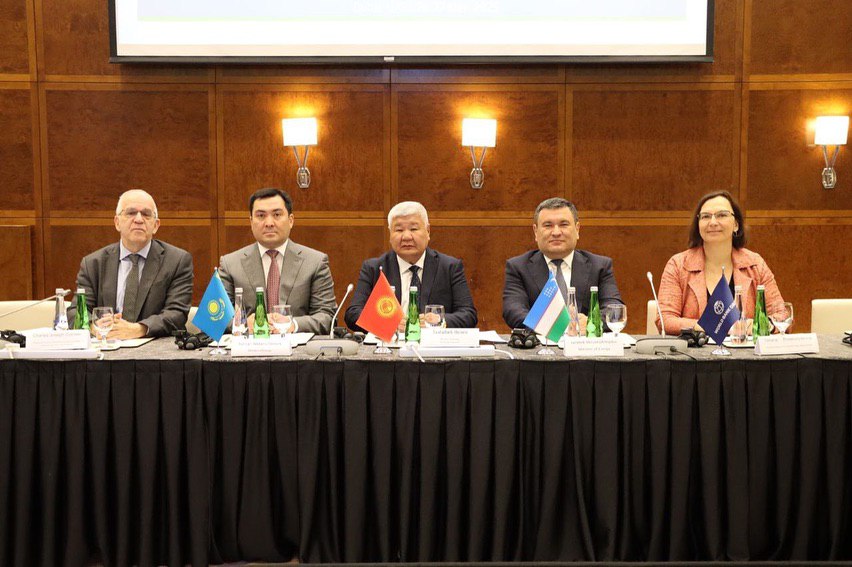
On May 26-27, 2025, energy ministers from Kazakhstan, Kyrgyzstan, and Uzbekistan met in Dubai, United Arab Emirates, for the second high-level meeting on the Kambarata-1 Hydropower Plant (HPP) project. The meeting was organized with the support of the World Bank, according to Kyrgyzstan’s Ministry of Energy.

Kambarata-1 is a flagship regional initiative designed to enhance energy security and water management across Central Asia. The planned hydropower facility, with a capacity of 1,860 megawatts, will be constructed on the Naryn River in Kyrgyzstan.

The delegations were led by Energy Ministers Yerlan Akkenzhenov (Kazakhstan), Taalaibek Ibraev (Kyrgyzstan), and Jurabek Mirzamakhmudov (Uzbekistan). High-level representatives from the finance and water ministries of the three countries also participated.

During the meeting, the ministers formally requested technical assistance from the World Bank. This includes an updated feasibility study, environmental and social impact assessments, and the development of a robust financial and commercial implementation model.

The World Bank delegation featured several senior officials, including Tatiana Proskuryakova, Regional Director for Central Asia; Carolina Sánchez-Páramo, Director for Strategy and Operations in Europe and Central Asia (ECA); Charles Joseph Cormier, Regional Infrastructure Director for ECA; and Stephanie Gil, Program Leader for Energy.

“We are pleased to support the governments of Kazakhstan, Kyrgyzstan, and Uzbekistan in advancing the Kambarata-1 project,” said Proskuryakova. “It will bring major economic and social benefits to the region.”

The ministers reiterated their commitment to the project, describing it as a cornerstone of regional energy integration.

Participants reviewed progress since the first roundtable in Tashkent in January 2025. Discussions focused on revised cost estimates, grid modernization needs, financing strategies, and the importance of strong environmental and social safeguards.

Kazakhstan’s Yerlan Akkenzhenov highlighted the collaborative nature of the initiative: “Kazakhstan fully supports this project and will continue working closely with its regional partners.”

Kyrgyzstan’s Taalaibek Ibraev underscored the national significance of the HPP: “This project is the foundation of Kyrgyzstan’s energy strategy. We are proud to implement it in partnership with Kazakhstan and Uzbekistan.”

Uzbekistan’s Jurabek Mirzamakhmudov referenced the tangible progress already made: “With joint efforts and international backing, we are confident in our ability to realize this project according to global standards.”

The ministers agreed on specific next steps and timelines for project preparation and pledged to hold regular meetings to ensure steady progress.

As previously reported by The Times of Central Asia, the Kambarata-1 HPP will be located in the upper reaches of the Naryn River in Kyrgyzstan. Once completed, it is expected to generate approximately 5.6 billion kilowatt-hours of electricity annually. The estimated construction cost exceeds $4 billion.

At AIF, Tokayev Proposes “CryptoCity” as Pilot Zone for Digital Innovation

Kazakhstan plans to establish a pilot zone named “CryptoCity” to facilitate the free circulation of cryptocurrencies, President Kassym-Jomart Tokayev announced at the Astana International Forum (AIF).

“We plan to create an innovative pilot zone called CryptoCity, where cryptocurrencies can be used to purchase goods, services, and for other purposes,” Tokayev stated.

The president highlighted Kazakhstan’s progress in digital transformation, positioning the country as a potential Eurasian IT hub. He also outlined ambitions for Kazakhstan to become an academic and innovation center through partnerships with foreign universities and increased research and development.

“Kazakhstan is launching the most powerful supercomputer, which has already been delivered to the country,” Tokayev said, referencing a recent agreement between the Ministry of Digital Development, Innovation and Aerospace Industry and Presight AI Ltd. The system, boasting a performance of about 2 exaflops, was developed under a strategic partnership with G42, an Abu Dhabi-based technology group.

Cryptocurrency regulation remains a divisive issue in Kazakhstan. While the National Bank supports liberalizing the sector, several members of parliament are advocating for increased state control.

Tokayev used the economic forum to reaffirm Kazakhstan’s commitment to innovation as a tool for societal development.

“Our primary task is to reduce regional disparities and strengthen the middle class. That is why we continue to bolster our capabilities in key sectors, from digital technologies and artificial intelligence to clean energy and high value-added manufacturing,” he said.

He also emphasized regional cooperation: “Kazakhstan is ready to share its emerging IT capabilities with its neighbors and collaborate with all countries interested in fostering economic ties.”

Reflecting on global trends, Tokayev warned of growing protectionism and weakening multilateralism. “There are different scenarios for the future, some offer opportunities, others harbor risks. Will we see inclusive progress or destructive fragmentation? This depends not on the declarations of a few, but on the cooperation of the majority,” he concluded.

Kyrgyz Authorities Seek to Classify Cement as Socially Significant

The Ministry of Economy and Commerce of the Kyrgyz Republic has released a justification for its decision to include cement on the list of socially significant goods, a designation that allows the government to regulate prices for essential items, including construction materials.

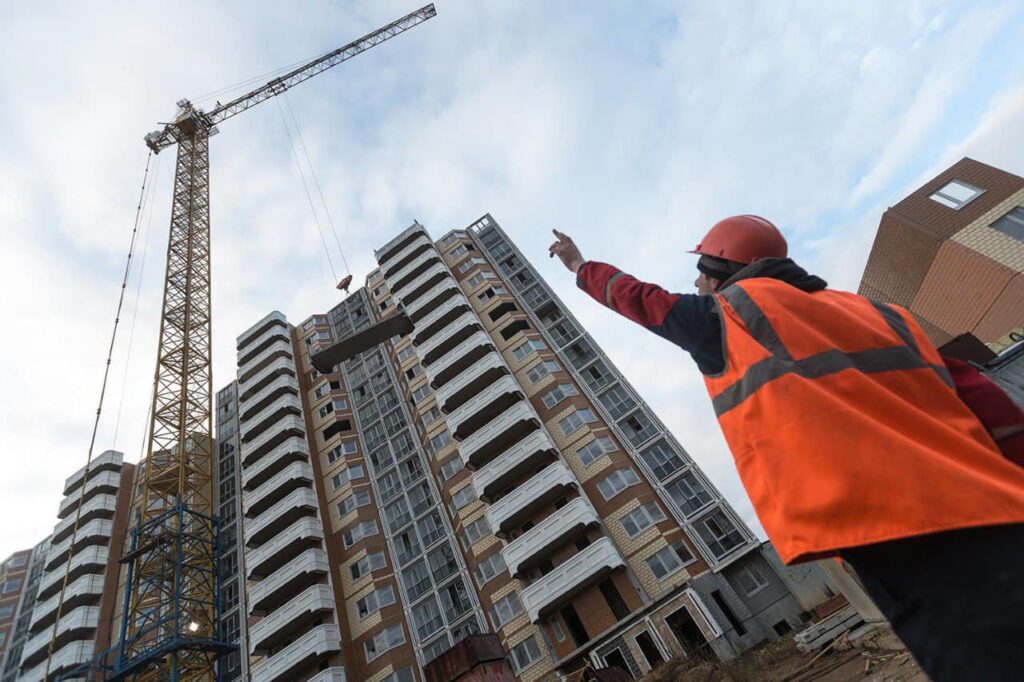
According to the ministry, the absence of state oversight has led to unjustified increases in cement prices, placing upward pressure on housing costs and hindering the construction of social and infrastructure projects.

“This situation limits the population’s access to quality, affordable housing and slows the country’s socio-economic development,” the ministry stated.

By classifying cement as a socially significant good, the government gains the authority to regulate its price. The move aims to stabilize the construction market, lower building costs, and improve housing affordability for the public.

Officials at the ministry expressed confidence that the measure would not cause any significant negative consequences. The only potential downside, they noted, would be a reduction in profits for cement manufacturers and intermediaries, primarily in conditions of market volatility where price ceilings may be imposed.

Kyrgyz economists support the move, arguing that state price regulation will help stabilize the domestic cement market, stimulate the construction industry, and improve the broader socio-economic outlook. They also believe it will bolster regulatory oversight of the construction sector.

The ministry further warned that the lack of effective pricing mechanisms poses risks of shortages or sudden price spikes during periods of heightened demand. In contrast, stable cement prices would boost confidence among construction firms, enabling better planning and project implementation.

To ease supply constraints, the Kyrgyz cabinet previously lifted a temporary ban on cement imports, aiming to satisfy a growing demand from construction companies and the general population through additional foreign supply.

Center for Labor Migrants Opens in Kyrgyzstan

On May 28, a new Center for Pre-Migration Orientation and Reintegration of Migrants was inaugurated in Bishkek, marking a significant step toward safer and more organized labor migration for Kyrgyz citizens.

According to the International Organization for Migration (IOM) in Kyrgyzstan, nearly 40% of the country’s youth migrate abroad for work, often without formal contracts or adequate preparation. The newly established center is designed to assist prospective and returning migrants in navigating the complexities of labor migration.

The center is part of a broader IOM initiative funded by the Swiss Agency for Development and Cooperation (SDC).

Speaking at the opening ceremony, IOM Director General Amy Pope emphasized the center’s mission: “At the Center, we will help prospective and returning migrants get the tools and information they need to stay safe and successful. When migration is safe, regular, and dignified, it leads to better outcomes for the migrants, the country they go to work in, and the country they come from.”

The project was developed in partnership with Kyrgyzstan’s Ministry of Labor, Social Security and Migration and the Ministry of Education.

Minister Ravshanbek Sabirov highlighted the center’s importance: “The Center is an important step toward protecting the rights and ensuring decent conditions for our migrants. Here they will be able to obtain the necessary information, prepare for going abroad, and successfully return, having undergone retraining and confirmed their professional skills.”

With IOM’s support, the center also includes a specialized laboratory for certifying professional competencies in the public catering sector. By the end of 2025, the lab aims to certify at least 200 migrants pursuing culinary employment, easing their path to jobs abroad.

The Times of Central Asia previously reported that around 600,000 Kyrgyz citizens are currently living abroad, with Russia remaining the primary destination. As of the end of 2024, nearly 380,000 Kyrgyz nationals were registered with Russian migration authorities.

However, due to Russia’s economic downturn, stricter immigration rules, and a rise in anti-immigrant sentiment, many Kyrgyz migrants have begun seeking alternatives in countries such as Turkey, South Korea, and various parts of Europe.