• KGS/USD = 0.01144 0%
  • KZT/USD = 0.00196 -0%
  • TJS/USD = 0.10899 0%
  • UZS/USD = 0.00008 0%
  • TMT/USD = 0.28490 0%
  • KGS/USD = 0.01144 0%
  • KZT/USD = 0.00196 -0%
  • TJS/USD = 0.10899 0%
  • UZS/USD = 0.00008 0%
  • TMT/USD = 0.28490 0%
  • KGS/USD = 0.01144 0%
  • KZT/USD = 0.00196 -0%
  • TJS/USD = 0.10899 0%
  • UZS/USD = 0.00008 0%
  • TMT/USD = 0.28490 0%
  • KGS/USD = 0.01144 0%
  • KZT/USD = 0.00196 -0%
  • TJS/USD = 0.10899 0%
  • UZS/USD = 0.00008 0%
  • TMT/USD = 0.28490 0%
  • KGS/USD = 0.01144 0%
  • KZT/USD = 0.00196 -0%
  • TJS/USD = 0.10899 0%
  • UZS/USD = 0.00008 0%
  • TMT/USD = 0.28490 0%
  • KGS/USD = 0.01144 0%
  • KZT/USD = 0.00196 -0%
  • TJS/USD = 0.10899 0%
  • UZS/USD = 0.00008 0%
  • TMT/USD = 0.28490 0%
  • KGS/USD = 0.01144 0%
  • KZT/USD = 0.00196 -0%
  • TJS/USD = 0.10899 0%
  • UZS/USD = 0.00008 0%
  • TMT/USD = 0.28490 0%
  • KGS/USD = 0.01144 0%
  • KZT/USD = 0.00196 -0%
  • TJS/USD = 0.10899 0%
  • UZS/USD = 0.00008 0%
  • TMT/USD = 0.28490 0%
08 December 2025

Marriage Trends in Kazakhstan: What Young People Value Most

The Research Center “Youth” has published a survey examining the perspectives of young Kazakhs on marriage and divorce. Ranking.kz analysts analyzed the main points of this research, shedding light on the preferences and values of the younger generation in Kazakhstan.

According to the survey, 78% of respondents view formal marriage registration as essential, while only 15% accept civil unions. When selecting a life partner, key considerations included age (53.9%), appearance (45.4%), and nationality (39.4%). Notably, factors such as mutual love and moral values were cited by fewer than 1% of participants.

Gender-Based Preferences

Women prioritized their partner’s age, financial stability (30.6%), career prospects (22.9%), and even gender (18.7%). Men, meanwhile, focused on their partner’s physical attractiveness and youth but also emphasized the social status of the future spouse’s family (17.1%) and lineage (24.6%).

Trends in Marriage and Divorce

Kazakhstan has seen a decline in its marriage rate, dropping from 9.9 marriages per 1,000 people in 2013 to 5.7 in the first half of 2024. Analysts attribute this to the smaller generation born between 1995 and 2000, which tends to marry later in life. The average age at first marriage has increased from 26.7 years in 2003 to 27.8 years for men in 2023, and from 23.9 years to 25.2 years for women.

Divorce rates have fluctuated over the past 20 years, correlating with marriage statistics. Between 2013 and 2018, over 51,000 divorces were registered annually. However, this number dropped to 40,200 in 2023, before rising again in the first half of 2024 – 2.3 times higher than during the same period in 2023.

Causes of Divorce

The survey identified adultery (61%), physical violence (51%), and substance abuse (48%) as the leading causes of divorce. Women were more likely to cite physical (62.1%) and psychological (37.7%) violence, as well as gambling addiction (37.1%). Men highlighted personality incompatibility (36%) and lack of love (30.2%).

The Kazakhstan Institute of Public Development (KIPD) corroborated these findings, adding a lack of mutual understanding (24%), interference from parents (10.4%), infertility (11%), and cohabitation with relatives (5.6%) as additional factors. Despite these challenges, 14% of respondents stated that divorce is unacceptable under any circumstances.

Celebrating Global Family Day: Honoring Uzbek and Kazakh Traditions That Unite Generations

Every year, January 1 marks Global Family Day, an idea first introduced in 1997, when the United Nations launched the International Decade for the Culture of Peace and Non-Violence for the Children of the World. By 1999, the had UN invited its members to dedicate the first day of the year to developing strategies for peace, and since then this day has been observed annually as a reminder of the role families play in fostering a peaceful and compassionate world.

This year, The Times of Central Asia takes a closer look at family customs in Uzbekistan and Kazakhstan, nations where family values are deeply woven into the fabric of life.

In Uzbekistan, family is at the heart of society. Respect for elders and care for the young are not just taught — they are lived and celebrated daily. Parents and children share close relationships, turning to one another for advice and support.

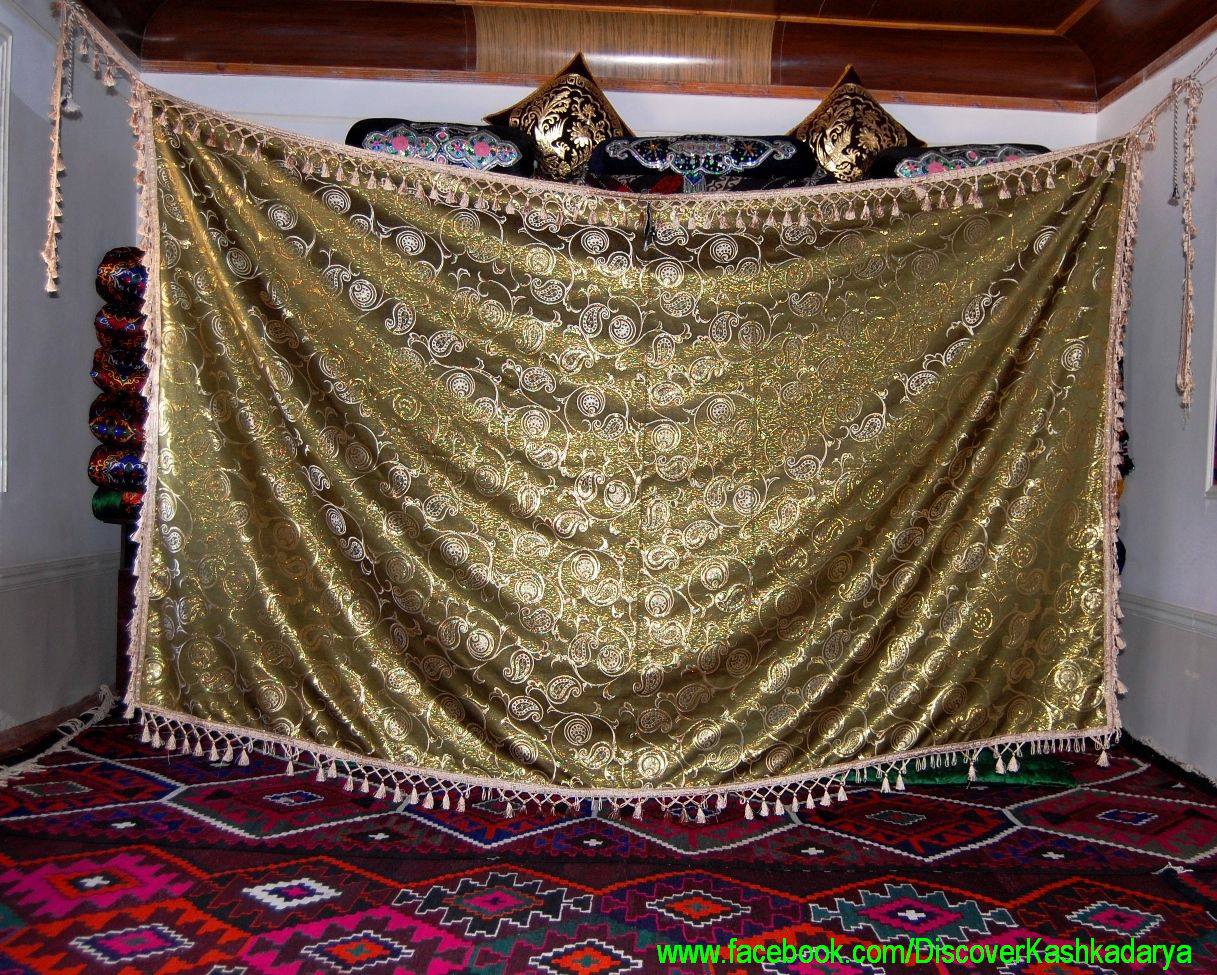
Chimildiq canopy; image: Facebook Discover Kashkadarya

Traditions add a rich layer to these connections, keeping families united. Weddings, for example, are deeply symbolic. One notable custom is the Chimildiq, a ceremonial canopy for newlyweds which marks the start of their life together and serves as a space for blessings and well-wishes for their future. Another beloved tradition is the Beshik tuyi, a joyous celebration of a baby’s first cradle wherein relatives and neighbors come together to share in the happiness of welcoming a new life, underscoring the communal nature of Uzbek culture.

“As an Uzbek woman, I’ve always been fascinated by the beauty and meaning behind our customs,” Rohila Mullayeva told TCA. The mother-in-law to three brides, for more than 20 years Mullayeva has been serving as a kayvoni, one appointed by women to preside over table work at weddings and other ceremonies. “They’re not just rituals but expressions of love, respect, and hope for the future,” she said. “Take Chimildiq, for instance – a special moment for young couples starting their journey together. One of the rituals in the ceremony is when the bride and groom give each other honey on their fingers. This is a sweet symbol of the joyful moments they hope to share in their life ahead. Another part of the ceremony is both meaningful and playful — when the groom attaches boiled eggs his bride’s dress. This gesture is a heartfelt wish for the couple to have many children.

“Then there’s the Beshik tuyi, the cradle ceremony, which is one of the most cherished traditions in our culture. When a bride gives birth to her first child, she is honored in a beautiful custom called Sallabandon, which is part of Beshik tuyi. An elderly grandmother, someone respected for having a big family, places a salla, a headdress wrapped in a special cloth, on the bride’s head,” Mullayeva explained. “During this ceremony, a kurpacha — a soft, colorful quilt — is placed under the bride’s feet, a gesture of respect and care. The meaning behind Sallabandon is deeply symbolic; it marks the bride’s transition from being a girl to a woman, a mother who has now joined the ranks of those who nurture and guide the next generation.”

According to Mullayeva, these traditions may seem simple, but they carry a huge depth of meaning, reminding us of the value we place on family, the importance of blessings, and the joy of welcoming new life.

Beshiq Tuyi; image: VK Viktoria Larina

In Kazakhstan, family holds a similarly sacred role. Despite transitioning from a nomadic to a settled lifestyle, the Kazakh people have held onto their age-old customs with great pride. Hospitality stands at the center of their way of life, with guests treated to warm welcomes and the finest offerings in the household. The tradition of Zheti ata, which requires the knowledge of seven generations of paternal ancestors, highlights the importance of lineage and family continuity. The ritual of Betashar, where a bride’s face is unveiled, symbolizes the union of two families. This significant custom has even earned a place on UNESCO’s list of Intangible Cultural Heritage.

Despite rapid modernization, Kazakhstan remains deeply connected to its rich familial traditions, which are considered the bedrock of national identity. Ethnographer and historian Aigerim Alimova shared her insights with TCA on these customs.

“Family, clan, and home are fundamental for Kazakhs,” Alimova explained, highlighting Asar, a tradition where relatives, neighbors, and friends come together to provide mutual assistance, be this in building a home or organizing a significant life event. Another tradition, Erulik, fosters community spirit by welcoming new neighbors with an invitation to dine, allowing newcomers to quickly adapt to their new location.

“Family values in Kazakhstan are also reflected in wedding traditions, which have been preserved in various forms,” noted Alimova. “For instance, during matchmaking, a ritual called Kudagi zhuzik involves the bride’s mother gifting the groom’s mother, symbolizing the unification of two families. The Kyz uzatu ceremony, marking the bride’s departure from her family, features special dishes prepared by the bride’s side to honor and strengthen the new family ties.”

There are a vast multitude of traditions in Kazakhstan and Uzbekistan which reflect deep-rooted family values. For instance, it’s customary for the head of the family to taste food first at a meal, and young people never sit higher than their elders at the table. These traditions serve to embody respect, unity, and the continuity of family heritage.

ESPN’s Laura Sanko Dives into Kazakh Culture, Inspired by UFC’s Shavkat Rakhmonov

American TV host and ESPN journalist Laura Sanko, known for her admiration of Kazakh UFC fighter Shavkat Rakhmonov, has shared her journey of learning the Kazakh language​.

Sanko acknowledged that the process has been challenging but expressed enthusiasm for mastering new words and phrases.

“It’s difficult. You would laugh if you saw me. I sit in my hotel room, watch YouTube videos, and try to repeat after them. When I think I’ve succeeded, I send an audio file to Sayat Abdrakhmanov, Shavkat Rakhmonov’s manager, asking him to check. Then he translates my phrases into Kazakh, and I listen to them slowly, over and over,” she revealed during an interview with Schrödinger’s Sport.

Despite her dedication, Sanko modestly assessed her progress, emphasizing the significant effort required to learn Kazakh.

“I learned that ‘sәlemetsiz be’ means ‘hello.’ I picked that up through YouTube. I wanted to prepare for a simple conversation, but I’m far from that. Kazakh is very difficult for Americans. It requires using deep throat muscles, while English relies on more frontal sounds. It’s hard for us to get it right,” she explained.

Sanko has long been a familiar name among martial arts fans in Kazakhstan. She began following Rakhmonov’s career even before his debut in the UFC​. Her admiration for the fighter has occasionally sparked rumors of romantic interest, but Sanko maintains that her fascination is purely professional.

Sanko’s admiration for Rakhmonov extends beyond his fighting skills to Kazakhstan’s culture. She has made public appearances in traditional Kazakh attire, such as during a UFC weigh-in​. Ahead of Rakhmonov’s most recent fight, she appeared in a traditional Kazakh outfit and, after his seventh consecutive UFC victory, delivered a speech in Kazakh – a gesture widely appreciated by Kazakhstani fans.

Shavkat Rakhmonov is one of Kazakhstan’s most celebrated MMA athletes. Currently ranked No. 2 in the welterweight division, Rakhmonov remains undefeated with a 19-0 record.

Gender Expectations in Kazakhstan: How Boys and Girls are Raised Differently

From childhood, boys and girls in Kazakhstan are raised with clearly defined roles based on gender stereotypes. These attitudes are instilled through the family, media, and educational system, creating pressure on children to conform to specific expectations. Boys are prepared for leadership and career success, while girls are prepared for family life and the role of model kelinka (daughter-in-law).

The UNDP Analytical Report (2024) emphasizes that patriarchal attitudes still persist in Kazakhstan. These stereotypes are transmitted through key institutions of socialization, including the family, educational institutions, and the media, and shape the perception of gender roles as strictly fixed.

Expectations for boys and girls are established from an early age.

For boys, parents often buy cars, construction sets, and tool kits, reinforcing the idea that a man is a protector, provider, and builder. Boys are expected to do well in school and go to university. The phrase “You are a man; you must be strong” often defines their upbringing. It is believed that a boy should be raised to be independent and able to earn money.

Daniyar, 20, student from Almaty:
“When I was a teenager, I was constantly told that I should be responsible and strong. Crying or showing weakness was considered a shame. I couldn’t even express my emotions freely. I think this had a big impact on my worldview.

Madiyar, 22, artist:
“Like many boys, I faced the belief that creativity was not for men. Until I achieved some success, my parents constantly discouraged me, not because it didn’t seem lucrative, but simply because I’m a man.”

Girls are given dolls, toy kitchens, and dishes from an early age to instill domestic skills. Parents often say: “You must learn to cook to be a good wife.” Girls are taught to be obedient, modest and caring. Family conversations often boil down to the fact that a girl should marry and become an exemplary kelinka, responsible for caring for her husband, his parents, and their children.

Aizhan, 25, Taraz:
“When I was a child, my brother could do whatever he wanted – go out, play with friends, but I was constantly told: “Wash the dishes” or “Learn to cook, who will marry you otherwise?”. No one talked about my education, it was considered not as important as being able to bake baursaks (a Kazakh sweet bread).”

Karima, 26, a teacher from Astana:
“In our family, education for girls was not considered a priority. I was often told: “You will get married, why do you need higher education?” I had to fight this stereotype to go to university.”

Lera, 21, student, Astana:
“I didn’t really face any problem in choosing a profession. My parents encouraged my choice to enroll in physics. However, at the university, gender inequality is rampant. Some professors are always saying that math is not for women or that we came here to find husbands. I think that’s a big problem, too.”

In addition to parental guidance, traditional Kazakh gender roles are reinforced through the media.

Traditional gender stereotypes are frequently reinforced in Kazakhstani media through advertisements and TV series. In advertisements, women are often portrayed as housewives taking care of the family and doing household chores, while men are portrayed as successful professionals and leaders.

For example, in a study on gender stereotypes in Kazakhstani advertising, it is noted that women are often shown in the context of family responsibilities, emphasizing their role in the household, while men are portrayed in the professional sphere, emphasizing their career achievements.

Media images are supplemented by social pressure. For example, families often ask women aged 20-25: “When are you getting married?” or “Why aren’t you a kelinka yet?” For men, questions about marriage focus on the need for them to “achieve something in life” in order to be worthy grooms.

The gender roles that are laid down in Kazakhstan from childhood are deeply rooted in culture, but society is gradually beginning to redefine them. A difficult but necessary step is to educate the new generations without prejudice so that boys and girls will grow up free from the expectation that their choices are limited by gender.

“Success is Possible in Kazakhstan”: An Interview with Fashion Brand Qazaq Republic

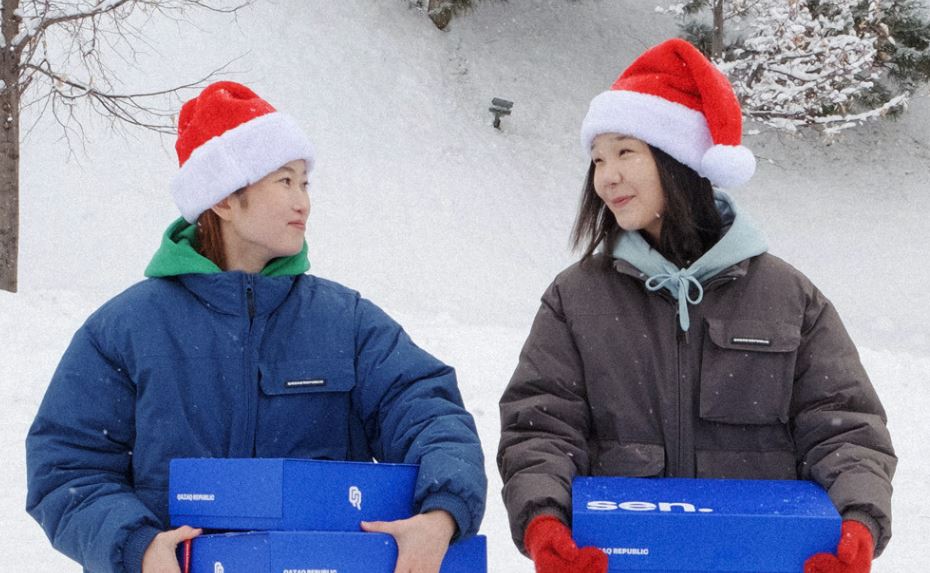
Qazaq Republic has become a popular brand among young people in Kazakhstan. The brand has become a success story for entrepreneurship within Kazakhstan and Central Asia. The Times of Central Asia spoke with Yermek Kazym, co-founder and CEO, to learn more about the brand, its message, and how it achieved its success.

TCA: Qazaq Republic celebrates Kazakhstan’s heritage through fashion. What inspired the brand’s creation, and what is its story?

When the founder of Qazaq Republic, Saken Joldas, was studying in the US, he would always bring gifts from Kazakhstan for his friends. But the available options were always uninspiring. This led him to dream about creating something more appealing to showcase modern Kazakhstan’s vibrant youth culture and style.

In 2016, when the mayor of Almaty announced a competition to design a new city logo, Saken shared his designs with the public. He created digital versions of the design to print on mugs and t-shirts and posted them on Facebook. The response from the community was incredible—people loved the concept and showed great interest in purchasing the items. That’s how the idea for the brand began to take form, starting right in his kitchen.

The first big order came from the Duty-Free store at Almaty Airport. They requested around 30 t-shirts to sell. As the business grew, Qazaq Republic was given space at the biggest toy and bookstore in Almaty, Meloman. With the rise in sales, we decided to open QR’s very first store. When designing it, we even considered adding a coffee shop in case the store didn’t work out.

QR’s first store opened in November 2019 on 47 Mametova street, but then the pandemic hit. While malls were closing, our store had the advantage of being a standalone store.

To help people feel better during difficult times, we created unique cotton masks with the phrase “Bari jaqsy bolady” (Everything will be alright). Instead of selling them, we gave them free of charge with orders over 5,000 tenge. Customers started placing smaller orders just to get these masks, giving us a strong sense of support and confidence that we were on the right track.

TCA: Could you walk us through the creative process of designing a typical Qazaq Republic collection?

We’ve built a solid foundation now. People used to think we were just buying ready-made items and putting our logo on them, but that’s not the case.

Like global brands such as Nike and Ikea, we design our products in Kazakhstan while outsourcing production and manufacturing to trusted partner factories in Turkey and China. We oversee every detail, from creating labels and designs to developing patterns, ensuring complete control over the process. This approach allows us to concentrate more on perfecting our products.

The brand’s uniqueness lies in creating products that make everyday life comfortable and functional while staying modern and high-quality.

TCA: Who is the target audience for Qazaq Republic, and how has it evolved since the brand’s inception?

When we first launched our brand, we assumed it would primarily appeal to tourists. However, over time, we noticed a strong interest from local customers. This led us to shift our focus to the local market gradually. Today, we proudly consider ourselves a leader in the local clothing industry. While our target audience is broad, we primarily focus on young people aged 18 to 35.

During the pandemic, hoodies gained popularity as remote work became the norm. The workplace mindset changed, and hoodies became more widely accepted after the pandemic, which helped drive our brand’s growth.

TCA: Are there specific markets outside Kazakhstan where Qazaq Republic has seen significant interest?

Yes, we’ve noticed influencers from various countries wearing our products. Recently, a girl from Kazakhstan sent one of our t-shirts to a popular Korean boy band, and the lead singer began wearing it on TV shows. The moment went viral on TikTok, creating a significant buzz.

I don’t think they were familiar with QR, but knowing that they probably receive thousands of gifts from fans worldwide, it’s amazing that the singer chose to wear our t-shirt for its design and product. It inspires us to believe our products can succeed in other markets as we consider expanding to markets like South Korea, China, and Europe.

TCA: What were your biggest challenges when launching and growing the brand?

The pandemic wasn’t a challenge for us. As people say, what doesn’t kill you makes you stronger.

However, we faced some difficulties, such as a budget shortfall and a decrease in our customers’ incomes due to the devaluation of the tenge. Our costs increased in dollars, but we couldn’t pass those extra expenses onto our customers, whose incomes were shrinking. As a result, we had to reduce our gross and profit margins.

With the growth of online marketplaces, people opt for cheaper products, making the competition even stronger. We’re not the cheapest, but we’re not the most expensive either, so we need to keep up with trends and highlight the quality of our products.

TCA: How do you see the Qazaq Republic contributing to Kazakhstan’s global awareness?

We hope to contribute positively. We want people traveling or studying abroad to wear our products with pride.

One of our goals is to become one of Kazakhstan’s top three brands. Forbes recently published a list of the top brands in Kazakhstan, with Air Astana, Rakhat, and Kaspi leading the pack, and we were number four. We aim to break into the top three.

We’re building a Kazakhstani brand that can compete with global brands in quality, style, and positioning. We hope foreign audiences will be intrigued by our products’ slogans and learn more about our rich culture. “Born Qazaq” isn’t just about patriotism; it means being born free.

We want people to explore and understand the meanings behind these phrases and gain interest in Kazakhstan’s culture.

TCA: Have you faced any challenges with competitors or people trying to replicate your business model? How do you feel about it?

Yes, we have. The apparel industry is one of the most fiercely competitive markets globally. To stay relevant and stand out, we must constantly compete with well-established international giants like Zara, H&M, Pull&Bear, and Bershka. To thrive, we offer unique designs, maintain high product quality, and build a strong connection with our audience.

After starting our company, many locals thought it was easy to just get t-shirts, put prints on them, and sell them. Some people even copied us, but I took it as a compliment. It encourages innovation and entrepreneurship. They’re paying for t-shirts and dealing with customs and taxes. Even if they fail, they’ll still gain valuable skills. This inspires me. It also sends a message to our people: if the Qazaq Republic can do it, so can others. Even if only one out of five similar companies succeeds, it will still boost our country.

In Uzbekistan, someone started a brand called “Uzbek Republic.” At first, we were jealous, but over time, we came to appreciate it and see it as a form of recognition.

We also began noticing counterfeit versions of our designs in local markets. While frustrating, it shows that our brand is growing and attracting attention.

TCA: What new directions or collaborations can we expect from Qazaq Republic in the coming years?

We’ve been brainstorming a lot with our teams. One area we’re expanding is our kids’ collection. My youngest child always complains that she can’t find anything to wear from our brand.

We’re also working on a more basic collection—something people can wear daily without a big logo. We’ll have a subtle, tone-on-tone logo that can be worn under jackets, offering a more minimalist look compared to some of our other designs.

We also plan to expand into online marketplaces in Europe, the US, and South Korea.

TCA: Are there plans to expand into other product lines, such as accessories and home decor?

A couple of years ago, we had big plans to launch a coffee chain and create a brand similar to Zara Home. However, we faced some challenges. Initially, we focused mainly on sales and didn’t pay enough attention to distribution. As a larger company, we have to make careful decisions and focus on our processes, or the market could overtake us.

TCA: Do you have any additional comments?

I’m really proud of my team. Many started with us as their first job, and we’ve grown together. Akmaral and Saken care about the employees, and there’s a lot of trust here. Some people have been with us since the beginning, and when we see that, we know we’re doing something right.

We’ve even won awards for our HR practices, and I’m very proud of our corporate culture. Our company has a lot of trust and love, so we don’t have to spend much time on internal issues, which lets us focus on improving externally. With this team, we can achieve big goals.

I hope we can inspire a new generation of entrepreneurs in Kazakhstan and show people that success is possible. There is so much talent here; we want to help nurture and develop it further.

To see the range click here: https://qazaqrepublic.com/

Global Ranking: Kazakhstan Has the Third-Highest Unemployment Rate in Eurasia

In the global ranking of unemployment rates for 2024, prepared by ILOSTAT, Kazakhstan placed 104th out of 187 countries with an unemployment rate of 4.8%.

According to analysts from Energyprom.kz, the worst unemployment rates were recorded in Eswatini (34.4%), South Africa (33.2%), and Djibouti (25.9%), while Qatar boasted the lowest rate globally at 0.1%.

In the Eurasia region Kazakhstan ranked third highest for unemployment, ahead of only Tajikistan (11.6%) and Azerbaijan (5.6%). The best performers in the region are Moldova (1.4%), Russia (2.5%), and Kyrgyzstan (3.3%). For context, the global average unemployment rate stood at 5%, with the Europe and Central Asia region slightly higher at 5.5%.

The Bureau of National Statistics of Kazakhstan (BNS) reported that by the end of Q3 2024, the country had 448,600 unemployed individuals – 0.6% fewer than during the same period in 2023. The official unemployment rate was 4.6%, with parity between urban and rural areas.

Family circumstances (100,200 cases), voluntary resignations (95,600 cases), and difficulties in finding employment (92,200 cases) were identified as the primary causes of unemployment.

In terms of job-seeking durations:

  • 127,500 individuals searched for less than a month.
  • 113,300 sought work for one to three months.
  • 124,600 for three to six months.
  • 36,800 for six months to a year.
  • 46,000 were unemployed for over a year.

A small fraction of the unemployed (332 individuals) had already initiated entrepreneurial ventures or secured employment arrangements.