• KGS/USD = 0.01144 0%
  • KZT/USD = 0.00192 -0%
  • TJS/USD = 0.10879 0.28%
  • UZS/USD = 0.00008 0%
  • TMT/USD = 0.28490 -0.28%
  • KGS/USD = 0.01144 0%
  • KZT/USD = 0.00192 -0%
  • TJS/USD = 0.10879 0.28%
  • UZS/USD = 0.00008 0%
  • TMT/USD = 0.28490 -0.28%
  • KGS/USD = 0.01144 0%
  • KZT/USD = 0.00192 -0%
  • TJS/USD = 0.10879 0.28%
  • UZS/USD = 0.00008 0%
  • TMT/USD = 0.28490 -0.28%
  • KGS/USD = 0.01144 0%
  • KZT/USD = 0.00192 -0%
  • TJS/USD = 0.10879 0.28%
  • UZS/USD = 0.00008 0%
  • TMT/USD = 0.28490 -0.28%
  • KGS/USD = 0.01144 0%
  • KZT/USD = 0.00192 -0%
  • TJS/USD = 0.10879 0.28%
  • UZS/USD = 0.00008 0%
  • TMT/USD = 0.28490 -0.28%
  • KGS/USD = 0.01144 0%
  • KZT/USD = 0.00192 -0%
  • TJS/USD = 0.10879 0.28%
  • UZS/USD = 0.00008 0%
  • TMT/USD = 0.28490 -0.28%
  • KGS/USD = 0.01144 0%
  • KZT/USD = 0.00192 -0%
  • TJS/USD = 0.10879 0.28%
  • UZS/USD = 0.00008 0%
  • TMT/USD = 0.28490 -0.28%
  • KGS/USD = 0.01144 0%
  • KZT/USD = 0.00192 -0%
  • TJS/USD = 0.10879 0.28%
  • UZS/USD = 0.00008 0%
  • TMT/USD = 0.28490 -0.28%
13 December 2025

Kazakhstan to Become a BRICS Partner on January 1, 2025

Kazakhstan will officially join BRICS as a partner state on January 1, 2025, according to Yuri Ushakov, an assistant to Russian President Vladimir Putin. Ushakov stated that Russia has received confirmation from several countries expressing readiness to become BRICS partners.

“One of the important results of the BRICS summit in Kazan was the establishment of the category of BRICS partner countries and agreement on a list of 13 states. Appropriate invitations were sent to these states. Confirmations of readiness to become a BRICS partner state have been received from Belarus, Bolivia, Indonesia, Kazakhstan, Cuba, Malaysia, Thailand, Uganda, and Uzbekistan,” Ushakov announced​.

Kazakhstan’s Position on BRICS Partnership

Kazakhstan’s Ministry of Foreign Affairs has confirmed the country’s status as a BRICS partner state, effective from January 1, 2025​. However, the press secretary to Kazakh President Kassym-Jomart Tokayev, Berik Uali, previously stated that the country does not plan to seek full BRICS membership in the foreseeable future. Uali cited the multi-stage application process and considerations regarding the association’s development prospects as reasons for this decision​.

BRICS, comprising Brazil, Russia, India, China, and South Africa, aims to promote economic, political, and cultural cooperation among member states. As a partner, Kazakhstan will engage with BRICS without taking on the obligations or privileges of full membership.

This development marks a significant step in Kazakhstan’s international engagement strategy while reflecting its cautious approach to deeper involvement in the bloc.

Kyrgyz Authorities Tighten Control Over Energy Resource Usage

Kyrgyzstan has enacted a new law mandating efficient and rational use of energy resources across all enterprises, both state-owned and private​.

The law establishes a dedicated government body tasked with inspecting organizations, enterprises, and buildings to ensure compliance with energy efficiency standards, regardless of ownership. This legislation, previously approved by parliament, assigns local state administrations and municipal authorities the responsibility of ensuring energy efficiency in buildings under their jurisdiction. This includes the adoption of highly efficient energy-consuming devices and equipment.

The new law also requires authorities to provide consumers with metering devices for electricity, natural gas, and heat energy. These devices are to be installed in facilities where they are currently absent, allowing for more accurate monitoring and management of energy consumption.

Kyrgyzstan continues to face an electricity deficit of 3.9 billion kilowatt-hours, exacerbated by economic growth, increased industrial activity, and rising energy demand​. Despite ongoing efforts, such as the construction of new hydroelectric power plants and importing electricity from neighboring countries, the shortage persists. This has resulted in rolling blackouts across nearly all regions during winter months.

As previously reported by The Times of Central Asia, these shortages highlight the urgency of implementing measures to conserve energy​.

President Sadyr Japarov has criticized citizens for their lack of responsibility in conserving natural resources. He expressed optimism that the new law would encourage greater accountability and help reduce electricity and heat consumption.

By emphasizing energy efficiency and resource management, Kyrgyzstan aims to address its energy challenges while promoting sustainable development.

Turkmen Authorities Prevent Turkmen-Turkish Family Reunifications

Turkish citizens have reported difficulties faced by their wives, citizens of Turkmenistan, who have been banned from leaving the country after renewing their passports​.

Women who returned to Turkmenistan to apply for new passports have been denied exit at Ashgabat airport. Authorities cited violations of the “legislation of the country of stay,” referencing paragraph 9 of part 1 of Article 30 of Turkmenistan’s Law On Migration. This law prohibits citizens who have previously violated the laws of the country of stay from leaving Turkmenistan for five years. However, no explanation has been provided for why this regulation applies to the affected women.

Turkish spouses insist their wives did not violate any laws abroad and were legally residing in Turkey.

Arslan Rustem, a Turkish citizen, shared his experience: “I married a Turkmen citizen in July 2022. My wife was legally living in Turkey, but when her passport expired, she returned to Turkmenistan to replace it. After receiving a new document, she was not allowed to leave.” Rustem emphasized that there were no legal issues with their marriage or residency.

Similarly, Mahmut Uchar encountered the same problem. He was advised by the Turkmen Consulate in Istanbul that his wife must travel to Turkmenistan to renew her passport after changing her surname. “We were assured the entire process would take no more than a month. But a year later, my wife is still unable to return to Turkey,” he explained.

This predicament has impacted dozens of families. Women have filed complaints with various government agencies in Turkmenistan, including the Presidential Administration, but no resolution has been provided. Appeals from Turkish organizations advocating for family reunification have also gone unanswered.

The Migration Service of Turkmenistan has not commented on the legal basis for applying the travel restriction. Husbands of the affected women have expressed confusion and frustration, believing that these actions infringe upon their families’ rights.

Turkmenistan frequently restricts its citizens’ travel abroad for a variety of reasons. These measures include travel bans on individuals with outstanding bank loans, parents of minor children, and citizens whose relatives have criminal records spanning three generations​​. Passports are often confiscated at airports until debts are paid in full​.

The government has also imposed restrictions following incidents involving Turkmen citizens abroad, citing security concerns. These policies have drawn criticism from human rights activists, who have called on Turkmen authorities to lift unwarranted restrictions on freedom of movement​​.

Kyrgyzstan Plans to Reclaim All Uranium Tailings Dumps

Kyrgyz President Sadyr Japarov addressed the pressing issue of uranium waste during the People’s Kurultai (national congress), emphasizing ongoing efforts to reclaim radioactive tailing dumps across the country.

According to Japarov, many tailing dumps were constructed during the Soviet era along riverbanks and in headwaters used by local communities for domestic water supply.

“We turned to Russia, as the legal successor of the USSR, for assistance. Rosatom allocated RUB 2.1 billion ($20 million). Work is now underway to relocate radioactive waste from hazardous areas to safer locations,” Japarov stated.

Japarov highlighted the completion of uranium waste reclamation in Issyk-Kul Oblast, where nuclear waste had posed a threat to Lake Issyk-Kul. Without intervention, the region faced the risk of an ecological disaster. Efforts in Naryn region are also nearing completion, and attention will soon turn to tailing dumps in southern Kyrgyzstan. Local residents have noted that uranium mined in this area was used in the first Soviet atomic bomb.

The tailing dump in Jalal-Abad region is particularly concerning due to its potential impact on neighboring Uzbekistan. Toxic waste from the site threatens the region’s ecology through contamination of a local river.

Russian companies tasked with reclaiming five tailing dumps in Naryn and Jalal-Abad regions will be exempt from taxes, as previously reported by The Times of Central Asia. This collaboration is part of an agreement to address Kyrgyzstan’s most dangerous uranium waste sites​.

According to Kyrgyzstan’s Ministry of Emergency Situations, the country is home to 92 burial sites containing toxic and radioactive materials.

Kazakh MP Zhanbyrshin Criticizes Air Astana

Kazakh MP Yedil Zhanbyrshin has voiced strong criticism of Air Astana, calling for more Kazakh-language content on its flights and denouncing the airline’s complex refund and compensation processes​.

Zhanbyrshin directed his remarks at Air Astana CEO Peter Foster, emphasizing the need for the airline to prioritize the Kazakh language, particularly for flights operating within Kazakhstan.

“We have repeatedly raised this issue, and it is time to bring the situation in line with the country’s laws. Onboard content is predominantly presented in another language, with Kazakh rarely used. Why is the state language not given priority?” the MP stressed.

He further reminded the airline of its obligation to comply with national laws and uphold citizens’ rights.

“Mr. Foster, when you first came to Parliament, you were asked only a couple of questions. Working here, you must protect the rights of Kazakhstanis, honor and respect the country’s laws, and create appropriate conditions. Don’t laugh! It’s not funny. You are sitting here, treating us as if we are not people. We are not aborigines in Africa [sic] who don’t understand anything. Don’t play with us, laughing in our faces. This is Parliament! We are representatives of the people, elected by the people,” Zhanbyrshin declared.

Zhanbyrshin also criticized the airline’s refund policies, describing them as excessively convoluted. He recounted his personal experience of trying unsuccessfully for five months to secure compensation for a 12-hour flight delay.

“It is almost impossible for an ordinary person to navigate the application process and find the necessary information on the website. This is a deliberately complicated process,” he said. He urged other airlines, including SCAT, to simplify their procedures.

Zhanbyrshin’s comments follow another controversy involving Air Astana. In November, MP Irina Smirnova sued the airline after her flight was rescheduled at only seven hours’ notice. Smirnova sought moral compensation of one tenge for the inconvenience but lost the case. She has since announced plans to appeal​.

Kazakhstan’s Southern Region Receives Full Irrigation Water Supply from Kyrgyzstan

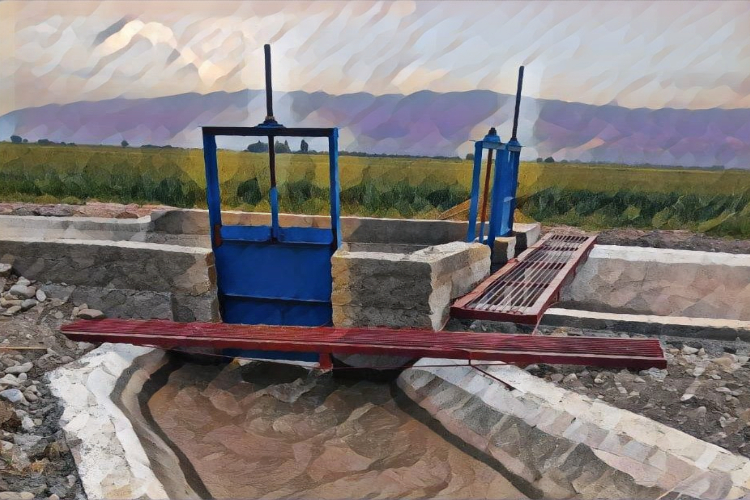
This year, five districts in Kazakhstan’s southern Zhambyl region—Kordai, Merke, Baizak, Zhambyl, and Talas—were fully supplied with irrigation water from the transboundary Shu and Talas rivers, which flow from neighboring Kyrgyzstan. The announcement was made by Kazakhstan’s Ministry of Water Resources and Irrigation.

In April, Kazakhstan and Kyrgyzstan agreed on a joint water intake schedule for the 2024 irrigation season. As part of this agreement, Kazakhstan received 418 million cubic meters of water from the Talas River, exceeding the planned 380 million cubic meters and surpassing last year’s allocation by 94.2 million cubic meters. Additionally, along the Shu River (called Chu in Kyrgyzstan), Kazakhstan was allocated 165.3 million cubic meters, 29.7 million cubic meters more than in 2023.

“Farmers in the Zhambyl region were fully provided with irrigation water according to their needs,” stated Kairat Amanov, director of the Zhambyl branch of Kazvodkhoz. In total, 533.3 million cubic meters of water were delivered, irrigating 90,100 hectares of farmland. Kazvodkhoz, a division of Kazakhstan’s Ministry of Water Resources and Irrigation, is responsible for managing the nation’s irrigation infrastructure, including canals and reservoirs.

Kazakhstan’s agriculture, especially in its arid southern regions, relies heavily on irrigation water from Kyrgyzstan. At the same time, Kyrgyzstan faces its water management challenges. The water level of Lake Issyk-Kul, Kyrgyzstan’s largest lake, has been declining, partly due to the diversion of feeder rivers for local irrigation and to meet downstream agricultural needs in Kazakhstan.

Although the Shu River does not directly feed Lake Issyk-Kul, it originates in the Issyk-Kul region and could have been utilized to irrigate nearby farmland. Instead, it plays a critical role in supporting Kazakhstan’s Zhambyl region. This allocation highlights Kyrgyzstan’s significant role in Central Asia’s water policies and its ongoing efforts to maintain cooperative relations with neighboring countries on key water and energy issues.