• KGS/USD = 0.01143 -0%
  • KZT/USD = 0.00192 -0%
  • TJS/USD = 0.10820 0.19%
  • UZS/USD = 0.00008 0%
  • TMT/USD = 0.28575 0%
  • KGS/USD = 0.01143 -0%
  • KZT/USD = 0.00192 -0%
  • TJS/USD = 0.10820 0.19%
  • UZS/USD = 0.00008 0%
  • TMT/USD = 0.28575 0%
  • KGS/USD = 0.01143 -0%
  • KZT/USD = 0.00192 -0%
  • TJS/USD = 0.10820 0.19%
  • UZS/USD = 0.00008 0%
  • TMT/USD = 0.28575 0%
  • KGS/USD = 0.01143 -0%
  • KZT/USD = 0.00192 -0%
  • TJS/USD = 0.10820 0.19%
  • UZS/USD = 0.00008 0%
  • TMT/USD = 0.28575 0%
  • KGS/USD = 0.01143 -0%
  • KZT/USD = 0.00192 -0%
  • TJS/USD = 0.10820 0.19%
  • UZS/USD = 0.00008 0%
  • TMT/USD = 0.28575 0%
  • KGS/USD = 0.01143 -0%
  • KZT/USD = 0.00192 -0%
  • TJS/USD = 0.10820 0.19%
  • UZS/USD = 0.00008 0%
  • TMT/USD = 0.28575 0%
  • KGS/USD = 0.01143 -0%
  • KZT/USD = 0.00192 -0%
  • TJS/USD = 0.10820 0.19%
  • UZS/USD = 0.00008 0%
  • TMT/USD = 0.28575 0%
  • KGS/USD = 0.01143 -0%
  • KZT/USD = 0.00192 -0%
  • TJS/USD = 0.10820 0.19%
  • UZS/USD = 0.00008 0%
  • TMT/USD = 0.28575 0%
14 December 2025

Cost of Living in Uzbekistan Remains Moderate in Regional Context

Uzbekistan ranks third among Central Asian countries in terms of cost of living, according to the latest data from Numbeo. With an index score of 24.2 on a 100-point scale, Uzbekistan maintains relatively low living expenses by global standards, though costs remain lower than in Kyrgyzstan (25.4) and Kazakhstan (26.6).

The estimated monthly expenses for a family of four in Uzbekistan, excluding rent, are approximately 21 million UZS ($1,743.31), while the average per-person cost stands at 5.6 million UZS ($464.88).

Compared to the United States, Uzbekistan’s overall cost of living, including rent, is 65.2% lower. Rent alone is 71.1% cheaper.

Regional Comparisons

In a comparison of major cities, living in Almaty, Kazakhstan, is 6.8% more expensive than in Tashkent, excluding rent. Including rent, the cost difference narrows to 5.9%, with rent prices in Almaty 3.5% higher. Restaurant prices are 17.5% higher in Almaty, while grocery costs are 1.3% lower. Local purchasing power is 5.5% stronger than in Tashkent.

Bishkek, Kyrgyzstan’s capital, is marginally cheaper than Tashkent, with the overall cost of living 0.5% lower excluding rent and 4.8% lower when rent is included. Rent in Bishkek is 15.7% cheaper, restaurant prices are 1.9% lower, and groceries cost 7.4% less. However, Bishkek’s local purchasing power is 21.3% lower than in Tashkent.

In Dushanbe, the cost of living is 0.8% higher than in Tashkent without rent, but 7.7% lower when rent is included. Rent prices are 29% lower, restaurant prices are 13.4% cheaper, and groceries are 18.3% more expensive. Local purchasing power in Dushanbe is significantly lower, 50.9% below that of Tashkent.

Ashgabat, the capital of Turkmenistan, stands out as the region’s most expensive city. The cost of living there is 261.4% higher than in Tashkent without rent and 208.5% higher when rent is factored in. Rent prices in Ashgabat are 77.6% higher, restaurant prices are 242.4% more expensive, and groceries cost 291.3% more. Despite the elevated costs, local purchasing power in Ashgabat is 58.5% lower than in Tashkent.

Kazakhstan Boosts Animal Feed Exports to China

Kazakhstan has significantly increased its exports of compound animal feed to China, even as shipments of unprocessed grain have declined, according to Kazakhstan Temir Zholy (KTZ), the national railway operator.

The shift in export dynamics is attributed to China’s record 700-million-ton grain harvest in 2025. In response to domestic supply, the Chinese authorities have tightened grain import regulations and introduced customs restrictions. As a result, Kazakhstan’s grain export structure has shifted toward processed goods with higher added value, most notably, compound animal feed.

Animal feed is in high demand within China’s livestock sector and receives priority clearance at border checkpoints. This preferential treatment has contributed to a notable surge in Kazakh feed exports.

During the first two months of the current marketing year (September-October 2025), KTZ transported 873,000 tons of grain for export, including 672,000 tons of animal feed, a 3.5-fold increase compared to the same period last year.

Overall grain exports to China, however, rose 35% year-on-year to 3.5 million tons between January and October 2025, reflecting a shift toward higher-value processed goods rather than bulk grain.

According to the Ministry of Agriculture, Kazakhstan continues to export most of its grain to countries across Central Asia and the Caucasus, including Uzbekistan, Tajikistan, Kyrgyzstan, Afghanistan, Turkmenistan, and Azerbaijan.

Kazakhstan Launches First Carbon Agro-Climatic Testing Ground

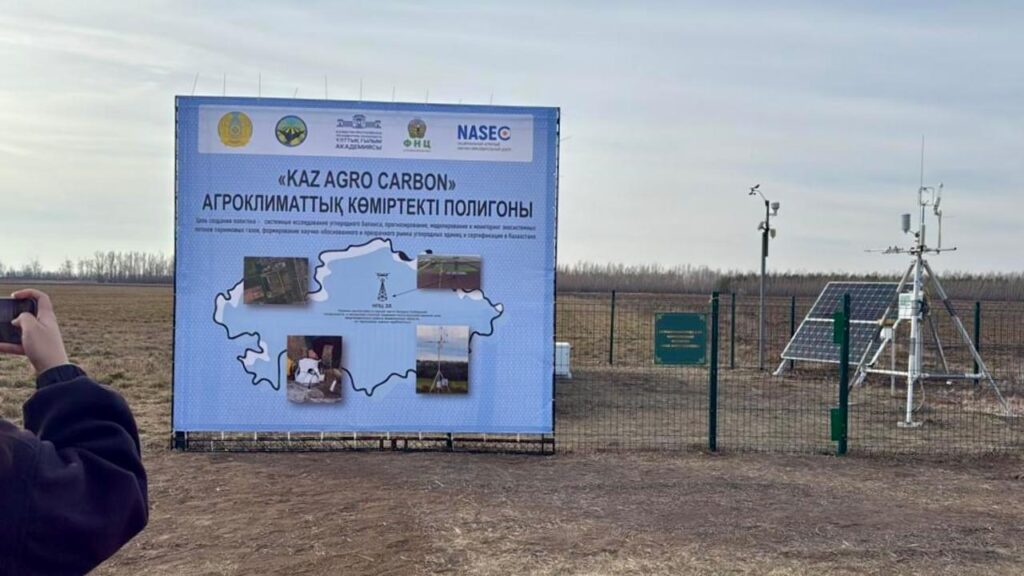
Kazakhstan has inaugurated its first carbon agro-climatic testing ground, Kaz Agro Carbon, at the A.I. Barayev Scientific and Production Center for Grain Farming, marking a significant step toward climate-resilient agriculture.

The project is a collaborative effort between the agriculture ministries of Kazakhstan and Russia, the National Academy of Sciences of Kazakhstan, and scientists from the University of Hannover in Germany.

According to the Kazakh Ministry of Agriculture, the new facility is designed to manage soil carbon, reduce greenhouse gas emissions, and enhance the climate resilience of the agricultural sector.

Kaz Agro Carbon will act as a pilot site for joint research focused on measuring, modeling, and managing the carbon balance in Northern Kazakhstan. Researchers aim to develop technologies that reduce emissions and boost carbon dioxide absorption in local ecosystems.

“Kaz Agro Carbon is a platform for integrating science, innovation, and real-world production. It will help preserve soil fertility, adapt agriculture to climate change, and develop a national carbon balance management system. This is an important step toward developing climate-smart agriculture in Kazakhstan,” said Timur Savin, Chairman of the Board at the Scientific and Production Center for Grain Farming, during the opening ceremony.

Amid global efforts to combat climate change, carbon farming is emerging as a strategic growth area for Kazakhstan’s agricultural sector.

According to the Ministry of Science and Higher Education, Kaz Agro Carbon is equipped for year-round monitoring of ecosystem conditions. The site will track soil carbon levels as well as key meteorological data such as temperature, humidity, and precipitation.

Kazakhstan’s carbon sequestration potential is estimated at up to 535 million tons annually. The development of carbon offset trading mechanisms could attract as much as $25 billion per year to the national economy. The new facility will provide farmers with the tools to certify accumulated carbon and participate in the emerging carbon quota market, positioning Kazakhstan to take an active role in international emissions trading.

Insider’s View: Cooperation Between Uzbekistan and the United States in Tourism

In recent years, relations between the Republic of Uzbekistan and the United States of America in the field of tourism have reached a qualitatively new level. The foundation of this cooperation lies in the systematic efforts of the Tourism Committee to implement the provisions of the “Road Maps” aimed at strengthening bilateral ties, expanding tourism exchanges, and attracting American investment into the sector.

The period of 2018–2019 became a turning point in enhancing the tourism dialogue between the two countries. Uzbekistan welcomed experts from the International Association of Tourism Professionals, led by H. Luis Lorenzo Gutierrez, representatives of “PBS” and “ABC” television channels, as well as a delegation from the Congress of Bukharian Jews of the USA and Canada. During the same period, the Tourism Committee organized a series of visits by well-known American bloggers Mark Wiens and Sonny Side, thanks to which millions of viewers around the world were introduced to Uzbekistan’s gastronomic and cultural richness.

An important step was the introduction of American online booking services — Booking.com, Expedia, Hotels.com, and Tripadvisor. By the end of 2018, 886 hotels across the country had been connected to these platforms, significantly improving Uzbekistan’s accessibility for American travelers.

Since 2019, special attention has been paid to promoting Uzbekistan’s tourism potential through U.S. media and digital platforms. Within the framework of the “World Influencers Congress 2019” forum, more than 20 leading American bloggers arrived in Tashkent, including the “Devin Super Tramp” team, which filmed a short movie titled “Aladdin” in Bukhara and Khiva. These projects not only enhanced Uzbekistan’s visibility on global social media but also helped build its image as a safe and welcoming destination.

Cooperation in professional training also developed in parallel. Edward Castley, Vice President of the American Hotel & Lodging Association (AHLA), conducted master classes for university and college instructors, sharing U.S. best practices in training tourism industry professionals.

During the COVID-19 pandemic in 2020, an online conference was held with the assistance of the Embassy of Uzbekistan in Washington, D.C., bringing together leading American travel companies — ASTA, Intrepid Travel, G Adventures, and others. The participants discussed measures to restore tourist flows and improve traveler safety. In subsequent years, American media outlets such as The New York Times, National Geographic, and Foreign Policy became increasingly active in covering the country’s tourism potential.

Joint media collaborations, including Mystery Box’s 2021 production and CNN’s 2023 documentary The Spirit of Samarkand, have been instrumental in highlighting the cultural heritage and contemporary life of Uzbekistan’s historic cities.

In recent years, Uzbekistan–U.S. cooperation in tourism has acquired strategic importance. In 2024, Chairman of the Tourism Committee Umid Shadiev met with U.S. Ambassador Jonathan Henick to discuss prospects for developing green tourism and workforce training. The participation of the Uzbek delegation in prestigious exhibitions — Miami World Travel Expo 2024 and New York Travel and Adventure Show 2025 — opened new opportunities for promoting the country’s tourism brand. Notably, Uzbekistan was recognized as the “Best New Exhibitor” at the New York event.

The dynamics of tourist arrivals from the United States clearly demonstrate the effectiveness of bilateral cooperation. From 2018 to 2024, the number of American tourists visiting Uzbekistan tripled, reflecting the growing interest in the country’s cultural and historical heritage, hospitality, and sustainable tourism infrastructure.

The cooperation between Uzbekistan and the United States in the field of tourism has become an important factor in strengthening mutual understanding between the two peoples, expanding cultural exchange, and attracting investment into the national economy. Year by year, Uzbekistan confidently establishes itself as a modern, open, and dynamically developing tourist destination on the world map.


The views expressed in this article are those of the author and do not necessarily reflect the official policy or position of the publication, its affiliates, or any other organizations mentioned.

Škoda Group Plans Joint Venture to Assemble Railway Vehicles in Uzbekistan

Czech manufacturer Škoda Group has announced plans to establish a joint venture in Uzbekistan to assemble railway transport vehicles, according to a statement from the company’s press service.

The initiative was unveiled during President Shavkat Mirziyoyev’s official visit to Belgium on October 24, where he held a roundtable meeting with top European business leaders. Among the participants was Škoda Group CEO Petr Novotný, who described Central Asia as a highly promising market. Novotný presented the company’s strategic roadmap for entering Uzbekistan, backed by support from the European Commission and the European Investment Bank.

The proposed joint venture will focus on three key areas: assembling railway vehicles under local conditions, providing long-term maintenance and repair services, and launching a Škoda Academy to train and upskill Uzbek specialists.

“Each of the three areas represents a concrete step toward fulfilling the new Enhanced Partnership and Cooperation Agreement and the European Global Gateway strategy. We consider Uzbekistan to be a country opening up to new investments from European business partners. It has long been in our sights in terms of our strategic ambitions. We therefore very much welcome the opportunity to contribute to the development of sustainable transport, education, and technological modernization in the local market,” Novotný said.

Škoda emphasized that the project aligns with Uzbekistan’s national goals to modernize its transport infrastructure and deepen partnerships with European industry. The company said that high-level discussions in Brussels underscored the strong potential for European technology and expertise to support the sustainable transformation of Uzbekistan’s railway sector.

Kyrgyzstan Boosts Coal Production Ahead of Winter Heating Season

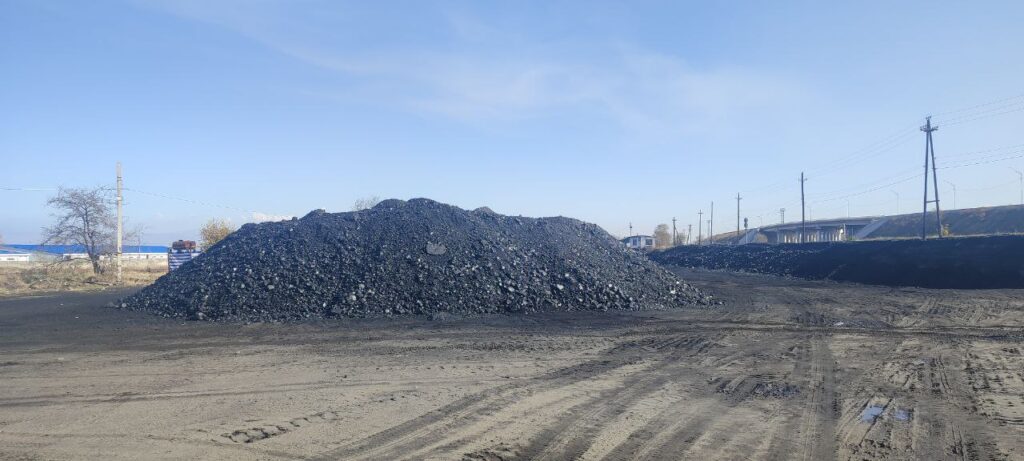
Kyrgyzstan has increased domestic coal production in preparation for the winter, with four of the country’s six deposits now operating at full capacity, according to the state-owned enterprise Kyrgyzkomur, which oversees coal mining and distribution at socially affordable prices.

To ensure stable fuel supply, Kyrgyzkomur has signed agreements with 126 coal trading bases nationwide. These sites sell coal at reduced prices, aimed at supporting low-income households and easing the burden on public utilities.

In the first nine months of 2025, Kyrgyzstan produced 655,000 tons of coal, while overburden removal reached 6.8 million cubic meters.

Coal from the Kara-Keche deposit remains the most in demand. It is also supplied to the Bishkek thermal power plant, which provides the capital with heat and electricity. However, local coal is considered lower in quality compared to imports, particularly coal from Kazakhstan’s Shabyrkul deposit.

To stabilize the market and prevent price hikes, authorities have tightened oversight of the coal sector. Under an order issued by the Ministry of Economy on September 26, 2025, temporary state regulation of coal prices was introduced for 90 days.

“The maximum retail prices are set at $80 per ton for imported coal and $66 per ton for local coal from the Kara-Keche deposit, mined by Kyrgyzkomur,” said Maksat Akylbekov, chief inspector at the Antimonopoly Regulation Service, in an interview with Tbe Times of Central Asia.

To curb speculation and prevent the sale of low-quality coal, Bishkek authorities have banned the retail sale of coal in bags. Fuel can now only be purchased by the ton at designated depots. As a result, smaller traders have relocated to the outskirts of the city, where they continue to sell coal in smaller quantities.

Sellers report that many residents request 100-200 kilograms of coal, as not all can afford to purchase an entire season’s supply at once or have the storage capacity. In some cases, sellers informally accommodate these buyers.

Violations of the government’s pricing rules are subject to fines of $35 for individuals and $150 for legal entities.