• KGS/USD = 0.01144 0%
  • KZT/USD = 0.00196 -0%
  • TJS/USD = 0.10899 -0%
  • UZS/USD = 0.00008 -0%
  • TMT/USD = 0.28490 0%
  • KGS/USD = 0.01144 0%
  • KZT/USD = 0.00196 -0%
  • TJS/USD = 0.10899 -0%
  • UZS/USD = 0.00008 -0%
  • TMT/USD = 0.28490 0%
  • KGS/USD = 0.01144 0%
  • KZT/USD = 0.00196 -0%
  • TJS/USD = 0.10899 -0%
  • UZS/USD = 0.00008 -0%
  • TMT/USD = 0.28490 0%
  • KGS/USD = 0.01144 0%
  • KZT/USD = 0.00196 -0%
  • TJS/USD = 0.10899 -0%
  • UZS/USD = 0.00008 -0%
  • TMT/USD = 0.28490 0%
  • KGS/USD = 0.01144 0%
  • KZT/USD = 0.00196 -0%
  • TJS/USD = 0.10899 -0%
  • UZS/USD = 0.00008 -0%
  • TMT/USD = 0.28490 0%
  • KGS/USD = 0.01144 0%
  • KZT/USD = 0.00196 -0%
  • TJS/USD = 0.10899 -0%
  • UZS/USD = 0.00008 -0%
  • TMT/USD = 0.28490 0%
  • KGS/USD = 0.01144 0%
  • KZT/USD = 0.00196 -0%
  • TJS/USD = 0.10899 -0%
  • UZS/USD = 0.00008 -0%
  • TMT/USD = 0.28490 0%
  • KGS/USD = 0.01144 0%
  • KZT/USD = 0.00196 -0%
  • TJS/USD = 0.10899 -0%
  • UZS/USD = 0.00008 -0%
  • TMT/USD = 0.28490 0%
08 December 2025

Kazakhs Owe Almost Quarter Million Dollars in Alimony and Child Support

Authorities in Kazakhstan registered 172 criminal offenses for non-payment of alimony in favour of children, incapacitated parents and former spouses in the first two months of 2024. The figure represents a fall of 1.1 percent compared to 2023.

The most frequent evaders were residents of the regions of Almaty (38 cases), Kostanay (19 cases), East Kazakhstan (17 cases), Karaganda (13 cases) and Pavlodar (11 cases). The least culpable locales in non-payment of family support were Turkestan, Aktobe, and Almaty city, with one case in each.

In 2023, 166 people nationwide, did not receive support payments. This year, the recorded number of adult victims is 158; a decrease of 4.8 percent. Among them are 151 women, nine minor children and two students. The largest sector of adults not receiving alimony comprises 82 Kazakh women aged 30 to 39; 38 women aged 18-30; 24 women aged 40-49; one citizen aged 50-59, and four senior citizens aged over 60.

It’s worth noting that the number of offenders for non-payment of family support in Kazakhstan increased by 29.6 percent to 70 people over the past year. According to official data, most are unemployed. Similar to the age demographics of those denied court-ordered payments, the culprits were often young or middle-aged adults. In the 30-39 age bracket, 39 Kazakhs were in arrears on alimony; in that of 40-49, 17, and in the 21-29 bracket, 11. In addition, two violators were under 20 and one was aged 50-59.

The total outstanding amount owed by persistent child support defaulters to children, as well as disabled parents and spouses, currently stands at $222,500; 43.6 percent more than in 2023. As a result of pre-trial proceedings, authorities managed to recover $40,600 owed to individuals. Last year, more than 6,000 Kazakhstanis were subject to administrative proceedings for evasion of alimony and 300 more were sent to court on criminal charges.

The most common reasons for non-payment are a lack of stable income or property that can be seized. According to the latest data, almost 15,000 citizens of Kazakhstan are forbidden to leave the country because of liens against them for non-payment of alimony and other incurred debts.
Kazakhstan’s Public Debt Falls Below $60 Billion

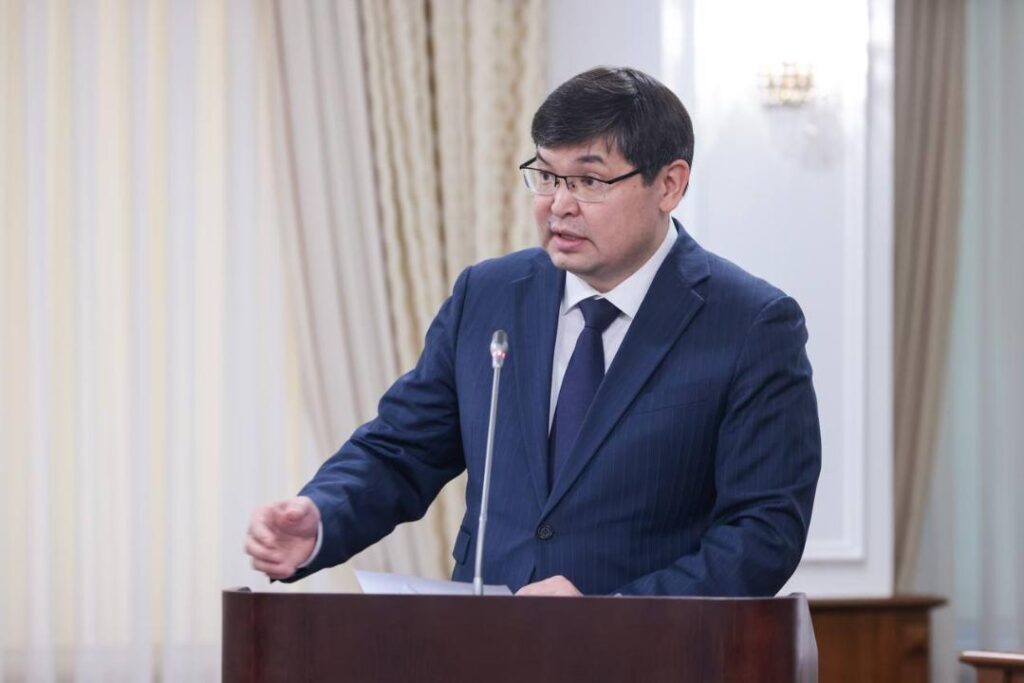
At a government press conference on Kazakhstan’s fiscal policy, finance minister Madi Takiev said that as of January 1 this year the country’s outstanding public debt was $59.9 billion, According to Takiev this figure is considered safe under a government rule. “In terms of GDP [gross domestic product], it is 22.8%. We have a limit — 33%. It is considered safe,” commented Takiev.

In October of last year, Kazakhstan’s state debt stood at $64.7 billion. At the end of 2023, the Mazhilis (lower house of parliament) reported that the size of Kazakhstan’s public debt comprised 40% of the entire federal budget. According to Mazhilis representatives, that creates certain risks for the country. At a joint session of the two chambers of parliament, former prime minister Alikhan Smailov promised that over the next five years, Kazakhstan’s total public debt will remain at a safe level — and will not exceed 25% of annual GDP.

Last year, the countries with the largest amounts of government debt were Japan ($9.57 trillion), Italy ($3.1 trillion), and the U.S. ($1.6 trillion). This month, developed countries of the Organization for Economic Cooperation and Development (OECD) increased their total government debt via sovereign bonds to $54 trillion. Over the past 15 years, this amount has grown by $30 trillion, according to the OECD report.

Dushanbe, Tashkent Are Worst Central Asian Cities for Air Quality

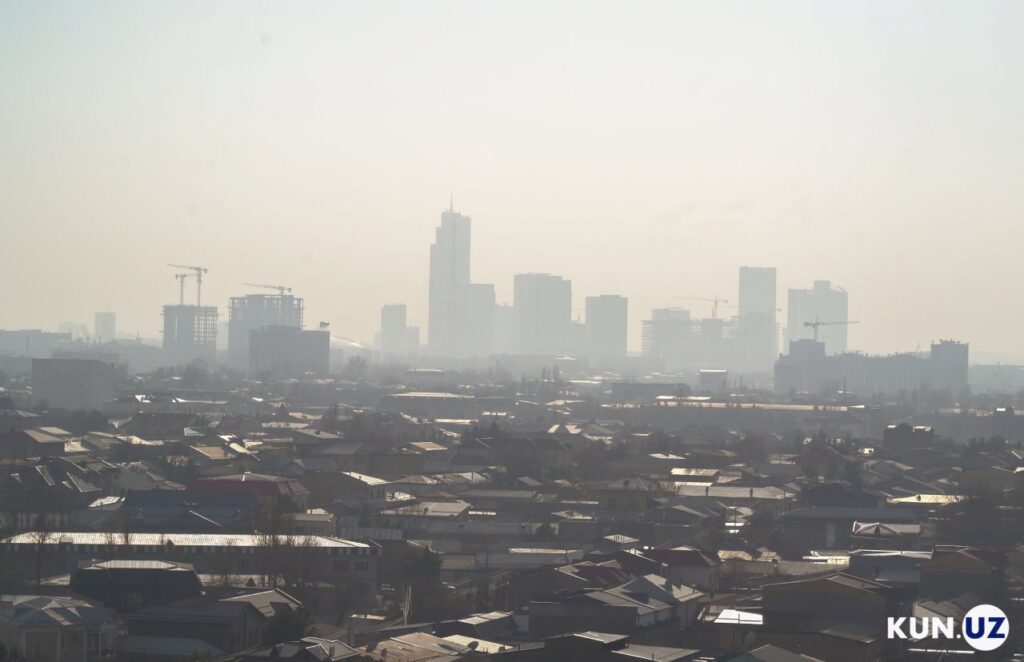
According to the latest ranking of the world capitals with the dirtiest air, published by the Swiss technology company IQAir, Dushanbe in Tajikistan came in fourth-worst, and Uzbekistan’s capital Tashkent took 22nd place. According to IQAir’s data, the average annual concentration of PM2.5 particles in amounted to 28.6 µg/m3, which is 5-7 times higher than World Health Organization (WHO) recommendations. The ranking was ‘led’ by India’s capital New Delhi, followed by Dhaka (Bangladesh), Ouagadougou (Burkina Faso), Dushanbe (Tajikistan) and Baghdad (Iraq).

In 2023 only 10 countries had air quality that met WHO recommendations. The cleanest air was in the capitals of Puerto Rico, New Zealand, Australia, Iceland, Bermuda, Estonia and Finland.

Recently, Tashkent launched Air Tashkent, an open-source data platform for air quality monitoring. It was developed by the Department of Digital Development under the capital’s hokimiyat (local administration), together with a group of national scientists called Amudario. The platform displays data from 10 stations which are updated hourly. Statistics for the last seven days are also available.

To combat harmful vehicle emissions in the Uzbek capital, officials have opened a diagnostic center. The center will check the amount of harmful emissions in the car’s exhaust, and according to those results, will put a sticker containing an RFID chip on the windshield in either red, yellow or green colors. That fits into a plan to divide Tashkent into ecological zones — and will restrict entry of vehicles that don’t comply with that zone ‘s specific sticker. Fines collected from those drivers will be used to fund ecological remediation.

The government of Uzbekistan has recently taken active measures to combat air pollution. Among the most significant are the capital’s gradual transition to electric transport, like city buses, the installation of exhaust filters at industrial enterprises, the gradual phase-out of AI-80 gasoline by 2026, and the construction of green power plants.

According to the CEO of IQAir’s North American division, Gloria Delphine Hammes, PM2.5 particles “kill more people than any other pollutant that exists.” The main means of production of PM2.5 particles is the burning of fossil fuels such as coal, oil and gas. Those particles, in turn, are responsible for the premature deaths of more than four million people worldwide each year. A separate analysis by a researcher at the Max Planck Institute for Chemistry in Germany found that fossil fuels are responsible for 65% of those deaths. In addition, the danger of these particles is that once they appear in one place, they can be carried by the wind for hundreds of thousands of kilometers in numerous directions, harming large numbers of people in other geographical regions.

Tajikistan Intensifies Efforts to Train Locals for Work Abroad

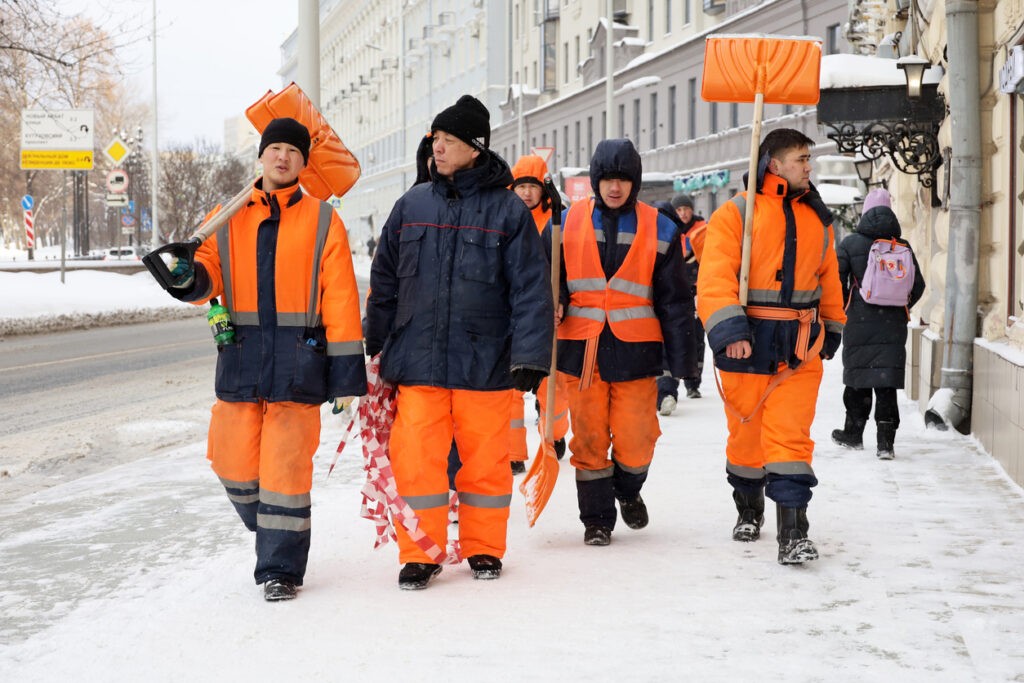
Tajikistan is stepping up efforts to teach its citizens global job skills which will facilitate access to higher-paying trades and expand the range of migrant-labor opportunities. The state-administered Adult Education Center of Tajikistan offers training in more than 100 professions, with new specializations emerging every year.

This year, the Asian Development Bank project plans to open three modern centers in Tajikistan for pre-departure training of migrants. These centers will train specialists in demand in the labor market, providing relevant international certificates. In addition, foreign languages, financial literacy and the basics of law and legal processes of different countries will be taught.

According to Deputy Labor Minister Shakhnoza Nodiri, working abroad is crucial for Tajik citizens to earn more. A worker’s qualifications are becoming one of the important requirements in the labor market, and the need for specifically trained personnel will grow in the future.

Russia remains one of the key destination countries for migrant labor from Tajikistan. Under a 2023 agreement on organized employment of citizens of Tajikistan with the Russian Federation, the Agency for Employment Abroad placed about 5,000 Tajiks, or 77% of the 6,500 Tajik foreign workers they placed abroad, into positions in Russia.

At the beginning of 2024, representatives of about 40 companies seeking employees from 13 countries visited the Agency for Employment Abroad to engage with Tajikistan’s labor resources. Most of the requests came from companies in Russia — where more than 100 companies applied to hire more than 20,000 workers from Tajikistan.

In addition to Russia, last year Tajik citizens were employed in Turkey, Kazakhstan, Poland, Romania, Belarus, Lithuania, Latvia, the UAE and Japan. Currently Tajikistan’s Ministry of Labor, Migration and Employment is actively working on signing agreements on labor migration with the UK, the U.S., Korea, Canada, Germany, Singapore, the Philippines and the Kingdom of Saudi Arabia. In that way, Tajikistan is strengthening its efforts to diversify the geographical pathways of labor migration, helping to give Tajik migrant laborers a choice in where to go.

FAO to Improve Soil Health In Uzbekistan

Earlier this month, The Food and Agriculture Organization of the United Nations (FAO) and its Global Soil Partnership (GSP), in collaboration with the Ministry of Agriculture of Uzbekistan, held a seminar in Tashkent on the ‘Recarbonization of Agricultural Soils’ (RECSOIL). The meeting concluded with unanimous approval of the development of an action plan for the development of the initiative in Uzbekistan.

RECSOIL will be implemented in collaboration with two other FAO projects in Uzbekistan funded by the Global Environment Facility (GEF): ‘Integrated Natural Resources Management in Drought-Prone and Salt-Affected Agricultural Production Landscapes in Central Asia and Turkey’ and ‘Sustainable Forest and Rangelands Management in the Dryland Ecosystems of Uzbekistan.’ In recent years, both projects have proven effective in supporting agricultural development in drought-prone regions of Uzbekistan through the use of advanced resource-saving methods, and continue to increase farmers’ incomes through the contribution of technical equipment to farms, and by maintaining land degradation neutrality.

The initiative addresses challenges related to climate change by promoting sustainable soil management (SSM) and by enhancing its health, make soil more productive and shock resilient. Aimed at maintaining and increasing carbon stocks to boost soil health which in turn, will secure and increase production and income, SSM practices include using cover crops, crop rotation and agroforestry.

The new scheme to tackle both carbon sequestration and mitigation of greenhouse gases (GHG) emissions, will be piloted through the provision of training for farmers and financial compensation to support their adoption of SSM practices. RECSOIL also provides robust methods to monitor and assess both soil health and levels of GHG emissions reduced through the project.

Launch of a Clinker Line for Kyrgyzstan’s Largest Cement Plant

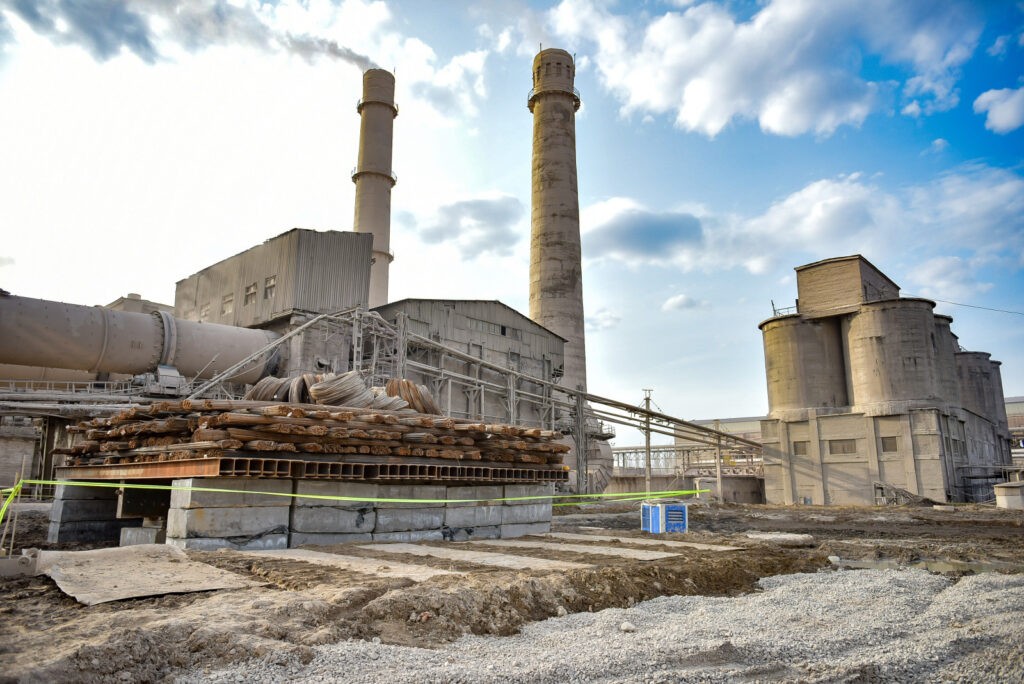
On March 20th, First Deputy Chairman of the Cabinet of Ministers of the Kyrgyz Republic, Adylbek Kasymaliev attended a ceremony to launch the construction of a new clinker line at the cement plant in Kant.

Kasymaliev reported that in 2023, the plant received $8.5 million from the Kyrgyz-Russian Development Fund for an export-oriented aerated concrete line. This year, thanks to a loan of $50 million from the Eurasian Development Bank and $20 million of internal investments, the construction of a new clinker line has begun.

Clinker is essential for cement production and its versatility allows it to be stored and transported globally without risk of degrading. With the completion of the new line, the production of high-quality clinker will total 800 thousand tons per year.

Located 20km east of Bishkek, Kyrgyzstan’s largest cement plant currently produces over 1.1 million tons of cement per year and since it cooperates with 45 companies – from manufacturers of bags for cement to end consumers – the plant’s activities have a widespread impact on Kyrgyzstan’s economy.