• KGS/USD = 0.01143 -0%
  • KZT/USD = 0.00192 -0%
  • TJS/USD = 0.10820 0.19%
  • UZS/USD = 0.00008 0%
  • TMT/USD = 0.28575 0%
  • KGS/USD = 0.01143 -0%
  • KZT/USD = 0.00192 -0%
  • TJS/USD = 0.10820 0.19%
  • UZS/USD = 0.00008 0%
  • TMT/USD = 0.28575 0%
  • KGS/USD = 0.01143 -0%
  • KZT/USD = 0.00192 -0%
  • TJS/USD = 0.10820 0.19%
  • UZS/USD = 0.00008 0%
  • TMT/USD = 0.28575 0%
  • KGS/USD = 0.01143 -0%
  • KZT/USD = 0.00192 -0%
  • TJS/USD = 0.10820 0.19%
  • UZS/USD = 0.00008 0%
  • TMT/USD = 0.28575 0%
  • KGS/USD = 0.01143 -0%
  • KZT/USD = 0.00192 -0%
  • TJS/USD = 0.10820 0.19%
  • UZS/USD = 0.00008 0%
  • TMT/USD = 0.28575 0%
  • KGS/USD = 0.01143 -0%
  • KZT/USD = 0.00192 -0%
  • TJS/USD = 0.10820 0.19%
  • UZS/USD = 0.00008 0%
  • TMT/USD = 0.28575 0%
  • KGS/USD = 0.01143 -0%
  • KZT/USD = 0.00192 -0%
  • TJS/USD = 0.10820 0.19%
  • UZS/USD = 0.00008 0%
  • TMT/USD = 0.28575 0%
  • KGS/USD = 0.01143 -0%
  • KZT/USD = 0.00192 -0%
  • TJS/USD = 0.10820 0.19%
  • UZS/USD = 0.00008 0%
  • TMT/USD = 0.28575 0%
13 December 2025

Uzbekistan Launches Construction of New Power Plants

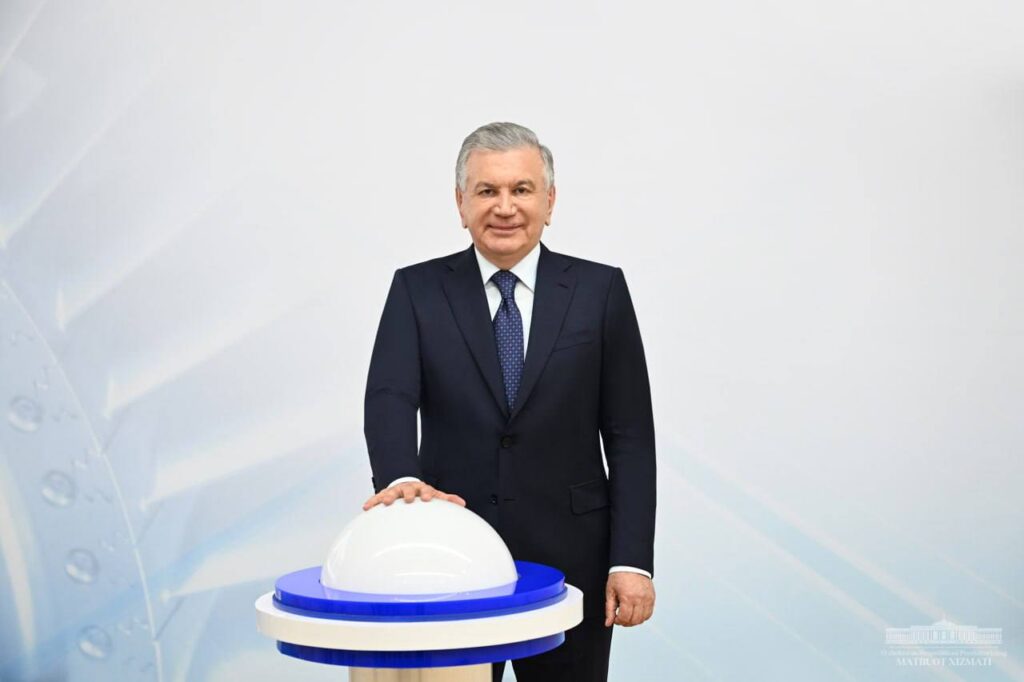
On March 25th, Uzbekistan President Shavkat Mirziyoyev pressed a symbolic button to launch the construction of new power plants in the country’s Namangan region.

Today, the Namangan region has 913 megawatts of generating capacity. Over the past three years, electricity consumption in the region has increased by 24 percent and to meet the ever-growing demand, three projects have been launched with a total capacity of 1,228 megawatts at a cost of $1.1 billion. The projects comprise a cascade of hydroelectric power plants and two solar power plants.

The Uzbekhydroenergo joint stock company will invest $434 million in a cascade of 6 hydroelectric power stations. With a total capacity of 228 megawatts, the plants will generate 1 billion kilowatt-hours of electricity per year, saving 310 million cubic meters of gas and providing electricity to 430 thousand households. The German company Hyper Partners GmbH will build a solar power plant with a capacity of 500 megawatts. The cost of the project is $350 million and the annual capacity, 1.095 billion kilowatt-hours. Another solar power plant will be built in cooperation with Tepelen Group Holding Limited from the United Arab Emirates. Its cost will also be $350 million and its capacity, 500 megawatts.

The connection of the above power plants to the power grid is scheduled for completion by the end of this year. Combined, the projects will provide the Namangan region with an annual generating capacity of 2141 megawatts and 7.8 billion kilowatt-hours of electricity. Since this is more than enough to cover the region’s need for 5.5 billion kilowatt-hours, any excess electricity will be sent to neighbouring Andijan and Fergana.

Demolitions in Bukhara Continue Despite UNESCO Demands for a Halt

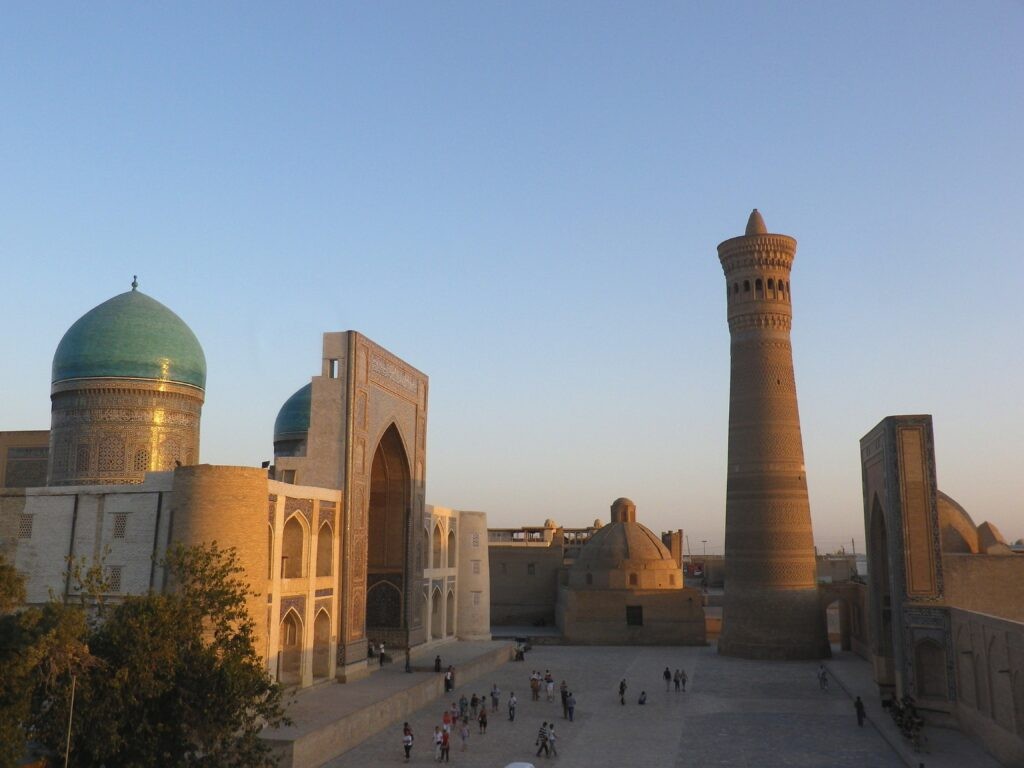
Demolitions in Bukhara’s buffer zone continue despite Uzbekistan’s promises to harmonize its plans with the United Nations Educational, Scientific and Cultural Organization (UNESCO). On February 26, demolition began on the 23,000-seat Bukhara Arena stadium near Bukhara’s historic centre. Ignoring the fact that construction of the Bokii Bukhoro tourist centre is under review by ICOMOS, the advisory body of UNESCO’s World Heritage Committee, local authorities are activating their plans.

UNESCO claims that on February 8, a letter was sent to the Uzbek government requesting clarification of plans for the project, but have received no response to date.

On March 2, Sara Noshadi, head UNESCO in Uzbekistan, issued the statement: “UNESCO is closely monitoring the state of conservation of the Bukhara World Heritage Site, including concerns expressed by civil society about potential construction plans in the buffer zone of the site. The World Heritage Centre has contacted the Uzbek authorities on this matter to request additional information and clarify the situation. The World Heritage Centre hopes that the authorities will fulfil their obligations under the World Heritage Convention and will not undertake any demolition/construction projects without prior notification and assessment by the World Heritage Committee, whose next session is in July 2024. UNESCO stands ready to provide expertise and assistance to safeguard the Outstanding Universal Value of the site.”

Alerte Héritage is a non-governmental organization for the protection of Central Asian architectural and cultural heritage headed by Boris Chukhovich.

A specialist in architecture and the protection of cultural heritage, Chukhovich actively advocates the protection of Bukhara’s historic centre. He strongly criticized the plan for the tourist centre, as “disastrous” and a “sham” and stated, “We appeal to UNESCO, which is responsible for World Heritage sites, and to the Uzbek government, which is responsible for the preservation of the country’s cultural heritage, as well as to all concerned institutions and individuals: the demolition must be stopped and further plans discussed and made available to the public as soon as possible!”

Bukhara joined UNESCO’s list of World Heritage Sites in 1993 and reflects the urban planning and architecture of the period of Uzbek rule by the Shibanid dynasty. The territory of the historical centre of Bukhara is 216 hectares, and its protected area, 339 hectares. The total area of the planned tourist centre is 32.6 hectares, all within the protected area of Bukhara’s historical centre which contains two objects of cultural heritage included in the National Register: the Sallakhkhana gate, restored in 2012, and the bust of Abu Ali ibn Sina, installed in 1980.

However, according to local officials, Bukhara’s infrastructure — much of which was built during the Soviet era — needs improvement to attract tourists. According to the requirements of the Convention for the Protection of the World Cultural and Natural Heritage of UNESCO, any major facilities planned for construction in Bukhara’s historical centre and its buffer zone must be pre-approved by UNESCO and, according to local legislation, by the Cultural Heritage Agency of Uzbekistan.

Assassination Plan by Criminal Group on Kyrgyz Leaders

The State Committee for National Security of Kyrgyzstan (CNSK) has reported that members of a transnational organized criminal group, on the instruction of former Kyrgyz oligarch Rayimbek Matraimov, were preparing an assassination attempt on the country’s top officials.

The committee stated that the standard operating activities of Kyrgyz national-security organs led to the discovery of five citizens of Azerbaijan who under the leadership of a transnational organized criminal group, had arrived in Kyrgyzstan in order to strengthen their criminal enterprise and spread the group’s ideology. However, according to the CNSK, the leader’s main task was to organize an assassination attempt on the country’s leadership in connection with the government’s policy of fighting organised crime. Kyrgyz law enforcement claims that the leaders of the international criminal community are dissatisfied with the actions of the Kyrgyz authorities — which force people involved in crime in the Commonwealth of Independent States (CIS) to abandon criminal plans.

“In this regard, on March 22, employees of the CNSK carried out operational and investigative measures, as a result of which all the above-mentioned persons were detained. Currently, investigative measures are being carried out to bring them to justice, according to the laws of Kyrgyzstan,” the CNSK said.

Law enforcement claims that the assassination attempt on the Kyrgyz leaders was organized by Raimbek Matraimov, former deputy head of Kyrgyz customs, and a known corrupt oligarch. After being placed on the wanted list, Matraimov fled to Azerbaijan, where he remains at present. The CNSK sent a letter to Baku requesting the extradition of Matraimov to Bishkek in the belief that the former official is related to the currently detained Azerbaijanis.

After the change of power in October 2020, Matraimov was accused of corruption in the customs service. The court ordered the former official to pay 2 billion som ($22.3 million) in damages and restitution back to the state. Matraimov pleaded guilty and paid the fines and penalties, in both cash and in the form of property. But, as Kyrgyz President Sadyr Japarov later noted, Matraimov continued to engage in “dark deeds” and was also accused of holding hostages.

“Now Matraimov has been put on a wanted list. All his property in Osh and throughout Kyrgyzstan will be confiscated. We will not leave him even one hundredth [of a hectare] of land. Even if he returns, he will no longer be the former ‘Rayim-million’ (the oligarch’s nickname). From now on, if he wants to live normally and feed himself, he should take a trading [stall] at the market…” said Kamchibek Tashiev, head of the CNSK at a meeting with workers at one of the markets previously owned by Matraimov.

Last year, when the authorities engaged in a high-profile struggle with the leaders of organized crime groups, many so-called ‘thieves in law’ began, one after another, to publicly renounce criminal activity and promised to live by the law. Conversely, some leaders of Kyrgyzstan’s criminal underworld were arrested and had their assets seized. One criminal mastermind when searched, was found to have jewellery worth over $1 billion in his possession.

EBRD Adds Kazakh Companies to Blacklist

Over the past six months, the European Bank for Reconstruction and Development (EBRD) has added two Kazakh enterprises to its blacklist of entities that the bank will not do business with.

One of the companies is Astana’s KS-Group LLP, which produces railway machinery and equipment. The company has been barred until April 2025 due to alleged fraudulent activities. The other enterprise, whose ban runs until December 2026, is Agidel-As LLP, which is also suspected of fraud. The company’s website mentions its involvement in large water-supply projects, construction of heating networks and other engineering projects.

KS-Group and Agidel-As are also blacklisted by the World Bank and Asian Development Bank.

Several other entities and individuals from Kazakhstan have been added to another of EBRD’s blacklists, entitled ‘Sanctions Based on Third-Party Findings’. Among them are the companies A3 Commerce and AltocomAsia, to which in addition to fraud, theft is also alleged.

Kazakh companies that appear on EBRD’s blacklists reflect the negative side of the business environment in the country. However, it does also indicate that the country’s law enforcement agencies are actively fighting fraud.

Kazakhstan’s SMEs Borrowed Almost U$17 Billion from Banks

Kazakhstan’s banks are actively supporting small and medium-sized businesses, according to the Kazakh National Bank, and as of February 1, 2024, entrepreneurs and small-business owners have been granted loans totaling 7.6 trillion tenge ($16.9 billion). Furthermore, the growth in lending over the last year amounted to 18.75%, or more than 1.2 trillion tenge ($2.2 billion).

The greatest demand for loans is observed among enterprises in the industrial sector, which received loans worth 2.21 trillion tenge ($4.9 billion), an increase of 10.5% annually, as well as in trade, where the volume of lending doubled to 2 trillion tenge ($4.4 billion). At the same time, the smallest loan volume was allocated to representatives of the communications sector – only 52.3 billion tenge ($160 million), which means a 21% decrease over the past year.

When analyzing statistics by region, one can note that the largest amounts of lending is to small and medium-sized enterprises (SMEs) from Almaty, which were allocated 3.8 trillion tenge ($8.4 billion), while Astana-based borrowers received 1.25 trillion tenge ($2.8 billion) in loans, an increase of 1%.

Earlier, Elena Bakhmutova, head of the Association of Financial Companies (AFC), noted that over the past eight years, lending to legal entities has increased by only 15%, while lending to individuals registered as sole proprietors increased more than five-fold to 1.6 trillion tenge ($3.6 billion) from 300 billion tenge ($665 million).

Uzbekistan’s IT Sector Sets Sights on United States

Uzbekistan’s revenues from IT outsourcing tripled last year to more than $300 million, after doubling every year for the previous four years. The Uzbek government believes that this rate of growth could soon bring Uzbekistan into the ranks of major IT outsourcing centers such as India, Belarus, Ukraine and Romania.

Recent reforms and investment in Uzbekistan have made the country a more attractive place to work not only for local IT professionals, but foreign workers as well. The number of companies in Uzbekistan established using foreign capital has grown seven and a half times in the last two years.

Uzbekistan is developing an IT ecosystem centered around the Tashkent IT Park. In addition to the Ministry of Digital Technologies, which is located there, 1,652 companies had become residents of the park by the end of 2023, almost half of them (767 companies) setting up over the past year. Residents of the IT park have significant tax benefits: Uzbekistan’s corporate tax ranges from four to 15%, but companies at the park are exempt from it. The IT sector now employs about 6,000 people.

The main technology export market for Uzbekistan today is the United States, which accounts for half of all IT exports. By the end of 2022, the U.S. had moved to 15th place from 20th for importing outsourcing services from Uzbekistan. Uzbek authorities aim to increase IT outsourcing to $5 billion, with the involvement of 300,000 people, as part of the country’s 2030 development strategy.