• KGS/USD = 0.01144 0%
  • KZT/USD = 0.00212 0%
  • TJS/USD = 0.10456 0.19%
  • UZS/USD = 0.00008 0%
  • TMT/USD = 0.28490 0%
  • KGS/USD = 0.01144 0%
  • KZT/USD = 0.00212 0%
  • TJS/USD = 0.10456 0.19%
  • UZS/USD = 0.00008 0%
  • TMT/USD = 0.28490 0%
  • KGS/USD = 0.01144 0%
  • KZT/USD = 0.00212 0%
  • TJS/USD = 0.10456 0.19%
  • UZS/USD = 0.00008 0%
  • TMT/USD = 0.28490 0%
  • KGS/USD = 0.01144 0%
  • KZT/USD = 0.00212 0%
  • TJS/USD = 0.10456 0.19%
  • UZS/USD = 0.00008 0%
  • TMT/USD = 0.28490 0%
  • KGS/USD = 0.01144 0%
  • KZT/USD = 0.00212 0%
  • TJS/USD = 0.10456 0.19%
  • UZS/USD = 0.00008 0%
  • TMT/USD = 0.28490 0%
  • KGS/USD = 0.01144 0%
  • KZT/USD = 0.00212 0%
  • TJS/USD = 0.10456 0.19%
  • UZS/USD = 0.00008 0%
  • TMT/USD = 0.28490 0%
  • KGS/USD = 0.01144 0%
  • KZT/USD = 0.00212 0%
  • TJS/USD = 0.10456 0.19%
  • UZS/USD = 0.00008 0%
  • TMT/USD = 0.28490 0%
  • KGS/USD = 0.01144 0%
  • KZT/USD = 0.00212 0%
  • TJS/USD = 0.10456 0.19%
  • UZS/USD = 0.00008 0%
  • TMT/USD = 0.28490 0%

Uzbekistan and Turkey Set $5 Billion Trade Target at Strategic Council Meeting in Ankara

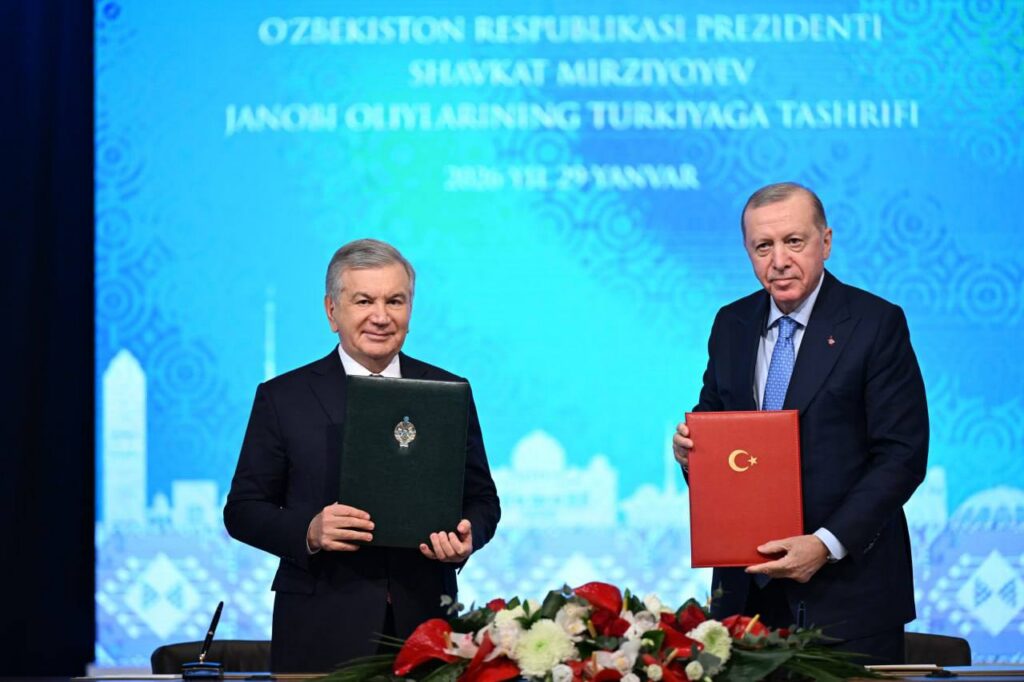
At the invitation of Turkish President Recep Tayyip Erdoğan, President of Uzbekistan Shavkat Mirziyoyev paid an official visit to Turkey on January 29, marking a new phase in the deepening partnership between the two nations. The visit was centered around the fourth meeting of the High-Level Strategic Cooperation Council, co-chaired by the two leaders in Ankara.

Discussions focused on strengthening the comprehensive strategic partnership between Uzbekistan and Turkey, with an emphasis on political dialogue, trade and economic cooperation, transport connectivity, and cultural and humanitarian exchanges. The two presidents also exchanged views on regional and global developments, underscoring the growing coordination between Tashkent and Ankara on international platforms.

Both sides highlighted the steady growth in bilateral trade, the rising number of joint ventures, and increased direct flights between the two countries. Regular cultural exchanges and growing people-to-people contacts were cited as further evidence of the strengthening relationship.

Key areas for future cooperation include joint projects in industry, agriculture, and social protection, as well as enhanced collaboration in defense, security, and combating cybercrime.

The timing of the Strategic Council meeting was described as symbolic, taking place on the eve of Ramadan and ahead of the 30th anniversary of the Treaty on Eternal Friendship and Cooperation between Uzbekistan and Turkey. The two sides expressed satisfaction with the growing political dialogue and the convergence of their positions on many international issues.

The presidents reaffirmed their commitment to mutual support in international and regional organizations, including the United Nations, the Organization of Turkic States, the Organization of Islamic Cooperation, and the Economic Cooperation Organization. Inter-parliamentary cooperation has also intensified, particularly through parliamentary friendship groups.

The leaders set an ambitious goal to increase bilateral trade turnover to $5 billion in the coming years. Expanding the list of goods covered under the Preferential Trade Agreement will be a key step toward achieving that target. Ahead of the visit, new priority areas for industrial cooperation were identified and will be implemented under a separate program.

Significant potential was noted for interregional cooperation, with delegations from all regions of Uzbekistan expected to visit Türkiye by the end of the year to develop joint projects. Cooperation will also be deepened in agriculture, horticulture, healthcare, and medical tourism.

The two countries agreed to intensify cultural and tourism ties through joint initiatives such as theater festivals, cultural weeks, historical film productions, and heritage restoration projects. In the education sector, the fourth Rectors’ Forum will be held in Bukhara this spring.

Following the Strategic Council meeting, Mirziyoyev and Erdoğan signed a Joint Statement and adopted a framework for cooperation within the comprehensive strategic partnership. A wide-ranging package of bilateral agreements was also signed, covering healthcare, education, military medicine, economic and financial cooperation, mining, transport corridors, special economic zones, nuclear safety, migration, religious affairs, foreign ministry cooperation for 2026-2027, light industry, and cultural collaboration.

At the conclusion of the visit, Mirziyoyev extended an official invitation to Erdoğan to visit Uzbekistan, reflecting the continued momentum and growing trust in bilateral relations.

Kyrgyzstan Suspends Private Driving Schools in Bid to Improve Road Safety

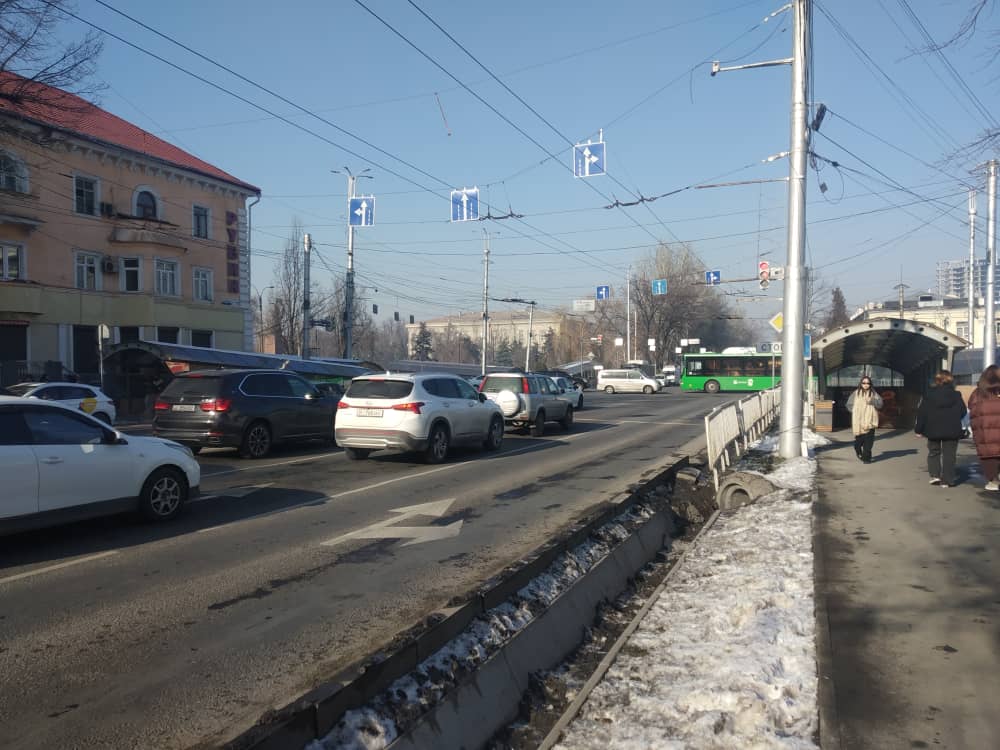
Kyrgyzstan has temporarily suspended the operations of all private driving schools as part of a sweeping reform aimed at improving driver education and road safety.

On January 29, President Sadyr Japarov signed a decree introducing a trial period, effective until August 30, 2026, during which driver training will be conducted exclusively through state-run driving schools. 

The reform also mandates a significant extension of the training period from the current 2.5 months to 10 months. Authorities say the new measures are designed to reduce traffic accidents and eliminate corruption in the issuance of driver’s licenses.

As of 2025, Kyrgyzstan had 340 driving schools, including 74 state-run institutions and 266 privately operated ones. Officials cite systemic issues in the private sector, including substandard instruction, widespread corruption, and the illegal sale of licenses.

Daiyrbek Orunbekov, Head of the Information Policy Service under the Presidential Administration, addressed public concerns over the extended training period in a Facebook post on January 29. 

He emphasized that the 10-month program is intended solely to improve driver competence and reduce accidents.

“A driver who has acquired sufficient knowledge poses no danger to themselves, passengers, or other road users,” Orunbekov wrote.

Under the new model, instruction will include both theoretical and practical training held two to three times per week, with each session lasting two to three hours. Some classes may be offered online. The curriculum will also cover psychological preparation and road ethics.

In response to critics who argue that the current 2.5-month course is adequate, Orunbekov said that meaningful learning cannot occur in such a short timeframe.

He cited international practices, noting that in many developed countries, driver training takes significantly longer. In Finland, the process can last up to a year and includes a probationary license period; in Germany, it ranges from six to twelve months; in Sweden and Norway, up to a year; and in the United Kingdom, Canada, the U.S., Australia, and New Zealand, it can take up to two years.

The reform follows concerning national road safety data. In 2025 alone, Kyrgyzstan recorded 8,456 traffic accidents, resulting in 900 deaths and 12,169 injuries. Over the past decade, more than 75,000 accidents have claimed over 9,000 lives.

According to Orunbekov, many current drivers lack even basic knowledge of traffic regulations and, in some cases, cannot recall where they were trained. He described this as a lingering consequence of a flawed and often corrupt driver education system.

Why Workers Are Leaving the Çalık Enerji Power Plant Construction Site in Turkmenistan

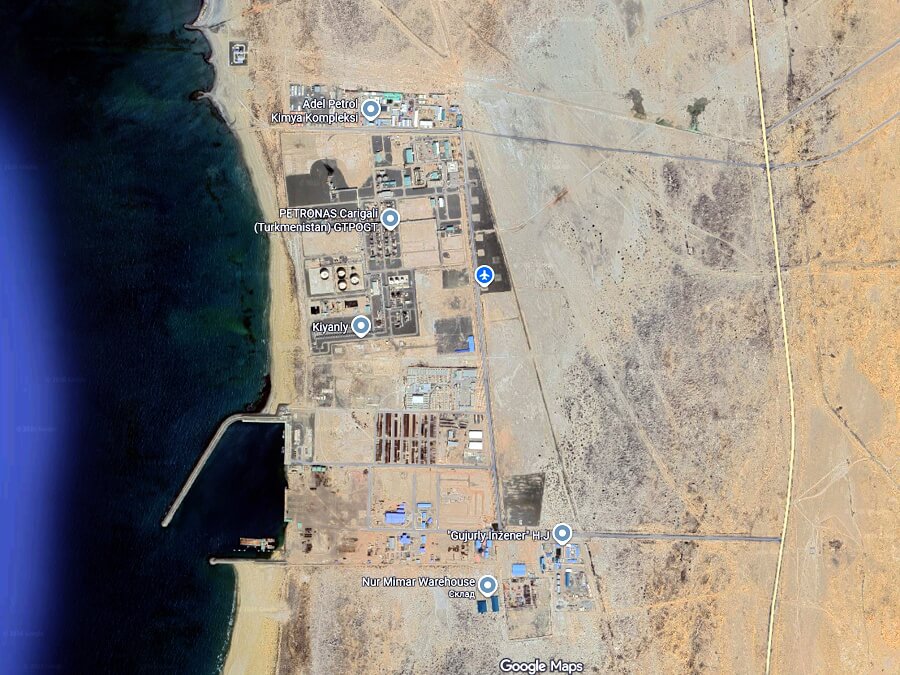
One of Turkmenistan’s largest combined-cycle power plants is currently under construction on the Caspian coast. Despite offering record-high wages by local standards, the site is experiencing persistent staff turnover.

The project is being led by the Turkish company Çalık Enerji, which is building a 1,574 MW combined-cycle gas turbine (CCGT) power plant in the village of Kiyanly in Turkmenistan’s Balkan region. While the workforce is largely made up of local residents, retaining staff has proven difficult.

According to former workers, even unskilled laborers can earn up to $2,856 per month, an exceptionally high salary for the region. This has attracted a steady stream of job seekers. However, many employees say the pay does not adequately compensate for the harsh realities of working on-site.

The primary reason cited for resignations is the extreme natural environment. The construction site lies between the Caspian Sea and an open expanse of steppe, where strong winds are a near-constant presence. Conditions worsen in winter, when workers endure eight-hour shifts outdoors in cold and windy weather, conditions that many find intolerable beyond a few months.

In addition to environmental challenges, workers point to strained relations with site management and internal conflicts among staff. They describe a lack of mutual trust between workers and middle managers, as well as growing tensions within crews.

Some have also reported interethnic clashes, particularly between Turkmen and Azerbaijani workers, despite both groups being Turkmenistani citizens residing in the same region. These disputes have occasionally escalated into physical altercations, further contributing to resignations.

Çalık Enerji signed a contract with the state-owned utility Turkmenenergo to carry out the Kiyanly project. The power plant will feature two units equipped with 9F.04 gas turbines, each with a capacity of 288 MW, and a D12 steam turbine produced by GE Vernova.

Kyrgyzstan Seeks End to Extra Transit Fees for Its Citizens Crossing Uzbekistan

Kyrgyzstan has formally requested that Uzbekistan eliminate additional fees imposed on Kyrgyz citizens transiting through Uzbek territory, including charges for vehicle insurance and window tinting.

The matter was raised during a session of the Jogorku Kenesh (parliament), where Deputy Foreign Minister Almaz Imangaziev confirmed that negotiations with Uzbek authorities are ongoing. According to Imangaziev, the request is currently under internal review in Uzbekistan.

“When Kyrgyz citizens transit through Uzbekistan, mainly en route to the southern regions of our country, they are required to purchase car insurance and pay additional fees if their windows are tinted. On our side, no such requirement exists,” said lawmaker Dastan Bekeshev, who called on the Foreign Ministry to advocate for the removal of these rules.

Imangaziev affirmed that Bishkek has already submitted a formal request to Tashkent. He added that if Uzbekistan fails to eliminate the fees, Kyrgyzstan may consider imposing reciprocal measures on Uzbek citizens transiting through Kyrgyz territory.

The development comes amid broader regional concerns over trade and transit barriers. On January 17, Uzbek Deputy Prime Minister Jamshid Khodjaev addressed similar frustrations during a meeting in Tashkent with entrepreneurs, ambassadors, and government officials. He pointed to challenges faced by Uzbek exporters to Tajikistan, citing excessive procedures and additional customs fees that reportedly raise the price of Uzbek goods by approximately 15%, undermining their competitiveness.

Khodjaev warned that unless such restrictions are lifted, Uzbekistan may introduce symmetrical measures in response.

Tax Reform in Kazakhstan Could Lead to Drug Shortages

Kazakhstan’s new tax policy has triggered concerns over potential disruptions in the supply of medicines and medical devices. Industry leaders warn that complexities in administering value-added tax (VAT), along with legal inconsistencies in the updated Tax Code, could destabilize the country’s pharmaceutical market.

Ruslan Sultanov, chairman of Kazakhstan’s Association of Pharmaceutical and Medical Product Manufacturers, raised concerns during an online meeting with government and business representatives. He said the changes have already led distributors to refuse purchases of several essential medicines.

Last year, Kazakhstan adopted a new Tax Code that increased the VAT rate from 12% to 16%. It also introduced zero and reduced VAT rates for specific sectors. During parliamentary discussions, lawmakers proposed exempting essential medicines from VAT and reducing the tax burden on medical institutions. 

Ultimately, authorities agreed to fully exempt more than 3,000 medicines purchased under the Guaranteed Volume of Free Medical Care (GVFMC) and Compulsory Social Health Insurance (CSHI) programs from VAT. However, Sultanov said these exemptions have not been sufficient to stabilize the market.

According to him, the pharmaceutical sector is facing unprecedented administrative pressure. One of the most critical problems is the inconsistent taxation of medical devices procured under the GVFMC and CSHI frameworks. While medical services are completely exempt from VAT, a 5% VAT rate is still applied to medical devices.

“As a result, hospitals are in a situation where they cannot offset the tax when purchasing medical equipment. After factoring in administrative costs, companies are losing 5-7%. This affects both domestic and foreign manufacturers,” Sultanov explained.

The lack of clear guidance from government agencies has further complicated matters. Socially significant medicines, which were previously taxed at 5%, are now VAT-exempt but ambiguity around the new rules has led to widespread reluctance among distributors to place orders.

“The confusion has created a bottleneck. For example, paracetamol is physically available in warehouses, but its movement is being blocked. Without timely clarification, we will face a shortage,” Sultanov warned.

To resolve the issue, he proposed eliminating the fragmented VAT structure currently applied to the pharmaceutical sector.

Sultanov also highlighted the risks associated with the under-declaration of customs values for imported drugs. He stated that customs officials continue to rely on outdated price data from a year ago, ignoring current market rates. This, combined with delays in approving maximum retail prices by the Ministry of Health, threatens the viability of long-term drug supply contracts signed before January 2026, particularly those involving medicines not produced domestically.

His concerns are echoed by pharmacy industry leaders. Talgat Omarov, Chairman of the Kazakhstan Association of Independent Pharmacies, confirmed that the organization has submitted formal appeals to President Kassym-Jomart Tokayev and Senate leadership, calling for the complete exemption of the pharmaceutical sector from VAT, not just medications supplied under state programs.

“Every day, customers come into pharmacies, see new price tags, complain, and leave. We hear this negativity constantly. Medicines are socially significant goods, and applying additional taxes in the current climate is dangerous,” Omarov said.

To cope with increased taxes and rising labor costs, pharmacies may be forced to raise markups to 30%, he warned. This would make medicines unaffordable for many citizens, reduce sales volumes, and potentially lead to mass closures of pharmacies.

Timur Zharkenov, Deputy Chairman of the Board of the National Chamber of Entrepreneurs of Kazakhstan, also called for immediate government intervention.

“We must act urgently there is no time left. Several issues require rapid solutions, and in the longer term, the tax structure for the healthcare sector must be reviewed within the framework of the new Tax Code,” he stated during the meeting.

As The Times of Central Asia previously reported, Kazakhstan has already experienced drug shortages and sharp price increases since the fall of 2025. 

Kazakhstan Expects to Double Influx of Foreign Gambling Tourists

Kazakhstan’s Ministry of Tourism and Sports expects the number of foreign gambling tourists to double following the planned opening of new casinos in four regions of the country.

Gambling tourists are foreign nationals who travel specifically to visit casinos and other gambling establishments. Currently, gambling is legally permitted only in two designated zones: the city of Konaev in the Almaty region and the Shchuchinsk-Burabay resort area in the Akmola Region. These facilities are open to both Kazakh and foreign citizens.

The government is considering a significant expansion of the gambling sector’s footprint. Plans are underway to open new casinos that will be accessible exclusively to foreign tourists.

Deputy Minister of Tourism and Sports Baurzhan Rapikov said the proposed locations for the new facilities include the East Kazakhstan, Almaty, Mangistau, and Zhetysu regions. He added that the expected economic impact includes about 500 jobs per casino, annual tax revenues of $4 million to $8 million, and an increase in gambling tourists from 100,000 to 200,000 per year.

In parallel, Kazakhstan is prioritizing the digitalization of its tourism sector. Beginning in February, the ministry will launch the development of a unified digital tourism ecosystem based on the Kazakhstan.Travel platform. 

The upgraded system will feature an intelligent, AI-powered route planner, online booking tools, and optimal travel date suggestions. A new feature, KazTuristBot, will provide personalized recommendations and 24/7 support for travelers.

For businesses, the platform will offer a showcase of tourism products, demand analytics, and digital tools for accessing government support. Authorities will also gain access to real-time data on tourist flows, enabling targeted infrastructure development in high-demand regions.

As previously reported by The Times of Central Asia, Kazakhstan emerged in 2025 as one of the fastest-growing destinations in Central Asia for South Korean tourists. Data from the Agoda platform showed a 295% increase in travel interest between January and October.