• KGS/USD = 0.01144 0%
  • KZT/USD = 0.00194 0%
  • TJS/USD = 0.10879 -0.18%
  • UZS/USD = 0.00008 0%
  • TMT/USD = 0.28490 0%
  • KGS/USD = 0.01144 0%
  • KZT/USD = 0.00194 0%
  • TJS/USD = 0.10879 -0.18%
  • UZS/USD = 0.00008 0%
  • TMT/USD = 0.28490 0%
  • KGS/USD = 0.01144 0%
  • KZT/USD = 0.00194 0%
  • TJS/USD = 0.10879 -0.18%
  • UZS/USD = 0.00008 0%
  • TMT/USD = 0.28490 0%
  • KGS/USD = 0.01144 0%
  • KZT/USD = 0.00194 0%
  • TJS/USD = 0.10879 -0.18%
  • UZS/USD = 0.00008 0%
  • TMT/USD = 0.28490 0%
  • KGS/USD = 0.01144 0%
  • KZT/USD = 0.00194 0%
  • TJS/USD = 0.10879 -0.18%
  • UZS/USD = 0.00008 0%
  • TMT/USD = 0.28490 0%
  • KGS/USD = 0.01144 0%
  • KZT/USD = 0.00194 0%
  • TJS/USD = 0.10879 -0.18%
  • UZS/USD = 0.00008 0%
  • TMT/USD = 0.28490 0%
  • KGS/USD = 0.01144 0%
  • KZT/USD = 0.00194 0%
  • TJS/USD = 0.10879 -0.18%
  • UZS/USD = 0.00008 0%
  • TMT/USD = 0.28490 0%
  • KGS/USD = 0.01144 0%
  • KZT/USD = 0.00194 0%
  • TJS/USD = 0.10879 -0.18%
  • UZS/USD = 0.00008 0%
  • TMT/USD = 0.28490 0%
15 December 2025

Kazakhstan Becomes Most Attractive Country for Migrants From Uzbekistan

According to the Statistics Agency under the President of Uzbekistan, 17,336 people emigrated from the country by the end of 2023, with women making up 52.3% of the total. Over 80% of those who left were of working age. This figure almost doubled compared to 2022, when 8,790 people left the country.

The most popular destination for migrants from Uzbekistan in 2023 was Kazakhstan, with 81.1% (14,000) choosing this neighboring country. Russia (15.4% or 2,600 people) and South Korea (0.6% or 107 people) were the second and third most popular choices, respectively.

In contrast, Uzbekistan saw an influx of 2,955 immigrants in 2023, mostly from Russia (39.8%) and Kazakhstan (24.6%). Others moved from Tajikistan (9.7%), Kyrgyzstan (5.1%), Turkmenistan (2.1%), and other countries (18.7%).

Labor migrants constituted the majority of those leaving Uzbekistan. The Agency for External Labor Migration of Uzbekistan reported a sharp increase in the number of citizens employed through organized recruitment in other countries, totaling 38,400 in 2023. Russia was the leading destination for Uzbek workers (29,200), followed by South Korea (4,900), Great Britain (1,900), Kazakhstan (1,300), Germany (477), and Turkey (277). A small number of Uzbeks also found employment in Romania, Bulgaria, Japan, Lithuania, Poland, the UAE, and Latvia.

However, these official statistics do not account for the significant number of Uzbeks working abroad illegally. Specialized Uzbek agencies estimate that over 2 million Uzbeks live and work abroad permanently, with over 60% working in the Russian Federation.

Almaty is the Most Expensive City in Central Asia

Almaty has been ranked as the most expensive city in Central Asia according to the “cost of living” index regularly published by the Numbeo service. In terms of goods and services prices, including rent, food, and catering, Almaty has surpassed Central Asian capitals such as Astana, Tashkent, and Bishkek.

According to the data, a family of four in Almaty spends approximately $2,157 per month not including rent, while an individual can live for an average of $598.50 excluding housing costs. The city also has the most expensive restaurants in Central Asia. Most Almaty residents spend their money not on high cuisine, however, but on real estate rent, with an average of one-third of the family budget being spent on renting an apartment.

However, when compared across Asia, Almaty ranks 40th out of 86 cities, positioned between Turkish Antalya and Chinese Hangzhou. Astana, the capital of Kazakhstan, ranks 49th, making it cheaper than Bali, but more expensive than Baku.

The most expensive Asian cities for the cost of living are Singapore, Hong Kong, and Tel Aviv, whilst globally, Zurich and Singapore are considered the most expensive places to live.

First Regular Flights From Beijing Arrive In Bishkek

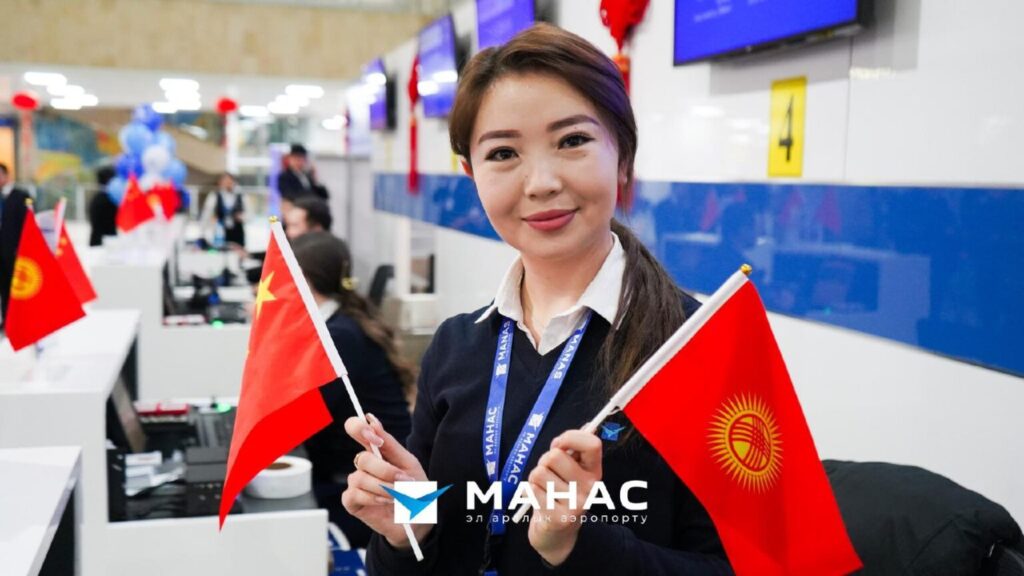
Manas International Airport in Bishkek has announced that new regular flights between Bishkek and Beijing are to be carried out three times a week.

The first flight from Beijing to Bishkek carried 90 passengers, while there were 150 people on the return flight. Direct flights from Bishkek to Chinese cities are operated by companies from Russia, Kazakhstan and China. The Chinese airline China Southern Airlines carries passengers from Beijing.

The Kyrgyz government hopes that an increase in the number of flights from China will bring new economic opportunities and an increase in trade turnover between the two countries. Tourist flow from China, which had practically stopped since the coronavirus pandemic, is expected to restart.

The first large group of tourists from China arrived in Bishkek in April last year on a flight from Urumqi. Earlier, representatives of the Kyrgyz tourism industry held a meeting with Chinese tour companies and representatives of the Chinese ministry of economy, where a simplified electronic visa system for Chinese tourists was introduced.

EU To Simplify Visa Regime For Kazakhstanis

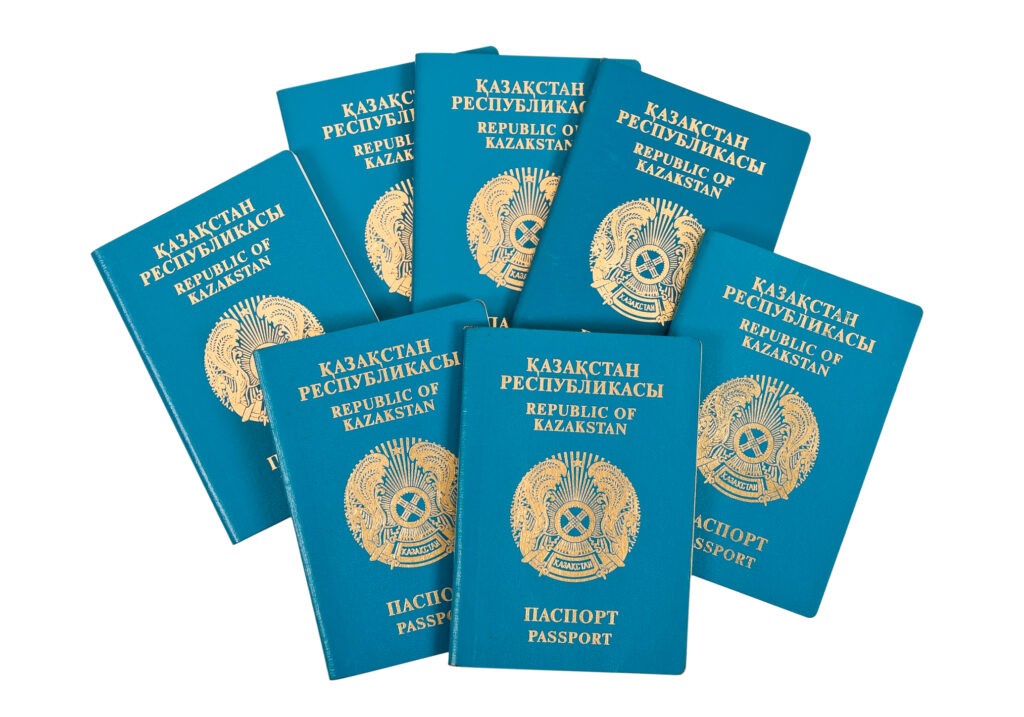
Citizens of Kazakhstan can currently travel to 34 countries without requiring a visa, and it seems the power of the Kazakhstani passport may be set to increase further still. At the end of last week Kazakhstan’s deputy minister of foreign affairs, Alibek Bakayev, held a second round of talks with the head of the EU Delegation to Kazakhstan, Kestutis Jankauskas, on the issue of EU visas.

The introduction of a visa-free regime with the EU is not currently being discussed. However, the EU Schengen-area visa regime is being improved in the following areas:
– introduction of a single list of documents required for a visa application;
– a reduction in consular fees;
– a shortening of the waiting period for applications;
– increasing the validity period for multiple-entry visas.

In 2024 citizens of Kazakhstan can visit 34 countries without obtaining a visa from a foreign consulate. These are: Albania, Andorra, Argentina, Armenia, Azerbaijan, Barbados, Belarus, Brazil, China, Colombia, Ecuador, the Republic of Georgia, Haiti, Hong Kong, Iran, South Korea, Kyrgyzstan, Malaysia, Maldives, Moldova, Mongolia, Nicaragua, Oman, UAE, Philippines, Qatar, Russia, St. Vincent & Grenadines, Serbia, Tajikistan, Thailand, Turkey, Ukraine, and Uzbekistan.

There are also several states where one can get a “visa upon arrival” stamp immediately upon entry. These states are Zambia, Indonesia (for 30 days), Mauritius, Namibia, and the Seychelles. However, that list will shrink in the spring of 2024: Kazakhstan’s temporary visa-free regime with Thailand end on February 29.

According to the Global Passport Power Ranking 2024 by Passport Index, Kazakhstan’s passport ranks 56th in the world in terms of freedom of movement bestowed upon its holder.

Platform Supporting Female Entrepreneurs Launches In Uzbekistan

An online platform called Coozin has been introduced in Uzbekistan, with the goal of championing female entrepreneurs.

Women can use Coozin to learn the fundamentals of business, sell their goods and services, network with other entrepreneurs, and find inspiration. The platform will also help Uzbekistan to achieve the UN’s sustainable development goals.

The Coozin initiative is the first in Uzbekistan to enable women to independently promote their businesses. It was coordinated with the help of the OSCE, IT-Park, and the Business Women’s Association of Uzbekistan, as well as the the Coca-Cola Foundation.

Mirziyoyev Fortifies China-Uzbekistan Relations for Economic and Green Transformation

Ahead of his trip to Beijing, in his article for the People’s Daily, Uzbekistan’s President Shavkat Mirziyoyev poured lavish praise on China. Not only did Mirziyoyev say he admired Chinese President Xi Jinping’s global development, security and civilization initiatives as efforts to significantly address global challenges and accelerate the transition to a more sustainable and inclusive future, he also aligned Tashkent’s vision of regional and international security with Beijing.

Mirziyoyev has paid several visits to China, underscoring Beijing’s growing importance in his economic and development agenda. His objective to strengthen “multifaceted” relations with Beijing further expounds the fact that China will be a centerpiece of his foreign and regional policy and ambition for a green transition.

During his October’s trip to Beijing to attend the third Belt and Road Forum, Mirziyoyev struck a complimentary tone, expressing gratitude to Xi for the invitation, stressed that the number of Chinese companies investing in Uzbekistan had increased fivefold and said that he expected bilateral trade to exceed $10 billion by the end of 2023.

Mirziyoyev’s campaign has worked, given that Chinese enterprises are the second-largest investors in the country, China accounts for more than one-fifth of Uzbekistan’s foreign trade (21.3%) and bilateral trade in 2023 has far exceeded expectations, reaching $14 billion. Once Mirziyoyev signaled that China as one of his top foreign policy priorities, it helped Tashkent sign several agreements with Beijing.

In his latest visit, Mirziyoyev called for international unity on the “Green Silk Road,” which was first proposed by Xi in Uzbekistan back in 2016, and fully supported the green initiative’s potential to shape the agenda for a “common green future.” Construction of a 400-megawatt solar photovoltaic power plant by PowerChina and Mirziyoyev’s meetings with Chinese energy companies in October indicated that he was impressed by their ability to deploy modern engineering solutions in electricity transmission networks and to implement solar, wind and hybrid power projects.

Just last month, Mirziyoyev praised his strategic partner for completing projects at an “astonishingly” fast pace, and he continues to hail China’s progress on large scale joint investments projects which have helped Tashkent make important strides in developing green energy and their endeavor to create 27 gigawatts of renewable energy generation by 2030.

While cooperation with the “undisputed global leader” in renewable energy would solidify Tashkent’s energy security and environmental sustainability, the first hydrogen plant in the country and region will also save some 33 million cubic meters of gas every year, decarbonize heavy industries, and add a new engine of growth, raising Uzbekistan’s international profile.

The two nations are promoting active cooperation on infrastructure, too. The Chinese-built Angren-Pap railway line, the China-Kyrgyzstan-Uzbekistan transport corridor, and the four routes of the China-Central Asia natural gas pipeline that pass through Uzbekistan denote a region-wide consensus on developing intra- and inter-regional infrastructure to push trade, enhance connectivity, and bring prosperity.

Once finalized, the China-Kyrgyzstan-Uzbekistan railway project will give Central Asia the shortest and most accessible passage to global markets, bringing billions of dollars of investments into the region. Reconstruction projects spearheaded by China, such as the A380 highway, have buttressed Uzbekistan’s transportation infrastructure, ensuring the timely delivery of goods, whilst further cooperation on logistics is also making progress.

As per Uzbekistan’s Ministry of Transport, the electric transport network in the country has also been boosted after an agreement was reached in December to jointly produce 70 centralized and 50,000 non-centralized electric vehicle (EV) charging stations by 2033, providing energy to 700,000 vehicles. Some 2,500 of these units are expected to be installed by the end of 2024. Leading Chinese tech firms such as Huawei, BYD and ZTE are already operating in Uzbekistan, and Mirziyoyev intends to foster industrial cooperation with these giants to transform the country into a technology hub through the establishment of high-tech industries and technology parks.

Cooperation in the field of education is another area which has piqued Uzbekistan’s interest. Through the construction of educational infrastructure, technical training and scholarships, China has expanded its influence and instilled interest, especially among Generation Z, in learning Chinese. Confucius Institutes are operating in Samarkand and Tashkent, and Mirziyoyev wants to expand the teaching of the Chinese language, which in turn would help him train a workforce capable of applying China’s development practices.

Over the past three decades, the China-Uzbekistan strategic partnership has grown substantially. High-level political exchanges in the last couple of years have, as per Uzbekistan’s estimates, translated into agreements and trade contracts worth $40 billion as Chinese investors continue to fund projects in green energy, oil and gas, telecommunications, and the automotive industry, among others.

Tashkent’s support of Beijing’s efforts to “implement the reunification of Taiwan” and backing for Xi’s initiative for an “all-weather comprehensive strategic partnership” signal that Mirziyoyev is extremely keen to curry favor with China in multiple areas. It is hoped within Uzbekistan that this will kick-start construction of the China-Kyrgyzstan-Uzbekistan railway project, something which Tashkent has since long been pushing for.

Azhar Azam is a geopolitical analyst.