• KGS/USD = 0.01143 -0%
  • KZT/USD = 0.00192 -0%
  • TJS/USD = 0.10820 0.19%
  • UZS/USD = 0.00008 0%
  • TMT/USD = 0.28575 0%
  • KGS/USD = 0.01143 -0%
  • KZT/USD = 0.00192 -0%
  • TJS/USD = 0.10820 0.19%
  • UZS/USD = 0.00008 0%
  • TMT/USD = 0.28575 0%
  • KGS/USD = 0.01143 -0%
  • KZT/USD = 0.00192 -0%
  • TJS/USD = 0.10820 0.19%
  • UZS/USD = 0.00008 0%
  • TMT/USD = 0.28575 0%
  • KGS/USD = 0.01143 -0%
  • KZT/USD = 0.00192 -0%
  • TJS/USD = 0.10820 0.19%
  • UZS/USD = 0.00008 0%
  • TMT/USD = 0.28575 0%
  • KGS/USD = 0.01143 -0%
  • KZT/USD = 0.00192 -0%
  • TJS/USD = 0.10820 0.19%
  • UZS/USD = 0.00008 0%
  • TMT/USD = 0.28575 0%
  • KGS/USD = 0.01143 -0%
  • KZT/USD = 0.00192 -0%
  • TJS/USD = 0.10820 0.19%
  • UZS/USD = 0.00008 0%
  • TMT/USD = 0.28575 0%
  • KGS/USD = 0.01143 -0%
  • KZT/USD = 0.00192 -0%
  • TJS/USD = 0.10820 0.19%
  • UZS/USD = 0.00008 0%
  • TMT/USD = 0.28575 0%
  • KGS/USD = 0.01143 -0%
  • KZT/USD = 0.00192 -0%
  • TJS/USD = 0.10820 0.19%
  • UZS/USD = 0.00008 0%
  • TMT/USD = 0.28575 0%
14 December 2025

Tajikistan Elevates Cultural Presence with Permanent Delegation at UNESCO

In a significant move, Tajikistan has taken a stride towards enhancing its international cultural representation by establishing a Permanent Delegation to UNESCO. President Emomali Rahmon, on January 12th, issued a decree formalizing the establishment of this delegation. The decision is expected to bolster Tajikistan’s standing in the global community, facilitating active engagement with UNESCO, and providing a platform to advocate for and safeguard the nation’s cultural heritage on the international stage.

Tajikistan has already made notable contributions to UNESCO’s recognition of cultural treasures. In December, the traditional art of text decoration known as “Tazhib” and the celebration of “Sada” secured places on the Representative List of the Intangible Cultural Heritage of Humanity. Additionally, the craft of producing atlas and adras, as well as cultural elements like chakan, the musical genre “falak,” and the observance of “Yaldo night” have earned spots on UNESCO’s list.

Given the shared cultural heritage of Central Asian nations, certain elements transcend national borders, embodying the essence of regional traditions. For instance, Tajikistan, along with other Central Asian countries, shares intangible cultural heritage items like the Navruz holiday, shashmakom music, silk weaving techniques, and the art of making the traditional dish, plov.

Tajikistan is actively pursuing UNESCO recognition for the ancient farmers’ festival, Mehrgon, as part of its intangible cultural heritage. Mehrgon, deeply rooted in Tajik history, marks the culmination of the harvest season. Its inclusion in UNESCO’s list would represent an acknowledgment of Tajikistan’s distinctive cultural traditions.

Moreover, Tajikistan has submitted a proposal to inscribe twelve sites of ancient Khuttal on the UNESCO World Cultural Heritage Register. This collection of sites includes cities, palaces, fortresses, mausoleums, and monasteries, collectively bearing witness to the profound history of the region. If accepted, the inclusion of these sites on the World Cultural Heritage List would contribute to their preservation for generations to come.

Citizens Unite for Environmental Clean-up

In a demonstration of communal commitment to the environment, over 100 citizens of Turkmenistan engaged in a clean-up initiative organized by the Malaysian oil and gas giant, Petronas. The event on Kiyanly beach, aimed at stimulating environmentally responsible behaviour, saw participants cleanse the shoreline of litter.

Petronas regularly stages such events as part of its broader environmental policy, with employees of the company and citizens coming together, fostering a sense of shared responsibility. It is hoped that such initiatives can become a catalyst for lasting change.

German Company to Invest €100 Million in Plastic Production in Kazakhstan

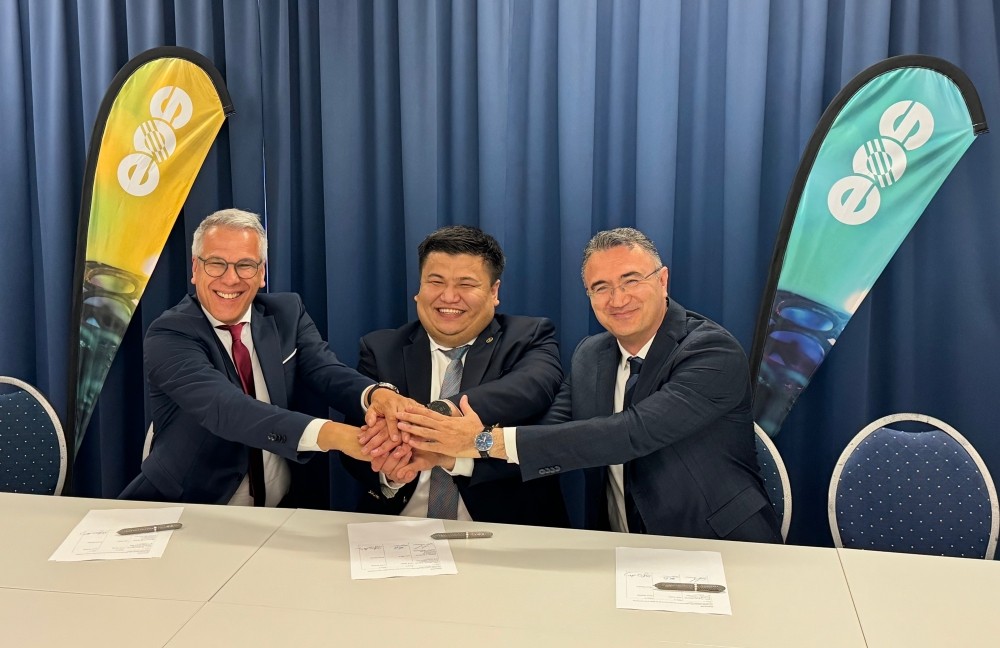
On January 12th in Berlin, a meeting took place between the Ambassador of Kazakhstan to Germany, Nurlan Onzhanov, the Official Representative of the National Company KAZAKH INVEST, Saken Olzhabayev, and the owner of WIS Kunststoffe GmbH, Sigmar Roemhild. Therein, the Kazakh and German sides discussed plans for the construction of a plastic production plant in Kazakhstan’s Atyrau region, KAZAKH INVEST has reported.

Sigmar Roemhild stated that his company is at the stage of completing the pre-investment process of analyzing the market in Kazakhstan and initially plans to invest about €100 million in the design and construction of the plant. According to Roemhild, there is great potential for production in the country due to its strategic location, favorable investment climate, and availability of raw materials.

WIS Kunststoffe GmbH specializes in the production of plastic and polymer raw materials and compounds, polyolefin, styropolymers, technical and structural plastics, granules and powders.

Ambassador Onzhanov said that Kazakhstan is Germany’s leading trade and economic partner in the region, accounting for over 80% of German trade with Central Asia. The Government of Kazakhstan actively cooperates with large German companies to develop industry with advanced technologies and German experience.

Following the meeting, Roemhild and Olzhabayev signed a memorandum of cooperation. According to the National Bank of Kazakhstan, the volume of FDI from Germany to Kazakhstan for thee first three-quarters of 2023 amounted to $623 million, more than twice the figure for the same period in 2022 ($308.6 million).

Oil Exports Across Caspian Sea Increase

KazTransOil JSC, a subsidiary of Kazakhstan’s national oil and gas company KazMunayGas, said on January 12th that it has exported 3.376 million tons of oil from the Caspian port of Aktau in 2023, a 1.108-million-ton increase compared to 2022.

The increase is due to the volume of crude oil shipped in the direction of the Baku-Tbilisi-Ceyhan oil pipeline, from 250,000 tons to 1.392 million tons, 5.5-fold more compared to 2022. Of that amount, 1.057 million tons of oil was shipped from the Tengiz oil field in this direction. In addition, in 2023, 1.984 million tons of oil was shipped from Aktau to Makhachkala in Russia.

In 2022, President Tokayev ordered that the volume of oil transported along the Trans-Caspian corridor be increased. In accordance with his instruction, KazMunayGas and the state oil company of Azerbaijan, SOCAR entered into an agreement providing for the transportation of up to 1.5 million tons of oil per year from the Tengiz field in the direction of the Baku-Tbilisi-Ceyhan oil pipeline.

World Bank Provides Additional Support for Kyrgyz Republic’s Digital Transformation

On January 12th, the World Bank’s Board of Executive Directors approved $7 million in additional financing to the ongoing Digital Central Asia South Asia (Digital CASA) project for the Kyrgyz Republic. This additional financing complements the original $50 million Digital CASA – Kyrgyz Republic Project approved in March 2018 to support the nation’s digital transformation through increasing access to affordable internet, private investment in the ICT sector, and improving the provision of digital government services.

“The Digital CASA – Kyrgyz Republic Project supports the country’s digital transformation agenda and the National Sustainable Development Strategy 2018-2040,” stated Naveed Hassan Naqvi, the World Bank Country Manager for the Kyrgyz Republic. “The project is expected to foster sustainable and inclusive growth by helping bridge the digital divide, especially in rural areas of the country. It also aims to enhance the provision of digital government services, thereby promoting efficient and transparent public administration.”

Naqvi stated that the funding will enable 800,000 citizens of the Kyrgyz Republic to access better and more affordable internet services, thus bringing the internet penetration rate in the country to 57%. Among the key goals of the project is laying 2,500 kilometers of fiber-optic network across the country, establishing two cross-border fiber-optic links, and building a government cloud (G-Cloud) infrastructure.

The Digital CASA – Kyrgyz Republic project will ultimately help integrate the Kyrgyz Republic and other landlocked countries of Central Asia and parts of South Asia into the regional and global digital economy, thereby enabling these countries to reap the benefits of digitization.

“The additional financing is critical for closing the financing gap caused by the need to increase the initially planned capacity for data storage and processing on the G-Cloud,” said Sandra Sargent, World Bank Senior Digital Development Specialist and Project Task Team Leader. “G-Cloud is a government cloud platform that serves as one of the key pillars of digital public infrastructure and will provide storage, processing power, and computing capacity to support e-government services, as well as handle large amounts of data.”

Mass Die-Out of Swans in Mangystau: What are the Causes?

On December 27th, inspectors discovered a tragic picture on the shores of Lake Karakol in the Ustyurt State Nature Reserve, with the lifeless bodies of thirty swans lying on the ground. The Department of Ecology, which analyzed water from the lake, reported that at the time of sampling the maximum permissible concentration of harmful substances had been exceeded. However, the true extent of the situation has since become clearer, and according to updated information 826 dead swans have been recorded in Mangystau, with this figure continuing to rise daily.

In the process of monitoring water sources associated with Lake Karakol, having found that permissible pollution levels had been exceeded, an unscheduled inspection of the Rixos Aktau hotel took place. This information was provided by Nurken Sharbiev, Deputy Minister of Ecology and Natural Resources of the Republic of Kazakhstan, and Zhomart Aliyev, head of the Committee for Environmental Regulation and Control of the Ministry. Rixos currently operates 34 hotels and resorts, the majority of which are located in Turkey, Kazakhstan, the UAE and Egypt, and seven of which were developed in partnership with the infamous Bayrock Group.

The Rixos Water World Aktau Hotel is located on the coast of the Caspian Sea, 20 kilometers from the city of Aktau, whilst the protected territory of Lake Karakol is located within the boundaries of the Karagi-Karakol Zoological Reserve, which has republican significance. More than 20 species of birds listed in the Red Book of Kazakhstan and the international list of protected species inhabit this land, including the dalmatian pelican, pink flamingos, and the Savka.

At this juncture, the extent of the involvement of Rixos Aktau is yet to be revealed, though the Department of Ecology of Mangystau is probing the hotel’s discharge into the lake. Specialists are currently analyzing samples, and if the results show contaminants the hotel may be fined up to an amount which would depend on the volume and composition of the discharged wastewater.

However, a representative of the public commission tasked with investigating the cause of the mass die-out, Adilbek Kozybakov, posted a different supposition about the reason for the death of the birds on Facebook. “The cause of death is avian influenza, as confirmed by laboratory tests. Viruses of some forms of bird flu can be dangerous to both humans and poultry, but for some reason they still have not declared a quarantine and closed Lake Karakol to visitors. Due to the wide resonance around this topic, different groups of journalists, bloggers, activists and ordinary citizens passing by the lake come to Karakol every day. They walk along the shore, stepping on bird droppings, and can then carry the bird flu virus home,” Kozybakov wrote.

Kozybakov has suggested that experts from various fields – veterinarians and ornithologists, virologists and bacteriologists, specialists in epizootiology and epidemiology, and local independent biologists and ecologists – should form a commission. “Only through such a body will it be possible to develop sound and objective recommendations for the resolution of the current situation and to prevent future episodes,” he stated.