• KGS/USD = 0.01144 0%
  • KZT/USD = 0.00194 -0%
  • TJS/USD = 0.10877 -0%
  • UZS/USD = 0.00008 0%
  • TMT/USD = 0.28571 0%
  • KGS/USD = 0.01144 0%
  • KZT/USD = 0.00194 -0%
  • TJS/USD = 0.10877 -0%
  • UZS/USD = 0.00008 0%
  • TMT/USD = 0.28571 0%
  • KGS/USD = 0.01144 0%
  • KZT/USD = 0.00194 -0%
  • TJS/USD = 0.10877 -0%
  • UZS/USD = 0.00008 0%
  • TMT/USD = 0.28571 0%
  • KGS/USD = 0.01144 0%
  • KZT/USD = 0.00194 -0%
  • TJS/USD = 0.10877 -0%
  • UZS/USD = 0.00008 0%
  • TMT/USD = 0.28571 0%
  • KGS/USD = 0.01144 0%
  • KZT/USD = 0.00194 -0%
  • TJS/USD = 0.10877 -0%
  • UZS/USD = 0.00008 0%
  • TMT/USD = 0.28571 0%
  • KGS/USD = 0.01144 0%
  • KZT/USD = 0.00194 -0%
  • TJS/USD = 0.10877 -0%
  • UZS/USD = 0.00008 0%
  • TMT/USD = 0.28571 0%
  • KGS/USD = 0.01144 0%
  • KZT/USD = 0.00194 -0%
  • TJS/USD = 0.10877 -0%
  • UZS/USD = 0.00008 0%
  • TMT/USD = 0.28571 0%
  • KGS/USD = 0.01144 0%
  • KZT/USD = 0.00194 -0%
  • TJS/USD = 0.10877 -0%
  • UZS/USD = 0.00008 0%
  • TMT/USD = 0.28571 0%
16 December 2025

ADB and Kompanion Bank to Boost Financing of Women-Led and Small Businesses in Kyrgyzstan

As reported in a news release on its website, on December 28th the Asian Development Bank (ADB) and Kompanion Bank Closed Joint Stock Company on December 28th signed off a loan of up to $5 million in local currency financing to boost micro, small, and medium-sized enterprises (MSMEs) in Kyrgyzstan, especially those owned or led by women.

Established in 2004, Kompanion Bank is one of the large commercial banks in the Kyrgyz Republic and dominates the MSME market through its wide network with 93 branches across the country. More than half of Kompanion’s portfolio is with micro and small enterprises.

“Women account for about a third of entrepreneurs in the Kyrgyz Republic, but they nevertheless face significant challenges in accessing financial services and credit,” said ADB Director General for Private Sector Operations, Suzanne Gaboury. “This partnership with Kompanion Bank will help bridge the financing gap for women-led small businesses, as well as provide a strong case for the sustainability of local currency lending to these companies.”

To strengthen development impact and address finance and bankability constraints, transactions incorporate a credit guarantee from the Asian Development Fund’s (ADF) Private Sector Window facility (PSW) of up to $2.3 million. ADB will also provide technical assistance to Kompanion Bank to enhance its digital capabilities and operational efficiency.

“We are happy to be a partner with ADB in this initiative to support micro and small entrepreneurs in the Kyrgyz Republic. We believe that our experience in the MSME market will allow us to make a significant impact on the local economy, and we look forward to working closely with ADB for the benefit of our clients and the community,” said Kompanion Bank CEO, Margarita Cherikbaeva.

ADB will also help Kompanion Bank to develop a gender action plan to promote gender equality and women’s empowerment in its business activities. Key activities will include increasing the number of women borrowers and delivering training on improved agricultural practices and digital and financial literacy for female clients.
Kazakhstan and CNPC to Expand Cooperation

The partnership between Kazakhstan and the China National Petroleum Corporation (CNPC) is set to broaden, with plans to implement joint projects in the oil and gas industry. This information was shared during a meeting held via videoconference on December 28th between Kazakhstan’s First Deputy Prime Minister, Roman Sklyar, and CNPC President, Hou Qijun.

Sklyar highlighted the CNPC as a long-standing strategic and investment partner of Kazakhstan. In response, Qijun expressed the corporation’s commitment to expanding its cooperation with Kazakhstan, driven by the agreements made by the leaders of both countries.

As part of this renewed alliance, the Kazakh Government is actively working on specific projects within the Framework Agreement on expanding strategic cooperation in the energy sector. This agreement was signed during the state visit of the President of Kazakhstan, Kassym-Jomart Tokayev, to China earlier this year.

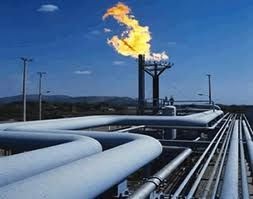
Current projects under discussion include expanding the production capacity of the Shymkent Refinery in south Kazakhstan, constructing the second line of the Beineu-Bozoy-Shymkent gas pipeline, and conducting joint geological exploration in Kazakhstan.

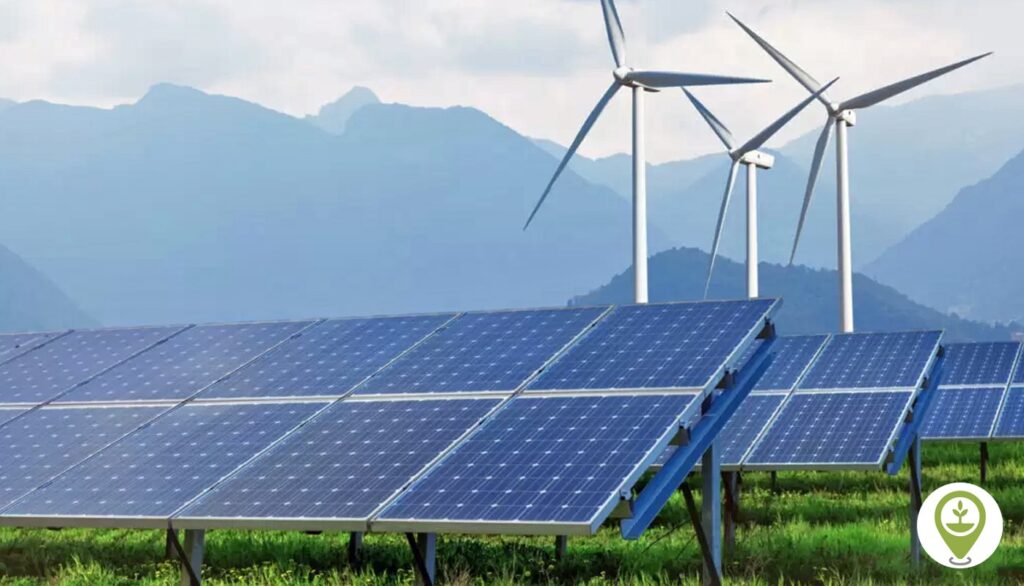
Uzbekistan to Cover Growing Demand with Green Energy Sources

Uzbekistan has set a goal of doubling its industrial production by 2030 and plans to implement more than 500 major industrial and infrastructure projects worth $150 billion. To accomplish these ambitious goals, the country needs to have guaranteed and stable energy resources, President Shavkat Mirziyoyev said on December 27th, at the launch ceremony of major projects in the field of green energy.

“We estimate that in the next six years, our country’s electricity demand will increase from the current 83 billion to 120 billion kilowatt hours. We will cover this primarily through renewable energy sources,” Mirziyoyev said.

Uzbekistan will continue its active investment policy to increase the capacity of green energy sources to 27 gigawatts by 2030, he said, adding that the country possesses enormous potential for green energy.

“In order to encourage the industry, we have launched the ‘Solar House’ system to provide preferential loans and subsidies for the installation of solar panels and ensure the guaranteed purchase of generated electricity. This year alone, 50,000 households and entrepreneurs have installed solar panels in our country,” Mirziyoyev said.

Currently, Uzbekistan is implementing projects for the construction of 22 solar and wind power stations with a total capacity of 9 gigawatts, and the government will create all the necessary conditions and preferences for foreign investors to implement such priority projects, Mirziyoyev concluded.

EBRD to Tackle Bottlenecks on Major Logistical Hub

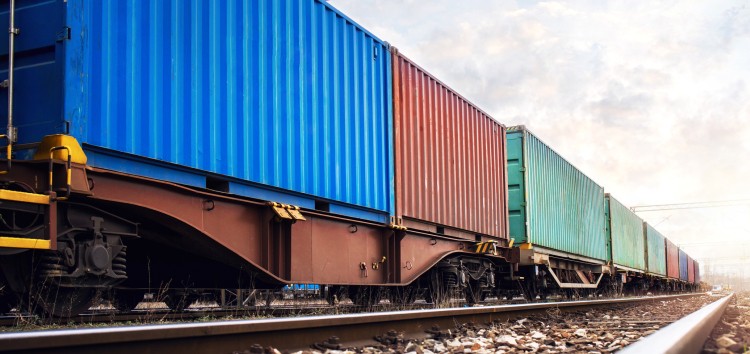
To tackle the identified bottlenecks within the Trans-Caspian corridor, the European Bank for Reconstruction and Development (EBRD) announced on December 27th its commitment to providing financial support for the enhancement of modern logistical infrastructure. The bank’s loan, amounting to up to U$ 40 million, is intended for Kazakhstan’s principal private rolling stock operator, Eastcomtrans. This support aims to bolster the operator’s container handling capacity, specifically targeting one of the busiest junctions near Almaty city, thereby ensuring the continuous operation of its railway fleet.

Eastcomtrans, an EBRD client since 2014 and the possessor of 8% of the nation’s total rolling stock, will utilize the allocated funds, available in both US dollars and Kazakh tenge, to further advance its Zhetygen logistical center. The investment will also facilitate the acquisition of approximately 250 new railcars and the maintenance of its existing stock.

Located in close proximity to the Chinese border and adjacent to Kazakhstan’s largest urban area, this upgraded logistical hub will function as a pivotal point along the Trans-Caspian Corridor. It is poised to enhance the smooth flow of cargo traffic across Kazakhstan. Anticipating a surge in trade volumes, especially in container traffic between Asia and Europe, the hub’s development aims to accommodate the escalating demand for freight transit.

President Launches Six Green Power Plants with Total Capacity of 2.4 Gigawatts

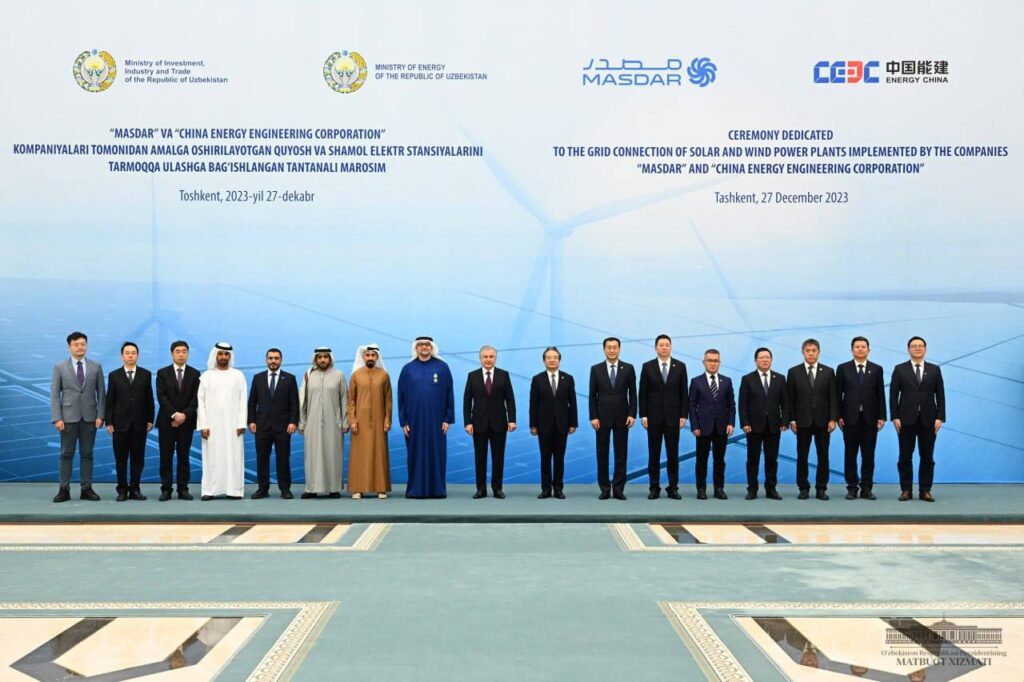
On December 27th, President of Uzbekistan, Shavkat Mirziyoyev took part in a ceremony of commissioning and connecting to the power grid of five solar and one wind power plants in six regions of the country. The event was attended by top executives from Masdar, China Energy Engineering Corporation, China Energy International Group, China Gezhouba Group, SEPCO III, and Dongfang Electric Corporation, which implemented the investment projects.

Speaking at the launch ceremony, Mirziyoyev said that today, “we are standing at an important event, which opens yet another bright page in the history of our country: six large solar and wind plants with a total capacity of 2,400 megawatts are to be connected to the grid”.

The first phase of the three solar power plants has been built in Jizzakh, Samarkand and Surkhandarya regions by the UAE-based company Masdar. This company has also built a modern wind power station in the Tomdi district, and its 100-megawatt capacity was also commissioned during the ceremony.

Gezhouba Group launched the construction of the first 400-megawatt solar power plants in Bukhara and Kashkadarya. Once commissioned, the President said, these projects worth $2 billion will generate six billion kilowatt-hours of electricity and save up to two billion cubic meters of natural gas.

Moreover, two million homes in Uzbekistan will be provided with an uninterrupted and guaranteed electric energy supply.

Gazprom Eyes Central Asia Amid European Sanctions

Facing a shortfall in European gas exports due to Western sanctions, Gazprom anticipates it will sell 34 billion cubic meters of unexported gas to Central Asia, according to recent reports.

“In light of the ongoing changes in the global energy market, Gazprom remains committed to ensuring a reliable gas supply to Russian consumers and bolstering export capabilities. A key focus for the company in this regard has been fostering collaboration with Kazakhstan, Uzbekistan, and Kyrgyzstan,” Gazprom stated in a press release.

The company confirmed a drop in gas exports to Europe of 34 billion cubic meters in the first eleven months of 2023, marking levels not seen since 1996. An earlier announcement by the Ministry of Energy of Uzbekistan unveiled a 15-year gas purchase agreement with Gazprom, extending the deal to include Kazakhstan, which involves a new pipeline construction.

In October, reports indicated the commencement of Russian gas deliveries to Uzbekistan through Kazakhstan. However, the specifics of this arrangement have not been disclosed to date.

Alexey Miller, Gazprom’s chief, outlined plans to expand the Central Asia gas pipeline system in November, highlighting memoranda signed with Uzbekistan, Kazakhstan, and Kyrgyzstan, and expressing optimism that the project will rejuvenate this pipeline network.

During the Soviet era, gas from the region was transported to Russia via the Central Asia–Center gas pipeline. After the USSR’s dissolution, the pipeline ceased operations and deteriorated, requiring substantial refurbishment to enable gas supplies from Russia to Central Asia. Miller noted the completion of the initial repair stage of the Central Asia-Center gas pipeline, facilitating gas delivery to Uzbekistan via Kazakhstan.

Earlier this year, Tashkent inked a two-year gas supply contract with Gazprom amounting to approximately 2.8 billion cubic meters annually. Despite these developments, details regarding the pricing of the purchased gas remain undisclosed. Which according to Uzbekistan’s Energy Minister, Zhurabek Mirzamakhmudov, is “in alignment with national interests and market dynamics.”