• KGS/USD = 0.01144 0%
  • KZT/USD = 0.00211 0%
  • TJS/USD = 0.10454 -0.1%
  • UZS/USD = 0.00008 0%
  • TMT/USD = 0.28571 0.28%
  • KGS/USD = 0.01144 0%
  • KZT/USD = 0.00211 0%
  • TJS/USD = 0.10454 -0.1%
  • UZS/USD = 0.00008 0%
  • TMT/USD = 0.28571 0.28%
  • KGS/USD = 0.01144 0%
  • KZT/USD = 0.00211 0%
  • TJS/USD = 0.10454 -0.1%
  • UZS/USD = 0.00008 0%
  • TMT/USD = 0.28571 0.28%
  • KGS/USD = 0.01144 0%
  • KZT/USD = 0.00211 0%
  • TJS/USD = 0.10454 -0.1%
  • UZS/USD = 0.00008 0%
  • TMT/USD = 0.28571 0.28%
  • KGS/USD = 0.01144 0%
  • KZT/USD = 0.00211 0%
  • TJS/USD = 0.10454 -0.1%
  • UZS/USD = 0.00008 0%
  • TMT/USD = 0.28571 0.28%
  • KGS/USD = 0.01144 0%
  • KZT/USD = 0.00211 0%
  • TJS/USD = 0.10454 -0.1%
  • UZS/USD = 0.00008 0%
  • TMT/USD = 0.28571 0.28%
  • KGS/USD = 0.01144 0%
  • KZT/USD = 0.00211 0%
  • TJS/USD = 0.10454 -0.1%
  • UZS/USD = 0.00008 0%
  • TMT/USD = 0.28571 0.28%
  • KGS/USD = 0.01144 0%
  • KZT/USD = 0.00211 0%
  • TJS/USD = 0.10454 -0.1%
  • UZS/USD = 0.00008 0%
  • TMT/USD = 0.28571 0.28%

One Step Forward, Two Steps Back: the EU’s Indecisive Strategy Towards Eurasia

Marking the next chapter in the geopolitical re-balancing competition between Russia and the West, on March 12, 2024, the European Parliament (EP) passed a resolution on deepening ties between the EU and Armenia. The document puts forth the possibility of granting Armenia candidate status for EU membership. Shortly after, Armenia’s Deputy Foreign Minister stated that a new cooperation agreement with the EU could be signed by July 2024. The EP’s “Renew Europe” block, at the forefront of some of the harshest motions and resolutions against Central Asian republics in the EU, endorsed this outreach towards Armenia. This comes a few weeks after Armenia froze its participation in the Russian-led military alliance of six post-Soviet states, known as the Collective Security Treaty Organization (CSTO), after citing the Organization’s failure to fulfill its obligations towards Armenia in its conflict with Azerbaijan.

These recent developments should be considered in the wider context of the EU’s eastward outlook, which has not always been evenhanded. Previously, on 17 January 2024, the EP had passed a resolution detailing the EU’s strategy on Central Asia, which recognized that the region is of “strategic interest to the EU in terms of security and connectivity, as well as energy and resource diversification, conflict resolution, and the defense of the multilateral rules-based international order”. European leaders ostensibly want to bring the Caucasus and Central Asia into the Western fold and away from Russia, China, and other competing regimes or ideologies.

Economic and security considerations may indeed pull European and Eurasian interests closer. Nonetheless, Central Asian states will likely, and understandably, choose to implement a multi-faceted foreign policy to diversify their trade and security alliances as they continue to transact and maintain working relationships with their powerful regional neighbors. Note that Chinese, Russian and other non-Western investment promises in Central Asia outweigh similar engagements from the EU.

There remain other potential obstacles to further cooperation. Not surprisingly, the EU seeks to have a degree of “values alignment” before establishing economic and security partnerships in the region, such as strengthened rule of law, human rights, and freedoms. On the other hand, the EU is sometimes perceived as giving conflicting and even insincere messages. Examples concerning Central Asia include instances where the EU has asked for progress in certain areas, but then failed to acknowledge policy implementation, or even doubled down on its criticisms despite positive steps taken by the targeted country’s leadership.

Take, for instance, the discussions in the EU around the violent unrest in Kazakhstan in January 2022. The EU has called on Kazakhstan to investigate the events and to undertake reforms. In the last two years, Kazakhstan’s president Kassym-Jomart Tokayev has overseen a batch of ambitious reforms, including enhanced political participation and representation as well as a stronger legal system and improved human rights, which are essentially unprecedented in the region. The progress made, however, does not seem to have materially swayed the EU’s outlook on the country.

In terms of the investigations and court proceedings related to the deadly 2022 riots, officials involved in the abuse of detainees were arrested and tried in court (recently, on 18 March, three received prison sentences). The more egregious acts, however, appear to have been led by hangers-on from former president Nursultan Nazarbayev’s rule, who wanted to regain power. They joined forces with thugs and jihadists to overthrow the current government, effectively attempting to stage a coup-d’état. Testimonies of eyewitnesses to the January 2022 events prove their links to at least one local crime boss and point to the involvement of high-level officials linked to Nazarbayev in fueling the violence to weaken the government. Other coup orchestrators include Karim Massimov, who led the National Security Committee during the attempted coup, and Kairat Satybaldy, his General and the nephew of former President Nazarbayev. Massimov, who has been linked to money laundering and bribes and a growing list of corruption scandals, is serving an 18-year sentence for high treason, abuse of power, and actions aimed at violently seizing power. Satybaldy is likewise serving a six-year sentence for major embezzlement and has reportedly paid back nearly 700 billion tenge, or around $1.5 billion, allegedly obtained through illicit means into the state coffers, according to Eurasianet.

The lack of acknowledgment for positive steps taken in this case points to another problem: the amount of scrutiny the EU directs towards a particular state is not always proportional to that state’s progress (or lack thereof) in the various EU-defined “value” areas, but rather to its strategic importance for Europe combined with the successful lobbying efforts by individuals and organizations inside the EU’s halls for or against that state. Going back to the Kazakhstan example, the EP’s above-mentioned January 2024 resolution asks for the release of five “political prisoners” in Kazakhstan. Three of these names are openly linked to an organization identified by Kazakhstani authorities as extremist, which is also known to be controlled by an internationally convicted fraudster. Furthermore, underlining the impact of negative lobbying efforts, this resolution is based on a report where a controversial NGO is listed as a source. This NGO is also associated with multiple notorious individuals charged with various crimes, such as murder and embezzlement, including the aforementioned fugitive fraudster.

Making its position vis-à-vis Central Asia even more disingenuous is the fact that the EU itself is showing a decline in its transparency and rule of law. The so-called Qatargate scandal that broke out in 2022 famously involved bribery and corruption charges against multiple EU officials and their linked NGOs and laid bare the ease with which outside actors could simply purchase influence and shape the EU’s decision-making. Unfortunately, not much has changed since then: Transparency International reported in December 2023 that “the European Parliament one year after Qatargate remains a democratic legislative body with a weak ethics system that is open to undue influence.” It is also noteworthy that the acting head of the Human Rights Sub-Committee (DROI) in the European Parliament called for the “immediate and unconditional release of Mr. Karim Massimov” in November of 2022, just weeks before herself being implicated in the Qatargate scandal, which led to her resignation.

Finally, in passing judgment on Central Asia in particular, European officials should keep in mind distinct local factors that inevitably influence domestic policies and priorities. Central Asian people have a different agenda than the populations living within the EU. These include not only improving their economic and social welfare but also finding justice for the massive amounts of public assets stolen by kleptocrats over the years and putting an end to decades-long corruption in their states. Another key issue for the region is the growing threat of Islamic extremism, which undermines Central Asia’s nascent democracies where the populations have historically been secular. Regardless of what distant observers proclaim, these countries are trying to take measures, often supported by their own people, to stop jihadist entities and/or well-funded kleptocrats from further destabilizing their domestic institutions.

In short, while the EU’s intentions towards Eurasia may be promising, the need for a more honest and consistently constructive strategy is apparent.

Former Kyrgyz Official Matraimov Extradited in Connection with Assassination Plot

According to statements issued by the special services of Kyrgyzstan, former deputy head of the customs service Raimbek Matraimov is connected with assassins who recently came to Bishkek from Azerbaijan to assassinate members of Kyrgyzstan’s leadership.

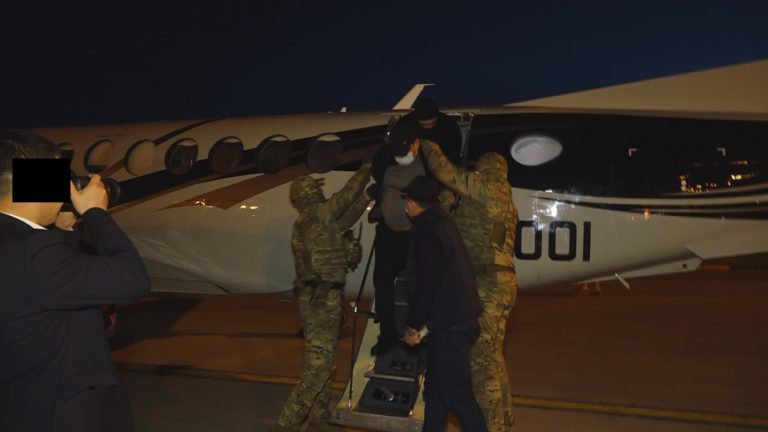
On March 23 Kyrgyz law enforcement became aware that the wanted Matraimov was in Baku, Azerbaijan’s capital. The State Committee for National Security of Kyrgyzstan (CNSK) sent a letter to the Azeri authorities with a request to detain and extradite him. In Baku this request was fulfilled. Matraimov’s brothers were also detained and flown to Kyrgyzstan, the CNSK reported.

The investigation into Matraimov alleges that his clan once had its own people in virtually all government agencies, including the police, prosecutor’s office, and parliament, where an entire political party worked on his behalf. Matraimov’s group had enormous resources, and numerous levers of influence over the authorities. The 2020 coup d’état in Kyrgyzstan was carried out in part because Matraimov’s party won the elections. As a result, those elections were deemed as corrupt, and subsequently voided.

Matraimov was put on an international wanted list on January 26. He was charged in absentia under two articles of the Kyrgyz criminal code: illegal imprisonment and legalization of criminal proceeds.

As The Times of Central Asia has previously reported, on March 22 in the center of Bishkek authorities detained members of a transnational criminal group, who came to Bishkek from Azerbaijan to assassinate the Kyrgyz political leadership. Kyrgyzstan’s special services believe that Matraimov is linked to the criminals and is involved in organizing the assassination attempt. It was also reported that the former official was extradited with the aid of a government board of Kyrgyz authorities.

China Mining Energy Group to Partner in Uzbek Copper Project

China Mining Energy Group will be participating in a project to mine and process copper ore in the Chust district of Uzbekistan’s Namangan region. The new partner is expected to increase the mine’s budget by 121 billion sum ($9.5 million), and create 420 jobs.

Geological exploration is scheduled to begin in April. The project is expected to cost $200 million and have an annual capacity of 30,000 tons of copper. For comparison, the largest producer of copper in Uzbekistan, the Almalyk Mining and Metallurgical Combine, produced 148,000 tons of copper in 2023.

China Mining Energy Group was established in 2003 and employs 40,000 people. It has $32 billion in assets. The company mines aluminum, copper, and gold in 17 countries.

Kyrgyzstan Takes Issue With Uzbekistan’s Hydropower Plans

Uzbekistan’s grandiose hydropower development plans are irking neighboring Kyrgyzstan, which is experiencing a shortage of water resources. These shortages have in part been caused by Kyrgyzstan swapping its water with Uzbekistan and Kazakhstan in exchange for electricity.

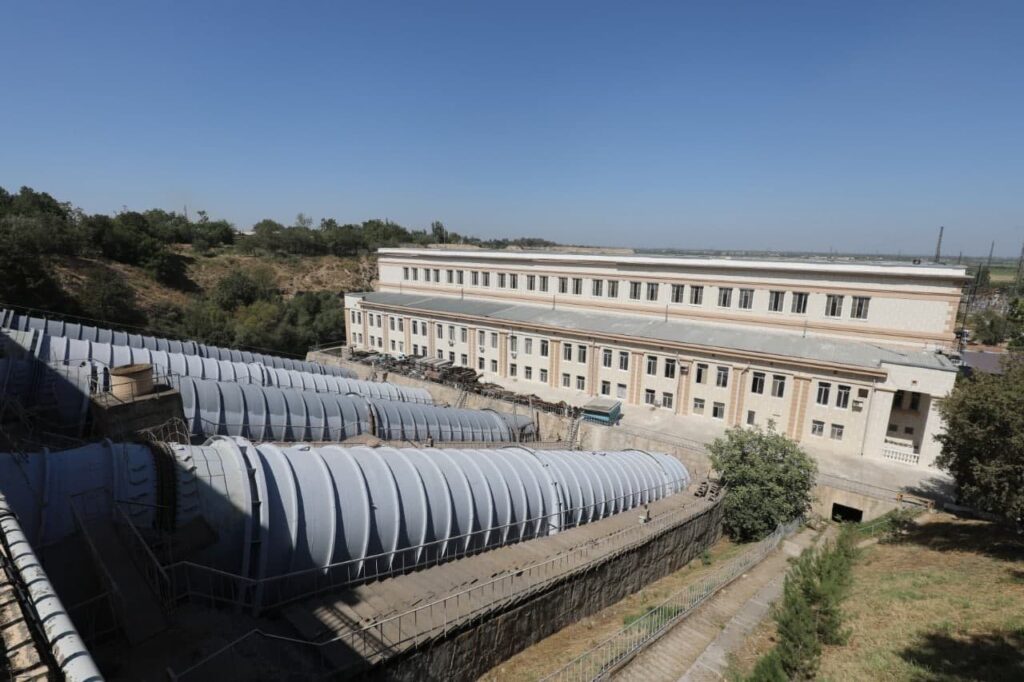
Uzbekistan’s construction of six hydroelectric power plants (HPPs), with a total capacity of 228 megawatts, has begun on the Naryn River in the Namangan region. The Uzbekhydroenergo project is estimated at $434 million and will generate up to 1 billion kilowatt-hours of electricity per year, enough to provide energy for 430,000 households. This will allow the country to save up to 310 million cubic meters of gas annually, to help alleviate shortages which has seen Uzbekistan turn to Russia.

The launch of the hydro project will provide the Namangan region with 7.8 billion kWh per year, which far exceeds local demand. This surplus energy will be transferred to neighboring regions in the Fergana Valley, and will guarantee energy supply during periods of peak consumption.

These plans contrast greatly with Kyrgyzstan’s situation, as the republic imports 3 billion kWh of electricity from neighboring states during the fall and winter seasons. Uzbekistan and Kazakhstan supply Kyrgyzstan with electricity in winter, and in return Kyrgyzstan provides them with water in summer, measuring the volume of water using a generator, and thus paying back the debt for the electricity.

According to official data, the Toktogul Reservoir in Kyrgyzstan is designed to hold 19.2-19.6 billion cubic meters of water. Kyrgyz Deputy Energy Minister, Talaibek Baigaziyev noted at a March 4 press conference in Bishkek that with electricity consumption on the increase and water levels falling, people urgently needed to curtail their usage. Water levels had already stopped at 7.7 billion cubic meters, versus a normal level of 17.3 billion cubic meters, leading to a risk of possible blackouts. If the level reaches anything below 6.5 billion cubic meters, the Toktogul HPP will stop.

In 2024, the Kyrgyz authorities plan to launch 11 HPPs, five large and six small. According to the Eurasian Development Bank, Kyrgyzstan’s energy sector will be operating under a state of emergency from now until the end of 2026. Kazakhstani experts have also expressed concern about their neighbors’ energy development plans. They say water shortages could worsen in the region, with water already scarce in Kazakhstan.

Bulat Yesekin, an expert on environmental policy and institutional frameworks for environmental protection, notes that “large hydropower plants further aggravate the problem of water supply and disrupt environmental sustainability. All over the world today there are campaigns to demolish hydroelectric dams and restore the natural regime of rivers. Only the preservation of natural river regimes can reduce water scarcity and create a more reliable basis for water supply for agriculture and industry.”

The construction of HPPs in border areas continues to create transnational problems. Altering river courses can destroy or alter ecosystems, change biodiversity, affect fisheries and agriculture, erode coastlines, and increase the risk of flooding in certain areas; yet access to electricity is a key issue across Central Asia that requires hydro resources to remain stable.

Man with Kyrgyzstan Links Among Suspects in Moscow Attack

A man originally from Kyrgyzstan is among the suspects detained in the attack on a Moscow concert hall that killed about 140 people, according to media reports.

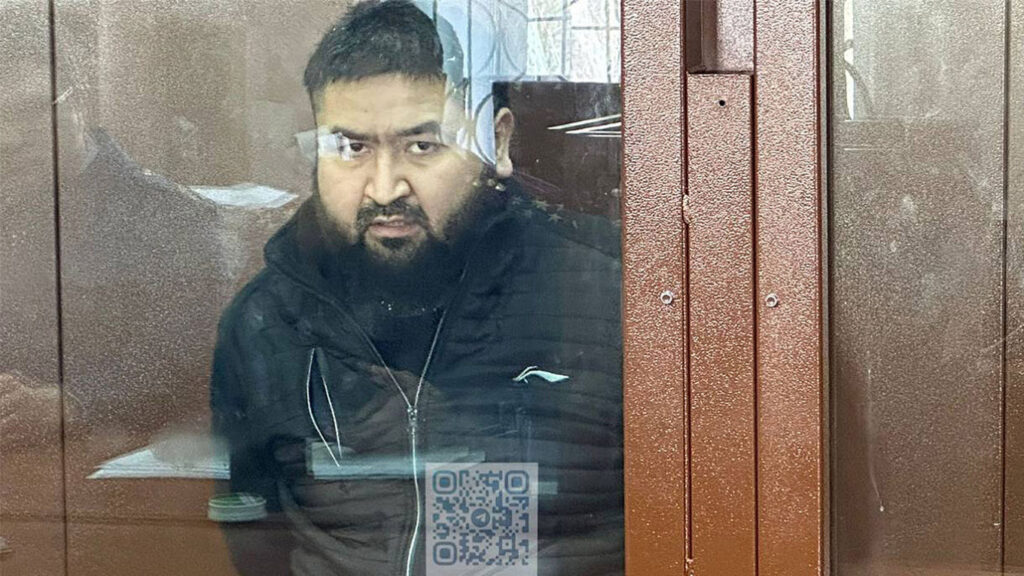
The man, identified as Alisher Kasimov, allegedly rented an apartment to men who carried out the attack on the Crocus City complex on Friday night. He appeared in court on Tuesday and did not show signs of having been beaten or tortured, as was the case with some other suspects.

Videos circulating on social media showed a distraught woman purported to be Kasimov’s mother. In the videos, the woman says Kasimov is innocent and that he did not know that he was renting an apartment to people who were plotting an attack. Kasimov denounced his Kyrgyz citizenship in favor of Russian nationality in 2014.

Several migrant laborers from Tajikistan were charged with terrorism Sunday night for their alleged role in the devastating assault with rifles and explosives.

The attack has focused attention on the large number of Central Asian migrants living – often in grim conditions – in Russia, as well as the possible vulnerability of some of them to recruitment by extremist groups.

The Islamic State group claimed responsibility for the Crocus City killings. Russia has tried to assign blame to Ukraine and the West, without offering evidence.

Uzum Deal Makes It Uzbekistan’s First Tech ‘Unicorn’

A digital ecosystem called Uzum has become Uzbekistan’s first tech ‘unicorn’ — a pre-IPO company with a valuation of over $1 billion — by attracting investment of more than $100 million this month. The bulk of this capital was put up by a Californian company, FinSight Ventures.

Uzum, founded by Jasur Jumaev, the co-founder of KupiKupon, and Boris Dobrodeyev, the former CEO of the Russian social network VKontakte, provides e-commerce services and banking projects for individuals and small and medium-sized businesses through a superapp. The investors will hold stakes of less than 5% apiece, while Uzum’s overall valuation has reached over $1.1 billion.

Under the structure of the deal, the equity capital investment amounted to more than $50 million, and another $50 million was raised earlier in the form of loans.

Prior to that, the founders had planned to raise $300 million. “We still plan to raise about $300 million during this year, but we have divided the round into two parts. This is the first one. The second part is already with the participation of funds from the Middle East, the UK and the U.S.,” Jumaev said.

The company has aggressive plans: to launch Uzbekistan’s largest logistics complex for e-commerce, which will increase its turnover by 2.5 times and expand the area of warehouses to 500,000 square meters, and an increase in the number of order delivery points. By the end of 2023, Uzum had 10 million monthly users, and its e-commerce revenue exceeded $150 million.

The next step for the first Uzbek tech unicorn will be an IPO, which is scheduled for 2026. According to Jumaev, the company is “considering all possibilities for optimal capital raising. One of the scenarios is to enter the Tashkent Stock Exchange and/or the Abu Dhabi Stock Exchange with parallel placements on Western markets.”

FinSight Ventures believes that Uzum is a national leader in key business verticals such as fintech and e-commerce, which in the future will allow it to follow the example of Kaspi.kz, from neighboring Kazakhstan, and become the standalone leader of Uzbekistan’s tech market.

According to the international auditing company KPMG, Uzbekistan is showing very strong economic growth: the country’s GDP growth for 2023 was 6%, and by 2030, under the strategy “Uzbekistan-2030,” overall GDP may reach $160 billion. Uzbekistan’s e-commerce is the fastest growing in Central Asia, forecasted to reach $1.8-$2.2 billion by 2027.

That potential is attracting major online retail players to the country: the Russian company Wildberries has been operating in Uzbekistan since 2022, and Ozon, also of Russia, entered Uzbekistan in November 2023. In this context, burgeoning national champion Uzum has a solid chance at becoming the largest retailer in the country as early as next year.