• KGS/USD = 0.01144 0%
  • KZT/USD = 0.00213 0%
  • TJS/USD = 0.10456 0.19%
  • UZS/USD = 0.00008 0%
  • TMT/USD = 0.28490 0%
  • KGS/USD = 0.01144 0%
  • KZT/USD = 0.00213 0%
  • TJS/USD = 0.10456 0.19%
  • UZS/USD = 0.00008 0%
  • TMT/USD = 0.28490 0%
  • KGS/USD = 0.01144 0%
  • KZT/USD = 0.00213 0%
  • TJS/USD = 0.10456 0.19%
  • UZS/USD = 0.00008 0%
  • TMT/USD = 0.28490 0%
  • KGS/USD = 0.01144 0%
  • KZT/USD = 0.00213 0%
  • TJS/USD = 0.10456 0.19%
  • UZS/USD = 0.00008 0%
  • TMT/USD = 0.28490 0%
  • KGS/USD = 0.01144 0%
  • KZT/USD = 0.00213 0%
  • TJS/USD = 0.10456 0.19%
  • UZS/USD = 0.00008 0%
  • TMT/USD = 0.28490 0%
  • KGS/USD = 0.01144 0%
  • KZT/USD = 0.00213 0%
  • TJS/USD = 0.10456 0.19%
  • UZS/USD = 0.00008 0%
  • TMT/USD = 0.28490 0%
  • KGS/USD = 0.01144 0%
  • KZT/USD = 0.00213 0%
  • TJS/USD = 0.10456 0.19%
  • UZS/USD = 0.00008 0%
  • TMT/USD = 0.28490 0%
  • KGS/USD = 0.01144 0%
  • KZT/USD = 0.00213 0%
  • TJS/USD = 0.10456 0.19%
  • UZS/USD = 0.00008 0%
  • TMT/USD = 0.28490 0%

Uzum Deal Makes It Uzbekistan’s First Tech ‘Unicorn’

A digital ecosystem called Uzum has become Uzbekistan’s first tech ‘unicorn’ — a pre-IPO company with a valuation of over $1 billion — by attracting investment of more than $100 million this month. The bulk of this capital was put up by a Californian company, FinSight Ventures.

Uzum, founded by Jasur Jumaev, the co-founder of KupiKupon, and Boris Dobrodeyev, the former CEO of the Russian social network VKontakte, provides e-commerce services and banking projects for individuals and small and medium-sized businesses through a superapp. The investors will hold stakes of less than 5% apiece, while Uzum’s overall valuation has reached over $1.1 billion.

Under the structure of the deal, the equity capital investment amounted to more than $50 million, and another $50 million was raised earlier in the form of loans.

Prior to that, the founders had planned to raise $300 million. “We still plan to raise about $300 million during this year, but we have divided the round into two parts. This is the first one. The second part is already with the participation of funds from the Middle East, the UK and the U.S.,” Jumaev said.

The company has aggressive plans: to launch Uzbekistan’s largest logistics complex for e-commerce, which will increase its turnover by 2.5 times and expand the area of warehouses to 500,000 square meters, and an increase in the number of order delivery points. By the end of 2023, Uzum had 10 million monthly users, and its e-commerce revenue exceeded $150 million.

The next step for the first Uzbek tech unicorn will be an IPO, which is scheduled for 2026. According to Jumaev, the company is “considering all possibilities for optimal capital raising. One of the scenarios is to enter the Tashkent Stock Exchange and/or the Abu Dhabi Stock Exchange with parallel placements on Western markets.”

FinSight Ventures believes that Uzum is a national leader in key business verticals such as fintech and e-commerce, which in the future will allow it to follow the example of Kaspi.kz, from neighboring Kazakhstan, and become the standalone leader of Uzbekistan’s tech market.

According to the international auditing company KPMG, Uzbekistan is showing very strong economic growth: the country’s GDP growth for 2023 was 6%, and by 2030, under the strategy “Uzbekistan-2030,” overall GDP may reach $160 billion. Uzbekistan’s e-commerce is the fastest growing in Central Asia, forecasted to reach $1.8-$2.2 billion by 2027.

That potential is attracting major online retail players to the country: the Russian company Wildberries has been operating in Uzbekistan since 2022, and Ozon, also of Russia, entered Uzbekistan in November 2023. In this context, burgeoning national champion Uzum has a solid chance at becoming the largest retailer in the country as early as next year.

Production Decrease and Import Increase in Energy Resources in Uzbekistan

According to the Statistics Agency of Uzbekistan, in January-February 2024, imports of natural gas increased 95-fold at a cost of $166.7 million. In the same period, Uzbekistan also increased its imports of oil by 5.3% costing $302.9 million and coal by 43.6% costing $42 million. Imports of electricity doubled, costing $36.4 million.

In the first two months of 2024, natural gas production in Uzbekistan amounted to 7.7 billion cubic meters; a decrease of 454 million cubic meters compared to early 2023. Oil production decreased by 8.8 thousand tons to 118.5 thousand tons, and coal production decreased by 23 thousand tons to 659 thousand tons.

Kyrgyzstan’s First Tire Recycling Plant to Produce Crumb Rubber for Sports Grounds

On March 26th, Akylbek Japarov, Chairman of the Cabinet of Ministers of the Kyrgyz Republic, visited a tire recycling plant in the city of Tokmok in northern Kyrgyzstan.

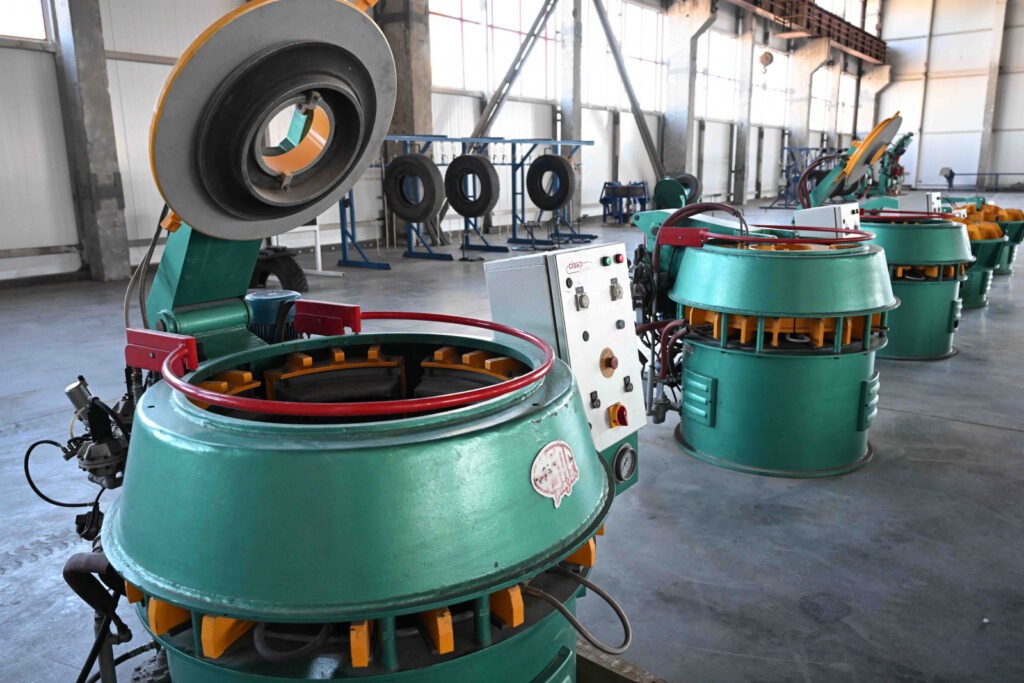
The Kumtor Gold Company has invested 19.2 million US dollars in an enterprise which uses German technology to re-tread tires of any size, and aims to increase the company’s efficiency by creating new sources of income. The plant, scheduled to open at the end of 2024 and currently operating in test mode, employs about 200 people and recycles more than 2 tons of old tires per hour.

A key goal of the plant is to produce surface material from crumb rubber for use in children’s sports areas at home and abroad. The initiative was welcomed by Mr Japarov who during his visit expressed the government’s readiness to install it in children’s playgrounds in schools and parks across the country.

Russia’s Rosatom to Build Wind Farm, Nuclear Plant in Kyrgyzstan

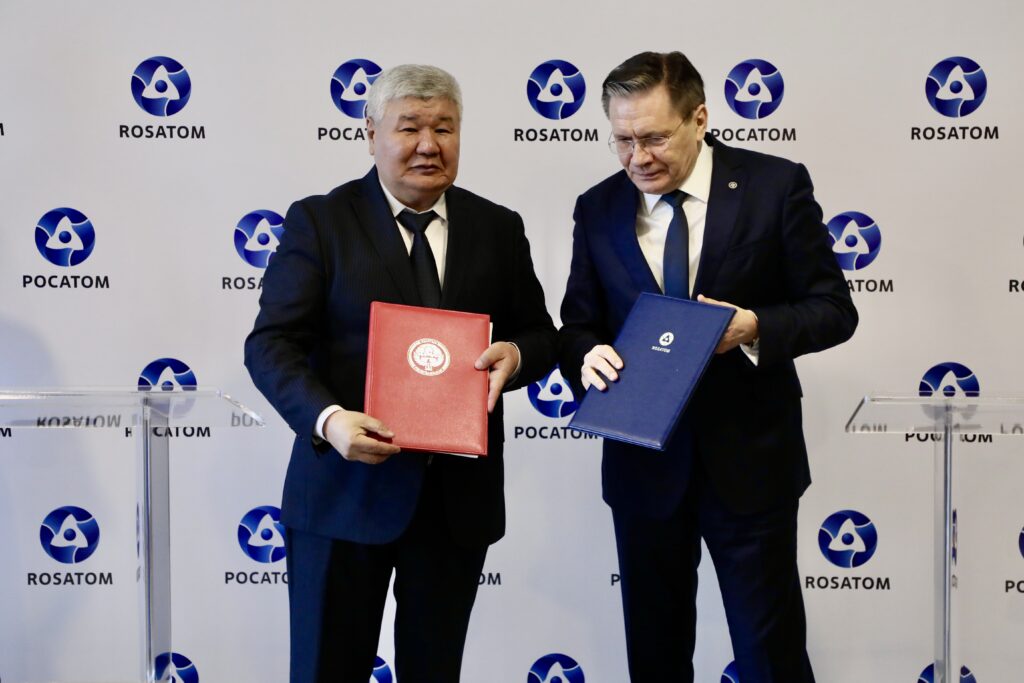
On the eve of the 13th ATOMEXPO-2024 International Forum in Sochi, Russia, representatives of the Kyrgyz Ministry of Energy signed an agreement with representatives of Russian state nuclear company Rosatom on the implementation of small-scale energy projects in Kyrgyzstan. At the forum, Rosatom’s management announced that the parties agreed to develop projects and then build small power facilities in Kyrgyzstan with a capacity of up to 400 MW, in different regions of the republic: the Jalal-Abad, Talas and Batken regions.

“The Kyrgyz Republic has tremendous potential for the development of small hydropower and construction of hydropower plants. Together with Rosatom’s in-depth expertise, it becomes possible not only to build environmentally friendly energy sources, but also to create sustainable infrastructure and decent jobs in the region,” said Evgeny Salkov, general director of JSC Rosatom Service. Rosatom Service is a subsidiary of Rosatom which deals with maintenance of energy facilities, including nuclear power plants.

The Kyrgyz delegation said that it’s ready to support any investment in the country’s energy sector. “Kyrgyzstan has created a favorable environment and conditions for international investment in hydropower projects. I am sure that Rosatom’s serious long-term plans related to investments in the Kyrgyz Republic will serve as the right message for domestic investors as well. Investments in the hydropower sector in Kyrgyzstan are profitable and reliable investments, and the government of the republic will continue at all levels to support the construction of new HPP projects,” said Taalaibek Ibraev, Kyrgyzstan’s minister for energy, speaking at the forum.

Meanwhile, Rosatom believes that Kyrgyzstan has great potential in developing green energy. Moreover, Kyrgyz authorities’ diversified approach to the development of the energy sector will contribute to the country’s energy independence. According to Rosatom CEO Alexey Likhachev, the Kyrgyz leadership is now expressing serious interest in building a small nuclear power plant, as well as wind farms.

“We are working on all of these directions. In particular, we have already reached agreements on the construction of a 100 MW wind power plant in the Issyk-Kul region. This is the first step, because the leadership of Kyrgyzstan plans to build wind power capacity of at least 1 GW,” Likhachev said.

Currently the Russian company is building several small hydroelectric power plants in the west and south of Kyrgyzstan. Earlier, Rosatom concluded a memorandum with the Kyrgyz authorities to work out a roadmap for the construction of a low-capacity nuclear power plant in the Central Asian republic, which will consist of two power units of 55 MW each. The situation is complicated by the fact that almost the entire territory of Kyrgyzstan is located within a zone of elevated seismic activity.

Kazakhstan’s Energy Ministry Lists Oil Reserves, Export Metrics

According to the Ministry of Energy of the Republic of Kazakhstan, at the beginning of 2024, oil reserves amounted to 4.4 billion tons. Those reserves are concentrated in Kazakhstan’s largest oilfields, where 10 fields hold almost 80% of all recoverable reserves. They are: Kashagan (1.014 billion tons); Tengiz (899.2 million tons); Karachaganak (308.8 million tons, of which condensate: 242.3 million tons); Uzen (123.3 million tons); Korolevskoye (57.1 million tons); Zhanazhol (44.6 million tons, of which condensate: 8.8 million tons); Kalamkas (41.5 million tons); Karazhanbas (37.9 million tons); Buzachi Northern (35.1 million tons); Northern Truva (33.9 million tons, of which condensate: 1.4 million tons).

The ministry of energy noted that total oil production is targeted to increase to 100 million tons per year. Work is already underway to expand production at the Kashagan and Tengiz fields, and exploration work to find new fields is also ongoing. Furthermore, the ministry names the countries which are the top importers of Kazakhstan’s black gold exports. They included Italy, the Netherlands, China, Korea, Romania, France, Turkey, Greece, and Singapore.

According to representatives of the Ministry of Finance of Kazakhstan, the income from oil production and export for the country consists of taxes paid by corporations within the oil sector. The amount of taxes the state receives depends on various factors, such as production volumes, depletion of reserves, tax exemptions, the world oil price, and transportation costs.

The ministry of finance lists revenues for 2023 from oil production and exports as follows: customs export duties on crude oil (1.643 trillion tenge); mineral extraction tax from oil sector organizations (1.283 trillion tenge); rent tax on exports from oil-industry businesses (452 billion tenge). The total amount of tax received by Kazakhstan from the oil industry in 2023 amounted to about three trillion tenge ($6.6 billion).

This year, the World Bank forecast a solid GDP growth rate of 3.4% for Kazakhstan’s economy. The main driver of this growth will be the development of the hydrocarbon sector and increase in oil production. Experts note that increased oil production will increase export revenues and stimulate domestic economic growth.

Turkmenistan’s Government-Supplied Agricultural Services Soar in Cost

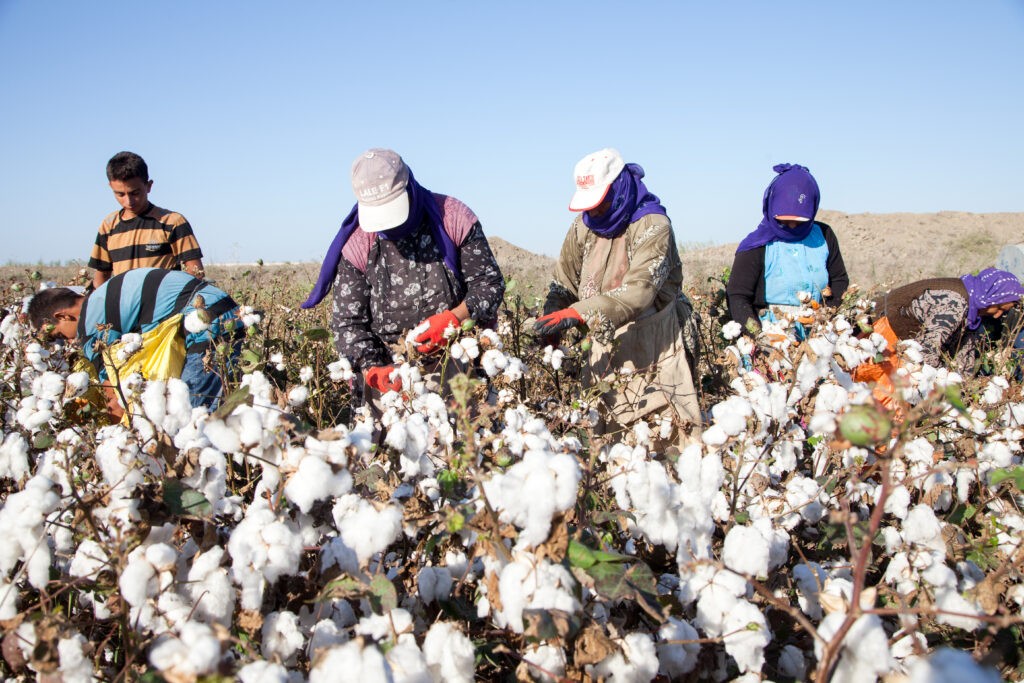
The prices for several services provided by the state to farmers in Turkmenistan have increased several times over, according to a report from news portal Turkmen.news after reviewing documents showing the old and new prices for government goods and services.

The price levels in the table are separated by different productivity per hectare, which, in turn, depends on the specific area of the crop. The table defines six stages of medium-fiber cotton yield from 7 (previously 6.4) to 40 centners (one centner is 100kg) per hectare.

The price of mineral fertilizers for 1 hectare was 146.64 manat ($7.5 at market rate) in the past, but since the start of 2024 it has increased to 878.7 manats ($45). Seeds for 1 hectare were delivered for 38.83 manat ($2), and now for 103.51 manats ($5). It used to cost 53.88 manat ($2.50) to irrigate 1 hectare of land, but now it costs 208.6 ($10.50).

The table also calculates the income of farmers based on all these costs. Before the recent increase in cotton and grain prices, the lowest-yielding tenants received 960 manat ($49) per hectare, and after all subtractions, they were left with just 8.6 manat ($0.40). For fields of the high productivity category – 40 centners per hectare, the standard initial income is 20,000 manat ($1,000), and after fees for state services – 15,000 manat ($770) per hectare.

Tenants typically farm from three to 20 hectares, often up to five hectares, depending on their means. These are mostly useless, low-fertility croplands.

There remains one glaring problem beyond the price hikes for government services and goods. In practice, farmers’ costs aren’t limited to payments for the aforementioned services. Firstly, farmers have plenty of informal costs. For example, a tractor driver hired by a farmer doesn’t go to the field for free; they should be paid at least 100 additional manat just for showing up. Furthermore, things like timely supply of high-quality and mold-free seeds and fertilizers, the battle with chronic drought – all of these hindrances require large amounts of money to overcome.

Second, the official quotas for fertilizer distribution by the state are greatly underestimated. Under government guidelines, 370 kilograms of urea and 500 kilograms of nitrogen are allocated for each hectare. According to the calculations of experienced farmers, at least 600 kilograms of urea are needed per hectare. But it’s impossible to get that much at the state price, so one must buy additional fertilizers from private traders at a completely different, higher price. As a result, many villagers hand over their crops to the state and become indebted for all the above services.

Villagers are looking for all kinds of additional ways to earn money, most of which are illegal. So, they rent fields for cotton and grain, but at the same time they grow vegetables on a part of the land. But this requires a more expensive rent payment and a separate contract. The result is that most of the farmers are giving up farming altogether and attempting to move abroad. A migrant worker can send money to a family that stays at home and tries to continue farming. Sometimes, rural agricultural workers enter full emigration and try to take their whole families with them.