• KGS/USD = 0.01144 0%
  • KZT/USD = 0.00211 0%
  • TJS/USD = 0.10454 -0.1%
  • UZS/USD = 0.00008 0%
  • TMT/USD = 0.28571 0.28%
  • KGS/USD = 0.01144 0%
  • KZT/USD = 0.00211 0%
  • TJS/USD = 0.10454 -0.1%
  • UZS/USD = 0.00008 0%
  • TMT/USD = 0.28571 0.28%
  • KGS/USD = 0.01144 0%
  • KZT/USD = 0.00211 0%
  • TJS/USD = 0.10454 -0.1%
  • UZS/USD = 0.00008 0%
  • TMT/USD = 0.28571 0.28%
  • KGS/USD = 0.01144 0%
  • KZT/USD = 0.00211 0%
  • TJS/USD = 0.10454 -0.1%
  • UZS/USD = 0.00008 0%
  • TMT/USD = 0.28571 0.28%
  • KGS/USD = 0.01144 0%
  • KZT/USD = 0.00211 0%
  • TJS/USD = 0.10454 -0.1%
  • UZS/USD = 0.00008 0%
  • TMT/USD = 0.28571 0.28%
  • KGS/USD = 0.01144 0%
  • KZT/USD = 0.00211 0%
  • TJS/USD = 0.10454 -0.1%
  • UZS/USD = 0.00008 0%
  • TMT/USD = 0.28571 0.28%
  • KGS/USD = 0.01144 0%
  • KZT/USD = 0.00211 0%
  • TJS/USD = 0.10454 -0.1%
  • UZS/USD = 0.00008 0%
  • TMT/USD = 0.28571 0.28%
  • KGS/USD = 0.01144 0%
  • KZT/USD = 0.00211 0%
  • TJS/USD = 0.10454 -0.1%
  • UZS/USD = 0.00008 0%
  • TMT/USD = 0.28571 0.28%

Hundreds of Cargo Trucks Queued Up at Kyrgyzstan Border to Enter Kazakhstan

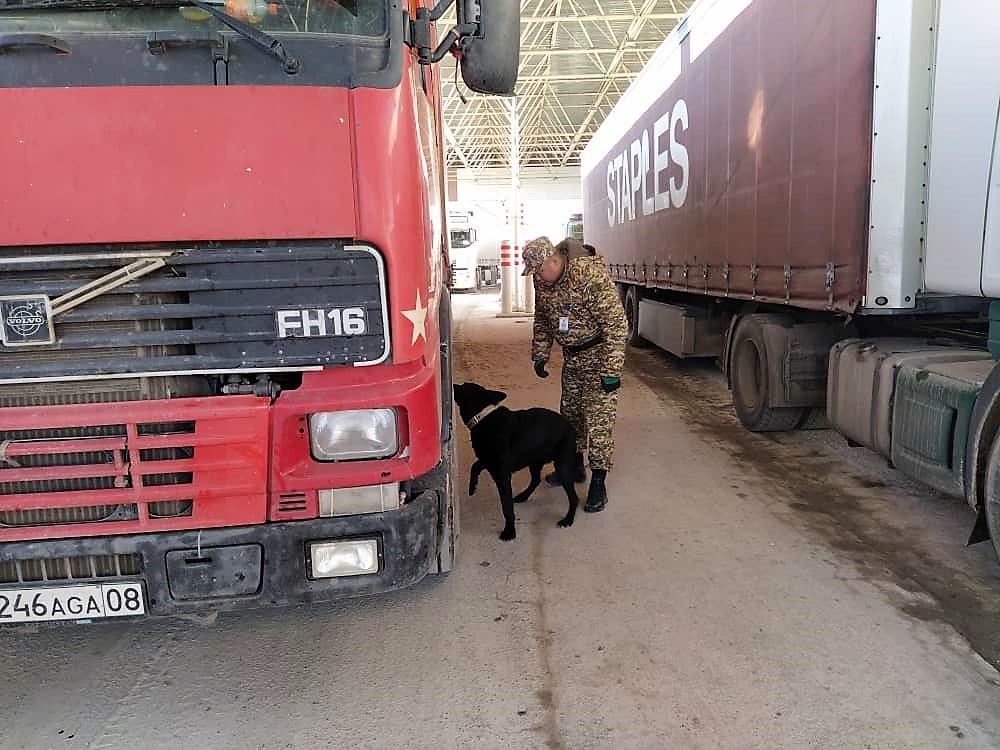
At the main vehicle checkpoint in Kyrgyzstan for crossing into Kazakhstan, the Ak-Tilek checkpoint, border guards counted 430 trucks queuing, while only 342 vehicles passed through the checkpoint yesterday. At the neighboring checkpoint on the border with Kazakhstan, about 90 trucks are in line.

Customs officers on both sides deny involvement in the traffic jams that have formed at the border. All checkpoints on the Kyrgyzstan-Kazakhstan state border are operating normally, according to the Information and Communications Department of the Border Guard Service of the State National Security Committee of Kyrgyzstan. “Both from the side of the Border Service of the Kyrgyz Republic and from the side of the Border Service of the Republic of Kazakhstan there are no restrictions for the passage of cargo vehicles,” the Kyrgyz Border Service said.

Border guards attributed the queue at the border to the start of the spring season. Following the New Year holidays (February 10th-17th) in China, the transit of goods to Russia through Kyrgyzstan usually increases in spring, and agricultural products begin to appear, first meat and later, vegetables and fruit.

According to Kyrgyz border guards, cargo vehicles with perishable products and animals are crossing the checkpoint out of turn. For every day of idle time, merchants say, they lose more than a hundred dollars.

Queues of trucks are not uncommon at the Kyrgyz-Kazakh state border. There have been cases when truckers from Kyrgyzstan carrying cargo to Russia had to wait at the border for weeks. The reasons for these long queues can be attributed to numerous causes. For example, last summer about 500 trucks queued at the border, and representatives from the Eurasian Economic Commission came to the site to sort out the situation. Kazakh customs officers attributed the long wait to a special operation to catch drug traffickers. Another time, Kazakhstan’s customs officers didn’t allow trucks from Kyrgyzstan to pass without navigation seals – which are GPS-enabled locks on cargo containers – which would have helped Kazakhstani authorities track the movements of goods. Each time, the two sides blamed the other.

The Kyrgyz side believes that the Kazakhs artificially create obstacles at the border to weaken competition from Kyrgyzstan, and the Kazakh authorities accuse Kyrgyz truckers of unwillingness to comply with Astana’s requirements and submitting fraudulent documents for cargo. Because of this, both truck drivers and cargo owners suffer, especially if they are transporting fresh fruits and vegetables, which can spoil before reaching their destination, which is most often in Russia. Kyrgyz merchants claim to be looking for alternative routes to deliver their cargo to Russia.

Kazakhstan, Uzbekistan Agree to Improve Ecology of Aral Sea Basin 

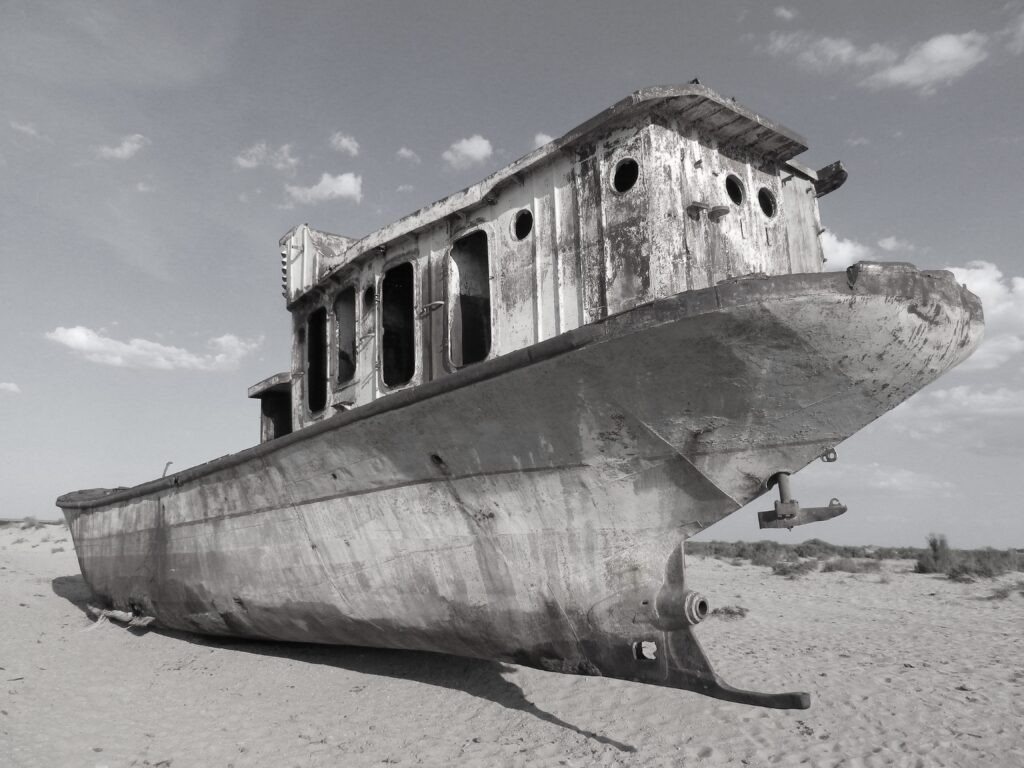
Kazakhstan and Uzbekistan will jointly improve the ecological situation in the Aral Sea basin, according to members of the Mazhilis of the Parliament of Kazakhstan. At a plenary session they adopted the corresponding bill on ratification of the agreement between the Government of the Republic of Kazakhstan and the Government of the Republic of Uzbekistan on cooperation in the field of ecology and environmental protection.
 
The document states that cooperation between the countries will be carried out in several areas. The most important is the prevention and control of pollution affecting the air and water of the Aral Sea, as well as the Amu Darya and Syr Darya rivers. Also included are the management of solid domestic waste and the preservation of biological diversity. In addition, Kazakhstan and Uzbekistan will jointly carry out measures to improve the ecological situation and environmental monitoring in the Aral Sea basin. The agreement between the countries also implies the creation of joint educational institutions, training of personnel, and the commitment that both states will do everything necessary to avoid environmentally harmful emergencies.
 
Parliamentarians report that in order to comply with this agreement, Kazakhstan and Uzbekistan will create a special commission that will monitor the implementation of the bilateral agreement.

German Investors Plan to Build Airport in Khorgos

Investors from Germany intend to start construction of a cargo/passenger airport at the Khorgos China-Kazakhstan gateway. The project will help increase the volume of cargo transportation between Kazakhstan and China, Zakon.kz reports.

In recent years, the Zhetysu region has begun realizing its economic potential through the implementation of major logistics projects. “The Hansa Consortium, a German company, is working on investing in a new airport on the territory of the special economic zone Khorgos – Eastern Gate,” said Bakytnur Bakytuly, head of the Entrepreneurship and Industrial-Innovative Development of the Zhetysu region.

The akimat (local administration) of Zhetysu region and the Hansa Consortium have already signed a memorandum for the project. The special economic zone (SEZ) already has the Altynkol freight railway station and a “dry port” logistics complex, the KTZE-Khorgos Gateway.

A feasibility study has been completed for the new international airport in Khorgos, which cost the state $195 million. According to the project, the estimated cargo capacity of the airport will be 377 tons per day, and the construction of this facility will provide the region with an additional 450 permanent jobs.

Galymzhan Daribayev, head of the Department of Transport and Roads of the Zhetysu region, said that construction of a second railroad track on a section of the Moyinty-Dostyk route towards the Chinese border is ongoing. According to him, the project will include modernization of railway sections Connector 1 – Prezlovaya Station, a length of 167 kilometers, and Aktogai-Vostok Station – Dostyk Station, a length of 275 kilometers. The volume of investment for this project is $654 million and should be completed in November 2024.

The Zhetysu region already has two airports that operate civilian passenger flights, one in the regional center, Taldykorgan, which most often connects with Astana, and the second in Usharal, which has a population of about 80,000 people. The runway of this airport can accommodate large aircraft, which plays a very important role in increasing the flow of tourists to the region. Usharal is located 40 kilometers from one of the most popular domestic tourist spots in Kazakhstan – Lake Alakol, the waters of which are said to have therapeutic effect. As part of a development program set forth in 2022, the runway at Usharal was reconstructed and now receives seasonal flights on the routes Almaty-Usharal-Almaty, Astana-Usharal-Astana, as well as the year-round route Taldykorgan-Usharal-Taldykorgan.

Turkmenistan May Supply Gas, Electricity to Kazakhstan, Azerbaijan and Turkey

Former President of Turkmenistan, Gurbanguly Berdimuhamedov said in his speech at the 15th meeting of the Council of Elders of the Organization of Turkic States (OTS) in Ashgabat that the country may start exporting gas to Kazakhstan, further stating that Turkmenistan has all the necessary resources to also supply Turkmen natural gas and electricity to Azerbaijan and Turkey.

“We are ready to continue to assist the brotherly countries in ensuring energy security. Turkmenistan, which is one of the largest producers of energy resources, is ready to supply them to brotherly countries and increase the volume of such supplies,” Berdimuhamedov said.

Turkmenistan currently exports electricity to Uzbekistan and Kyrgyzstan, and has ambitious plans to send natural gas to the east with the cooperation of these two countries. Berdimuhamedov said that Turkmenistan considers it necessary to create an effective, reliable and self-sufficient model of partnership in the unstable world energy markets in order to meet the growing demand for electricity in neighboring countries.

Currently, Turkmen gas is exported through three branches of the Turkmenistan-China gas pipeline, via Uzbekistan and Kazakhstan. The Republic sends 40 billion cubic meters of the fuel annually, and the capacity of the gas pipeline is 55 billion cubic meters. The spare capacity could be used to send Turkmen gas to China, Uzbekistan and Kazakhstan.

In order to provide southern Kazakhstan with gas, the national company QazaqGaz, which is owned by the national welfare fund Samruk-Kazyna, has signed an agreement with Uzbekistan. Under the terms of the deal, Uzbek gas from western fields crosses Karakalpakstan to the southern region of Kazakhstan. Also, Kazakhstan pumps Uzbek gas to supply Tashkent with fuel. This agreement was extended until the end of 2025, following President Tokayev’s recent visit to Uzbekistan. However, over this time period, Kazakhstan must find time to build the second branch of the Beineu-Bozoi-Shymkent gas pipeline, the capacity of which will be 15 billion cubic meters per year.

QazaqGaz is the largest supplier of natural gas in Kazakhstan. The national company often notes an increase in domestic consumption of natural gas and a decrease in exports. By supplying gas at higher export prices to China, QazaqGaz subsidizes cheap fuel for the domestic market. Last year, the company’s losses amounted to $391 million.

Air Asia, Malaysia Airlines to Receive Fifth Degree Air Freedom in Kazakhstan

Negotiations between the chairman of Kazakhstan’s Civil Aviation Committee, Saltanat Tompieva, and the director general of the Civil Aviation Authority of Malaysia (CAAM), Norazman Bin Mahmud, took place in In Kuala Lumpur, and were also attended by the heads of flagship carrier Malaysia Airlines and low-cost airline Air Asia X, alongside employees of the Aviation Administration of Kazakhstan and representatives of the Embassy of Kazakhstan in Malaysia.

During the talks, the Kazakh delegation declared its readiness for further cooperation with Malaysia, and is also prepared to expand the geography of flights for Air Asia X and Malaysia Airlines to the cities of Kazakhstan. Also under consideration is the option of granting Malaysia the International Civil Aviation Organization (ICAO) fifth degree of Freedom of Air. This means that Kazakhstan will allow Malaysian airlines to perform  inbound flights originating in a third country, stopping in Kazakhstan, provided that the final destination will be the airline’s home country.

The Kazakh delegation also visited Kuala Lumpur International Airport. Currently, the airport’s passenger traffic amounts to more than 60 million passengers a year, receiving flights from more than 60 world airlines. The first direct flight between Almaty and Kuala Lumpur is expected to be launched this month.

World Bank Supports Economic Reforms in Kazakhstan

Approval was granted on March 14th for the loan of $600 million to Kazakhstan by the World Bank’s Board of Executive Directors.

The loan will be used to implement the first phase of a series of reforms aimed to promote sustainable growth in the country and support Kazakhstan’s transition to a more competitive, greener, and inclusive economy. As a carbon-intensive economy, Kazakhstan has ambitions to scale-up action on tackling climate change and reduce reliance on the extraction of natural resources. The reforms aim to increase renewable energy generation, gradually phase out fossil fuel subsidies, improve energy efficiency, and protect poor and vulnerable households. These measures are integral to Kazakhstan’s Nationally Determined Contributions, which are committed to reducing harmful emissions by 25 percent by 2030.

“This new partnership with the Government of Kazakhstan supports tangible measures to advance a low-emissions development strategy as part of the global fight against climate change,” said Andrei Mikhnev, World Bank Country Manager for Kazakhstan.

Funding provided by the World Bank, with a low-cost and long-term repayment option, will support the government’s reforms in the following areas:

In developing greener and more efficient energy, the program implements key recommendations by the Country Climate and Development Report (CCDR) to support the reduction of Kazakhstan’s carbon footprint and contribute to global efforts to combat climate change.

In developing more competitive digital and financial markets and promoting transparent procurement practices, the program aims to enable more firms to provide digital services, develop safeguards essential for a digital economy, allocate credit to support productivity and increase transparency in procurement practices.

In targeting the poor and supporting regional development, reforms aim to strengthen the social protection system and enhance regional development, as part of broader efforts to enhance inclusion and provide greater opportunities nationwide.