• KGS/USD = 0.01144 0%
  • KZT/USD = 0.00212 0%
  • TJS/USD = 0.10456 0.19%
  • UZS/USD = 0.00008 0%
  • TMT/USD = 0.28490 0%
  • KGS/USD = 0.01144 0%
  • KZT/USD = 0.00212 0%
  • TJS/USD = 0.10456 0.19%
  • UZS/USD = 0.00008 0%
  • TMT/USD = 0.28490 0%
  • KGS/USD = 0.01144 0%
  • KZT/USD = 0.00212 0%
  • TJS/USD = 0.10456 0.19%
  • UZS/USD = 0.00008 0%
  • TMT/USD = 0.28490 0%
  • KGS/USD = 0.01144 0%
  • KZT/USD = 0.00212 0%
  • TJS/USD = 0.10456 0.19%
  • UZS/USD = 0.00008 0%
  • TMT/USD = 0.28490 0%
  • KGS/USD = 0.01144 0%
  • KZT/USD = 0.00212 0%
  • TJS/USD = 0.10456 0.19%
  • UZS/USD = 0.00008 0%
  • TMT/USD = 0.28490 0%
  • KGS/USD = 0.01144 0%
  • KZT/USD = 0.00212 0%
  • TJS/USD = 0.10456 0.19%
  • UZS/USD = 0.00008 0%
  • TMT/USD = 0.28490 0%
  • KGS/USD = 0.01144 0%
  • KZT/USD = 0.00212 0%
  • TJS/USD = 0.10456 0.19%
  • UZS/USD = 0.00008 0%
  • TMT/USD = 0.28490 0%
  • KGS/USD = 0.01144 0%
  • KZT/USD = 0.00212 0%
  • TJS/USD = 0.10456 0.19%
  • UZS/USD = 0.00008 0%
  • TMT/USD = 0.28490 0%

Tatneft to Explore for Hydrocarbons in Kazakhstan

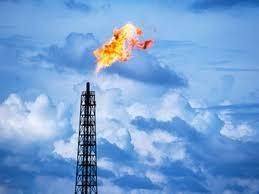
Kazakhstan’s national oil and gas company, KazMunayGas, and the Russian Tatneft will create a joint venture for geological exploration for hydrocarbons at the Karaton Podsolevoy subsoil area in the Atyrau region in western Kazakhstan, KazMunayGas has announced. 

The two companies signed agreements for the project on February 21st in the Russian city of Kazan. Tatneft is headquartered in the nearby town of Almetyevsk. 

According to the agreements, KazMunayGas is selling Tatneft a 50% stake in Karaton Operating Ltd., the operator of the Karaton Podsolevoy project.

In June 2023 KazMunayGas received a contract to explore and produce hydrocarbons at the Karaton Podsolevoy area and in September 2023 registered a private company, Karaton Operating Ltd., to implement the project. In November 2023, KMG transferred the subsoil use right to Karaton Operating Ltd.

“[Kazakhstan’s president Kassym-Jomart Tokayev] set the task of attracting foreign investment in the raw materials sector and geological exploration,” commented Magzum Mirzagaliyev, chairman of the board of KazMunayGas. “In this regard, we held negotiations with a number of investors and are pleased that our partner in the Karaton Podsolevoy project has become the Tatneft company, which has extensive experience in the field of geological exploration and development of oil and gas fields.” 

Mr Mirzagaliyev added that drilling of the first exploration well with a depth of 5,500 meters is planned for 2024.

70% of Kazakhstan’s Electricity Generated Using Coal

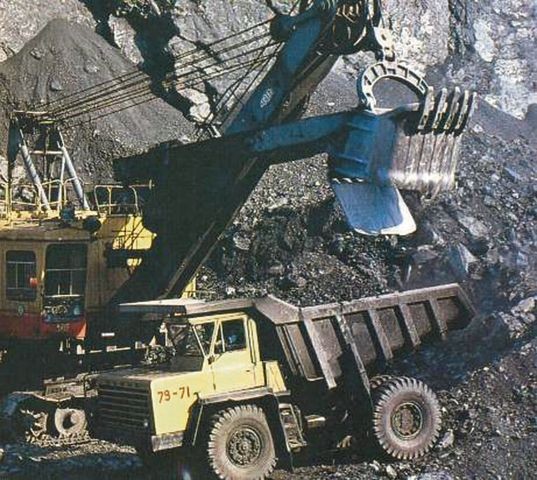
Last year Kazakhstan produced 112.7m tons of coal, 1.1% less than in 2022. The country’s energy-generating facilities used 65.9m tons and 31.9m tons were sent for export, according to data released by the National Bureau of Statistics.

Kazakhstan ranks among the world’s ten leading countries in terms of coal reserves, with 49 deposits containing 33.6bn tons of coal. 

Today the coal industry provides fuel for about 70% of Kazakhstan’s electricity generation. About 30 companies are currently engaged in coal mining in the country, providing jobs for almost 32,000 people.

Large coal deposits are located mainly in Central Kazakhstan (Karaganda coal basin, Shubarkol deposit, Turgai brown coal basin) and the northeastern region (Ekibastuz and Maikuben coal basins and Karazhyra deposit).

The Ministry of Industry and Construction earlier announced Kazakhstan’s plan to increase the production of coal in the period 2023-2029. The National Bureau of Statistics reported that exports of hard coal and lignite have increased 6.5-fold, mainly due to the growing demand for Kazakh coal from the countries of the European Union, which has placed an embargo on Russian coal exports to European countries since August 2022. 

Kyrgyz Re-Exporters of Chinese Cars Will Soon Pay Higher Duties

The Russian authorities have introduced additional customs duties for cars imported from Eurasian Economic Union (EAEU) countries, according to the Ministry of Economy and Commerce of Kyrgyzstan. The ministry says that the Russian government amended the rules of collection, calculation, payment and recovery of the utilization fee for wheeled vehicles and trailers. From April 1st 2024, all citizens importing cars into Russia which were previously customs cleared in the EAEU countries will have to pay an additional utilization fee. This fee is charged for the ecological recycling of the vehicle at the end of its service life.

“This approach will avoid situations where citizens and companies importing cars cleared in the EAEU countries receive unjustified advantages compared to car owners doing so in Russia and paying the taxes and fees established by law in full,” reads a statement on a Russian government website.

The EAEU includes five countries: Russia, Kyrgyzstan, Kazakhstan, Armenia and Belarus. The EAEU guarantees a single customs zone spanning the entire territory of these countries, meaning that import and customs clearance for a car in one of the EAEU countries means one can subsequently operate and sell it in any other EAEU country. Until now, Kyrgyz re-exporters of cars – mainly from China – have been successfully exploiting this loophole, as there is no utilization fee to pay when a car is cleared in Kyrgyzstan. As a result, cars imported from China and other countries cleared customs in Bishkek and were then freely shipped to automobile markets in major Russian cities. These cars imported to Russia from Kyrgyzstan are obviously cheaper than cars imported from other countries, including those imported directly by the manufacturer.

The leader among countries importing new cars to Russia in 2023 was China, while Kyrgyzstan ranked second, despite the fact the Kyrgyz Republic does not have its own car manufacturing factories. According to Russian customs data, 13,600 cars were imported from Kyrgyzstan to Russia in December of 2023 alone. In total, Kyrgyzstan exported more than 70,000 cars to Russia last year.

The so-called recycling fee was introduced by Russia in 2012, when the country joined the WTO. In August 2023, in order to protect Russian car manufacturers, the utilization fee in Russia was increased roughly nine-fold, forcing buyers to search for cheaper duty-free cars such as those imported via Kyrgyzstan.

Children in the Fields, Not at Their Desks: Turkmenistan Continues to Use Child Labor in Cotton Harvest

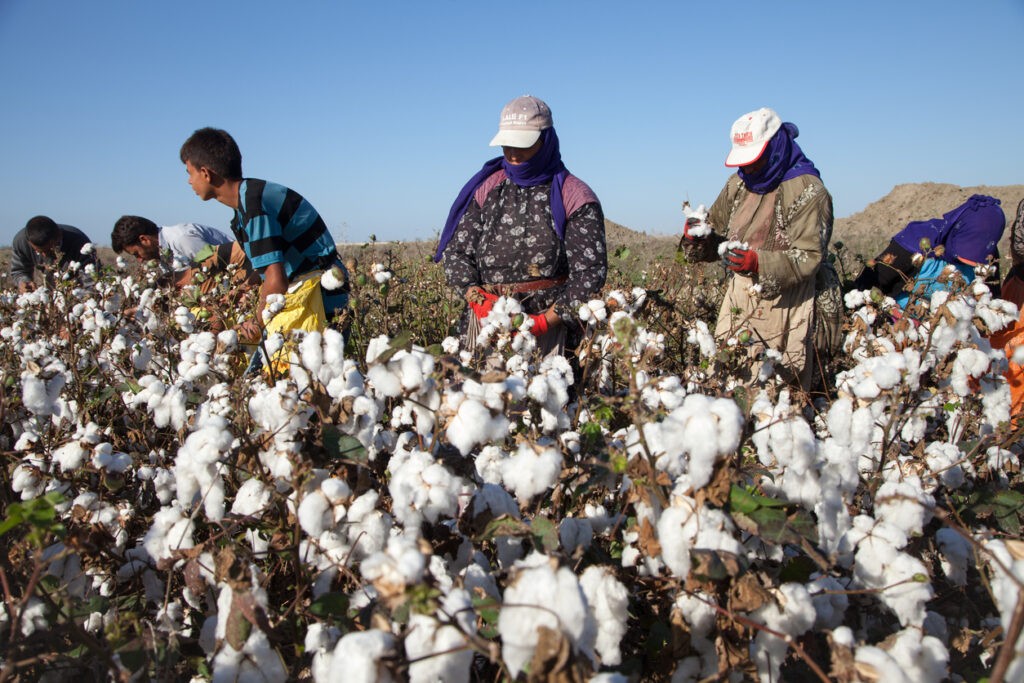
Turkmenistan continues to use forced labor of adults and children during the cotton harvest, according to experts from the Committee on the Application of Standards of the International Labor Organization (ILO).

“The preliminary findings of this observation mission indicate direct or indirect evidence of mobilization of public servants in all regions visited, with the exception of the city of Ashgabat,” the report by the committee states.

Another report by independent Turkmen human rights groups published last year documented widespread systematic forced labor in Turkmenistan – alongside widespread corruption. Under its ILO commitments, Turkmenistan has pledged for years to eradicate this practice, but the reality is different.

The Business and Human Rights Resource Center notes that the Turkmen Government obliges farmers to submit a certain quota of cotton each year. Failure to meet these quotas can result in the land being taken away from the dekhkans (smallholder farmers) and given to others, or the issuance of a fine. At the same time, the government maintains a monopoly on the purchase and sale of cotton, sets an artificially low purchase price, and does not disclose information about either the income from cotton or the use of that income.

Employees of government organizations are systematically forced to harvest cotton. They are not provided with proper working or living conditions, and are often forced to find housing and food at their own expense. In addition, they face such problems as unfavorable weather conditions – cotton harvesting starts in the summer heat and continues well into winter’s sub-zero temperatures – contact with chemicals used to treat the fields, and travel costs. Despite this, human rights advocates haven’t received any complaints about the authorities’ misconduct. This is likely due to the fact that workers are afraid of losing their jobs in the public sector, where the majority of Turkmenistan’s population is employed.

Despite local laws prohibiting the use of child labor – and a ban on the use of child labor in the cotton sector has been in place since 2008 – the practice is widespread during the cotton harvest. The Cotton Campaign, an international coalition of labor groups, human rights organizations, investors and business organizations, has repeatedly spoken out against this practice. Schoolchildren in Turkmenistan often go to the cotton fields themselves to earn money for clothing and food, as well as to help their parents, who are obliged to pick cotton.

Turkmenistan is the tenth largest cotton producer in the world and has a vertically integrated cotton industry. Despite the boycott of cotton picked using forced labor, the U.S., Canada and EU countries cannot always control the supply chain of cotton from third countries. Thus, Turkmen cotton harvested by forced and child labor filters into global cotton supply chains at all stages of production. The Cotton Campaign has called on governments, companies and workers’ organizations to take action and pressure Turkmenistan to end forced labor and protect the basic rights of its citizens.

Uzbekistan is a successful case study in the effort to eliminate forced labor. In March 2022, the Cotton Campaign announced the removal of its recommended global boycott of cotton from Uzbekistan. According to the ILO, 99% of Uzbek cotton pickers in 2021 worked voluntarily. The cotton boycott negatively impacted the country’s cotton exports – in 2020, the number of brands boycotting Uzbek cotton exceeded 300.

Italian Company to Begin Cultivating Snails in Kazakhstan

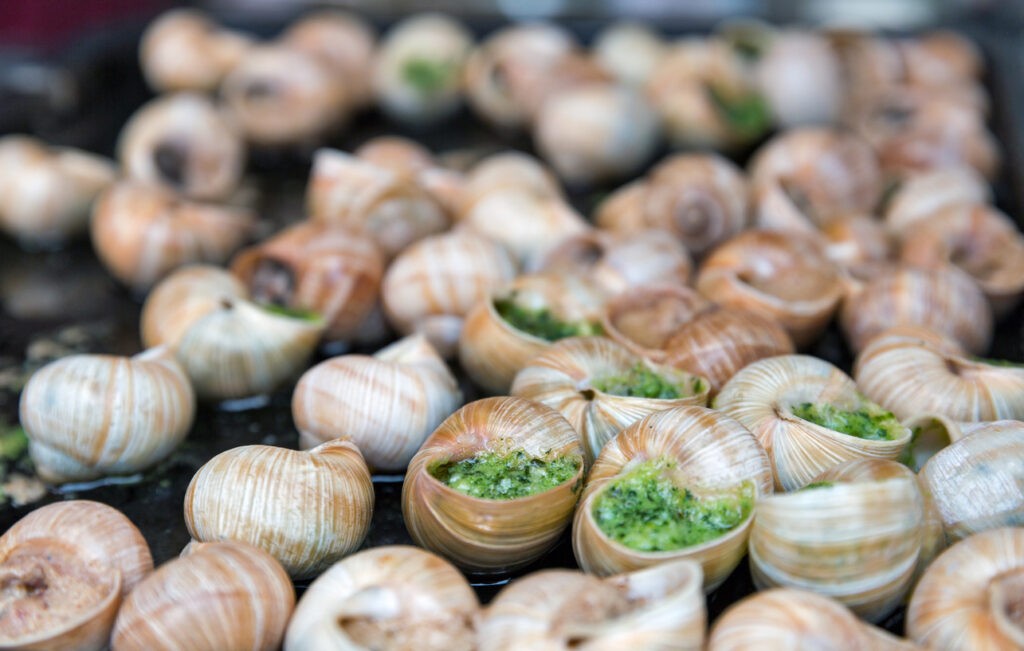
Lumacheria Italiana, the global leader in snail production, announced its plans to start industrial production of snails in Kazakhstan. Representatives of the company outlined their plans during a meeting with the Akim of the Zhambyl Region, Dauletkozha Mamyrov.

At the meeting it was noted that the Zhambyl Region is located in a favorable environmental and climatic zone, one that’s ideal for snail farming on an industrial scale and helps reduce production costs fourfold compared to the world market. The project will make the region the first in Central Asia that hosts snail farming on an industrial scale.

Furthermore, representatives of Lumacheria Italiana said they’ll be cooperating with the Kazakh company Meragro on the project, and that farming infrastructure be built in several stages. Lumacheria Italiana also expressed its readiness to train local farmers. Investment in the initial phases of the project alone will amount to more than €2,000,000.

Breaking Down Kazakhstan’s Claims Against International Oil Consortiums

The total amount of claims brought against the consortiums, North Caspian Operating Company (NCOC) and Karachaganak Petroleum Operating (KPO) is the largest in the history of Kazakhstan.

In March 2023, PSA LLP, the authorized state institution overseeing these projects, brought forward claims in international arbitration in relation to Kashagan and Karachaganak for $13.5 billion and $3.0 billion, respectively. In addition, the Atyrau Region environmental regulator filed a claim for $5.1 billion against the NCOC consortium for storing too much sulfur on site, discharging wastewater without treatment, etc.

The claims of PSA LLP cover the period 2010-19 and relate to the oil consortiums’ costs for carrying out large projects, as well as tenders and insufficient work completed.

The shareholders of NCOC, which is developing the offshore Kashagan Field, include: KMG Kashagan (16.877% stake), Shell Kazakhstan Development (16.807%), Total EP Kazakhstan (16.807%), Agip Caspian Sea (16.807%), ExxonMobil Kazakhstan (16.807%), CNPC Kazakhstan (8.333%) and INPEX North Caspian Sea (7.563%). Their total investments over the period have not been disclosed, but, according to various estimates, exceed $60 billion – meaning the state is currently calling into question about 23% of all costs.

The KPO consortium is Shell (29.25%), Eni (29.25%), Chevron (18.0%), Russia’s Lukoil (13.5%) and Kazakhstan’s state-owned KazMunayGas (10.0%). Investments in this oil and gas condensate field are estimated at $27 billion, hence the filed claim is significantly smaller both in absolute terms and as a percentage of costs, standing at about 11%.

A production sharing agreement was signed in 1997 for Karachaganak and in 1998 for Kashagan, with the contracts to be in effect for 40 years. In 2022, the sole participant in PSA LLP became Samruk-Kazyna Trust Corporate Fund, part of the state holding National Welfare Fund Samruk-Kazyna, while Kazakhstan’s Ministry of Energy is currently entrusted to run PSA LLP.
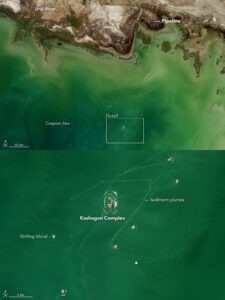
NCOC and KPO dominate the industry through control of three fields. Tengiz, Kashagan and Karachaganak are the largest oil and gas fields in Kazakhstan. The country’s oil and gas condensate production in 2023 amounted to 89.9 million tons (about 1.8 million barrels per day), with the share of the “three whales” – as these projects are called – accounting for 67% of oil production:

  • Tengiz with 28.9 million tons, down 1% versus the 2022 level;
  • Kashagan with 18.8 million tons, a 48% increase;
  • Karachaganak with 12.1 million tons, up 7% year-on-year.

The stabilization contract for Tengiz was one of the first signed at the dawn of Kazakhstan’s independence in 1993, also for a term of 40 years, meaning it should be the first to expire in 2033.

The shareholders of the Tengizchevroil JV are Chevron (50%), ExxonMobil (25%), KazMunayGas (20%) and Lukoil (5%). After completion of its FGP (Future Growth Project), Tengiz should produce about 900,000 barrels per day, a significant figure even by world standards.

It is surprising that Kazakhstan has not yet raised or voiced any claims against TCO, even though the FGP budget has swelled from an initial $12 billion to $25 billion – due to the addition of the WPMP (Wellhead Pressure Management Project) – then to $37 billion, and now, according to the latest information, to $46.7 billion, with the capacity expansion pushed back to the second quarter of 2025.

Meanwhile, a PSA LLP deputy general director, on an April 2023 episode of the Baidildinov.Oil YouTube program (titled “NCOC, KPO: Battle for the Future”), said the claims are not aimed at revising the contracts, but rather the state is merely pursuing fairness in its relations with the investors, and only through legal channels.

Such attention to NCOC and KPO against a backdrop of silence on Tengiz may be attributable to the fact that Kazakhstan’s share in TCO is owned and managed by the state-owned, KazMunayGas, not PSA LLP. Also of note is that Tengiz has turned out to be such a rich field that American companies are reported to want to extend the agreement for another 20 years. According to unconfirmed reports, consent in principle has been received, with the details now supposedly being discussed with the Kazakh Government.


Oil supplies and petroleum product shortages

Despite its high oil production and big hydrocarbon reserves, Kazakhstan continues to rely on Russian imports of petroleum products. According to the indicative plan of the Ministry of Energy, last year 5 million tons of diesel fuel should have been produced and about 800,000 tons imported, with an almost equal volume of gasoline production at 5 million tons and imports guided at 300,000-350,000 tons. In addition, the domestic market imports 30-40% of the tar and bitumen it needs for road work, with the same being true for jet fuel.

Meanwhile, Kazakhstan’s oil refineries are already operating at capacity (18 million tons per year), and a new refinery is needed. To fill that void, higher volumes of crude oil will be required.

The government has resolved that to meet growing needs, the Shymkent Oil Refinery in the south of the country (operated by PetroKazakhstan Oil Products) will be expanded. It is 51% owned by the Chinese state oil concern, CNPC, and 49% by KazMunayGas. Options to expand the refinery’s capacity from the current 6 million tons per year to 9 or 12 million tons per year are being considered.

However, over-regulation of the domestic market makes it unattractive for suppliers of crude oil. Currently, the state regulates crude oil prices in the domestic market, obliging extractive-industry companies to supply it at $20-25 per barrel.

Excluding the oil and gas condensate production of the “three whales,” production by other companies in Kazakhstan was down 3% in 2023 at 30.1 million tons. Currently, 60% of their production goes to the domestic market, while TCO, NCOC and KPO do not supply oil domestically under the agreements signed in the 90s.

At the end of 2022, President Kassym-Jomart Tokayev instructed the government to look at how an additional 5 million tons per year could be supplied to the domestic market by the large foreign operators. Therefore, a scenario in which Kazakhstan’s claims against NCOC and KPO are related to this should not be ruled out. Nevertheless, the question of regulated domestic prices, as well as how crude oil should be transported to refineries in the country’s south remains open.

It will be a while before we know whether Kazakhstan’s claims will be satisfied in international arbitration, as such proceedings can drag on for years. That said, the country’s ability to meet domestic demand and support budget revenues is limited and largely depends on the “three whales.”

 

Olzhas Baidildinov is an oil and gas industry expert, member of the Public Council of the Ministry of Energy of the Republic of Kazakhstan, author and presenter of the program “Baidildinov. Oil”, and founder of the Telegram channel, “Baidildinov. Oil”