• KGS/USD = 0.01144 0%
  • KZT/USD = 0.00212 0%
  • TJS/USD = 0.10454 -0.1%
  • UZS/USD = 0.00008 0%
  • TMT/USD = 0.28571 0.28%
  • KGS/USD = 0.01144 0%
  • KZT/USD = 0.00212 0%
  • TJS/USD = 0.10454 -0.1%
  • UZS/USD = 0.00008 0%
  • TMT/USD = 0.28571 0.28%
  • KGS/USD = 0.01144 0%
  • KZT/USD = 0.00212 0%
  • TJS/USD = 0.10454 -0.1%
  • UZS/USD = 0.00008 0%
  • TMT/USD = 0.28571 0.28%
  • KGS/USD = 0.01144 0%
  • KZT/USD = 0.00212 0%
  • TJS/USD = 0.10454 -0.1%
  • UZS/USD = 0.00008 0%
  • TMT/USD = 0.28571 0.28%
  • KGS/USD = 0.01144 0%
  • KZT/USD = 0.00212 0%
  • TJS/USD = 0.10454 -0.1%
  • UZS/USD = 0.00008 0%
  • TMT/USD = 0.28571 0.28%
  • KGS/USD = 0.01144 0%
  • KZT/USD = 0.00212 0%
  • TJS/USD = 0.10454 -0.1%
  • UZS/USD = 0.00008 0%
  • TMT/USD = 0.28571 0.28%
  • KGS/USD = 0.01144 0%
  • KZT/USD = 0.00212 0%
  • TJS/USD = 0.10454 -0.1%
  • UZS/USD = 0.00008 0%
  • TMT/USD = 0.28571 0.28%
  • KGS/USD = 0.01144 0%
  • KZT/USD = 0.00212 0%
  • TJS/USD = 0.10454 -0.1%
  • UZS/USD = 0.00008 0%
  • TMT/USD = 0.28571 0.28%

What to Expect from Central Asian Economies in 2024

The pandemic dealt a major blow to the global economy and to the economies of Central Asia in particular, which, despite some domestic production, rely on imports for a significant share (in monetary terms) of their consumption.

The Russia-Ukraine war acted as an economic shock to these economies, which had yet to recover from the damage done by Covid. While there is considerable intra-regional potential in terms of manufacturing and trade, most of the imports into Central Asia come from China, Turkey and Europe. At the same time, transnational corporations in Russia account for almost half of Central Asian demand for consumer goods.

In 2022, Central Asian countries began to reconfigure their supply chains to comply with sanctions. However, since almost half of the Russian economy was integrated with international corporations and supplied Central Asia, severing these trade links proved almost impossible. This is clearly reflected in the statistics for 2023, where almost all Central Asian countries saw re-exports of Western goods to Russia increase by tens or hundreds of times.

In terms of information and statistics, the most open countries of the region are Kyrgyzstan and Kazakhstan. Uzbekistan is quickly catching up, with government agencies launching websites where a significant amount of data can be accessed, both about the economy and the country as a whole.

Economic indicators for Central Asian countries in 2023
Countries (alphabetical order) GDP (in $ bln)* Growth, y-o-y Inflation, y-o-y
Kazakhstan 237.00 5.1% 9.80%
Kyrgyzstan 11.90 6.2% 7.30%
Tajikistan 11.36 8.3% 3.80%
Turkmenistan 60.10 6.3% 5.90%
Uzbekistan 90.80 6.0% 8.77%
* Approximations

Excluding Kazakhstan, the region’s largest economy (though still resource-based), whose GDP is larger than the other four countries’ combined, Central Asia can be characterized as a low-income region. With average wages in a range of $250–400 per month, the countries rely heavily on trade (imports) for food, clothing, and basic goods.

No country in the region is fully self-sufficient in terms of producing consumer goods, which, given the complex logistics, poses a challenge during swings in markets or geopolitical instability.

Still, the last five years have been favorable for the region: there have been fewer territorial disputes and border conflicts, while politicians in all five countries share the view that the C5 and C5+ formats can be an effective tool to develop intra-regional ties and a common market. Last year, the five presidents from the region met with the leaders of China, Russia and the United States.

In 2023, the countries fully recovered from the pandemic downturn, and each economy grew in annual terms. Due to its high base ($200+ billion GDP), Kazakhstan turned in the lowest growth at 5.1%. Its economy is driven mainly by resource extraction, metallurgy and agriculture. Given its size – an area of 2.7 million square kilometers – logistics is a big challenge for doing business in the country. Last year, according to preliminary data, Kazakhstan produced 90 million tons of oil, with exports mostly heading to Russia’s Novorossiysk port through the Caspian Pipeline Consortium (CPC).

Kazakh gas is used domestically and also exported to China via the Central Asia-China gas pipeline. Most of the natural gas that travels through the pipeline comes from Turkmenistan and Uzbekistan, which raised a loan from Chinese state companies to build it.

The West-East Pipeline starts in Xinjiang, Qinghai, Sichuan and Chongqing (the main gas-producing regions) and runs to eastern China. Construction of the first line was started in 2002 and finished in 2004, while the second line was constructed in 2008-12.

Uzbekistan’s economy has traditionally been largely export-driven, with gas and gold the key. Being one of the ten biggest gold producers in the world and also a doubly landlocked country, Uzbekistan is heavily dependent on gold exports, while agricultural exports – ranging from mass-market to premium ecological products – are also robust. Meanwhile, the country’s gas is produced by Lukoil, which in turn sells it to China.

Uzbekistan is actively developing various types of agricultural production, recording good harvests of fruits and vegetables under conditions of long-term water stress. After the Aral Sea dried up due to the USSR’s unsustainable cotton cultivation, Uzbekistan now not only processes its own cotton to make finished export products, but also purchases raw material from Turkmenistan, whose cotton is highly valued in world markets. The cotton industry in Uzbekistan has seen a resurgence since the abolition of what was enforced cotton-picking, which saw bans on exports.

In 2023, Uzbekistan held multiple international exhibitions and investment conferences to attract foreign capital to launch new production facilities and modernize the economy as a whole. The government announced negotiations with Zara, Columbia and Nike to launch production. While the country is still struggling with a lack of capital, major contracts are expected to be signed in 2024.

Kyrgyzstan does not lag Uzbekistan in terms of gold mining. For a long time, a Canadian company operated in the country, but now Turkish companies are entering the market having left Turkey because of its high inflation. A mountainous country, Kyrgyzstan is actively developing tourism and agriculture while lobbying on behalf of the China-Kyrgyzstan-Uzbekistan railway to other Central Asian countries. Meanwhile, the textile industry, from material production to retail, is important for the country’s economy and, having started as artisanal production, is now one of the region’s most developed. Note that most of the country’s energy is environmentally friendly, produced by hydroelectric power plants.

In 2023, changes to the government’s structure were pushed through, while Kyrgyz SMEs remain practically untouched by regulation due to the authorities’ cautious attitude toward business. This year, the future of the Kumtor Gold Mine, the country’s key asset, over which Russian and Turkish investors are competing, is to be decided. The largest investors in Kyrgyzstan are generally Russia and China, and Bishkek looks set to increase food exports to Kazakhstan and Russia in 2024 and would like to begin building transit routes (like the China-Kyrgyzstan-Uzbekistan railway).

What Tajikistan and Kyrgyzstan have in common is mountain glaciers, which are important water sources for the region. Tajikistan is an agricultural country with the bulk of the workforce employed in agriculture. Its agricultural products include wheat, cotton, fruits (especially grapes) and vegetables. Tajikistan’s mineral reserves are considerable and include gold, silver and aluminum.

In 2023, against the backdrop of the major war-related sanctions against Russia, Tajikistan found itself in a difficult situation: more than a million Tajiks work in Russia, sending remittances to their families back home, for whom the money is significant. Meanwhile, with the ruble weakening against global currencies, many Tajik workers in Russia took advantage of the cheaper real estate to move their families to Russia for a better life.

Tajikistan had the lowest inflation in the region in 2023, at about 3.8%, combined with the highest economic growth, at 8.3%. The largest investor in the country is China, and Chinese companies see potential in metallurgy and are interested in establishing a base to do business with Afghan border regions.

Of the countries in the region, Turkmenistan was the last to open up. It still requires visas even for citizens of other Central Asian countries. It boasts the largest gas reserves in the world. Its agriculture, as noted above, is driven mainly by high-quality cotton. However, scaling up production has proven difficult, as the country has struggled to improve efficiency in land and water management. Infrastructurally, Turkmenistan has ports on the Caspian Sea and a railway from Kazakhstan to Iran.

All countries in the region are united by one problem: weak currencies and a fairly large state share in the economy. On the one hand, this is good for the predictability of investment policy; on the other, it widens the range of political risks. While Kyrgyzstan has the clear advantage in the robustness of business to regime changes (there have been two revolutions in the country in the 2000s), it is too small for large investors, but well suited for small companies in agriculture. Meanwhile, Kazakhstan invests billions of dollars to support business, undoubtedly making itself more attractive for medium- and large-scale investors; that said, in many localities in Kazakhstan there is a shortage of quality infrastructure and logistics costs pose a challenge.

All five Central Asian countries have soft currencies. Due to the state’s desire to increase social spending, they tend to depreciate. Another key weakness of the countries, if viewed as a common market, is the undeveloped system of logistics and warehouses. In Kazakhstan alone, the shortage of warehouse space is over a million square meters. Uzbekistan and Kyrgyzstan, which have significant volumes of industrial and agricultural production, face an even greater shortage. Freight transport between the countries of the region cannot be called seamless, but the situation is changing, albeit slowly.

In 2024, the main economic challenge facing the countries is the development of manufacturing, as well as building new and additional logistics routes, which, unfortunately, will require political support. A potential highlight is that this year the three largest economies – Kazakhstan, Kyrgyzstan and Uzbekistan – may launch a regional visa.

Is it worth investing in the region? Taking into account the fact that the countries are at different stages of setting up a relative free market and also that their economies complement rather than compete with each other, it seems appropriate to consider the C5 as one large region that is inevitably moving toward a common market for the free movement of capital, human resources and goods. Twenty twenty-four should see several important steps taken in that respect.

Rassul Rysmambetov is an Almaty-based expert in distressed assets. He mainly deals with cross border business, M&A, asset value recovery.
Rassul holds an MBA degree from St. Gallen University (HSG).

 

Kazakhstan and Uzbekistan To Build ‘Central Asia’ Industrial Center

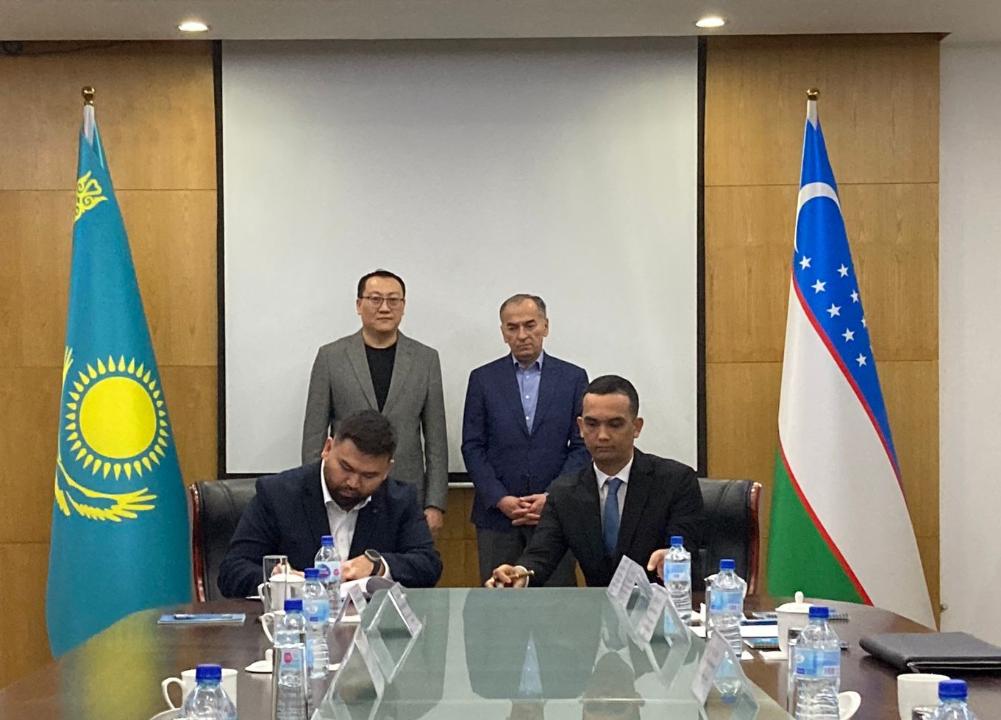
Kazakhstan and Uzbekistan are working to accelerate the creation of an international center for industrial cooperation, called ‘Central Asia’. It will be constructed at the border of the two countries, near the Gulistan checkpoint on the Uzbek side and the Atameken checkpoint on the Kazakh side, the Kazakh Ministry of Trade and Integration has reported. 

The Kazakh investor in the project, TCL Group, together with the administration of Kazakhstan’s Turkestan region, plans to begin construction of the Central Asia Center this year.

TCL Group has also signed a memorandum of cooperation with the Uzbek company Global Textile on the center’s first investment project, which will produce finished textile products.

Kazakhstan’s deputy minister for trade and integration, Kairat Torebaev, has commented that the Central Asia Center is expected to start its operations in the fourth quarter of 2026, and the official opening is planned for the first half of 2027.

Mr Torebaev believes the center will help intensify business ties between manufacturers from Kazakhstan and Uzbekistan, and stimulate the growth of trade turnover between the two countries. 

Trade turnover between Kazakhstan and Uzbekistan has grown to over $4.6bn in 2023. The sides aim to bring bilateral trade to $10bn in the coming years.

IFC Invests in Tajikistan’s First Green Bond

The International Finance Corporation (IFC), a member of the World Bank Group, has announced a subscription of up to $10m in a landmark local currency green bond issued by Tajikistan’s Eskhata Bank. This green bond is the first for the country, and is aimed at boosting access to climate finance for smaller businesses amid a challenging macro-economic environment.

Eskhata Bank is one of the country’s leading private banks, with a focus on serving micro, small and medium enterprises (MSMEs) and retail clients. The proceeds of the green bond will enable Eskhata to support MSMEs in undertaking climate-smart initiatives, supporting economic activity at a challenging time for the country.

“IFC’s investment in Eskhata Bank’s green bond is a testament to our dedication to supporting MSMEs in driving environmental sustainability,” said Akmaljon Saifidinov, Eskhata Bank’s CEO. “By channeling funds towards climate-smart projects, we are helping to build a more resilient and sustainable economy in Tajikistan.” 

Tajikistan recently approved its Green Economy Development Strategy for 2023–2037, which sets a clear vision for its transition to a low-carbon and resilient economy. IFC is supporting this process through its climate finance program in Central Asia, which aims to increase the flow of green finance into the country. 

“This first green bond issuance in Tajikistan by our long-standing client, Bank Eskhata, is a remarkable achievement that demonstrates the bank’s commitment to sustainable development,” said Zafar Khashimov, IFC Regional Manager.

Green bonds raise funds for projects with positive environmental benefits, such as renewable energy, energy efficiency, waste management, or green building. 

Kyrgyzstan Sees Surge In Car Imports From China

In 2023 Kyrgyzstan imported 79,131 cars worth nearly $1.2bn from China, an almost 45-fold increase compared to the 1,773 cars imported in 2022, the National Statistics Committee has reported. 

The import of cars from South Korea also increased, reaching 50,397 for almost $435m. 

The sharp increase in Kyrgyzstan’s car imports is largely due to the zeroing out of customs duties of the Eurasian Economic Union on the import of electric vehicles from third countries. Kyrgyzstan is a member of the EEU, together with Armenia, Belarus, Kazakhstan, and Russia.   

Since the introduction of Western sanctions against Russia over its invasion of Ukraine, China has become the main supplier of new cars to the Russian Federation. Chinese vehicles are mainly exported to Russia via Central Asian countries.

In total, 184,789 cars worth $2.7bn were imported into Kyrgyzstan last year, a 4.5-fold increase since 2022.

At the same time, in 2023 Kyrgyzstan re-exported 8,733 cars worth $69.6m, almost nine times more than in 2022. Most of the cars were re-exported to Russia — 6,253 for $52.5m, and 2,374 cars worth $10.8m were sent to Kazakhstan.

It Has Been 25 years Since the Terrorist Attack in Tashkent

TASHKENT, Uzbekistan – A lot of people in Uzbekistan remember where they were on that traumatic day 25 years ago. There are no public commemorations on the Feb. 16 anniversary. But every year, Uzbek media publish details about the 1999 bombings in Tashkent, the capital. School teachers briefly tell students about it.

The Uzbek government blamed Islamic militants for the coordinated bombings that killed at least 16 people and injured about 100. Islam Karimov, president at the time, said extremists had intended to kill him.

Abduvali Soyibnazarov, a political commentator in Uzbekistan, spoke about the attacks in a conversation with The Times of Central Asia. He said since his office – the Broadcasting Center of Uzbekistan is located in the central part of the city, the sounds of explosions were clearly heard by him.

It was 10:40 a.m., Soyibnazarov recalled.

“There was supposed to be a meeting of the government of Uzbekistan dedicated to the results of the economic development of the republic in the past year. Shortly before the start of the meeting, a shootout took place between the president’s guards and militants in the main square of Tashkent – in front of the government building,” he said.

International news organizations scrambled to figure out what was happening. There was a false rumor that the Cabinet of Ministers building had been attacked with grenades.

“The first explosion occurred shortly after the start of the shooting, on Yusuf Khos Khajib street of the capital, near the building of the Ministry of Internal Affairs. A ZAZ-968M car exploded,” Soyibnazarov said.

The second explosion, the most powerful of the day, occurred at 10:55 a.m., 15 minutes after the first blast.

“The explosion was in a car parked near Independence Square. Some residents, whose houses are two to three kilometers away from the place of the explosion, believed that an earthquake had started. Our Uzbek radio broadcasting center is also located in the central part of the city, so the explosion was very loud. Even the windows of our office almost broke,” he said.

A third car blew up near the entrance of the Cabinet of Ministers building, during a meeting that Karimov was scheduled to attend. Karimov, however, had not yet arrived. After being informed about the attacks, he went to the scene and was addressing the nation on live television when – at 11:20 a.m. – a fourth bomb exploded a few kilometers away, near the National Bank of Uzbekistan.

“As a result, the windows of the bank and surrounding buildings were shattered. People injured by broken glass were shown on TV. We heard explosions going off at different intervals in other parts of the city. The fifth and last explosion took place at 12 p.m. in the garage of a private house,” Soyibnazarov said.

The casualties included three internal affairs officers, one of whom later died.

Several days after the attacks, Karimov said he had narrowly escaped death.

“I usually arrive at meetings 10-15 minutes early. But I was a little late that day,” he said. “A car filled with explosives was parked near the building, and two young men who got out of it and ran away opened fire with automatic weapons. At that moment, the car I was sitting in was entering the area. The head of our security service, Rustam Khodzhayev, ran to us, shouted and stopped the car, saving my life.”

“If you want to help me, don’t panic,” Karimov said in an interview on national television. “We have enough strength. We have the power to destroy all terrorists and cut off their hands. Let our people know this.”

Uzbekistan launched a wide-ranging crackdown after the Tashkent attacks, arresting suspected militants and other people deemed to be threats to national stability. Judicial processes lacked transparency; the government said security concerns were the priority. Several people blamed for the attacks were executed.

The powers of the National Security Service expanded and fencing and guards were added around main government buildings. Official media dedicated long reports to terrorism and religious extremism. On radio and television, government-backed Islamic clerics urged people to resist recruitment efforts by banned religious groups.

Soyibnazarov, the commentator, said after the explosions, articles were published in the press and mass media of Uzbekistan condemning terrorism, religious fanaticism and extremism. TV and radio, religious clerics constantly urged the people to beware of the conspiracies of illegal religious groups and not to join them.  Some bearded men and women wearing hijabs faced suspicion and animosity in the secular state.

Since Karimov died in 2016, the government has eased up on religious controls and public displays of piety are more common.


Images below are from the “Shon-sharaf” Museum of the Main Department of Internal Affairs of the City in Tashkent

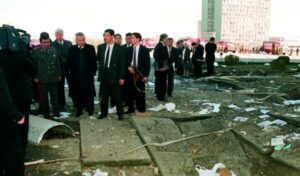
A few hours after the attack on February 16, President Islam Karimov, wearing a long black coat, inspects explosion area with officials and bodyguards.

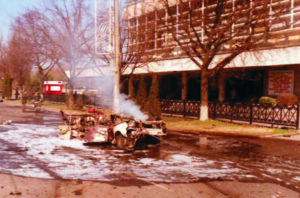
An explosion occurred near the “Nodirabegim” cinema on Sharof Rashidov Street.

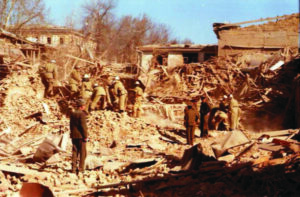
Destruction from the explosion in the apartment on Abdulla Qakhkhor street, Yakkasaray district.

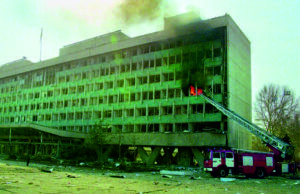
An explosion occurred near the entrance to the main building of the Cabinet of Ministers.


Uzbek Children for Sale: What Compels Mothers to Part With Their Young Ones?

In Uzbekistan, yet more cases of children being sold have been uncovered by officers of the State Security Service. Law enforcement officers recently detained women trying to sell their children in four cities in Uzbekistan.

A 29-year-old resident of Namangan tried to sell her ten-year-old son for $18,000 and was detained while receiving an advance payment of $4,000. A 31-year-old resident of Termez agreed to sell her newborn daughter for $2,000. She was detained while handing over the baby and receiving the money. A 33-year-old woman from Bukhara region, more recently living in Gulistan, was detained while trying to sell her two-week-old son for $40,000. And in the capital, a 27-year-old woman from Chirchik was detained for trying to sell her six-year-old son for $3,000.

Child trafficking has taken on horrific proportions in recent years in Uzbekistan. According to the World Report on Trafficking in Persons, over the timespan from 2014 to 2020, 380 cases of trafficking in newborns were uncovered here. Year after year, these figures continue to increase. Prices for babies range from $200 to $40,000.

There are several reasons that drive mothers to such drastic measures. The first is the overall plight of the mother. Often they have no way to make a living, have lost their husbands, or already have several older children. Another child becomes an impossible burden for her — which can be eased by earning money to feed, clothe, and house herself and the remaining family members.

There have been cases when children were offered in exchange for an apartment. The weak state system of support for women in difficult life situations puts these mothers in an impossible situation, having to choose between living in poverty or giving their children and themselves a chance to live in better conditions in the future.

Secondly, fear of shame and being publicly ostracized are major factors. Young women and girls who become pregnant for reasons deemed socially unacceptable — as well as victims of rape — experience this. In an attempt to hide the pregnancy and the child, such mothers often temporarily move to another city or region. This can culminate in the mother trying to get rid of the child by selling it far away from their home regions after giving birth.

Furthermore, Uzbekistan has a very complicated bureaucratic system of adoption, which helps drive the black market for the trafficking of newborns and children. Because of this bureaucracy, only a few people manage to take the desired child home from an orphanage. Therefore, childless couples look for a way to get a child directly from a maternity hospital. The mediator in such transactions is often the medical staff, who negotiate all the terms of sale with the biological mother and adoptive parents in advance.

The problem of selling children in Uzbekistan must be addressed comprehensively, experts say. The introduction of sex education lessons in schools is a necessity, as well as the introduction of state programs to support women in need, tougher penalties for selling a child, and changes to the adoption system.