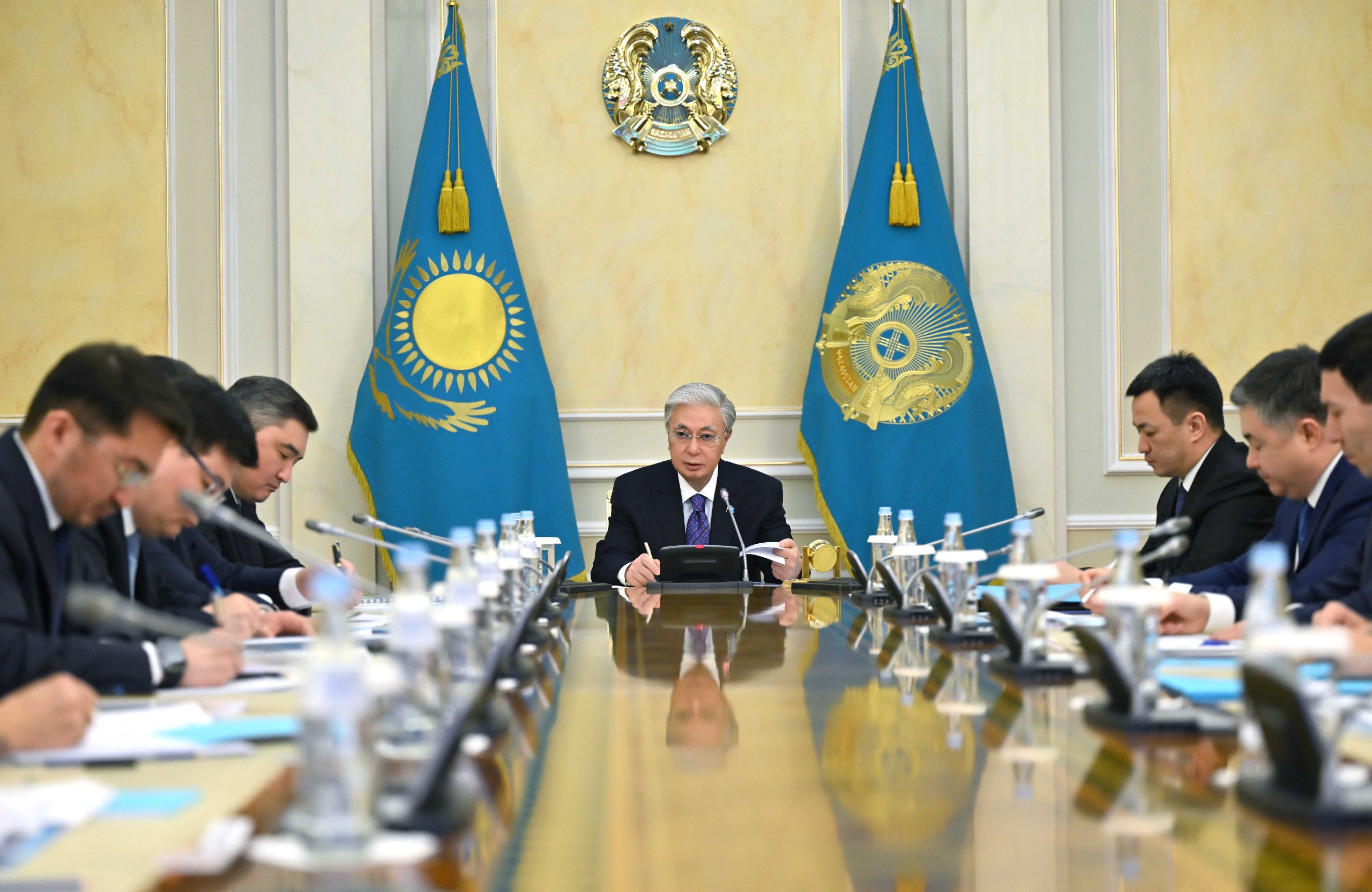
Kazakhstan’s President Kassym-Jomart Tokayev has criticized the country’s banks for their slow adoption of state-developed digital financial infrastructure. He made the remarks during a meeting on the implementation of the Digital Qazaqstan project.
During the meeting, the heads of ministries and government agencies presented reports on the rollout of digital solutions in public administration and the economy. In his comments, the president stressed the need for more active deployment of artificial intelligence in industry, as well as progress in developing digital payment infrastructure.
According to Tokayev, the National Bank has already created a digital financial ecosystem that includes interbank QR payments and transfers, as well as settlements using the digital tenge.
“This significantly reduces costs by shortening the chain of payment intermediaries. The requirement for all banks to connect to this infrastructure is enshrined in law, but the largest banks are delaying compliance,” the president said.
Since September 2025, a unified QR code system for interbank payments has been operating in Kazakhstan. The service allows users to pay for goods and services through mobile banking applications. Customers simply scan a QR code at a merchant’s terminal and confirm the transaction.
Initially, the service was available to clients of three banks. At present, 15 banks have signed participation agreements, although only six have completed technical integration with the system. The remaining institutions are required to connect by July 18, 2026.
Speaking in November 2025, National Bank Chairman Timur Suleimenov said the rollout had been slowed by both technical and market issues, adding that large financial ecosystems were reluctant to share payment traffic. He also described the digital tenge as a tool for transparency and control in public spending rather than a competitor to commercial banks’ own payment products.
Tokayev also emphasized that the widespread adoption of artificial intelligence technologies in the real economy is a strategic priority.
He linked this goal to the country’s technological sovereignty and called for accelerating the digitalization of the state apparatus. According to the president, more than 90% of public services in Kazakhstan have already been moved online, yet many government information systems remain insufficiently integrated.
“Speed and quality must be the priority at every stage. It is data that needs to flow, not people,” Tokayev said.
He added that digital transformation is incompatible with outdated bureaucratic practices.
“Digitalization and bureaucracy are as incompatible as ice and fire. We cannot force modern technologies to fit into old administrative models,” the president stated.
Tokayev also expressed concern about the pace of Kazakhstan’s digital transformation.
“I read news about the development of artificial intelligence; it is advancing so rapidly that I am becoming anxious about Kazakhstan’s digital future. It seems to me that the digitalization process is slowing down,” he noted.
The Times of Central Asia previously reported that the adoption of artificial intelligence technologies in the financial sector across Central Asia remains uneven, although Kazakhstan is currently regarded as the regional leader.